Letter to My First Love
By Lamaya · Colombia, Guajira · Yellow-crowned amazon (Amazona ochrocephala)
Starting to write this story means opening a memory that has stayed with me for years — waking moments that filled my soul and gave me such a happy childhood. You came into my life without warning and became the center of my small world, when I was just 9 years old.
I remember clearly that January 12, 2010, when you arrived in my arms as a gift from my father. I didn't know then that you would be my companion in every adventure, but the moment I saw you, I knew you would matter to me. I won't deny that fear came over me seeing you so fragile — a tiny parrot, featherless, newly hatched, taken from his nest. At that age, I didn't understand the harm they had done by pulling you from your natural habitat.
In La Guajira, where I grew up, seeing people sell wild birds was common — especially members of the Wayuu community. Back then, there weren't many laws protecting these birds from being captured and traded. Even so, I'm grateful my father chose to rescue you from the people who had you caged. Although it's a practice that has gone on for years and should never be supported, I made myself a promise: to care for you and love you for as long as life allowed.
And I did. But as we both grew, I understood it wasn't right to keep you — that if I truly loved you, I had to let you go, let you keep growing in your habitat. I thought about that constantly, and every time I did, my heart broke at the thought of never seeing you again. But the truth is, as much as I wanted it, I could never release you to live free. Not because I didn't want to, but because you simply couldn't have survived. When you came to me, one wing was completely broken and one foot was lame. I believed you might recover with time, but the damage done when you were taken was irreversible.
I never kept you in a cage. On the contrary, I always tried to let you live free, without clipping your wings. I let you roam the whole house on your lame foot and climb the trees in the yard. My grandmother's house was right next door, and every day you loved to climb the soursop tree she had there. You'd spend the whole morning and afternoon singing, driving every neighbor on the block wild with your calls. That started a constant war with my grandmother — you'd peck at every soursop she had — but I always defended you. Even so, she loved you as much as I did, as much as the rest of my family.
The name I gave you was Federico. That name marked my life forever, because without knowing it, you would become my first love. Yes — you were and will always be my first love. Because it was with you that I learned for the first time what it felt like to love something wildly and completely, even though to me you were far more than a little parrot. You were my everything: my accomplice, my confidant, my shoulder to cry on, my faithful friend. You were like a child who taught me what responsibility meant — waking up early to feed you, lifting you into the tree, playing with you, kissing you, teaching you to talk. That last one was one of the greatest joys of my life.
The bond we built, no one could understand — and I didn't try to explain it, because I didn't have the words myself to describe something as vast as the connection and love I felt with you. When I was sad, you were sad too. When you couldn't find me, you'd search for me wherever I was. When I traveled, I took you with me — I simply couldn't leave you behind. You were my emotional support, and even if people didn't understand that, I never cared what they said. I remember when the movie RIO came out — it filled me with such nostalgia. I could see myself in Linda and Blu. You loved watching that film and would sing along like crazy.
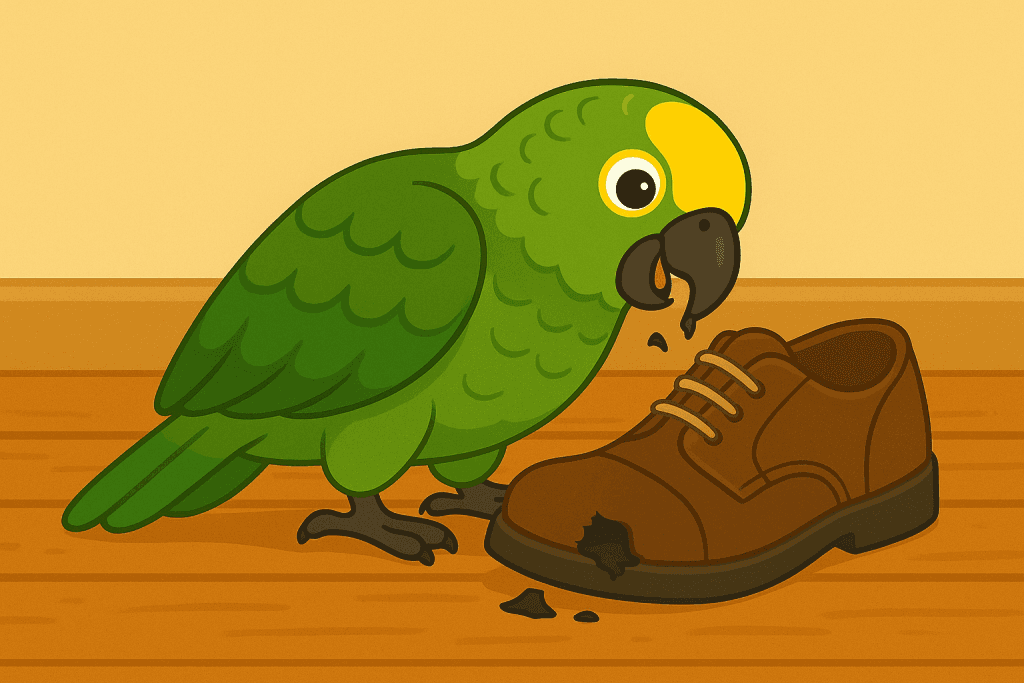
Most deep connections with pets are with dogs or cats. Mine was with you, my little parrot. You got into as much mischief as any dog — chewing my shoes, my toys, even my homework and school notebooks, which I then had no idea how to explain to my teachers, because they'd never believe a parrot did it instead of a dog. There were so many moments that filled my heart with joy, moments I could fill pages with and still remember as if they happened yesterday. I loved taking photos of you with an old phone my mom had. You were so beautiful — those green feathers like tree leaves, that little yellow head like the mangoes you loved to eat, that black beak like the sunflower seeds I'd give you. Even though I no longer have a single photo of you, your image is still vivid in my mind, all these years later.
Exactly 12 years, 7 months, and 18 days ago you left this world, and my heart broke completely. You came into my life to be my companion and to teach me so much. That afternoon when I came home from school, I went to see you as I did every day — but something was off. You didn't seem right, and I knew something was wrong. You were sick for three days. I took you to the vet and held onto hope that you'd get better soon. But you didn't. That morning of September 13, 2012, when I got up to check on you, I knew the moment I saw you that I was losing you. I took you in my arms, stroked you, told you again and again how much I loved you while your eyes slowly dimmed — and when they finally closed for good, I felt the greatest pain of my entire life, at just 12 years old.
You were gone, and I couldn't understand why. We'd had almost three years together, and it felt like we were owed so much more time. Since then I've written you letters so I'll never forget you. This is one of them. It still hurts that I couldn't keep my promise to bring you to a sanctuary, where you could have lived alongside other parrots.
After you left, I fell into a depression so deep it felt like nothing could pull me out. The house went silent and empty, and I felt lost without you. I made myself a promise: I would never keep a bird again, and I would never be part of taking freedom away from these beautiful, living creatures. Your memory had taught me to value freedom and nature, and I didn't want to feel again the pain of losing someone I loved that much.
Federico, you will always be in my heart.
With all my love,
Liz
P.S. I wrote this story with my whole heart, drawing on the letters I used to write after I lost him, bringing back memories I thought I'd buried. As I wrote it, tears ran down my face remembering the happiest and most painful moments I shared with Federico. I hope you enjoy reading it with the same feeling I had writing it. I'd love for it to reach you, and to have a chance to win. For me, sharing space with parrots again would mean feeling close to — and beginning to heal — the part of me that died the day Federico left. Thank you for reading my story and letting me live those moments with him again.
Analysis and reflections from Fundación Loros
The story of Liz and Federico reminds us that illegal trade tears lives apart and leaves wounds that never fully heal. When Federico — a small parrot with a broken wing and a lame leg — came into Liz's hands, her compassion led her to care for him at home rather than hand him over to the environmental authorities, where, following protocol, he would likely have been euthanized. She let him move freely, climb the soursop tree, and listen to llanera music, teaching Liz that to love is not to own.
That childhood bond stood in sharp contrast to a brutal reality: in La Guajira, hundreds of parrots die so that a few can survive the illegal trade. Reporting that illicit commerce is just as urgent as rescuing injured birds. Even knowing Federico would never fly free, Liz understood that his well-being had nothing to do with a cage or a veterinary protocol — it meant giving him dignity and companionship until the end.
Federico lived nearly three more years because of a love that knew how to stay close without holding on. His death marked Liz deeply: she understood that responsible care means reporting illegal trade, protecting habitats, and — when returning a bird to the wild is impossible — accompanying it with respect, without stripping away its essence. Federico showed that for an injured parrot, the truest freedom is sometimes living each day with tenderness, without bars or cages.