Rescue on the Magdalena: the story of Yoe
By Cielo Maria Ruiz Rincón · Colombia · Yellow-crowned amazon (Amazona ochrocephala)
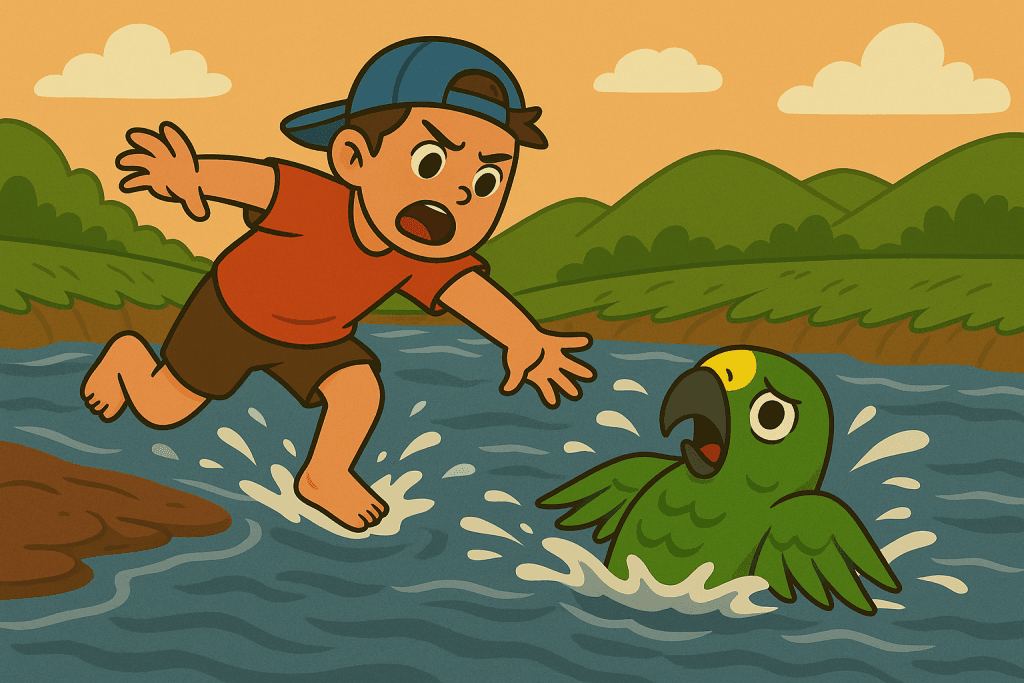
The parrot fell into the Magdalena river…
My brother rescued him by swimming out, and the parrot was injured. Out of the love I have for animals, I begged my parents to let us keep him so we could nurse him back to health.
We brought him home without knowing everything that would follow. We named him Stiven, but every time we called him that, he got annoyed and answered:
—No… Yoe.
From that moment on, we called him Yoe.
The first days
At just 12 years old, I looked after him constantly. I kept in mind the belief my parents used to say:
"When a parrot dislikes you, it will damage your things or do everything it can to show it."
I didn't want that, so I was the one who cared for him most. Over time we built a bond of love. I'd come home from school and bathe him. Every day I looked up healthy recipes for parrots… I started researching everything about his care.
His cage — 1 m × 1 m — was only for sleeping. During the day he roamed freely; he even climbed into the pots because he loved rice, though I wouldn't let him. Yoe was in great shape: every morning he flew to my room and said:
—Hello, my love.
I grew as fond of him as I could be of anyone.
The problems
Everything was going well, until Yoe started "attacking" my mom. We lived in an apartment: the kitchen right next to the balcony… Yoe would fly over and bite her. We decided to lock him up every time she came home from work.
The years went by. In 2021, already in tenth grade, I started asking myself what to study. Animals had always drawn me; having Yoe for more than eight years taught me that they are worth learning about and valuing. I discovered that Biology brought together everything I wanted.
Dilemma and decision
Yoe stayed locked up during the holidays whenever my mom was home; it hurt to see him like that. Researching through the Secretaría Distrital del Ambiente, I learned they offered stability, care, and medical assessment. From July 2021 I turned it over in my mind: I questioned what was right… love wouldn't let me picture my afternoons without his calls.
The process took two years to accept. I got a scholarship for Biology: my goal was to take part in his rehabilitation. But once I started university, I had less time; my family wasn't caring for him well. I cried seeing him locked up.
On 8 June 2024 I called the agency. They scheduled a pickup for Yoe. Thursday, 7:30 AM, they arrived with a van and a cage. I hugged him trying not to cry, but Yoe gripped me with his foot… he didn't want to leave. I signed the permits; they gave him a medical assessment (we had never clipped his wings).
Emptiness and news
The following days I didn't hear his calls at 6 AM; the emptiness set in. I filed an inquiry: they replied that he was a very active parrot, living peacefully with others. I felt relieved… it had been the right thing.
In August 2024 I filed another inquiry. The letter said that on 4 July, Yoe had died.
The news broke me; I asked myself whether any of it had been worth it. I cried… but I understood: animals belong to nature, not to us. I'm at peace: I cared for him like no one else and looked out for his wellbeing.
Without a doubt, he taught me to love my field. For the study… and for him… I will finish.
Analysis and reflections from Fundación Loros
Yoe's death in institutional custody adds an uncomfortable layer to the story: it shows that handing an animal over to the environmental authority does not guarantee a happy ending. Even so, it does not invalidate the principle that wild animals belong in nature — it challenges, rather, the institutions responsible for protecting them.
Yoe's transfer was necessary: the apartment could no longer meet his physical or behavioral needs. But his death reveals gaps — in infrastructure, staffing, or protocols — that must be acknowledged. Every parrot surrendered carries a duty of transparency: full clinical exams, a public record of incidents, enrichment plans, post-release monitoring, and, when a death occurs, an autopsy and report that explain the causes and allow for corrections.
For the caretaker, the news brings grief and questions: was it worth it? The ethical answer remains yes. Choosing assisted release was consistent with the well-being of the species, not with human comfort. Personal pain now becomes a driver of change: demanding higher standards, supporting centers that meet them, and, above all, discouraging others from keeping wild birds in captivity.
The final lesson is twofold: to love is to let fly, and to let fly also means holding the institutions entrusted with that flight accountable to the life they receive.