By Alejandro Rigatuso, Fundador y Director de Fundación Loros
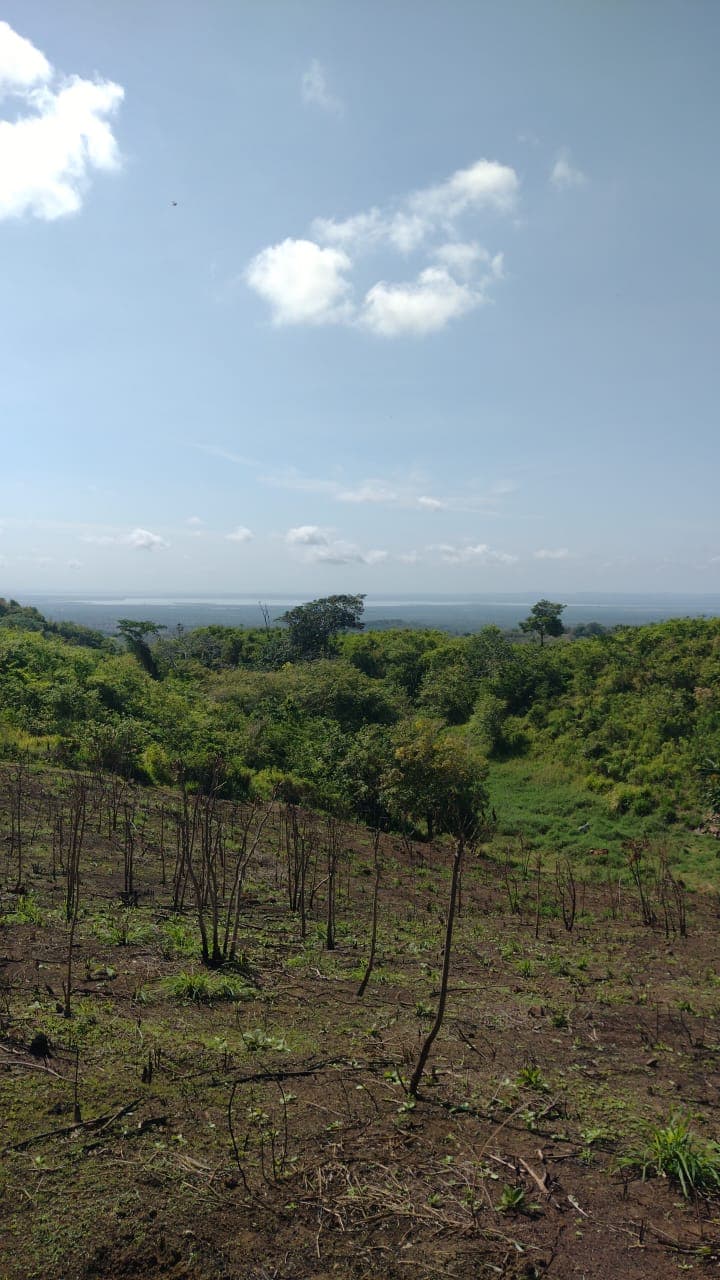
José Marín had been walking the hillside for a while when he found the spot. He wasn't looking for it — it came to him, the way good places tend to do. From that summit at coordinates 10.4281°N, 75.2449°W, the entire sanctuary stretches out below: the dense forest with the Fundación's facilities half-hidden among the vegetation, the release cages peeking through the canopy, and beyond them, still and silver beneath the April sky, the ciénagas.
In the foreground, an open stretch — bare ground, sparse shrubs, the scar of what the forest once was — stands in sharp contrast to the wall of green that begins just meters below. But what José noticed that Wednesday wasn't the wound. It was the breeze, and the view. From up there, you can see at once the place where the animals wait and the place where they're bound: the cages and the wetlands sharing the same horizon, as if the entire journey could fit inside a single glance.
The spot was logged in the sanctuary's field journal as one of the most valuable vantage points in the area. José continued his expedition.
About the author
Alejandro Rigatuso · Fundador y Director de Fundación Loros
Alejandro Rigatuso arrived at Fundación Loros after years as Vice President of Growth Marketing at Toptal, bringing with him an unconventional perspective: he knows an animal is well by its eyes, "bright, wide open." Lorenzo, the first parrot released, recaptured several times and always set free to fly again, marked him forever. At dusk, around five-thirty, you'll find him at the Mirador de las Ciénagas or wandering around Cerro El Peligro, envisioning observation towers and hundreds of native parrots soaring over a reserve that an entire community calls their own.