The nursery that gives the forest back
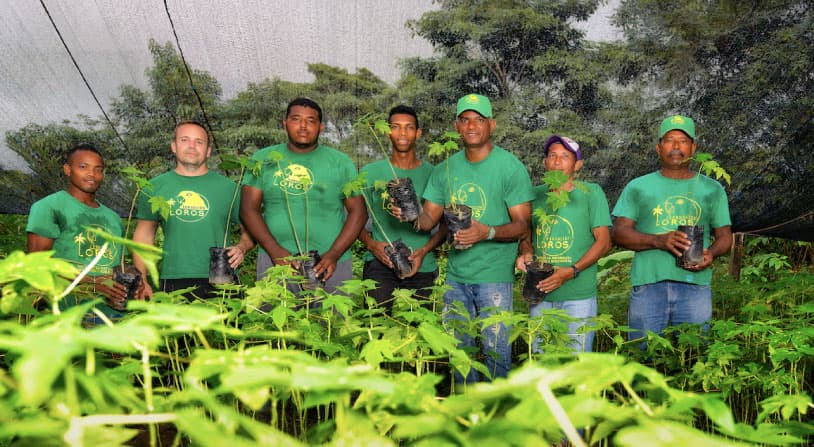
We propagate native species of the tropical dry forest so the parrots, parakeets, and macaws we release find food, shelter, and places to nest.
Tropical dry forest
An animal can only be free again if the forest it returns to still has food and nesting sites.
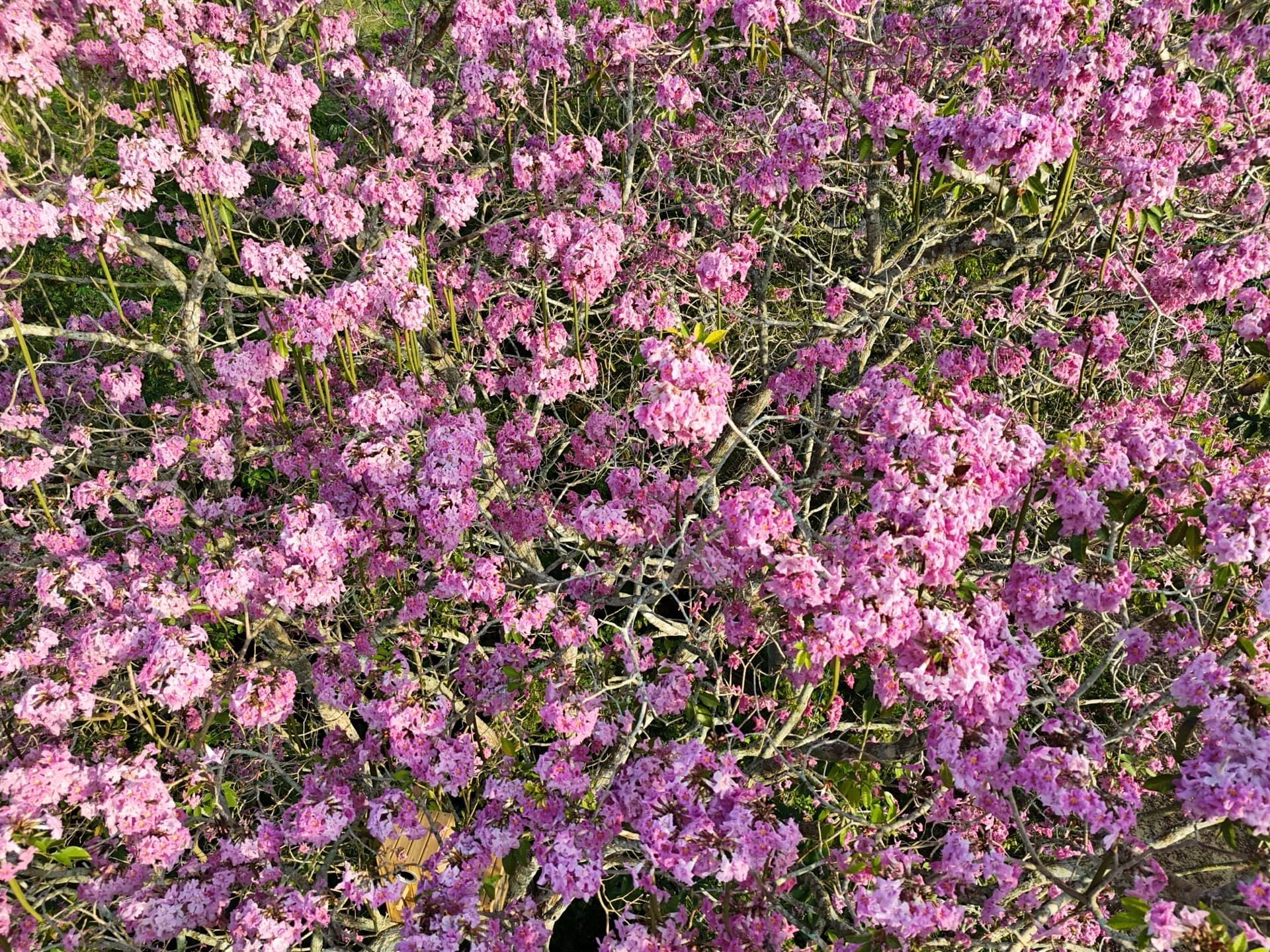
Tropical dry forest is one of the most threatened ecosystems on the planet: very little remains in Colombia, and what survives is fragmented into isolated patches. Restoring it is not landscaping: it is the condition that allows the parrots, parakeets, and macaws we rehabilitate to find fruit, seeds, cavities, and tall trees when we release them.\n\nThe seeds we plant come from the forest itself. Every seedling that leaves the Nursery returns to the ground as future food and shelter.
Why we plant
Three reasons behind every tree
Food and shelter for the released wildlife
We prioritize trees that produce fruit, seeds, and flowers year-round, and tall species with cavities where parrots and macaws can perch and nest.The most threatened ecosystem
We restore degraded areas with native species from the tropical dry forest, recovering soil and cover where only scrubland was left.Landscape connectivity
We conserve Cerro El Peligro as a core refuge and restore the riparian buffers — 30 meters on each side of the streams — to reconnect forest patches so wildlife can move through.
From the forest, for the forest
Priority species for tree planting
We plant with parrots and macaws in mind: trees that give them shelter — tall, mature specimens for perching, roosting, and nesting in cavities — and food — fruits, seeds, flowers, and pods throughout the year. These are the native tropical dry forest species we plant first.
| Common name | Scientific name | Value to wildlife |
|---|---|---|
| Caracolí | Anacardium excelsum | Emergent tree: perch and shelter |
| Ceiba | Ceiba pentandra | Nesting and shelter in the canopy |
| Ceiba de leche | Hura crepitans | Cavities for nesting |
| Macondo | Cavanillesia platanifolia | Giant tree: nesting cavities for macaws and parrots |
| Guacamayo | Albizia niopoides | Tall tree: perch and nesting cavities |
| Palma de vino | Attalea butyracea | Fruits and nesting sites |
| Búcaro | Erythrina fusca | Flowers: nectar and food |
| Guamo | Inga sp. | Edible pods and shade |
| Hobo | Spondias mombin | Abundant fruits |
| Camajón | Sterculia apetala | Fat-rich seeds |
| Guarumo | Cecropia peltata | Fruits; fast-growing pioneer |
| Olla de mono | Lecythis minor | Seeds, wildlife food source |
| Higuerón | Ficus insipida | Figs year-round |
| Copey | Ficus maxima | Figs: key food source |
| Uvito | Cordia alba | Sweet fruits |
| Indio desnudo | Bursera simaruba | Shelter; fast-rooting living fence |
| Muñeco | Cordia bicolor | Fruits for birds |
We also propagate
Fruit trees and nectar plants that supplement the diet of both wildlife and the local community: cashew, soursop, sugar apple, star apple, sapodilla, mango, mamoncillo, guava, tamarind, cañafístula, cedar, algarrobo, orejero, guácimo, guáimaro, corozo, yellow oak, polvillo, sapote, mamey, ciruela criolla, cañaguate, palmito, sauco (Cordia dentata), Magdalena calliandra (Calliandra magdalenae), rain tree (Samanea saman), and strawberry tree (Muntingia calabura), among others.
Want to go deeper? Read about the best trees for parrots and macaws in northern Bolívar.
The Nursery is authorized by the ICA to produce 185 timber, fruit, and ornamental species.
The six keystone trees
Six trees concentrate almost all the wildlife we protect. Planting them — or caring for the mature ones still standing — is the decision with the highest fauna return per individual planted.
- Yellow mombin (Spondias mombin) — transversal food for 17 species; its gum sustains the cotton-top tamarin through the dry season.
- Wine palm (Attalea butyracea) — the only one with proven double function: macaws nest in its standing dead trunks, and six species feed on it. Preserving the dead-standing palms is as important as planting new ones.
- Kapok (Ceiba pentandra) — cavities for macaws and owls; structural emergent.
- Sandbox tree (Hura crepitans) — cavities for macaws and owls.
- Wild cashew (Anacardium excelsum) — food for macaws and toucans; habitat for the tamandua.
- Trumpet tree (Cecropia peltata) — food for sloth, iguana, chachalaca, Forpus parrotlet; fast-growing (early succession).
Useful cavities take decades or centuries to form. Preserving the mature trees still standing is essential while the new planting matures.
Who we plant for
Explore trees and wildlife
Pick a fauna species to see which trees to plant for it, or flip the mode to see which wildlife depends on a tree. Every relationship is backed by at least two independent research efforts.
Scarlet macaw
Ara macao
Plant for this species (6)
- Nesting●●●P1
Kapok tree (Ceiba pentandra)
Cavity in emergent tree
- Nesting●●●P1
Sandbox tree (Hura crepitans)
Cavity
- Food●●●P1
Kapok tree (Ceiba pentandra)
Seeds and flowers
- Food●●●P1
Sandbox tree (Hura crepitans)
Seeds
- Food●●●P1
Wild cashew (Anacardium excelsum)
Fruits and seeds
- Food●●P1
Panama tree (Sterculia apetala)
Oil-rich seeds
Cross-referenced from three independent research efforts (Claude · Perplexity · ChatGPT). Only relationships agreed on by ≥ 2 sources are included, restricted to the approved tropical dry forest catalogue of Los Loros.
Plant a tree when you visit us
A registered nursery
The Vivero Fundación Loro is registered with the Instituto Colombiano Agropecuario (ICA) under Resolution 00001884 of March 3, 2023, registration 13-001-51, NIT 901597480-2, as a producer and distributor of propagation plant material for timber, fruit, and ornamental species.
The Nursery also finances the forest
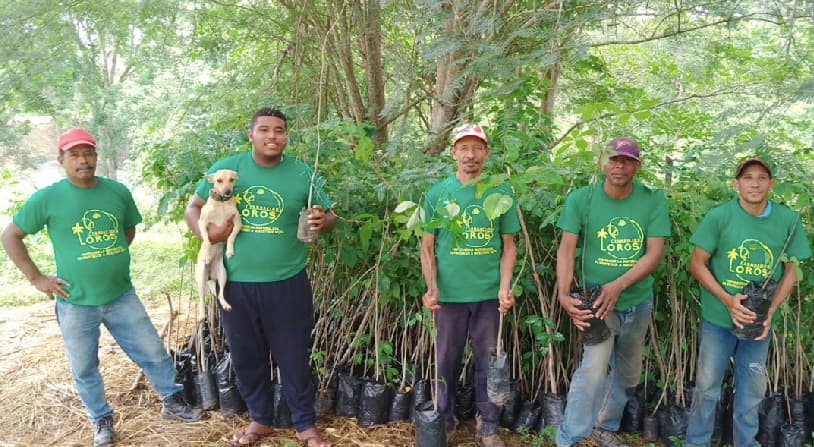
We sell plants to third parties and all revenue is reinvested in the Foundation's mission: restoring the tropical dry forest. Buying our seedlings is planting forest — even if not on our land.
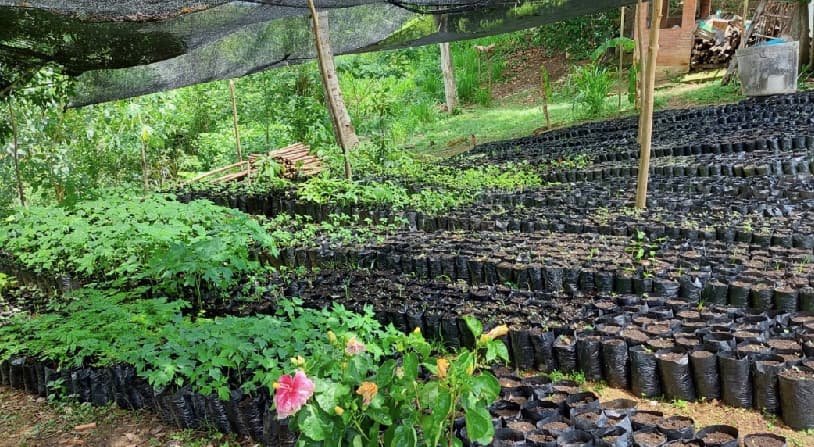
The Nursery
This is what it looks like inside
Reserve pulse
The forest we plant, live

2 months ago
Bryam David, the Visitor Who Brought Art
3 months ago
The Hill Turned Green Again

3 months ago
Un coendu decaído al pie de la ceiba

3 months ago
El armadillo que volvió del pueblo
3 months ago
Alberto Marked the Spot Where the Forest Will Grow

4 months ago
Twenty Macaws and a Crate of Mangoes

4 months ago
Seven Years of Canopy and Number 15 Is Finally Free

4 months ago
Parrot 33 and the Mist of Cerro el Peligro
2 months ago
Bryam David, the Visitor Who Brought Art
3 months ago
The Hill Turned Green Again
3 months ago
Un coendu decaído al pie de la ceiba
3 months ago
El armadillo que volvió del pueblo
3 months ago
Alberto Marked the Spot Where the Forest Will Grow
4 months ago
Twenty Macaws and a Crate of Mangoes
4 months ago
Seven Years of Canopy and Number 15 Is Finally Free
4 months ago
Parrot 33 and the Mist of Cerro el Peligro