Protected wildlife of Los Loros Reserve
Tropical dry forest · Villanueva, Bolívar
The territory
Who lives in the reserve
Across the 500 hectares of Los Loros — Regenerative Territory live parrots, primates, mammals, reptiles, and birds under the permanent care of the Foundation, the Colombian Navy, the local farmers, and the volunteers and tourists who look after the reserve.
The tropical dry forest is one of the most threatened ecosystems in Colombia — only fragments remain of what once covered the entire Caribbean coast. What follows is a first editorial inventory of the fauna that still finds refuge here.
Parrots
Parrots and macaws
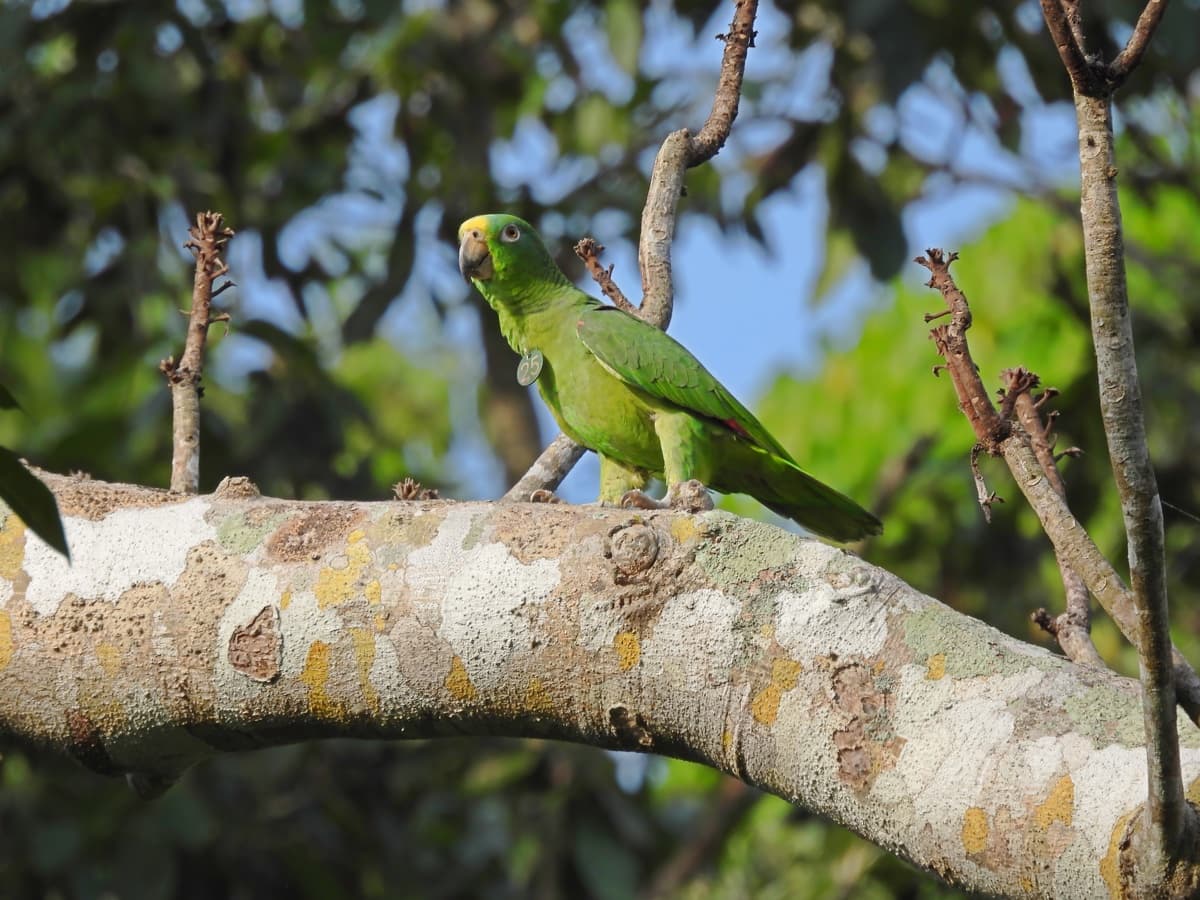
Amazona ochrocephala · Flagship species
Loro frentiamarillo
Our flagship species. A large green parrot with yellow forehead and crown and a red wing patch. The most-trafficked parrot in Colombia, and the reason Fundación Loros was founded: to give a second chance to individuals rescued from captivity and return breeding flocks to the tropical dry forest.
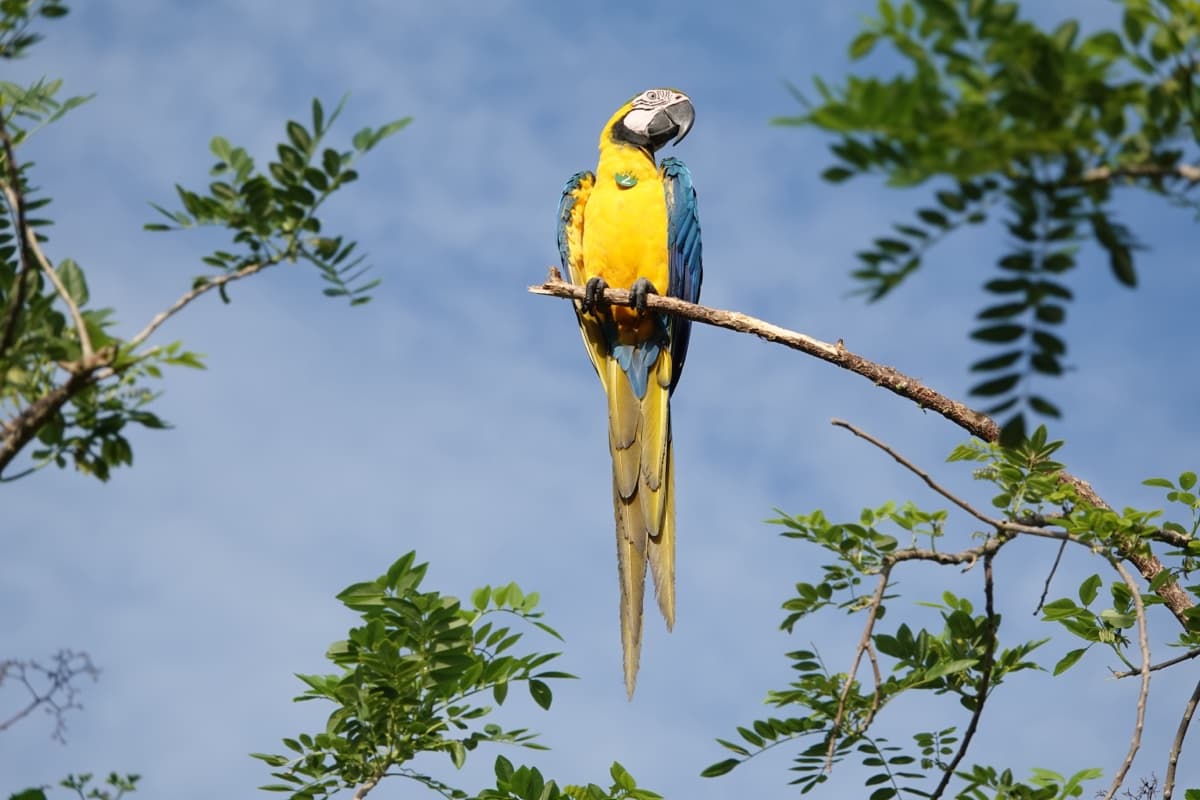
Ara ararauna
Guacamayo azul y amarillo
One of the most recognizable macaws in the tropics: deep blue back, yellow chest, and a white facial mask with black lines. They form stable pairs that fly together above the forest. Their diet centers on seeds, fruits, and palm nuts. In Colombia, populations have been pressed by the illegal pet trade.
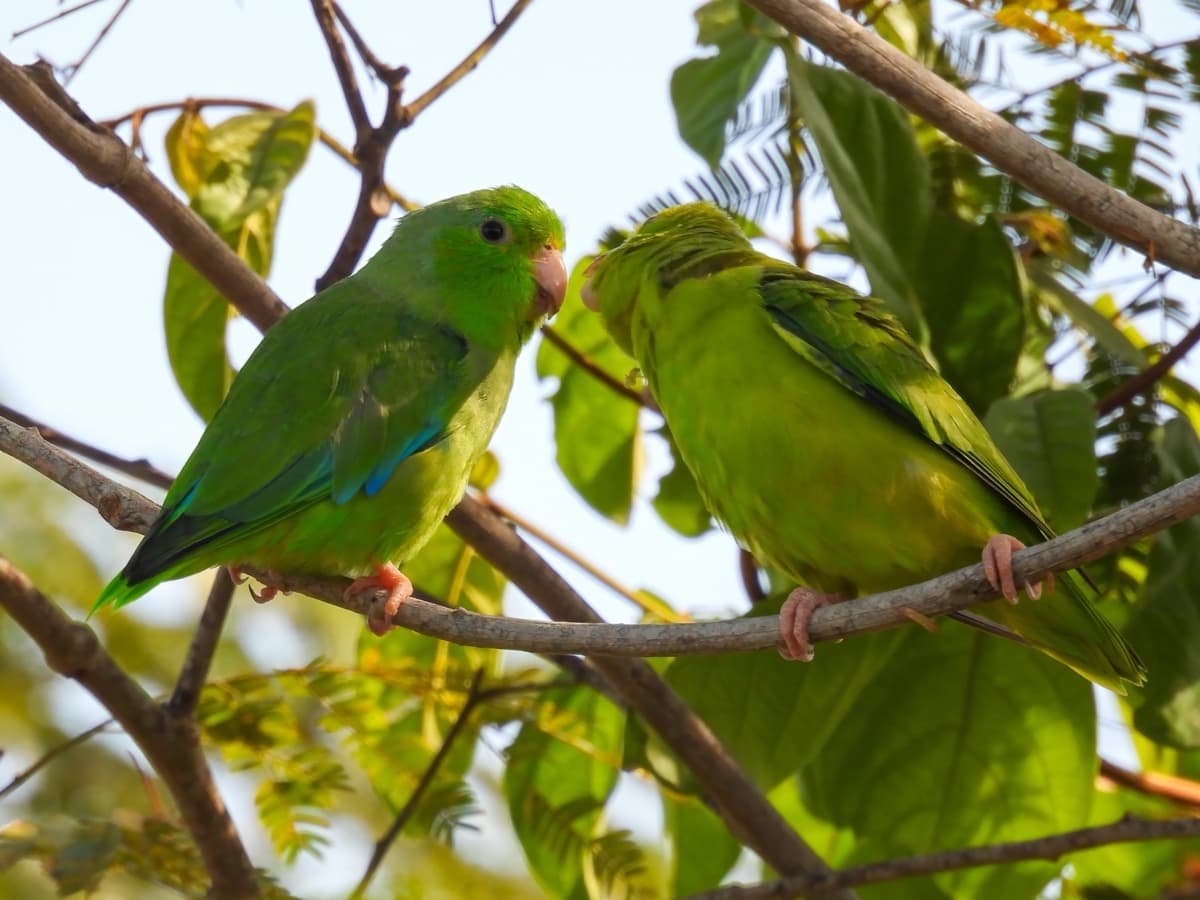
Forpus spengeli
Cotorrita aliturquesa
The smallest of Colombia's parrots — barely 12 cm. Bright green with a turquoise touch on the wings. Endemic to northern Colombia, it lives in small flocks in dry forests and open areas. Its size makes it a frequent target of the illegal trade; in the reserve we see them in flocks over the yarumo trees.
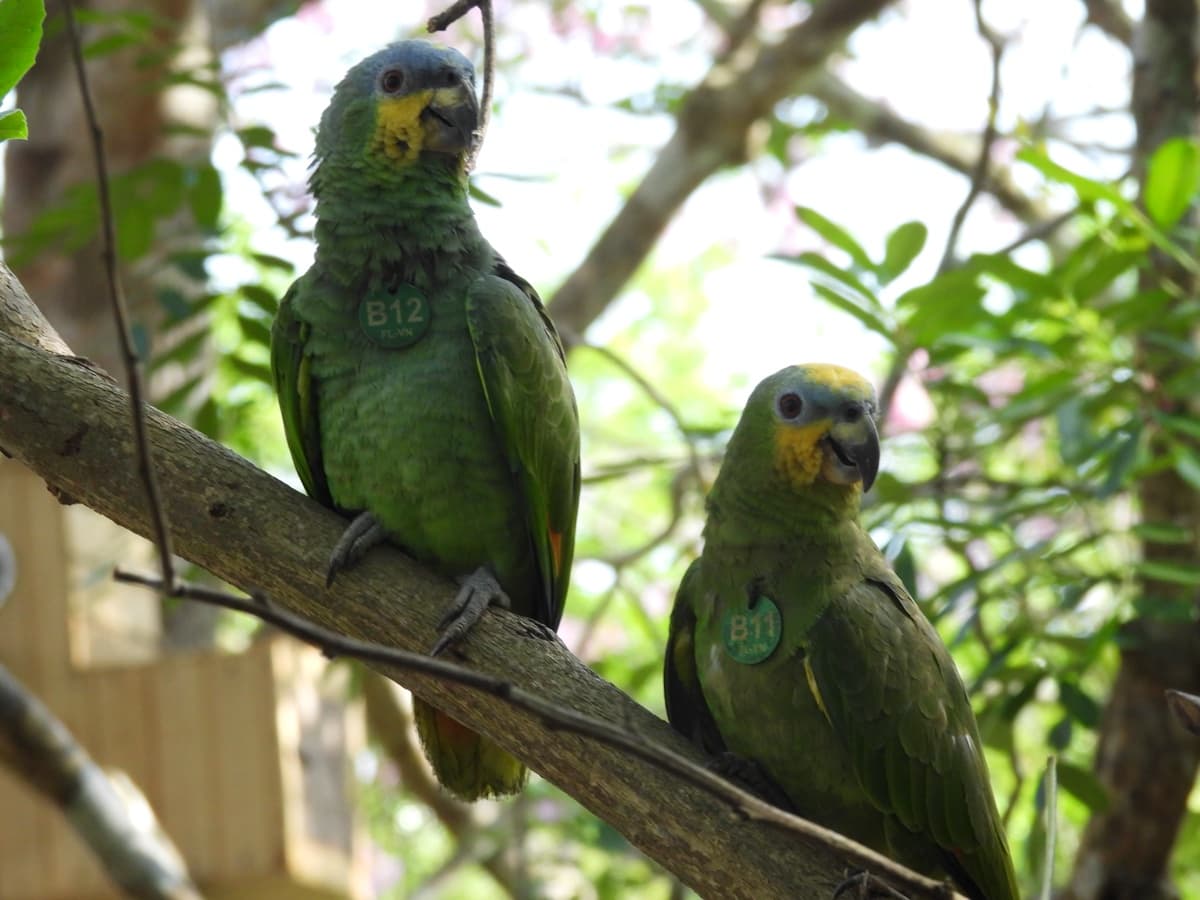
Amazona amazonica
Lora frentiazul
A common amazon of northern South America: green body, blue forehead, yellow cheeks and throat, and an orange wing patch that gives the species its name. Lives in pairs and noisy flocks in lowland forests. Frugivorous and granivorous. In the reserve, several individuals rescued from the illegal trade share spaces during rehabilitation.
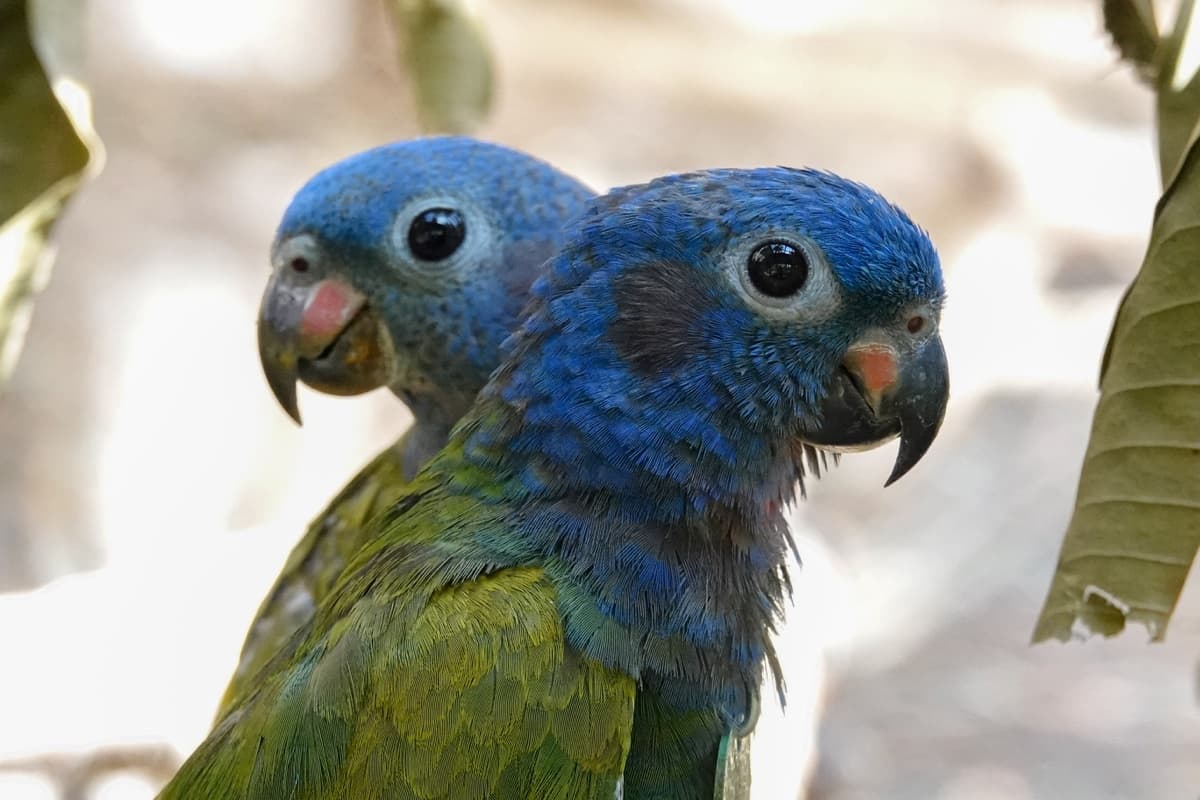
Pionus menstruus
Loro cabeciazul
Mid-sized parrot easily recognized by an entirely cobalt-blue head and chest over a green body, with a reddish bill. It flies in compact flocks at dawn and dusk. Frugivorous and granivorous; favors forest edges and areas with emergent trees. In Colombia it is a frequent target of the illegal trade because it readily learns sounds.
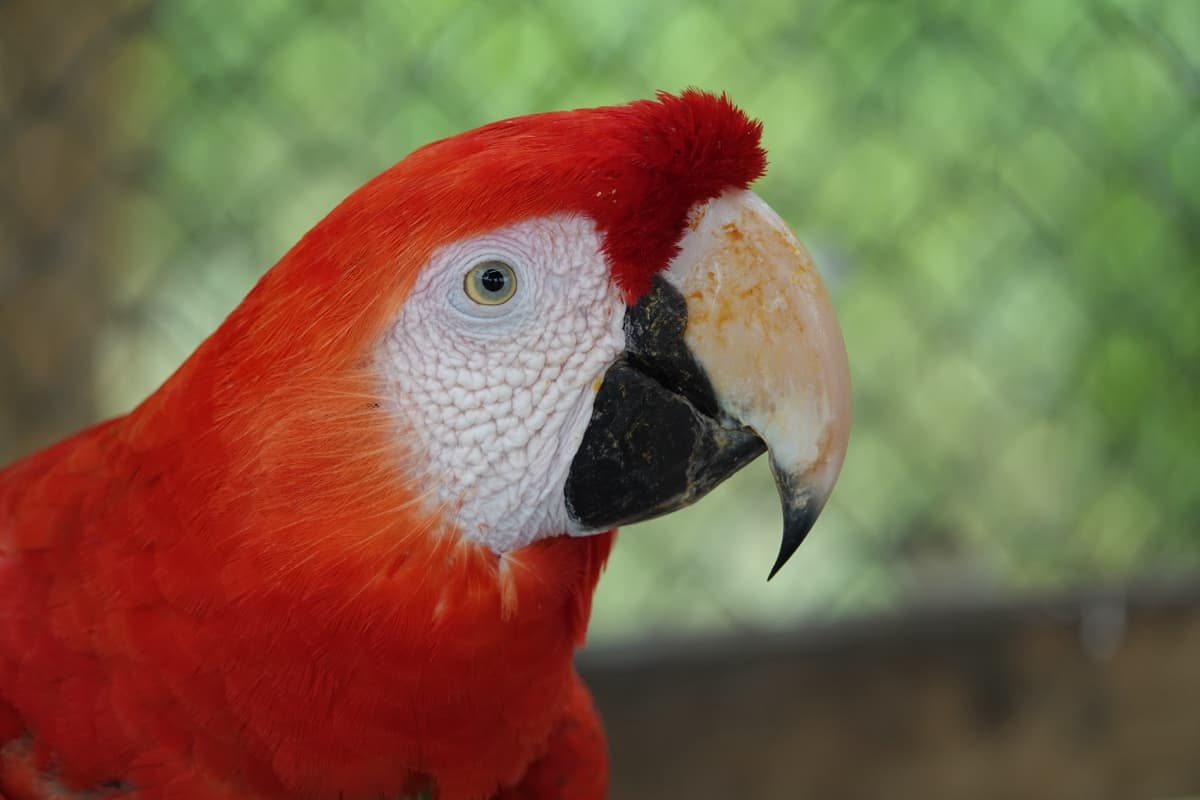
Ara macao
Guacamaya bandera
Known in Colombia as 'guacamaya bandera' because its red, yellow, and blue colors echo the national flag. Bare white facial skin furrowed by red feather lines and a powerful pale bill. They form lifelong pairs. They need huge trees and cavities to nest — their recovery depends on mature, connected forests like the reserve's.
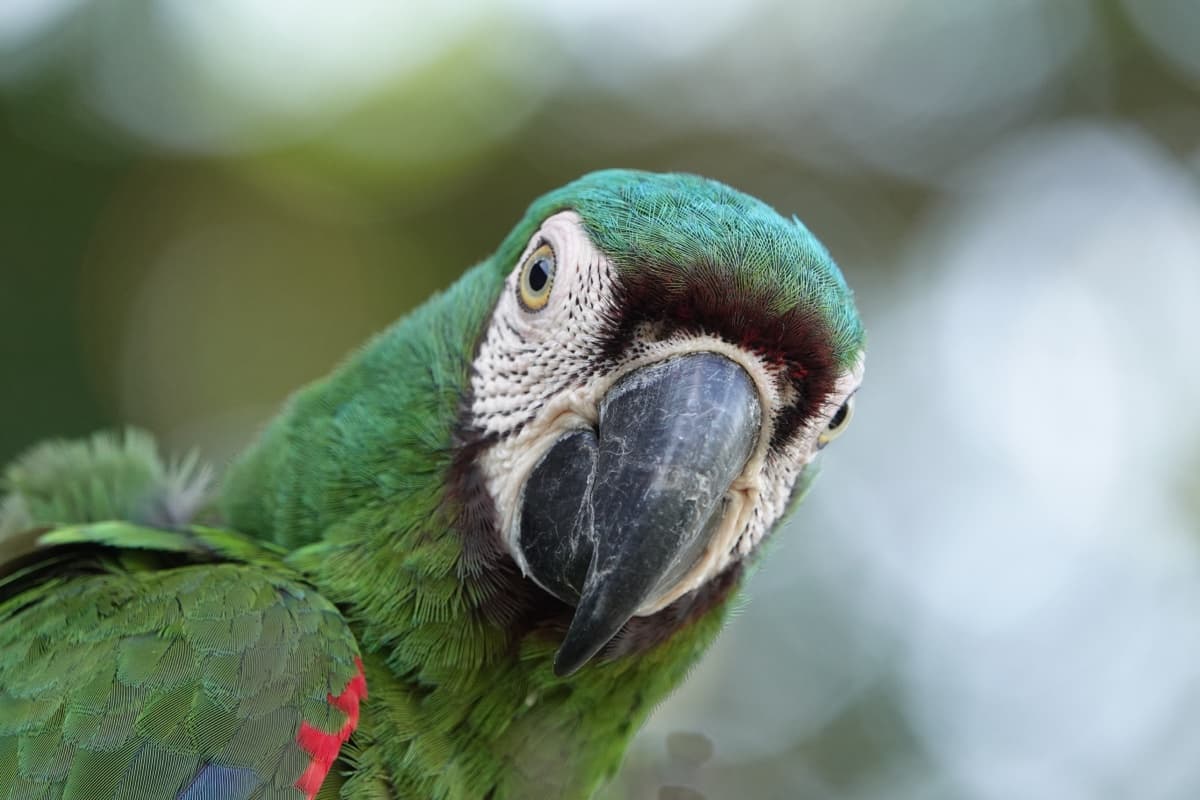
Ara severa
Guacamayo cariseco
A small macaw, mostly green, with chestnut forehead and cheeks and a flash of red beneath the wing. It flies in family flocks and perches in tall trees, where its sharp call announces its arrival. Frugivorous and granivorous. Though its population is stable, in the Caribbean region it is pressed by the illegal capture of chicks.
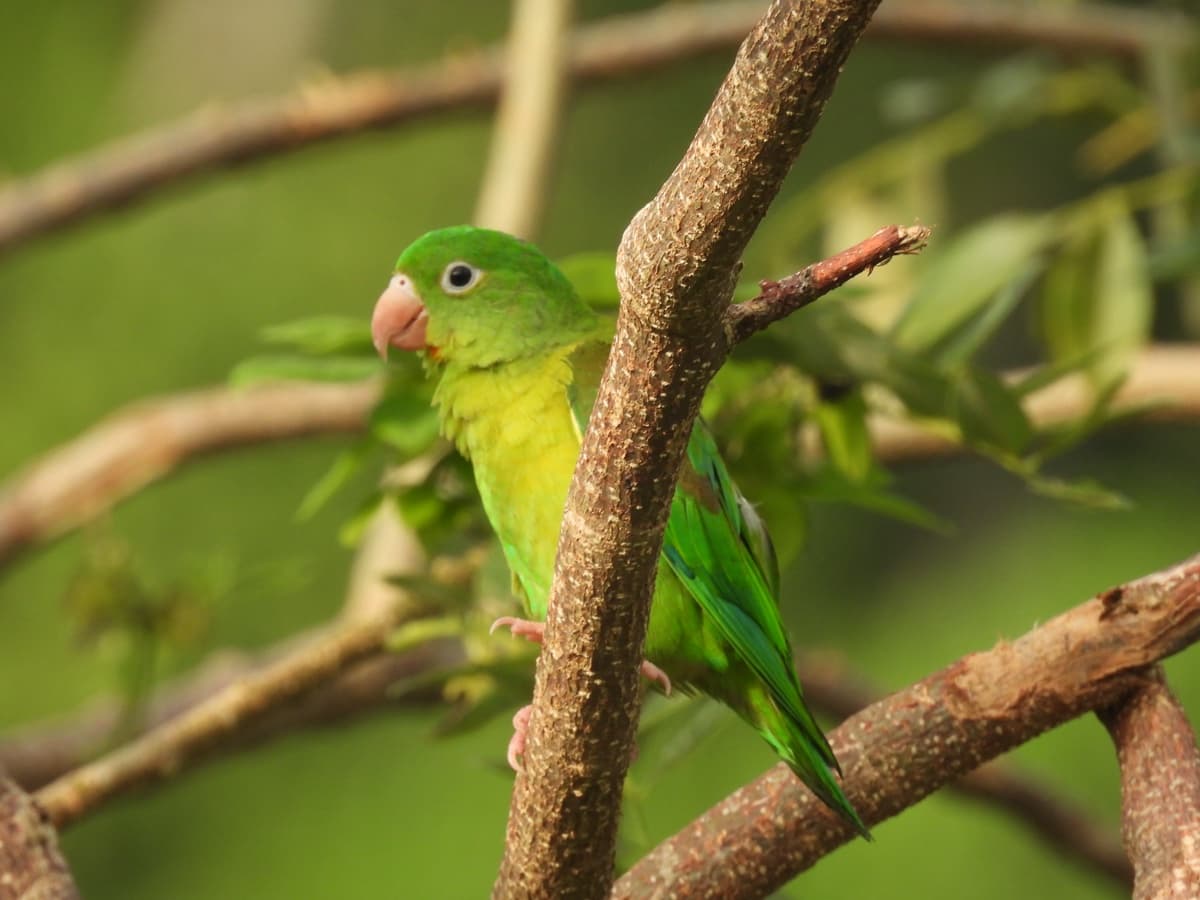
Brotogeris jugularis
Periquito alibronceado
A small, bright-green parakeet with an orange chin patch and a bronze wing patch that gives it its name. Flies in noisy, swift flocks above the dry-forest canopy. Frugivorous and nectarivorous: visits flowering and fruiting trees. One of the most abundant parrot species in the region, though still vulnerable to the illegal trade.
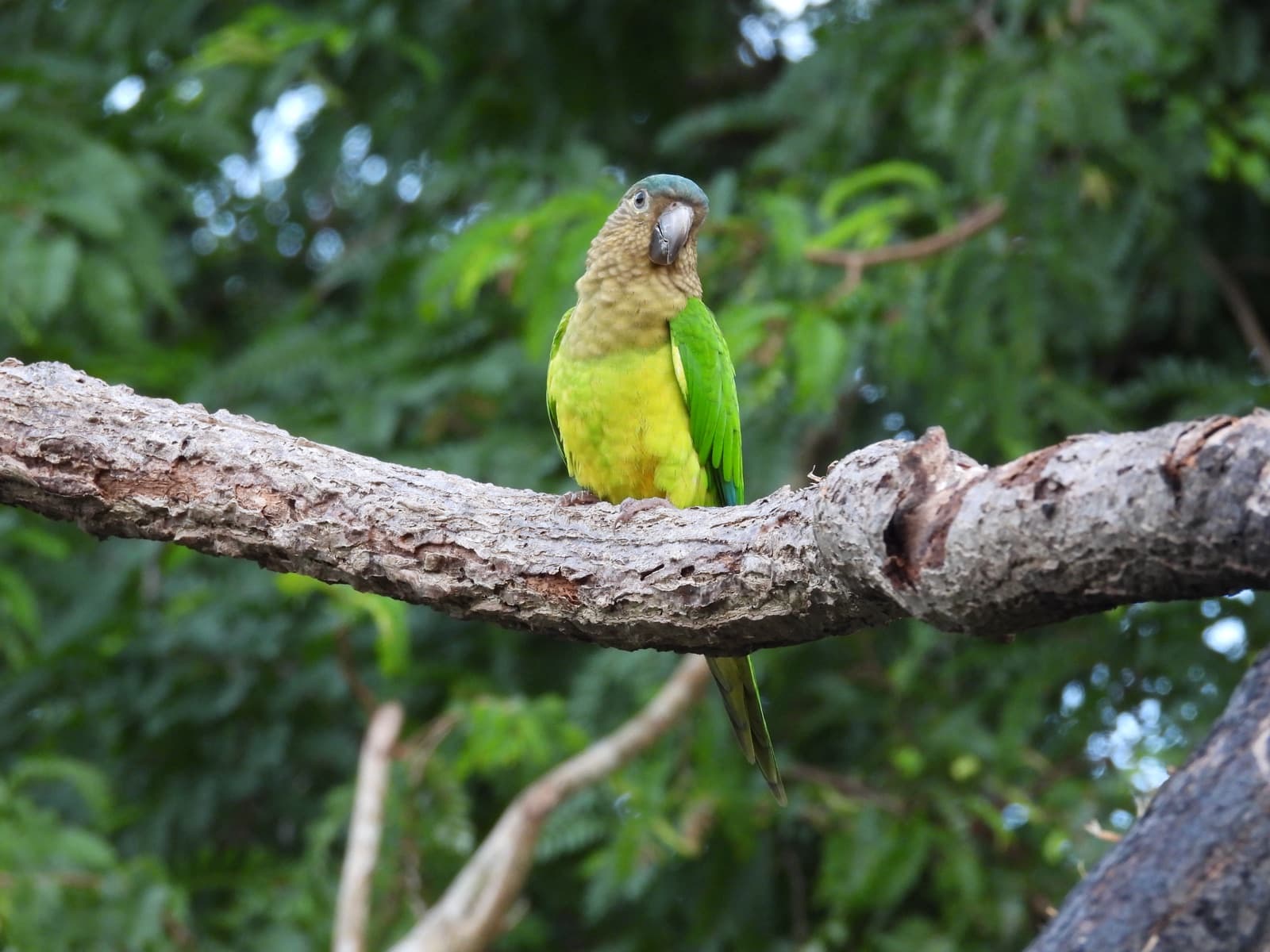
Eupsittula pertinax
Cotorra carasucia
A small, green parakeet with a dusky brown face and throat —the trait behind its Spanish name «carasucia», meaning dirty-face— and a yellowish belly. Native to northern South America and common in the Colombian Caribbean, it lives in noisy, restless flocks and nests in cavities and arboreal termite mounds. Frugivorous and granivorous, it helps disperse dry-forest seeds. Though abundant, it is also taken by the illegal pet trade.
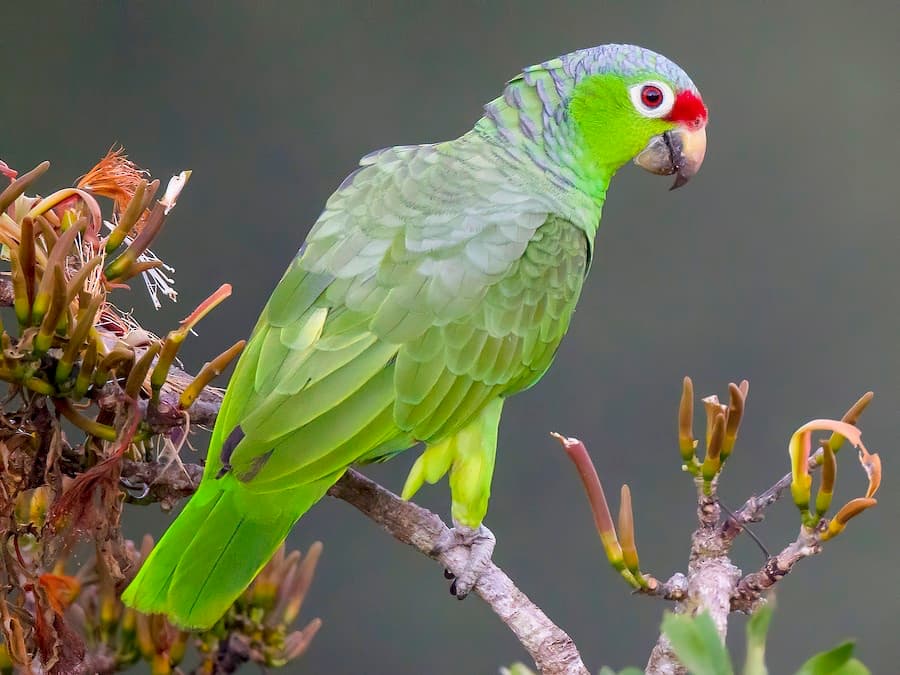
Amazona autumnalis
Lora frentirroja
A green amazon about 32–35 cm long, unmistakable for its red forehead, yellow cheeks, and a bluish wash over the crown, plus the red patch that shows on the wing. It inhabits humid and semi-deciduous forests from Central America to north-western South America, reaching the Caribbean lowlands in Colombia. It flies in pairs and flocks and feeds on fruits, seeds, nuts, and flowers. Like other amazons, it suffers from habitat loss and capture for the illegal trade.
These parrots share the reserve with other individuals rescued from the illegal trade, whom the Foundation rehabilitates for their return to the forest.
Primates
Primates of the Caribbean
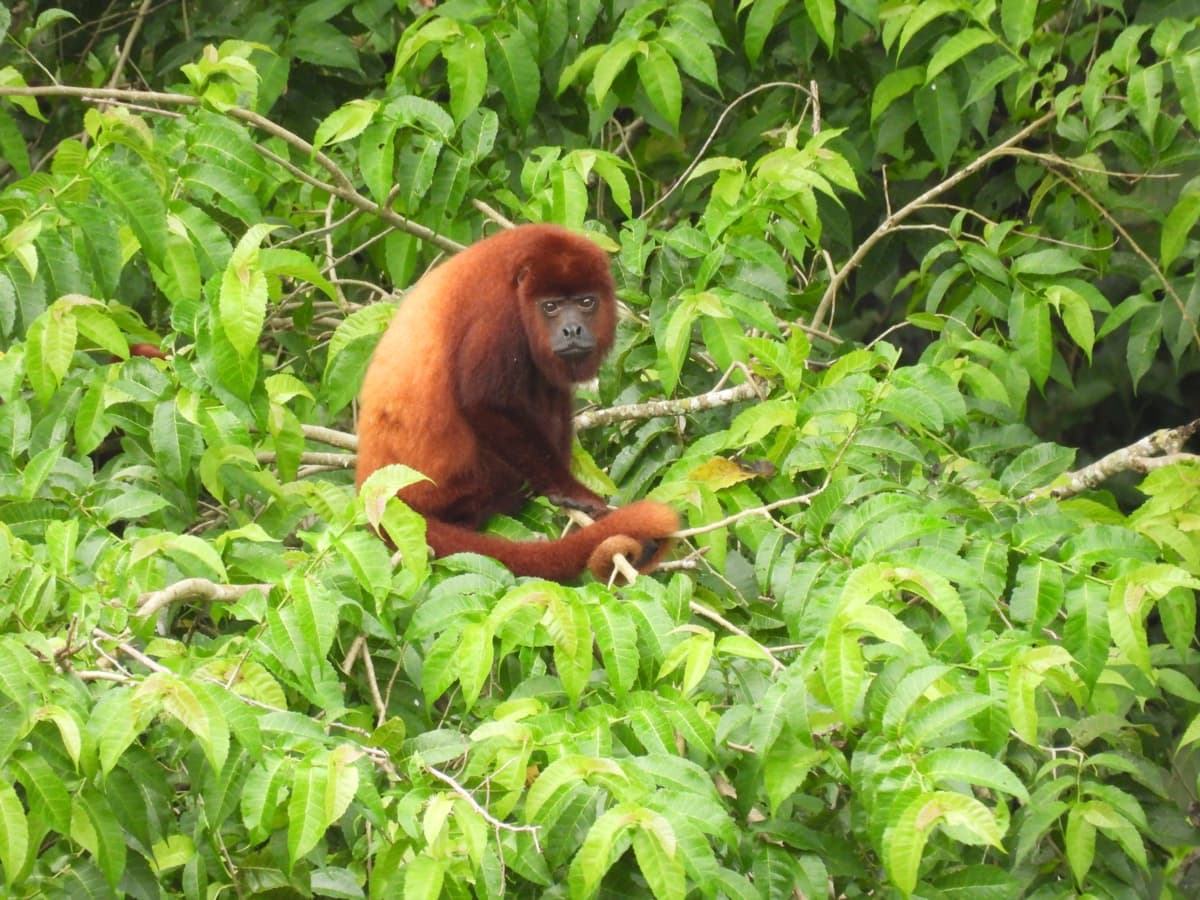
Alouatta seniculus
Mono aullador
Copper-colored coat and the loudest voice in the dry forest: its roar carries for kilometers and marks dawn in the reserve. Lives in family troops led by a male. Strictly arboreal; feeds on leaves, fruits, and flowers. An indicator of healthy forest: where the howler still calls, the canopy remains connected.
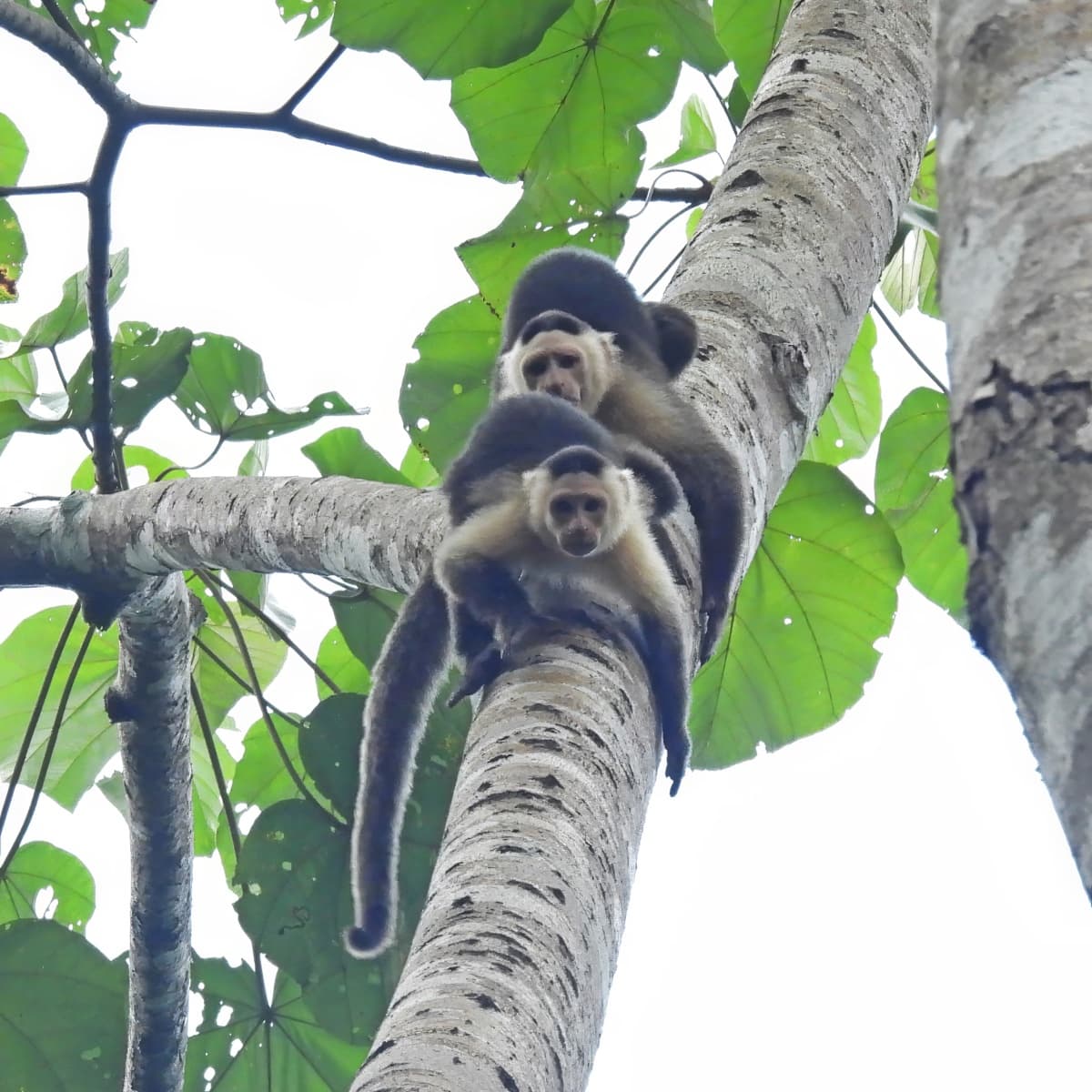
Cebus capucinus
Mono capuchino cariblanco
Small, agile, and curious, with a white face and chest on a black body. Lives in complex social groups; uses tools to open hard fruits. Omnivorous: insects, fruits, leaves, and small vertebrates. Its intelligence makes it especially vulnerable to the pet trade — a capuchin torn from its group rarely manages to rejoin a wild one.
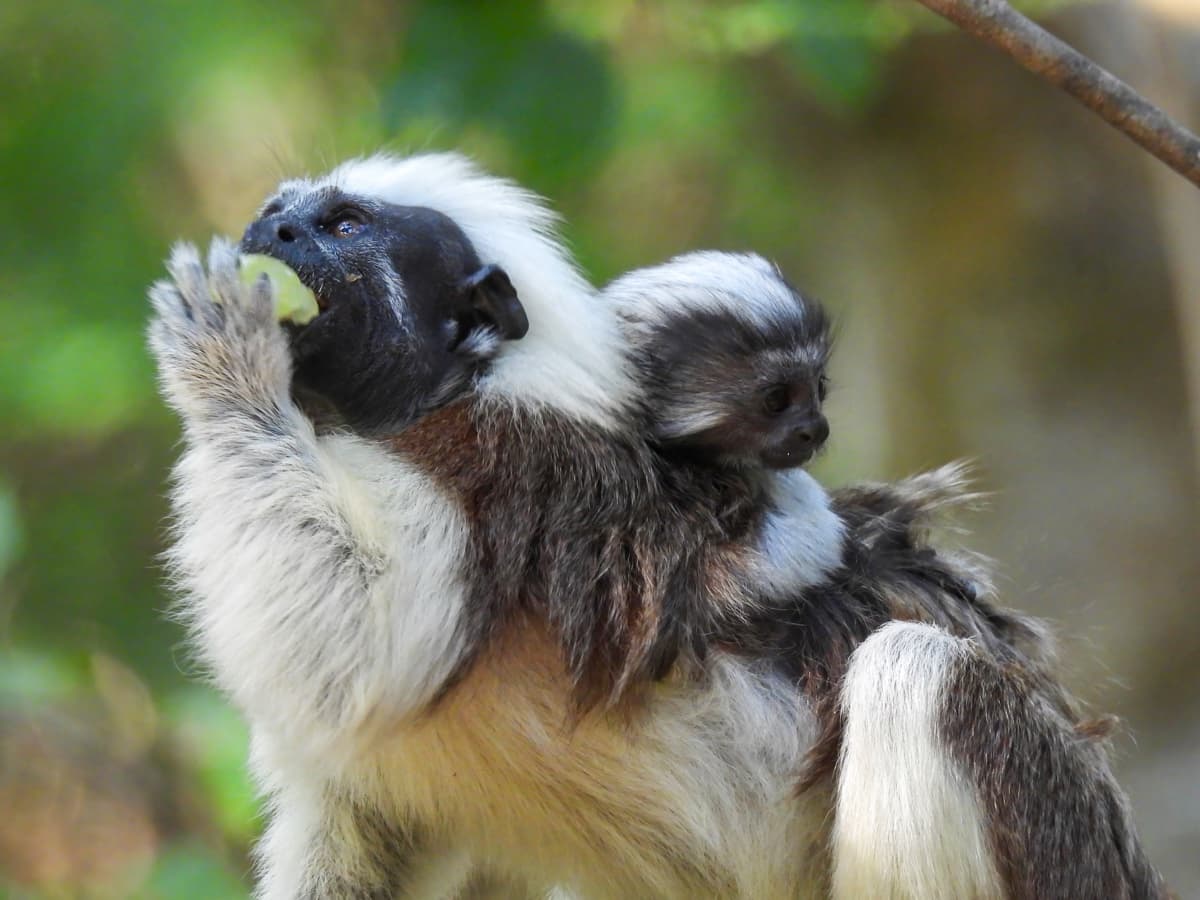
Saguinus oedipus
Tití cabeciblanco
Primate endemic to northern Colombia, identifiable by the crest of white hair on its head. Lives in small family groups; feeds on fruits, nectar, and insects. Listed as critically endangered (IUCN): the illegal trade and the fragmentation of the tropical dry forest threaten its last populations. Its conservation is a national priority.
Mammals
Mammals of the dry forest
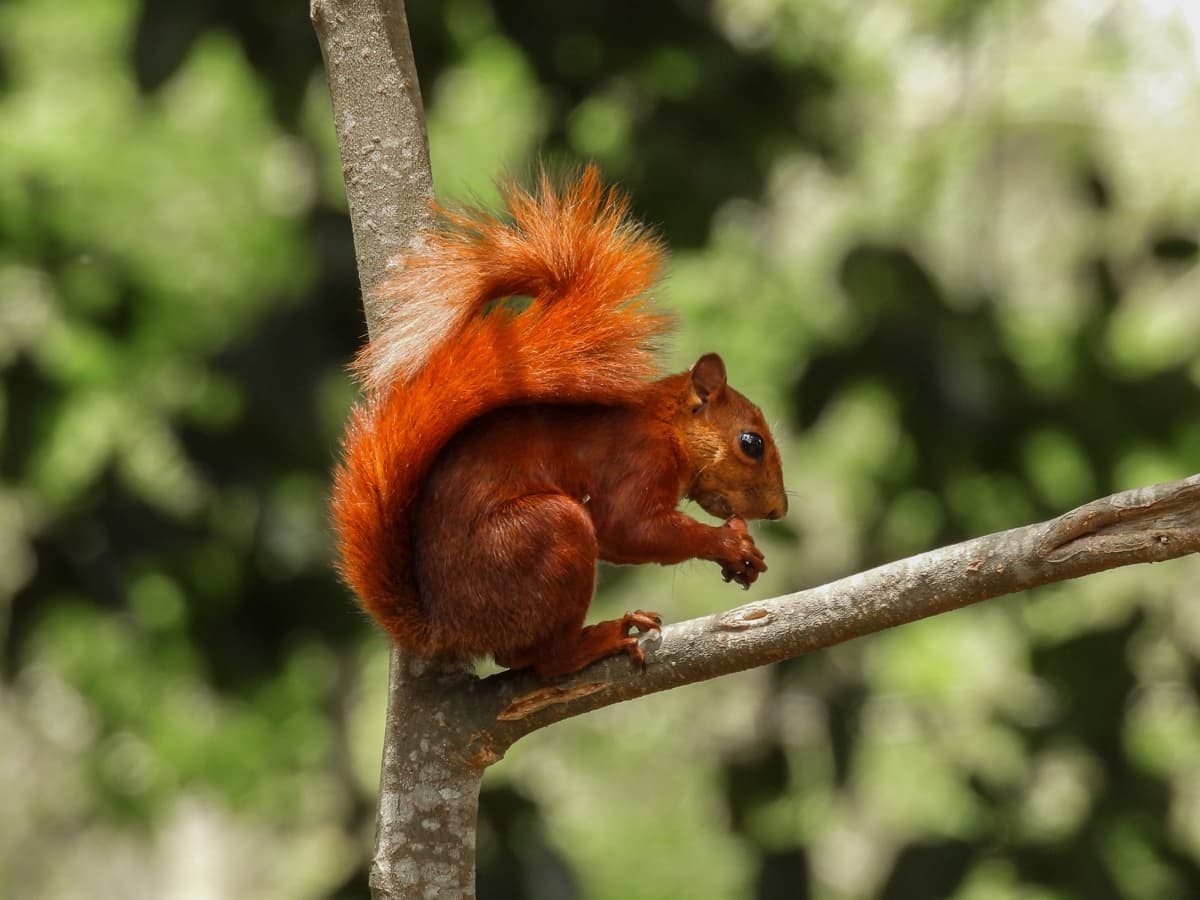
Sciurus granatensis
Ardilla cola roja
Colombia's most common squirrel, with a reddish back and bushy tail used as a rudder when leaping. Diurnal and solitary outside the breeding season. Disperses palm and tree seeds by burying caches it never retrieves — an ecological role key to dry forest regeneration.
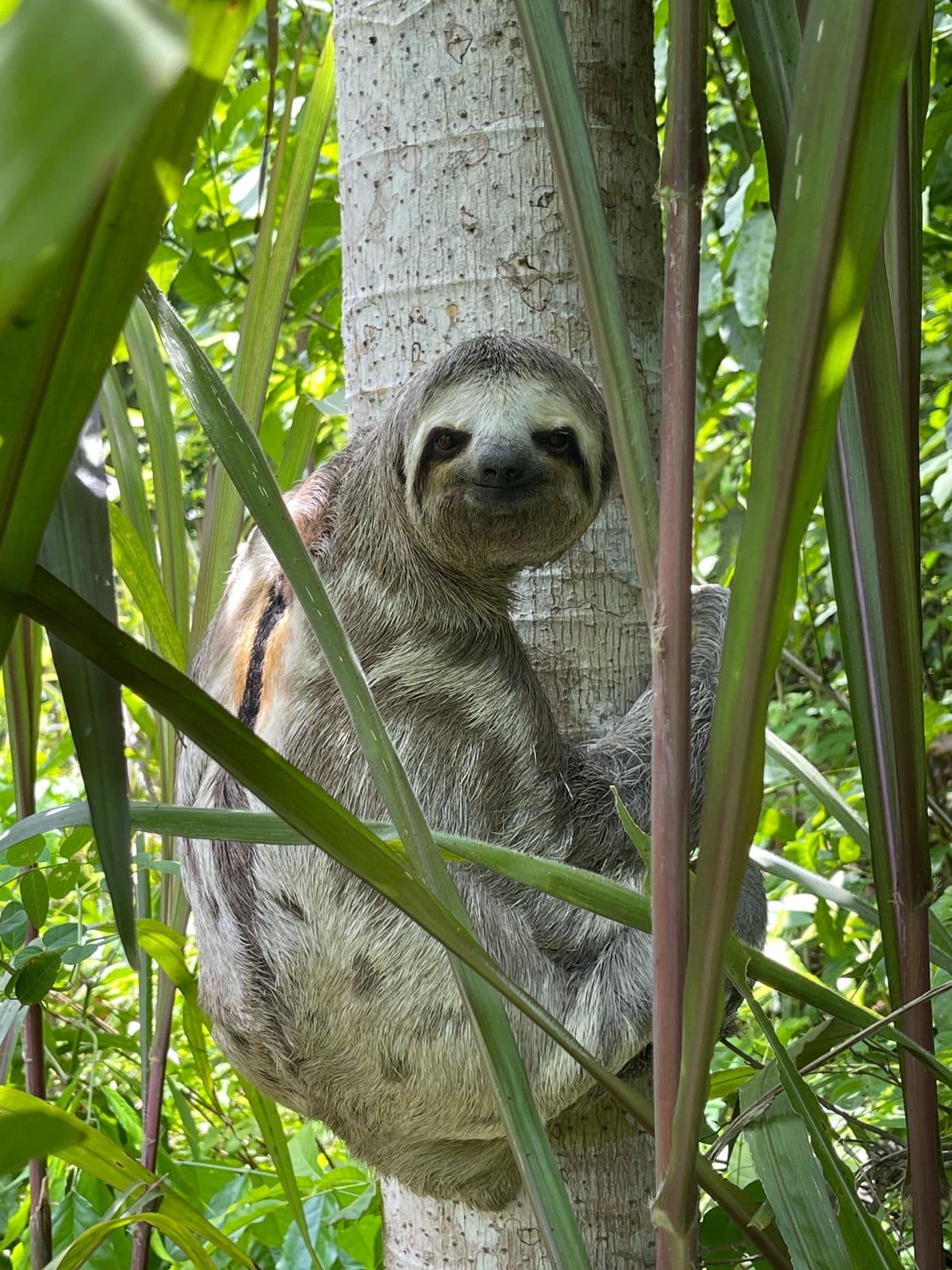
Bradypus variegatus
Perezoso de tres dedos
A slow-moving arboreal mammal, mostly folivorous: yarumo leaves and other canopy species make up much of its diet. Solitary; descends to the ground only about once a week. Its fur hosts algae and moths in a unique symbiotic relationship. In the dry forest it depends on canopy connectivity.
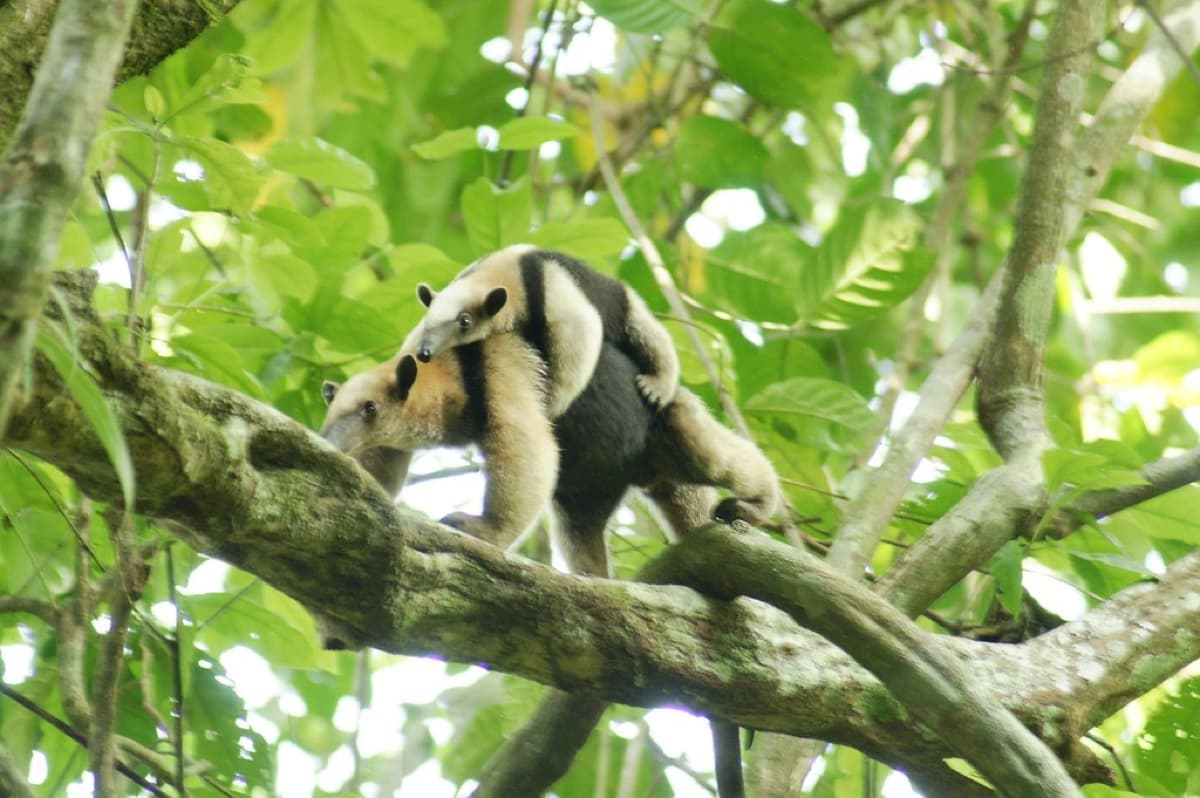
Tamandua mexicana
Tamandúa mexicana
A medium-sized anteater with a golden body, black vest, and a prehensile tail nearly as long as the rest of its body. Moves between the ground and the canopy, opening ant and termite nests with its curved claws. Solitary, mostly nocturnal, and plays a key role controlling social insects in the tropical dry forest.
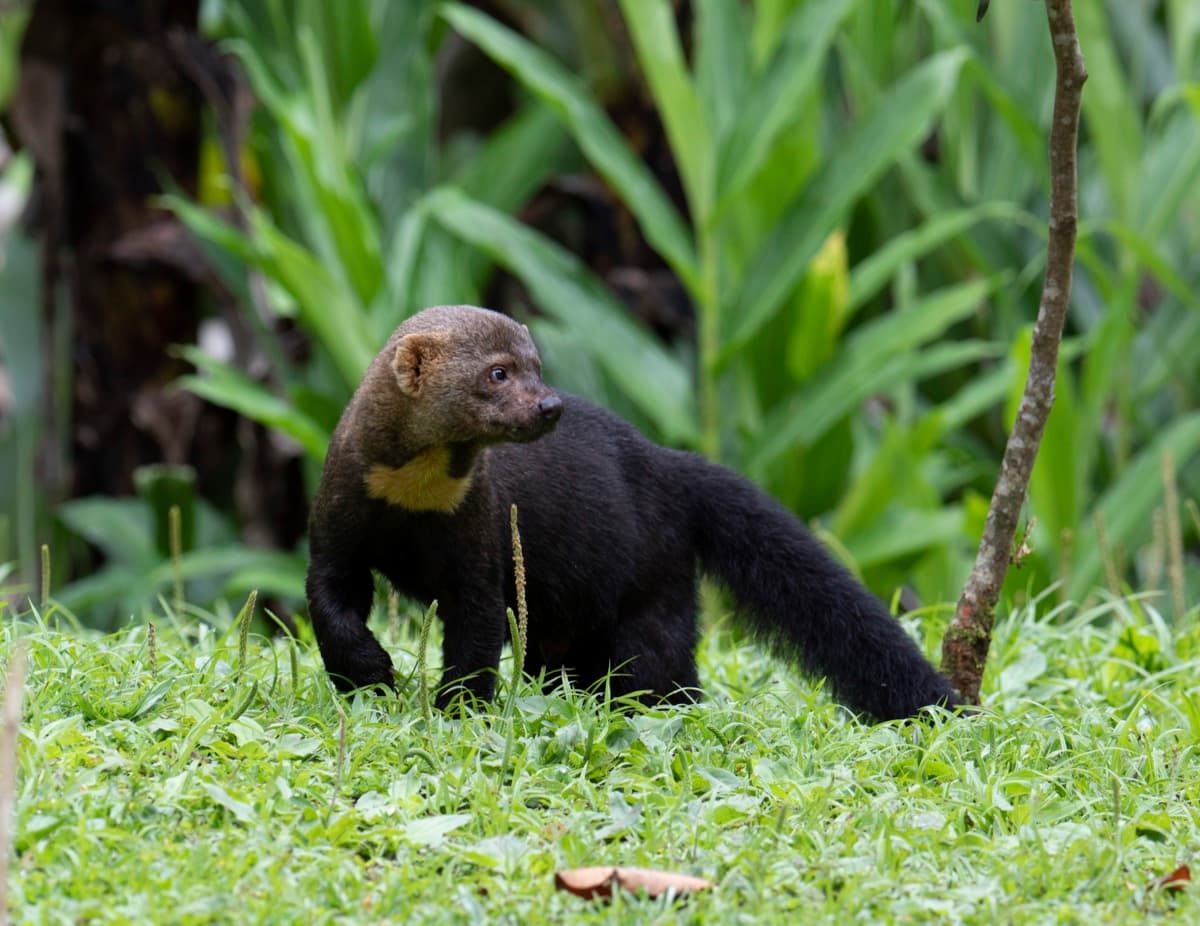
Eira barbara
Tayra
A medium-sized, agile, and curious mustelid: dark brown body with a paler head and neck and, sometimes, a yellowish chest patch. Active by day, it moves on the ground and climbs trees with ease. An opportunistic omnivore: fruits, small mammals, birds, eggs, and insects. Plays a role in trophic regulation and seed dispersal.
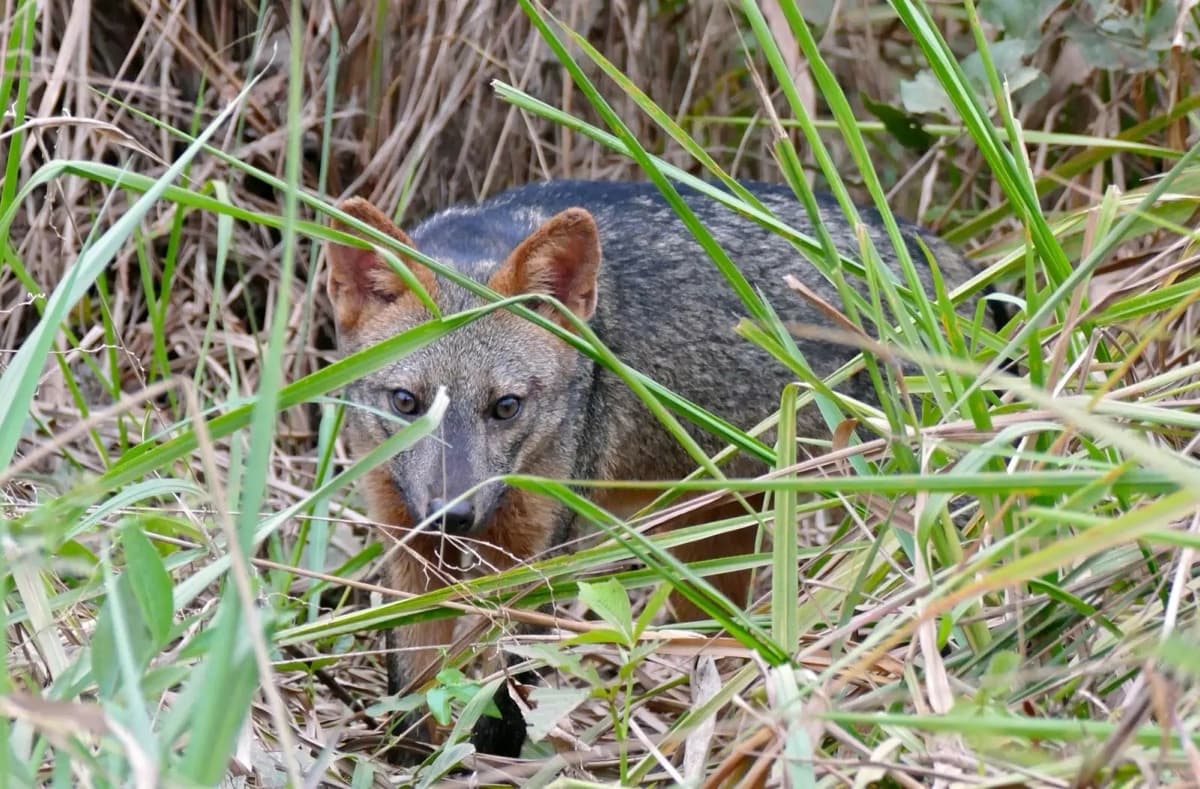
Cerdocyon thous
Zorro perro
A medium-sized South American canid with grayish-brown fur and darker legs and tail tip. Mostly nocturnal and crepuscular; moves in pairs or family groups through dry forests, savannas, and forest edges. An opportunistic omnivore: small mammals, birds, reptiles, insects, fruits, and crabs near water bodies. Plays a role in control and seed dispersal across the landscape.
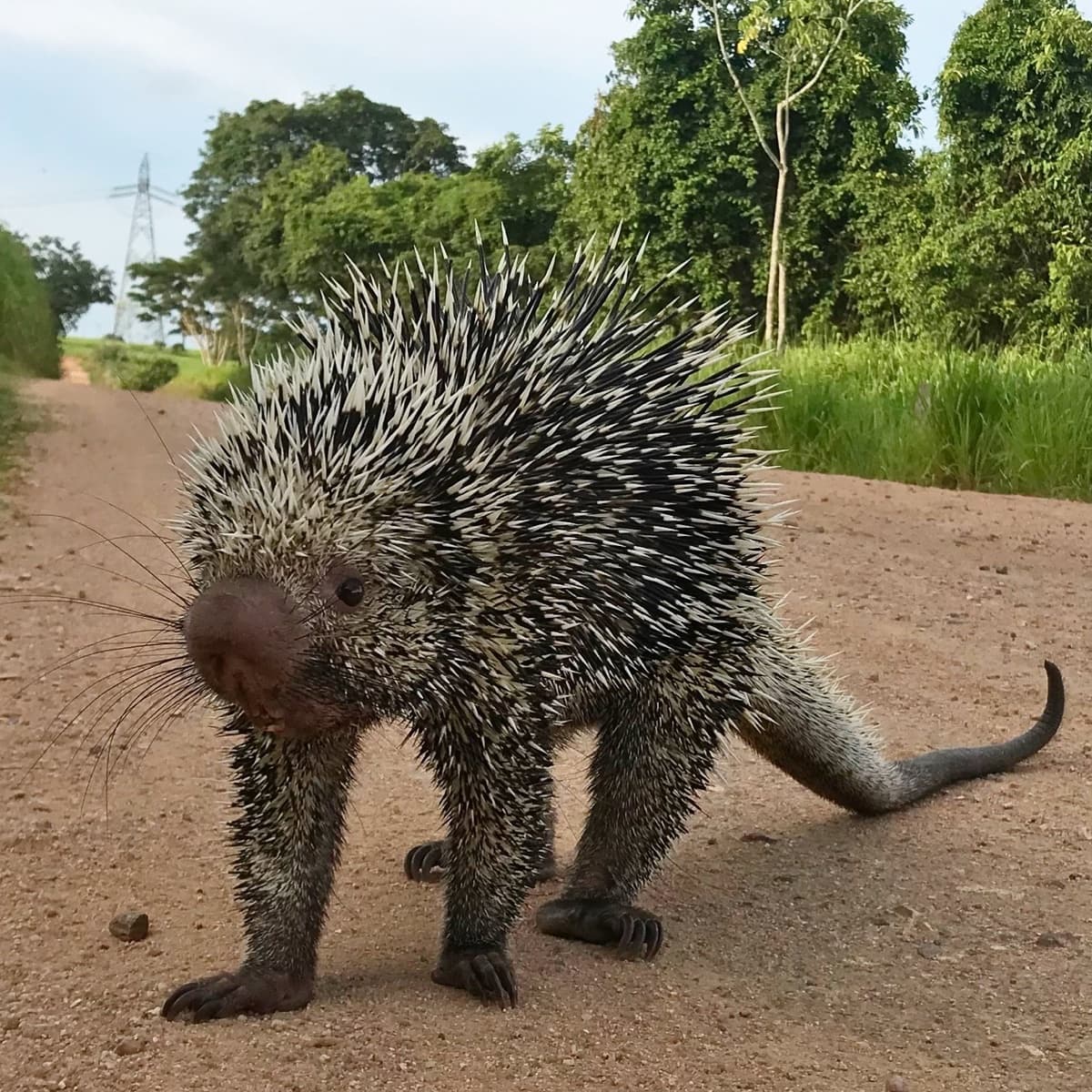
Coendou longicaudatus
Puerco espín arborícola
An arboreal rodent with a sturdy body covered in black-and-white quills and a long prehensile tail used as a fifth limb to move through the branches. Nocturnal and solitary; feeds on leaves, shoots, fruits, and bark. Its slowness and quills make it hard to hunt, but forest fragmentation and road-kill are its main threats.
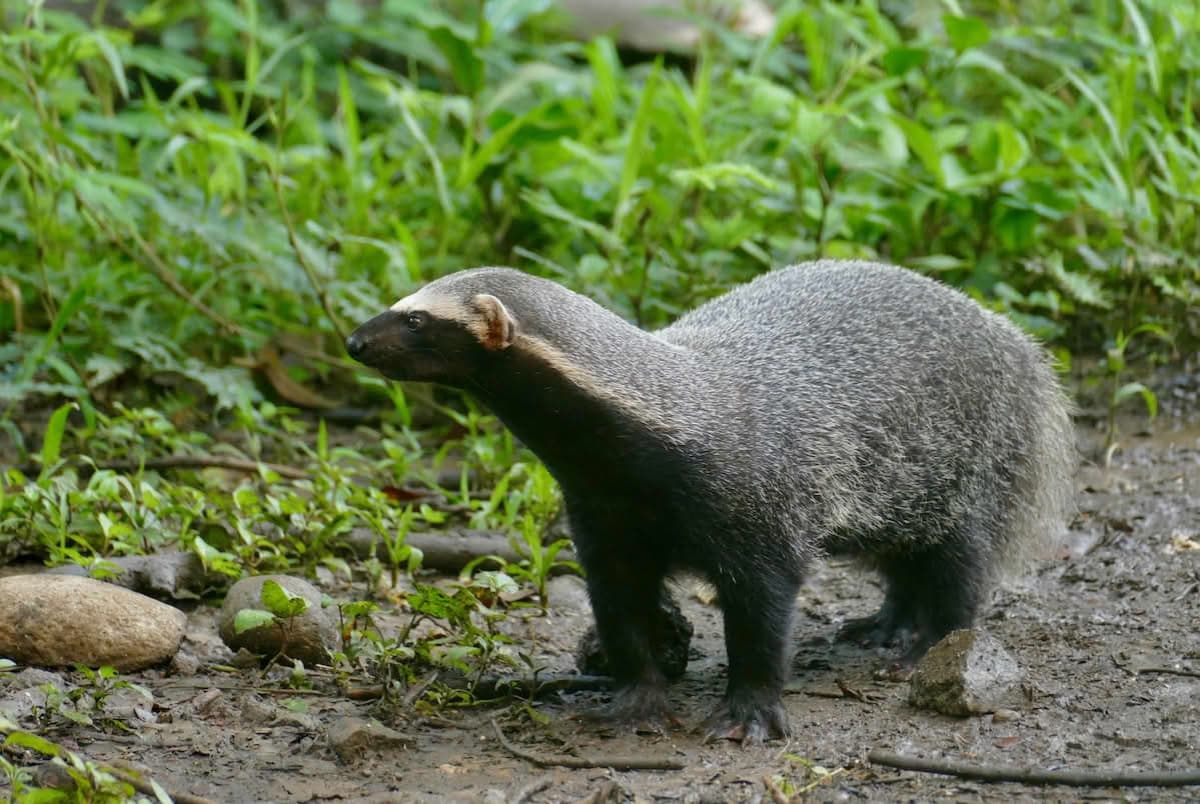
Galictis vittata
Grisón
A sturdy short-legged mustelid: pale gray back with a black face, chest, and legs, separated by a white band. Diurnal, agile, and very curious; moves in pairs or family groups. Carnivorous and opportunistic: rodents, birds, reptiles, amphibians, and insects. An indicator of well-conserved dry forest.
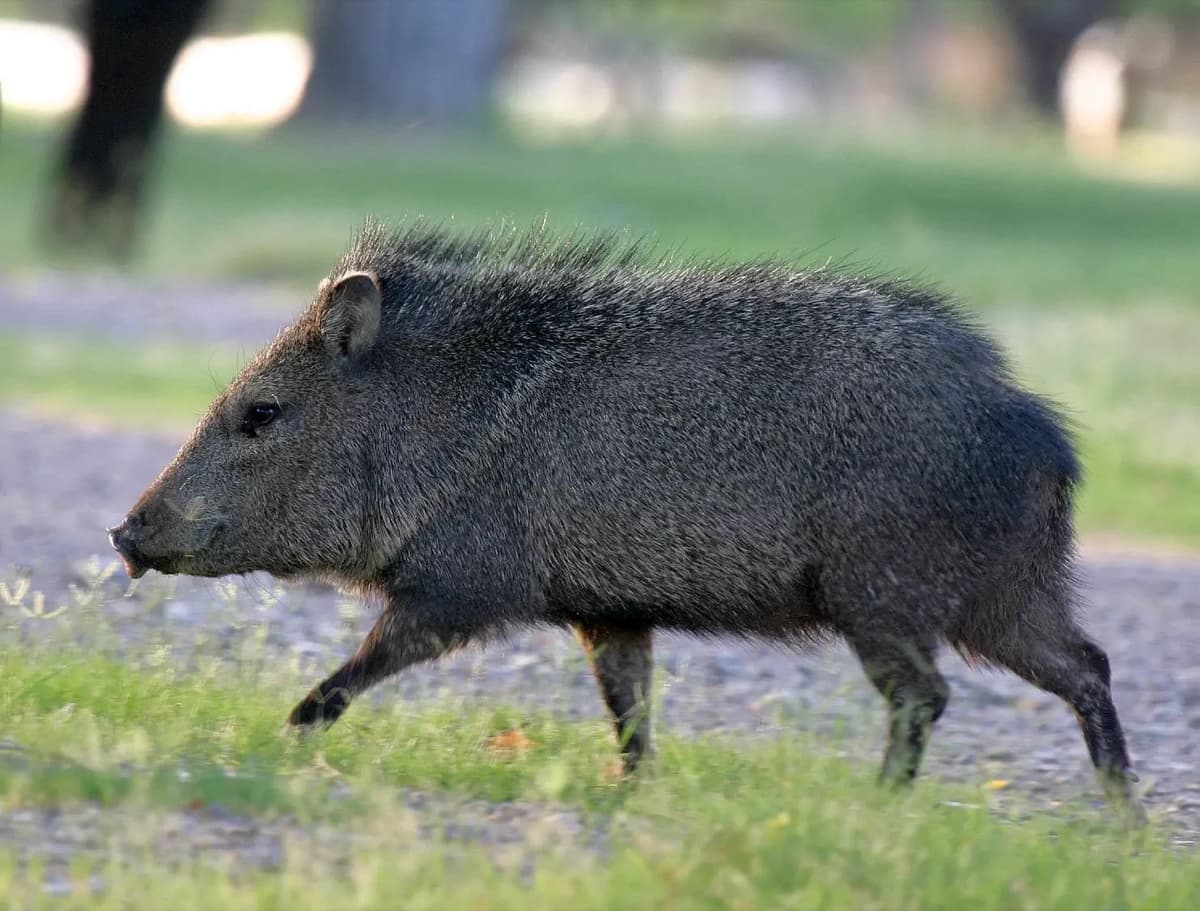
Pecari tajacu
Saíno
A mid-sized hooved mammal similar to a wild boar, with bristly brown-gray fur and a pale collar across the neck that gives it its name. Travels in herds of 5 to 20 through the dry forest, opening trails in the understory. Omnivorous: roots, fallen fruit, seeds, insects, and small vertebrates. A keystone of the trophic web and a seed disperser.
Also present in the reserve: Bradypus variegatus (three-toed sloth) · Leopardus pardalis (ocelot) · Mazama americana (red brocket deer) · Pecari tajacu (collared peccary) · Dasyprocta fuliginosa (black agouti) · Cuniculus paca (lowland paca) · armadillos (family Dasypodidae) · Procyon cancrivorus (crab-eating raccoon) · Eira barbara (tayra) · Galictis vittata (greater grison).
Reptiles
Reptiles of the reserve
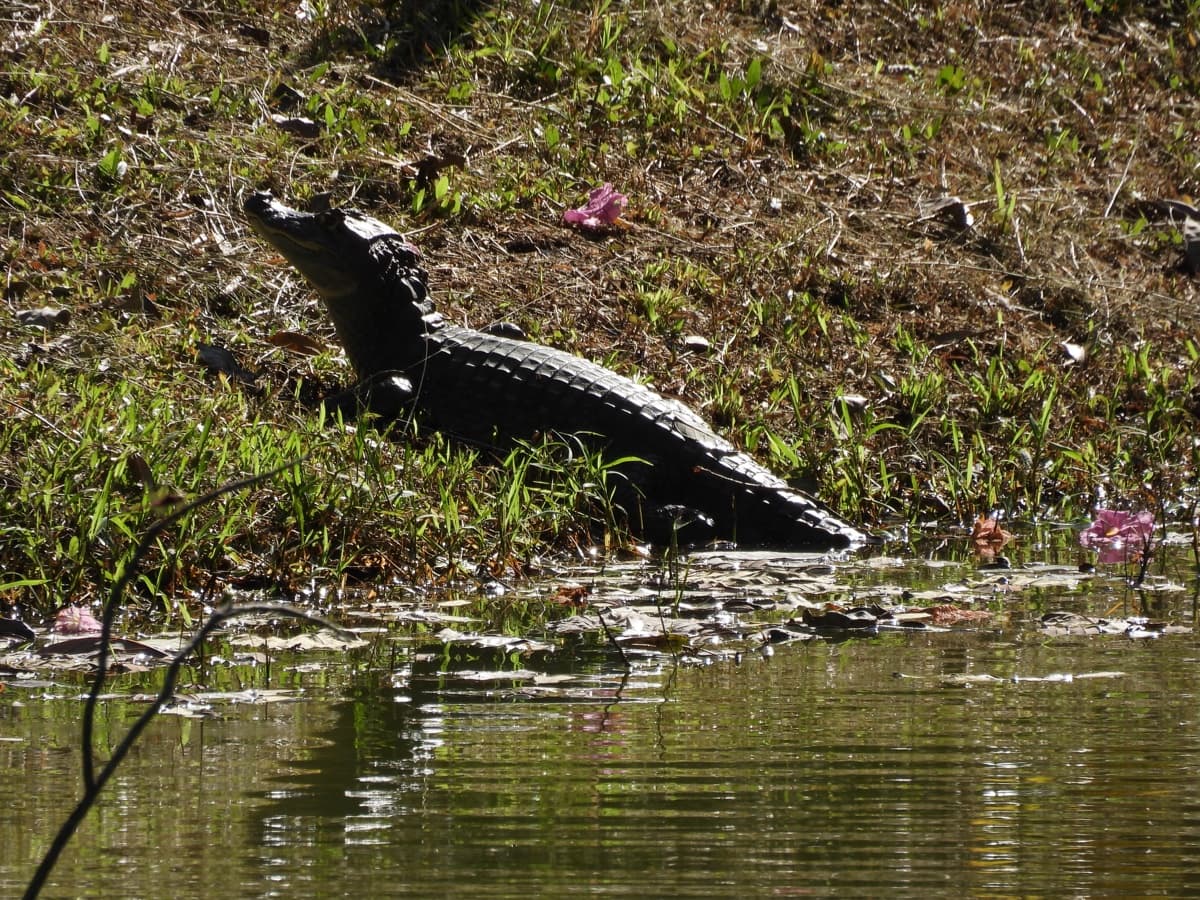
Caiman crocodilus
Babilla
A small Neotropical caiman found in the territory's streams and creeks. Adults reach 1.5 to 2 meters. Indicator of water bodies with an intact food chain. Listed as least concern in Colombia, but pressed by habitat loss.
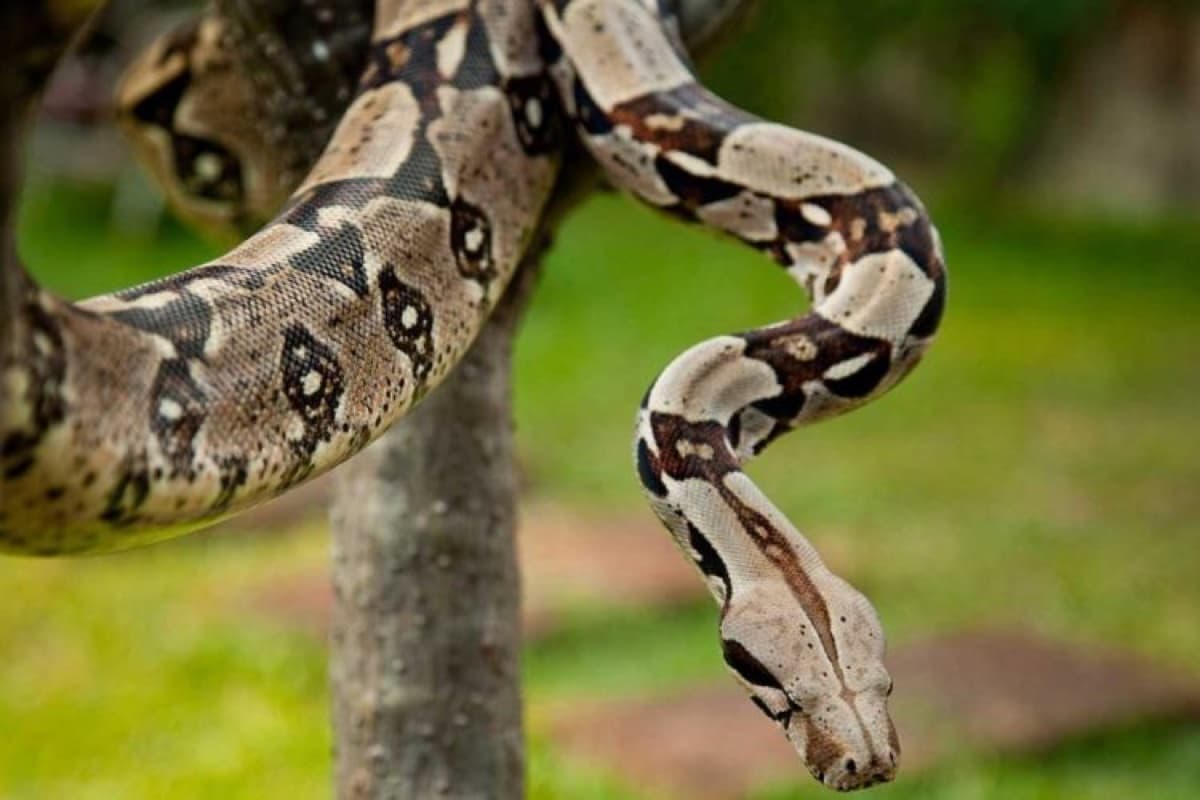
Boa constrictor
Boa
A large non-venomous snake with a thick body and mosaic pattern of brown and cream. Ambush hunter: rodents, birds, and lizards, which it constricts rather than envenomates. Moves between the ground and the canopy. A natural regulator of small-mammal populations. Not threatened globally, but locally persecuted out of fear.
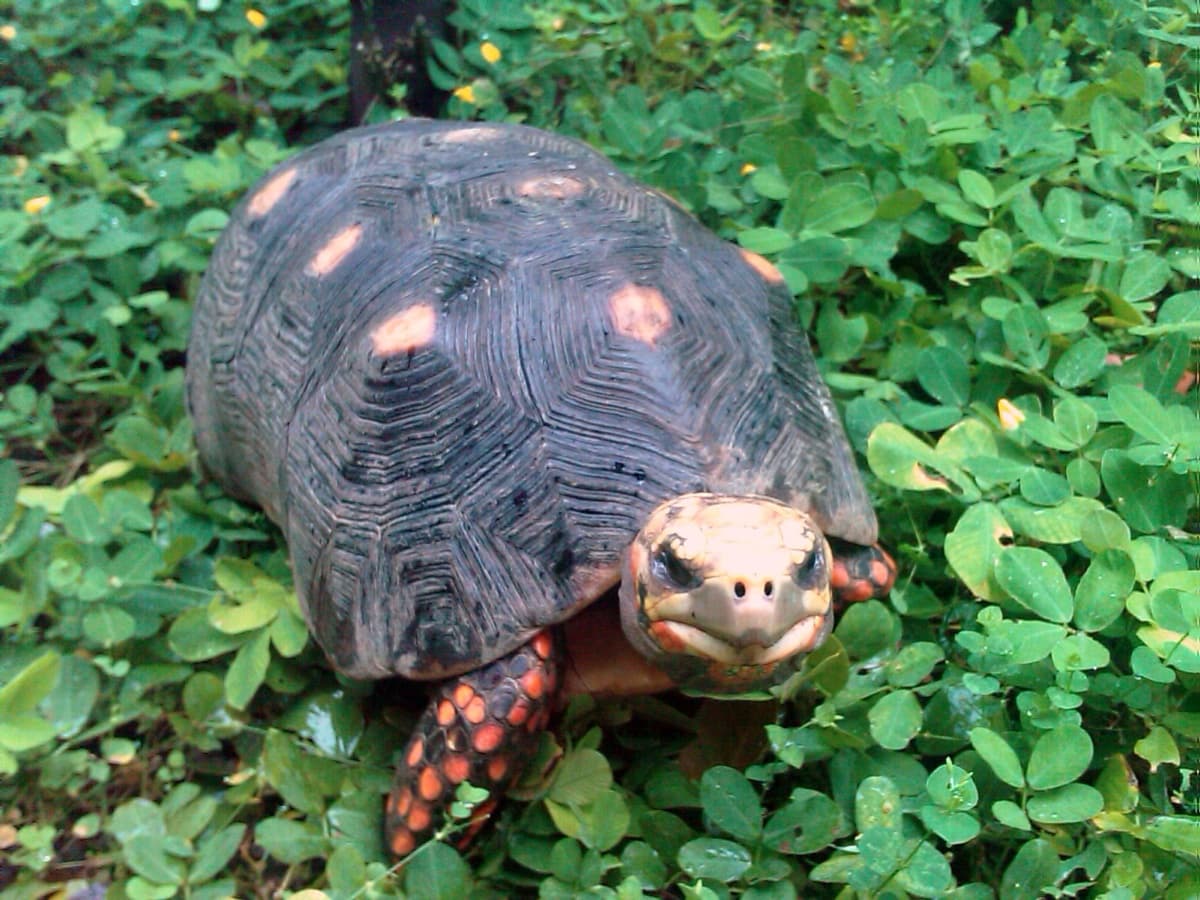
Chelonoidis carbonaria
Morrocoy
A land tortoise central to the dry forest: disperses large seeds and aerates the soil while digging resting sites. Dark shell with yellow or reddish central scutes and legs with deep-red scales. Classified as vulnerable in Colombia; local populations suffer from extraction for the pet trade.
Also present in the reserve: Green iguana (Iguana iguana) — a large arboreal reptile up to 1.5 m, herbivorous and a natural seed disperser; descends to the ground to nest in sand.
Birds
Birds of the reserve
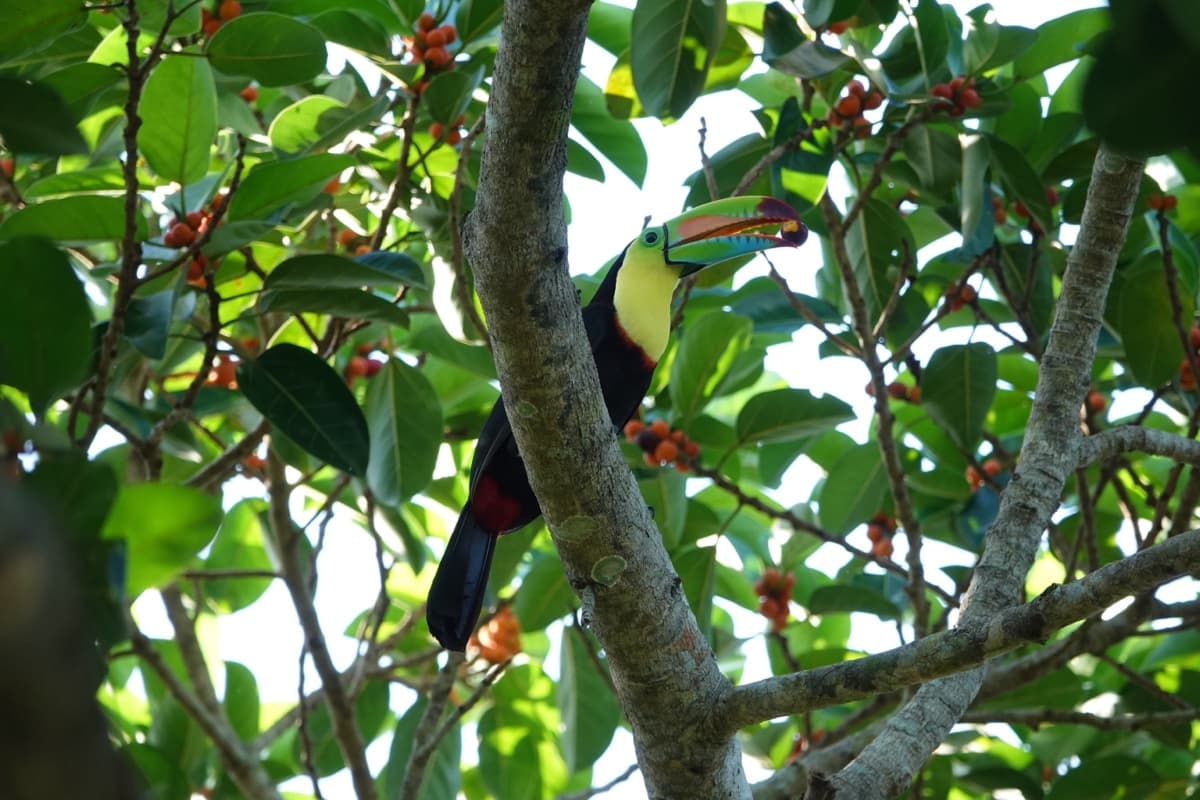
Ramphastos sulfuratus
Tucán pico iris
Unmistakable for its multicolored bill — green, yellow, red, and blue — and black plumage with a yellow chest. Lives in small flocks in the forest canopy. A primary frugivore: it disperses large seeds that few other species can swallow, essential for dry-forest trees like the caracolí and the hobo.
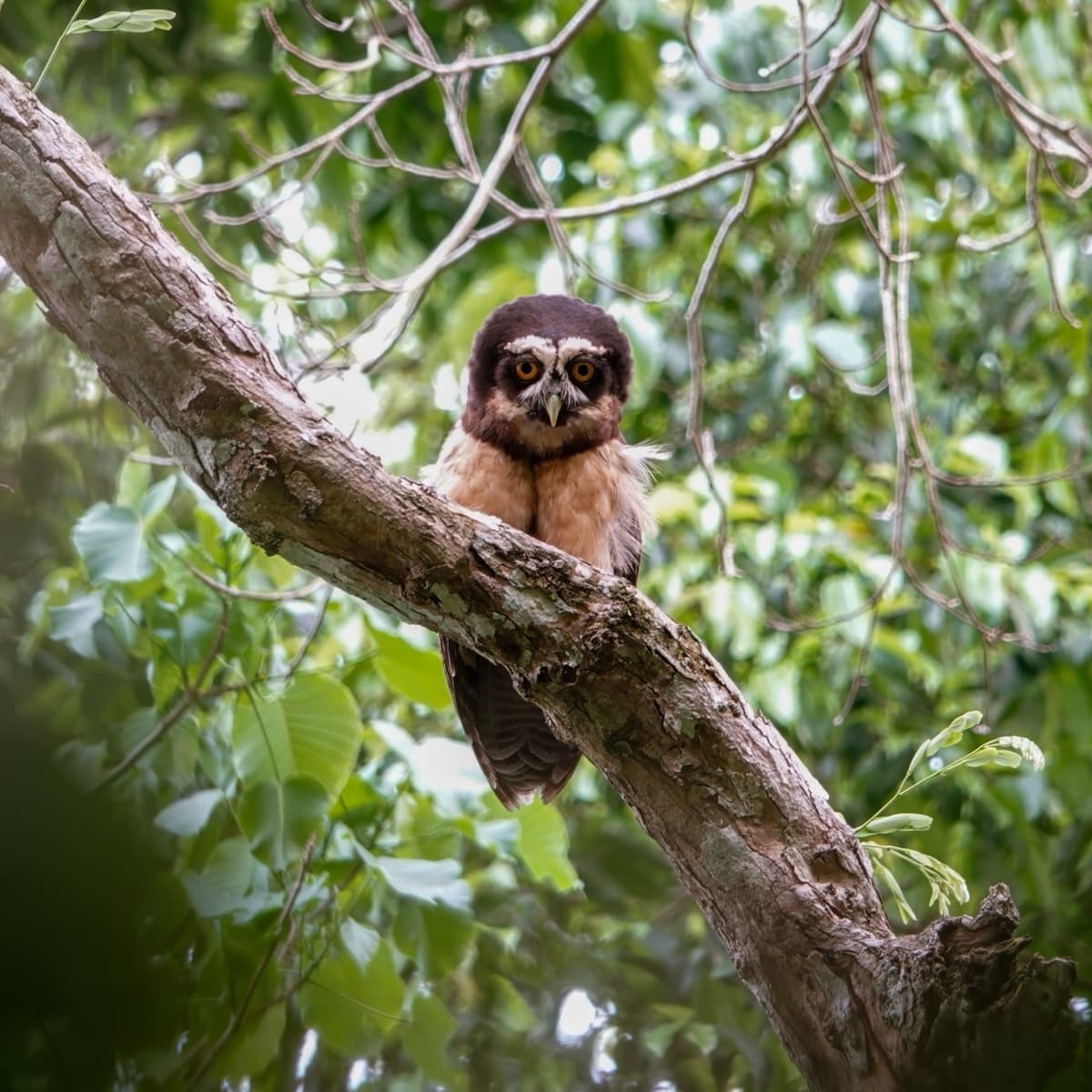
Pulsatrix perspicillata
Búho de anteojos
The largest owl of Colombia's tropical dry forest. Identified by the white «spectacles» above its yellow eyes. A nocturnal hunter of small mammals, birds, and large insects. A flagship of little-disturbed forests: it requires tall trees and old hollows for nesting.
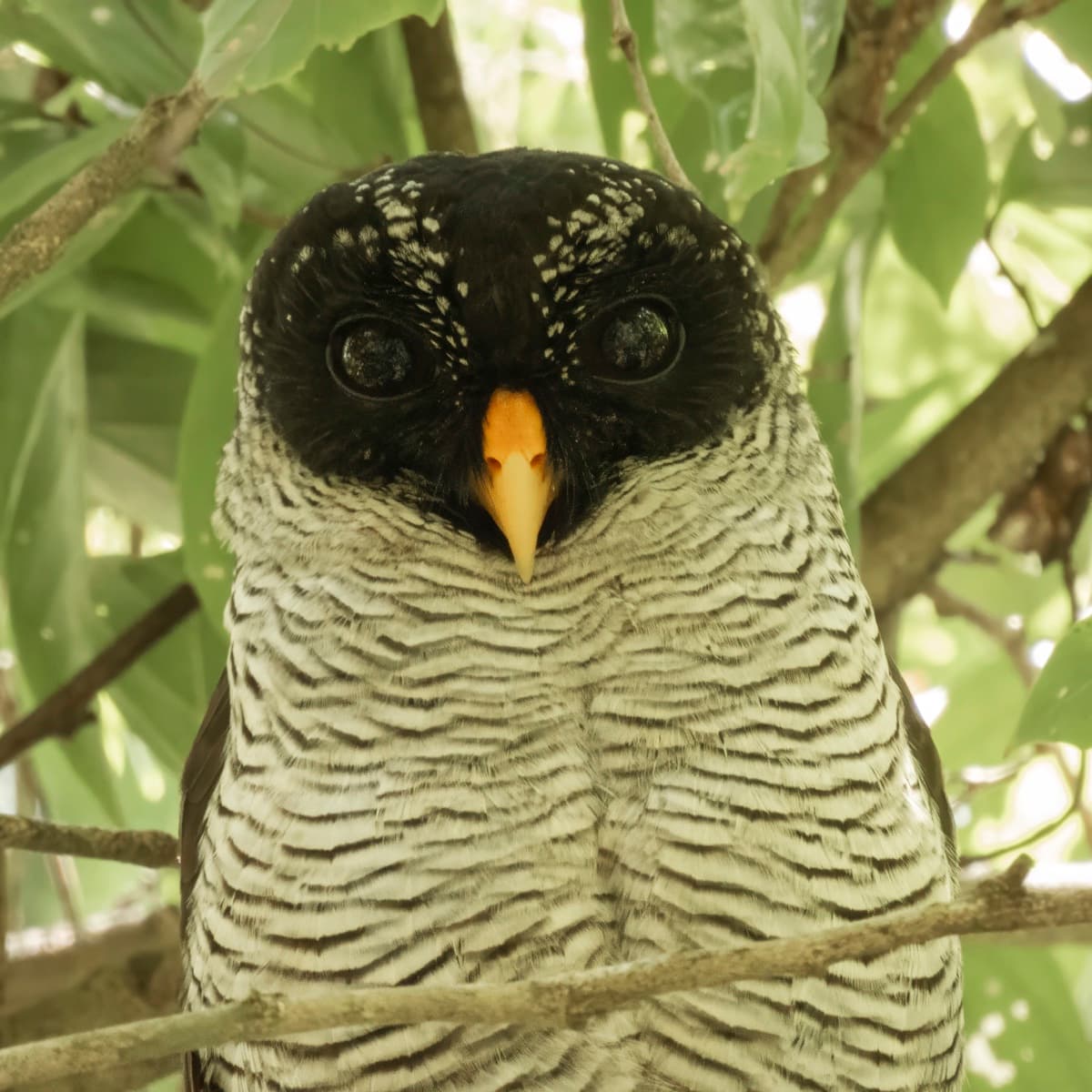
Strix nigrolineata
Búho blanco y negro
Medium-sized owl with a finely speckled black face and a chest barred in white and black — a pattern unique among the owls of the Colombian Caribbean. Strictly nocturnal and elusive, it feeds mostly on large insects and small vertebrates. Its presence in the reserve indicates a mature, connected forest.
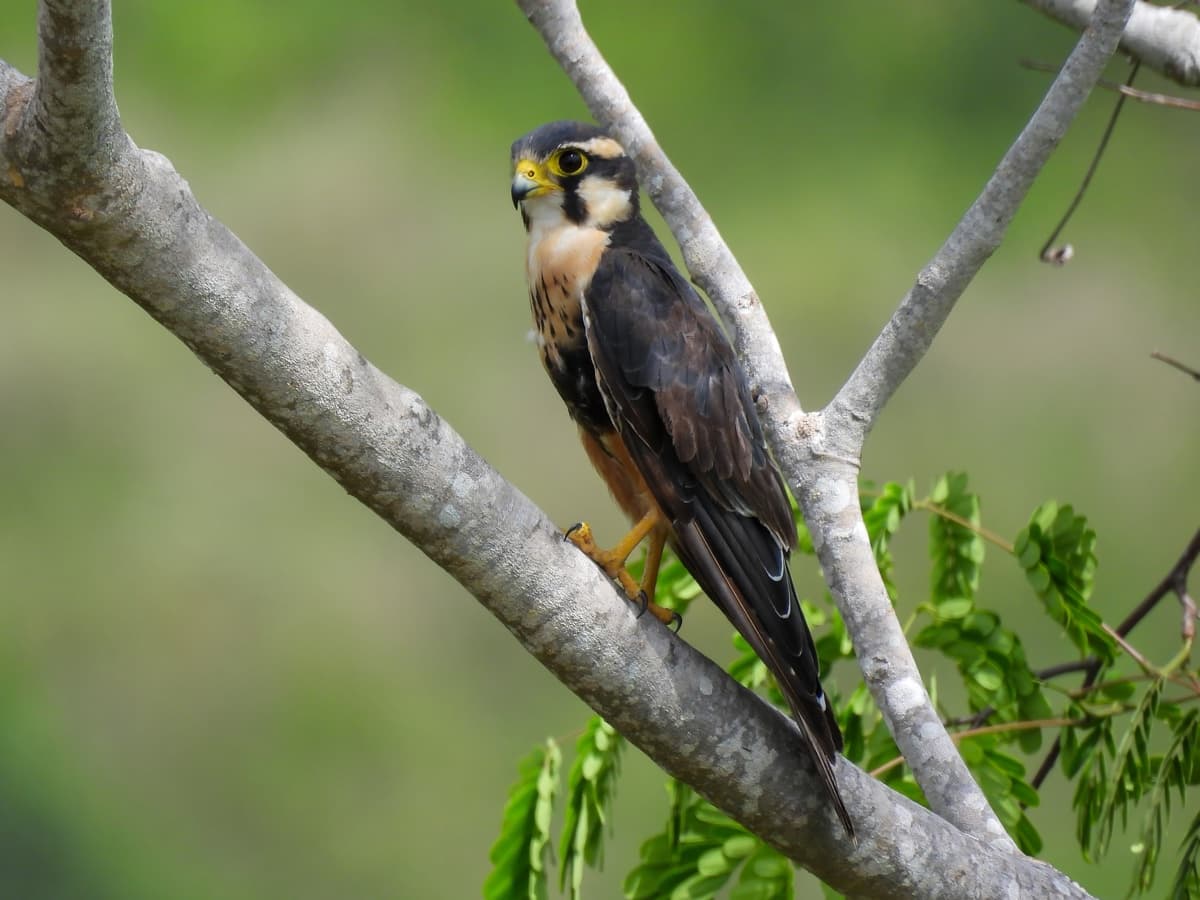
Falco femoralis
Halcón aplomado
Slender falcon with a slate-gray back and ochre chest with a dark facial stripe. It hunts in pairs: one flushes the prey, the other intercepts it in mid-flight. Small birds and large insects are its main food. We see it gliding over clearings and forest edges.
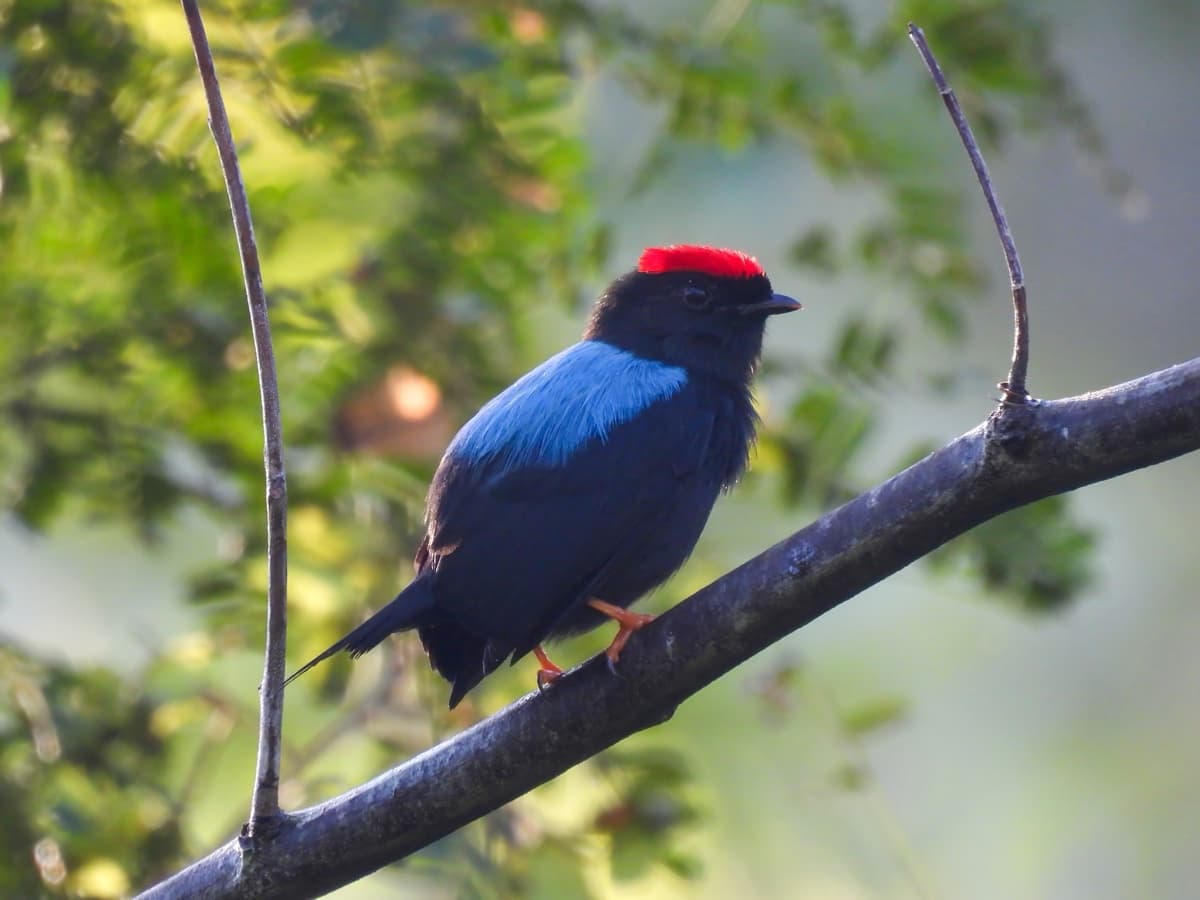
Chiroxiphia lanceolata
Saltarín lanceolado
A small bird with bright blue plumage, a red crown, and an elongated tail in males. Famous for its choreographed dances: two males take turns leaping on a branch to attract females. It inhabits the understory and feeds on small fruits — dispersing them across the reserve and contributing to forest regeneration.
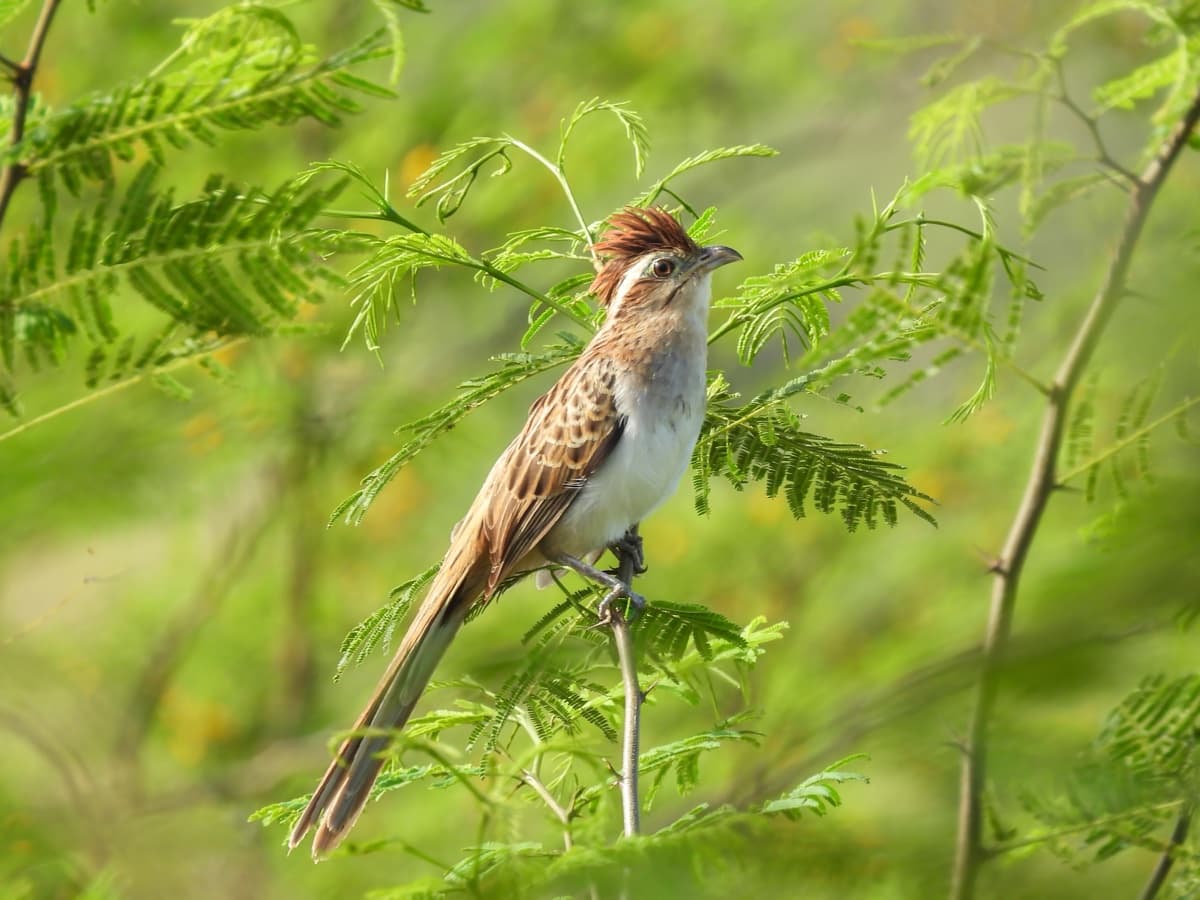
Tapera naevia
Cuclillo crespín
Cuckoo with an unmistakable song —two clear, melancholy notes— that few manage to see because it stays hidden in thickets and forest edges. It is a brood parasite: it lays its eggs in other species' nests, which raise its chick. An indicator of landscapes with healthy shrub cover.
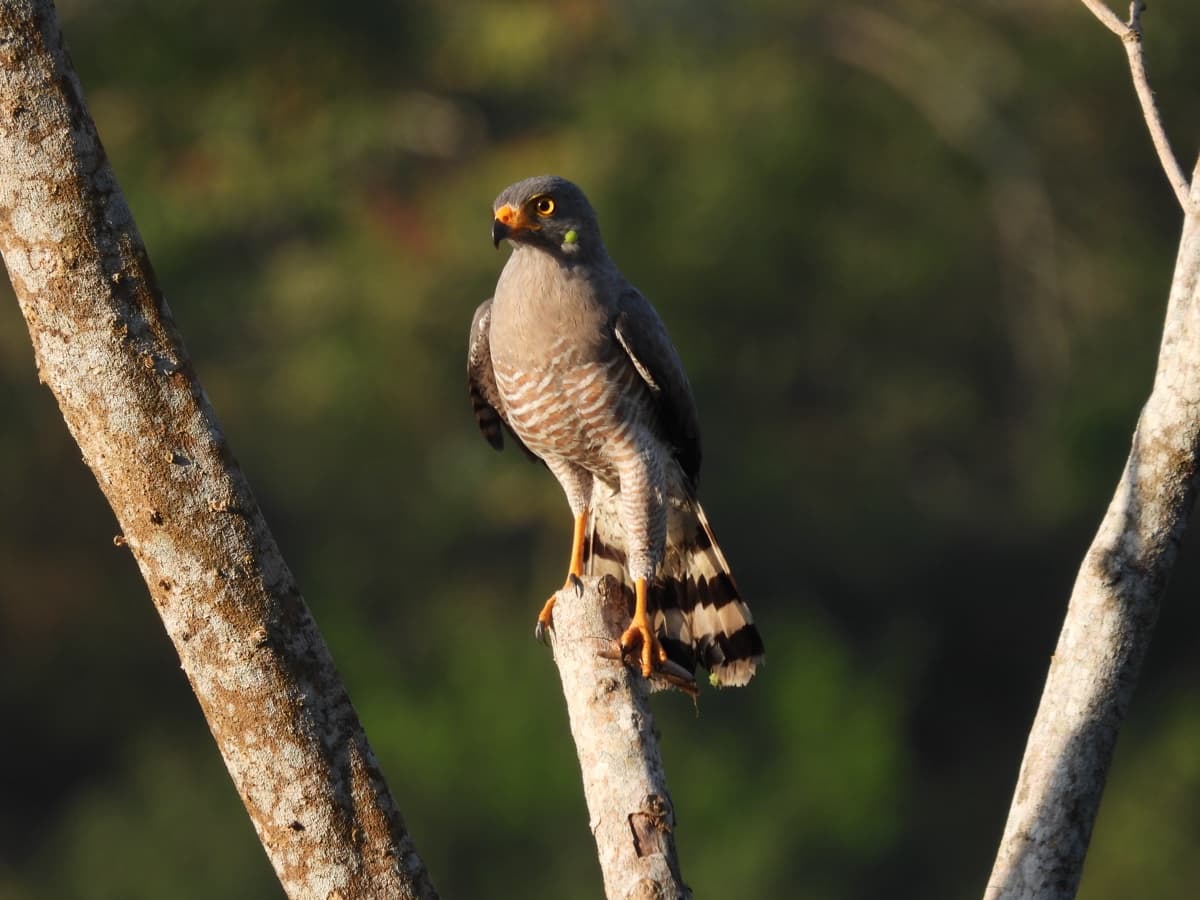
Rupornis magnirostris
Gavilán caminero
A medium-sized gray hawk with white-and-rufous-barred breast and belly, yellow eye, and orange cere. Hunts from low perches and roadsides: large insects, lizards, frogs, and small mammals. One of the most visible diurnal raptors in the Caribbean dry forests.
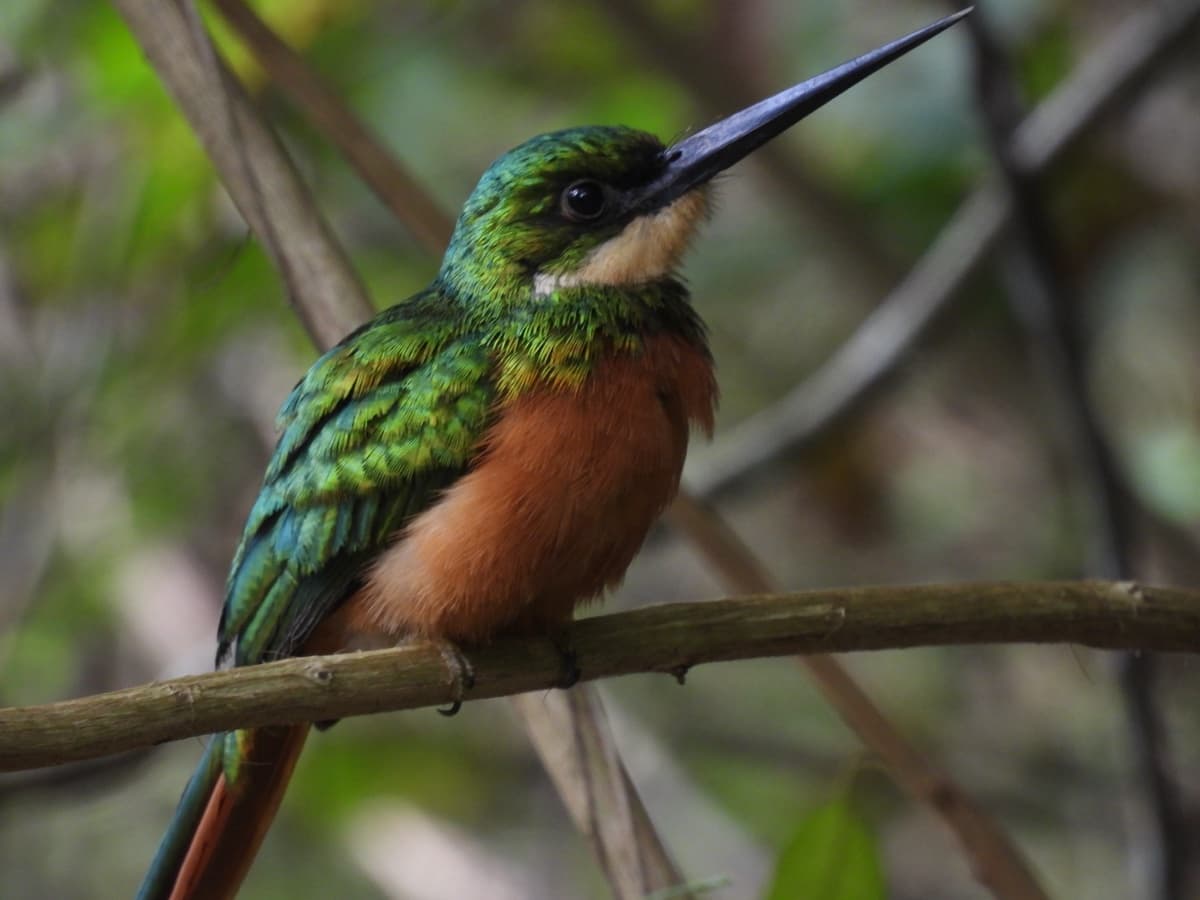
Galbula ruficauda
Jacamar colirrufo
A small, elegant bird with a metallic-green back, cinnamon belly, and a long needle-like bill. Sallies after butterflies and other flying insects from an exposed perch. Lives at the edges of dry forests and thickets.
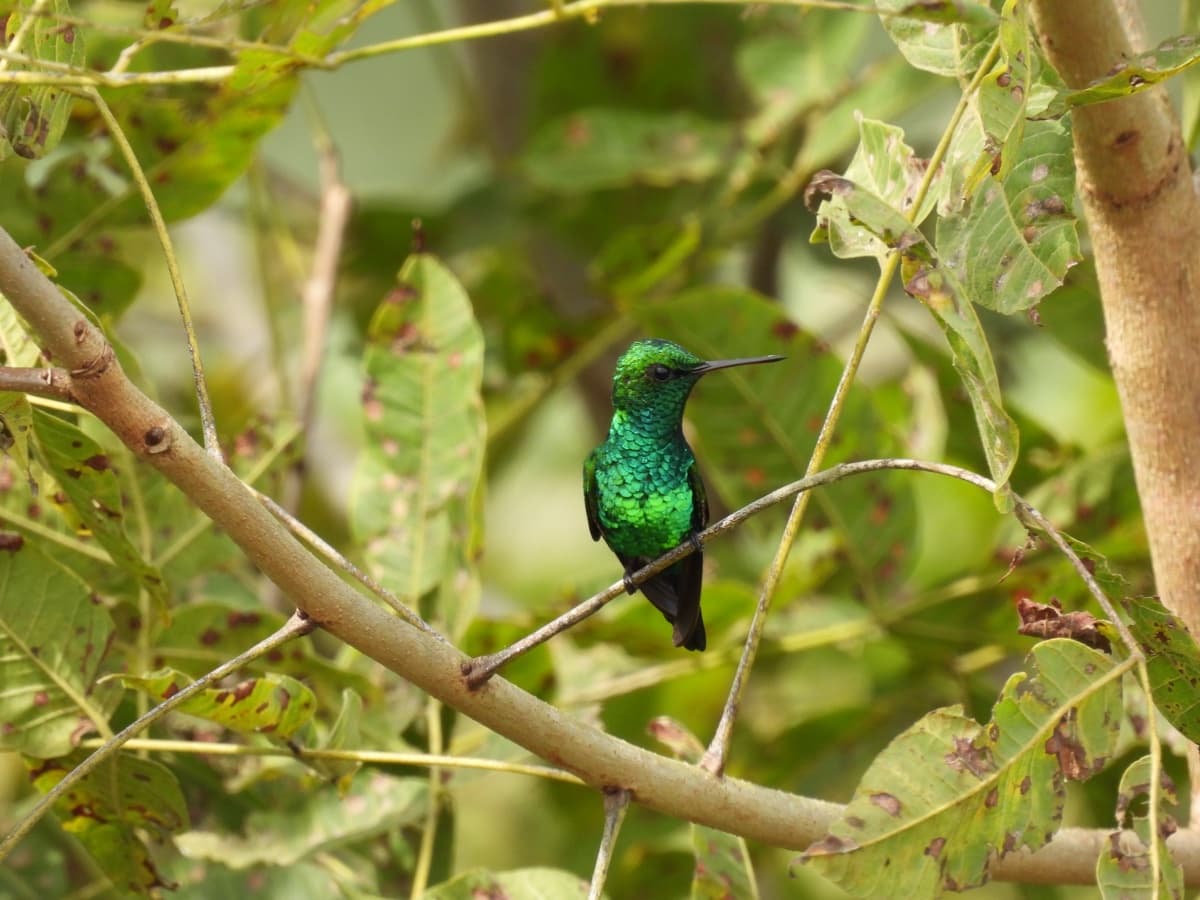
Chlorostilbon gibsoni
Esmeralda piquirroja
A small, fully iridescent-green hummingbird, restricted to northern Colombia and Venezuela. Visits tubular flowers in dry forests and open scrub; a key pollinator of the lower stratum. Its bill is the ecosystem's fine, precise tool.
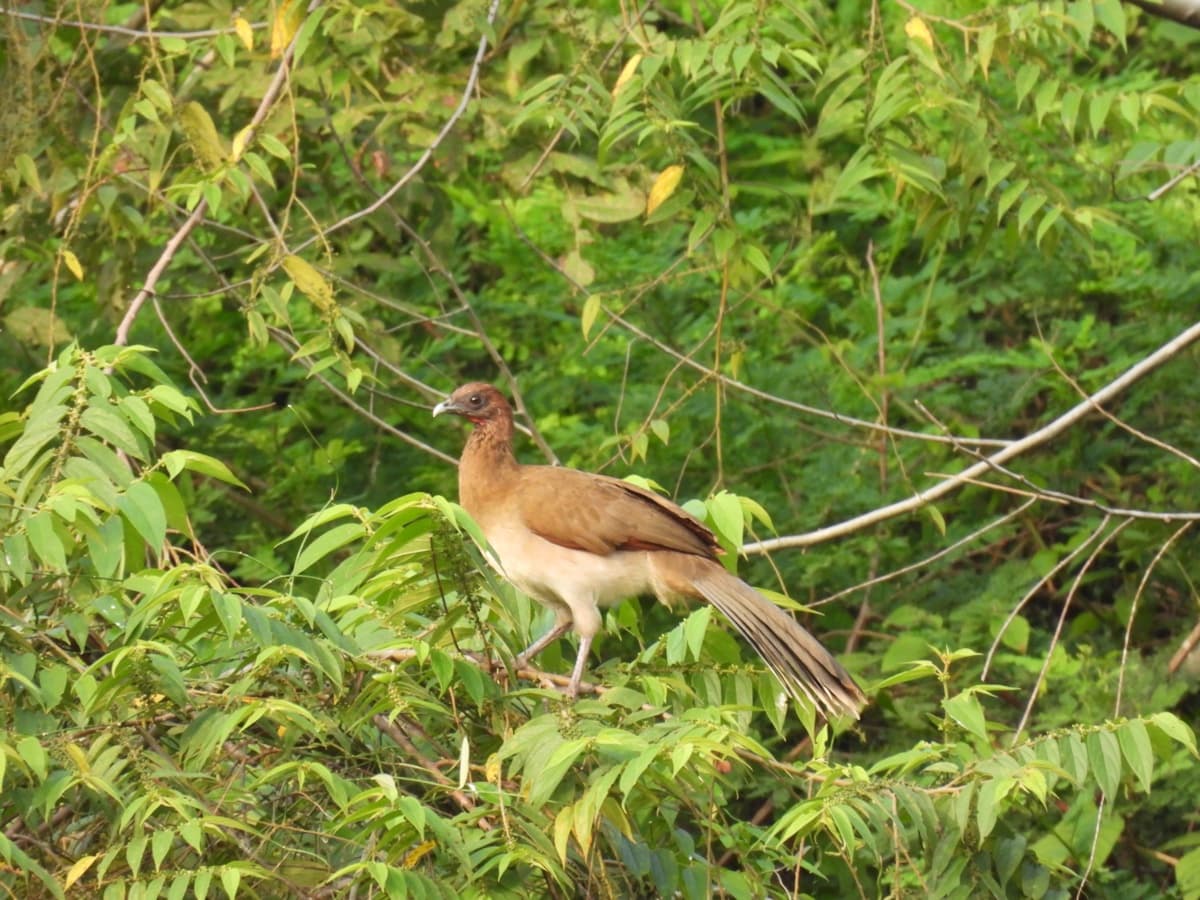
Ortalis garrula
Guacharaca caribeña
Endemic to the Colombian Caribbean: brown body, long tail, and a resonant dawn call that gives the species its name. Moves in groups through the canopy and dry-forest edges, feeding on fruit. Its morning call is the territory's soundtrack.
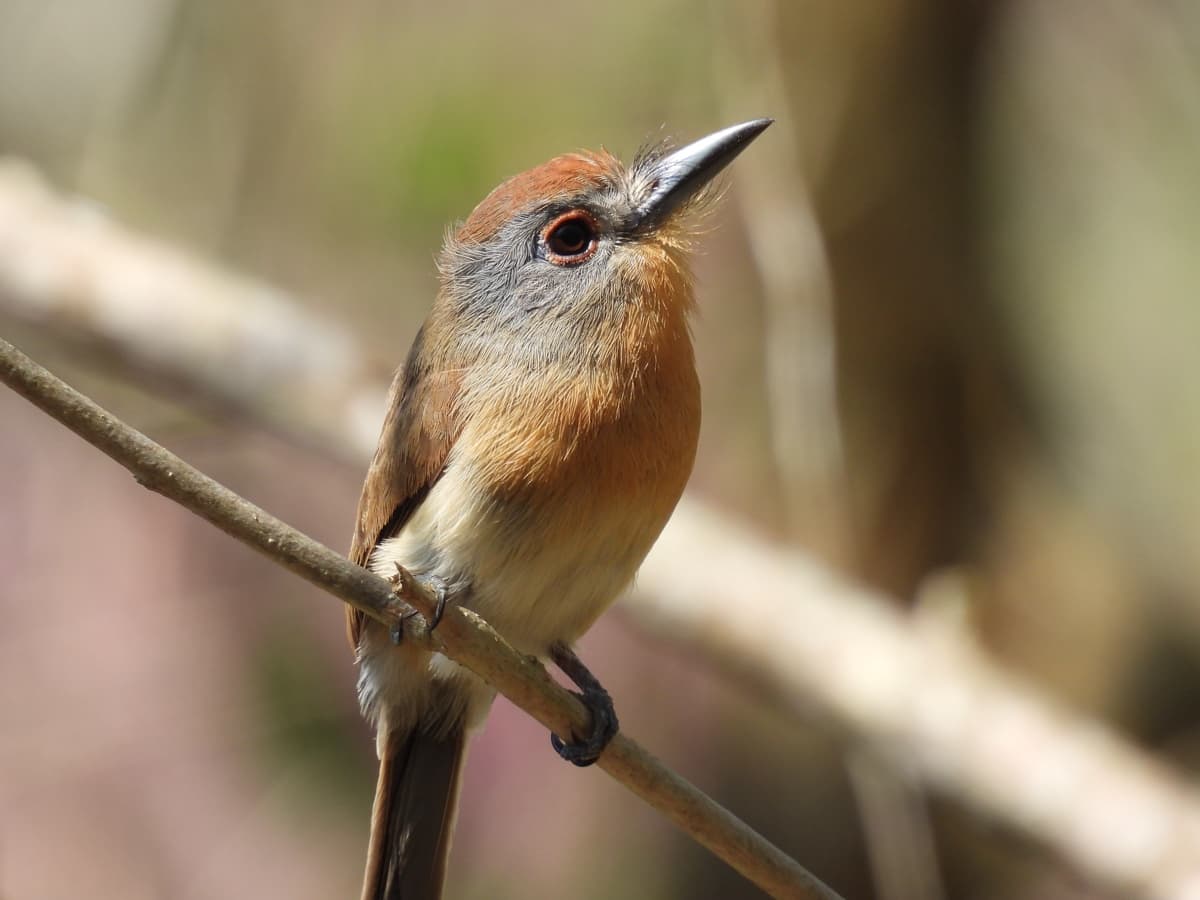
Nonnula frontalis
Monjilla carigrís
A small, discreet understory bird: brown back, warm cinnamon belly, and gray cheeks that give it its name. It perches motionless on low branches and sallies for insects with its slender bill. Soft-voiced and elusive, its mere presence indicates that the dry forest still has a healthy lower stratum.
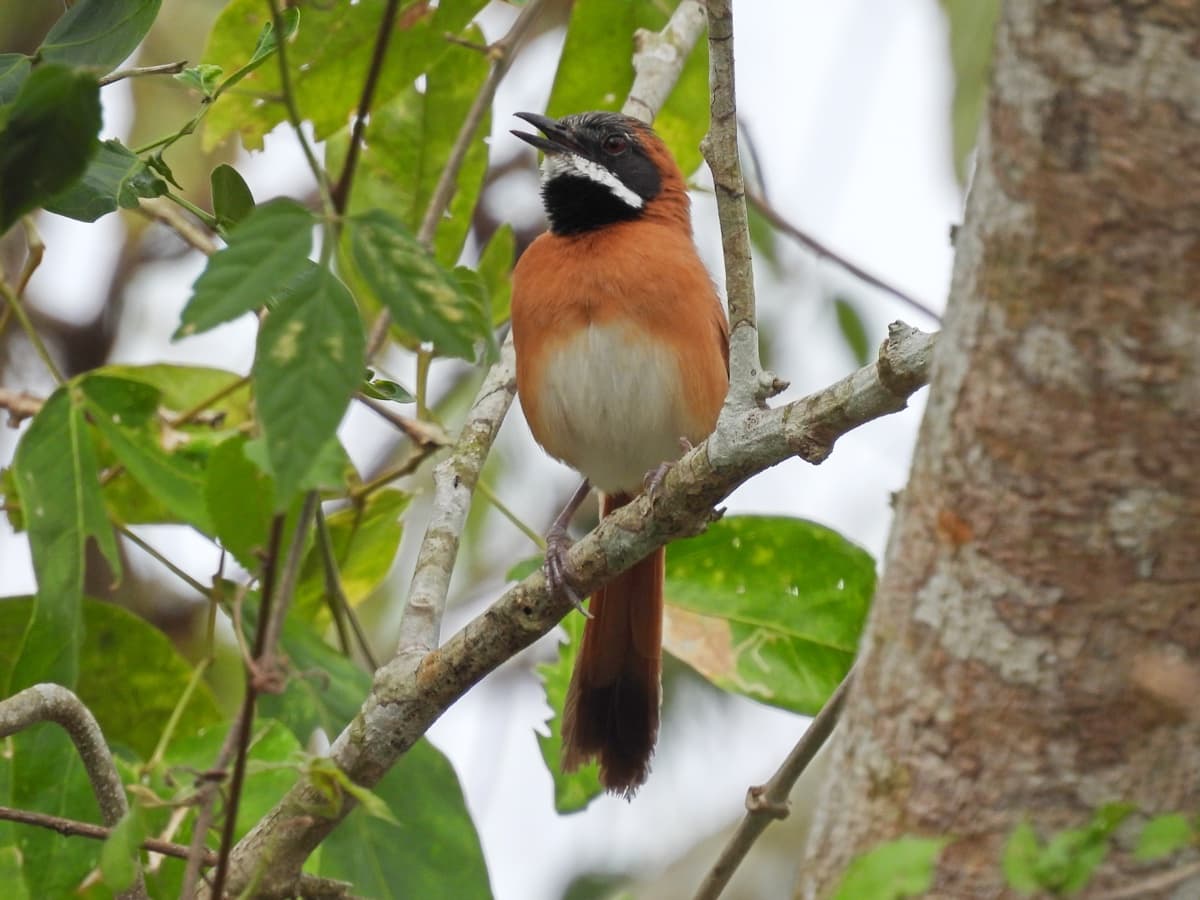
Synallaxis candei
Chamicero coronicastaño
Restricted to northern Colombia and Venezuela, almost exclusive to the dry forests and scrub of the Caribbean. Small but striking: rufous back, pale belly, black throat with two white whisker-like stripes. Lives in pairs in dense understory and gives itself away with a dry, repeated call. Its presence is a thermometer: it only appears where the dry forest remains intact.
More than 200 bird species have been recorded at Los Loros; the full list can be consulted in the reserve's eBird hotspot. The birdwatchers who visit each season are also part of the eyes that monitor the forest.
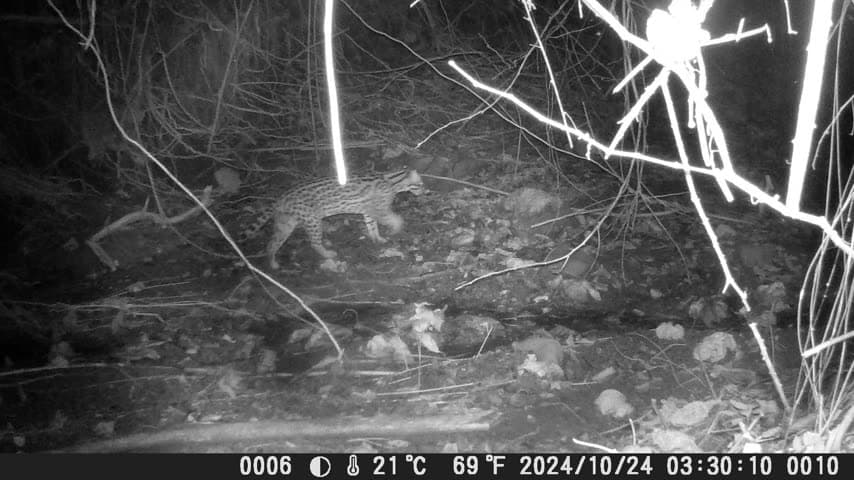
Active monitoring
Would you like to see how we monitor the wildlife we protect?
We distribute camera traps across the territory to record what happens when no one is watching. Every appearance confirms who lives here and guides us on where to reinforce protection. More than twelve species recorded so far — from ocelots to tamanduas, including the crab-eating fox, the collared peccary and the white-headed capuchin.
Why it matters
A single web
Each species you see here depends on a connected forest: macaws need tall trees and hollows for nesting; toucans and howlers disperse the large seeds that sustain the canopy; the red-footed tortoise opens paths through the soil. When one disappears, the rest weaken. That is why we protect the 500 hectares as a system — not as a collection of species.
Descriptions adapted from Bosque Seco Tropical: Guía de Especies (UNDP · Humboldt Institute · Ministry of Environment, 2018) and field observations in the reserve.
Environmental oversight and compliance

Supervising environmental authority
Every wildlife release, transfer, and management action in Los Loros Reserve is carried out under the supervision and authorization of the Regional Autonomous Corporation of the Canal del Dique (CARDIQUE), the competent environmental authority for northern and central Bolívar. The Foundation is registered in the Wildlife Friends Network through Resolution No. 1972 of December 28, 2022 and its subsequent acts.
Handling, transfer, and release protocols adhere to the environmental authority's guidelines. Periodic controls and ongoing feedback underpin the continuous improvement of field work and compliance with current regulations.
The logo identifies the environmental authority that exercises oversight; its use does not imply sponsorship or partnership.
Reserve pulse
The wildlife we protect, live

2 months ago
Bryam David, the Visitor Who Brought Art
3 months ago
The Hill Turned Green Again

3 months ago
Un coendu decaído al pie de la ceiba

3 months ago
El armadillo que volvió del pueblo
3 months ago
Alberto Marked the Spot Where the Forest Will Grow

4 months ago
Twenty Macaws and a Crate of Mangoes

4 months ago
Seven Years of Canopy and Number 15 Is Finally Free

4 months ago
Parrot 33 and the Mist of Cerro el Peligro
2 months ago
Bryam David, the Visitor Who Brought Art
3 months ago
The Hill Turned Green Again
3 months ago
Un coendu decaído al pie de la ceiba
3 months ago
El armadillo que volvió del pueblo
3 months ago
Alberto Marked the Spot Where the Forest Will Grow
4 months ago
Twenty Macaws and a Crate of Mangoes
4 months ago
Seven Years of Canopy and Number 15 Is Finally Free
4 months ago
Parrot 33 and the Mist of Cerro el Peligro
Support the tropical dry forest
Every hectare under care protects the species that live within it.