By Alejandro Rigatuso, Fundador y Director de Fundación Loros
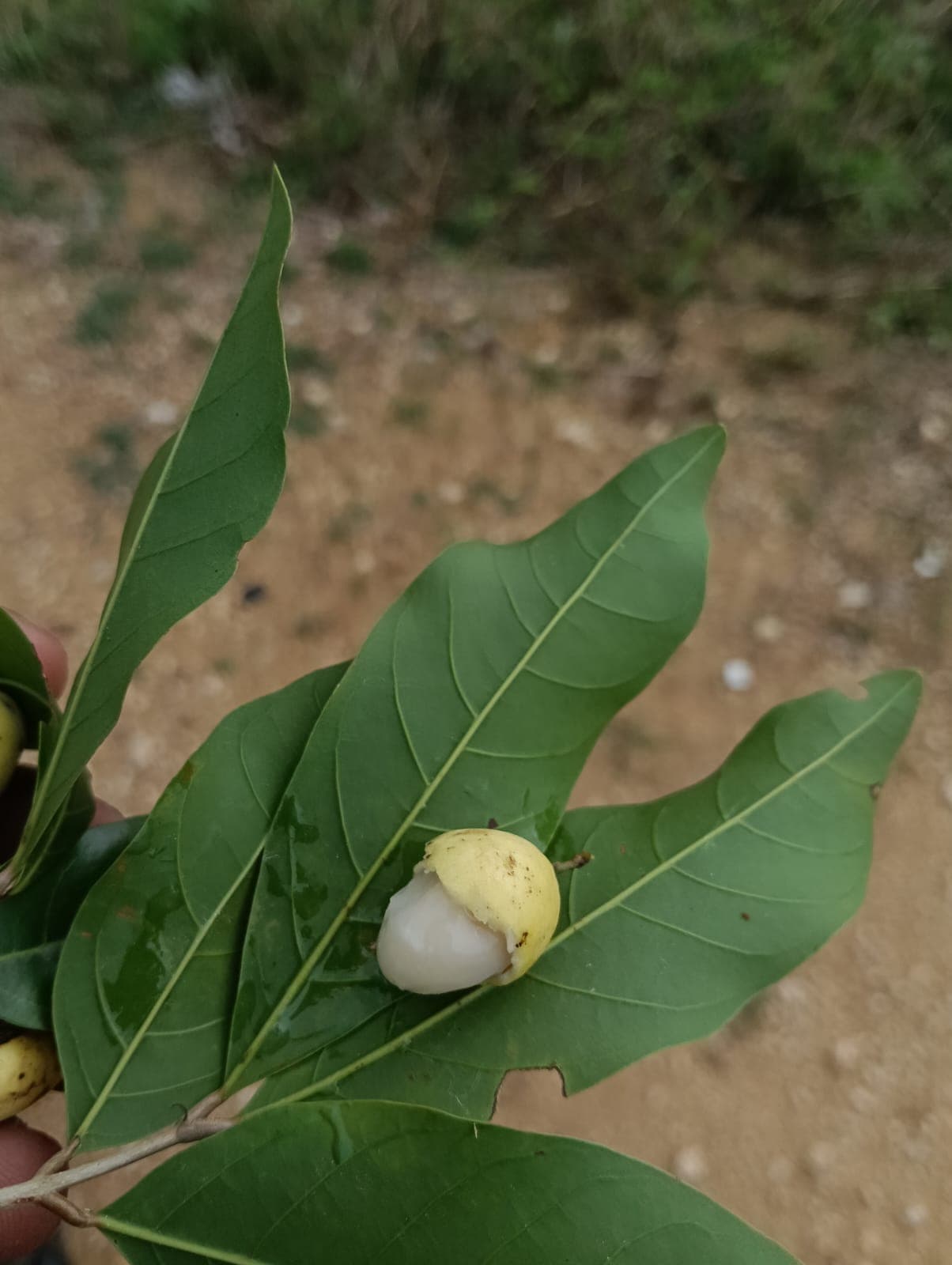
At the coordinates Alberto shared from the reserve, the reddish earth and small stones kept a secret among the branches: a yellow-green fruit, barely open, its white flesh peeking shyly toward the light. It was a cotoperi —known also as cotoprix or mamón de mico—, a Talisia sp. that few would have noticed had it not been for the trained eye of whoever was walking through that stretch on a Wednesday.
This was no isolated find. Omar had already reported several individuals of this same species in the area before, which makes this record a confirmation: the cotoperi has an established presence in that corner of the reserve. Alberto held it in his hand —branch, elongated leaves and fruit— and left a photographic trace of that almost ordinary moment which, added to the earlier reports, begins to draw the map of a plant that already feels at home among the 520 hectares of Loros.
About the author
Alejandro Rigatuso · Fundador y Director de Fundación Loros
Alejandro Rigatuso arrived at Fundación Loros after years as Vice President of Growth Marketing at Toptal, bringing with him an unconventional perspective: he knows an animal is well by its eyes, "bright, wide open." Lorenzo, the first parrot released, recaptured several times and always set free to fly again, marked him forever. At dusk, around five-thirty, you'll find him at the Mirador de las Ciénagas or wandering around Cerro El Peligro, envisioning observation towers and hundreds of native parrots soaring over a reserve that an entire community calls their own.