Lorenzo goes to school
By Elver Camilo Gómez Hincapié (Profe Camilo Gómez) · Colombia, Puerto Carreño · Yellow-crowned amazon (Amazona ochrocephala)
This story is chapter VII of The Spirit of the Parrots.
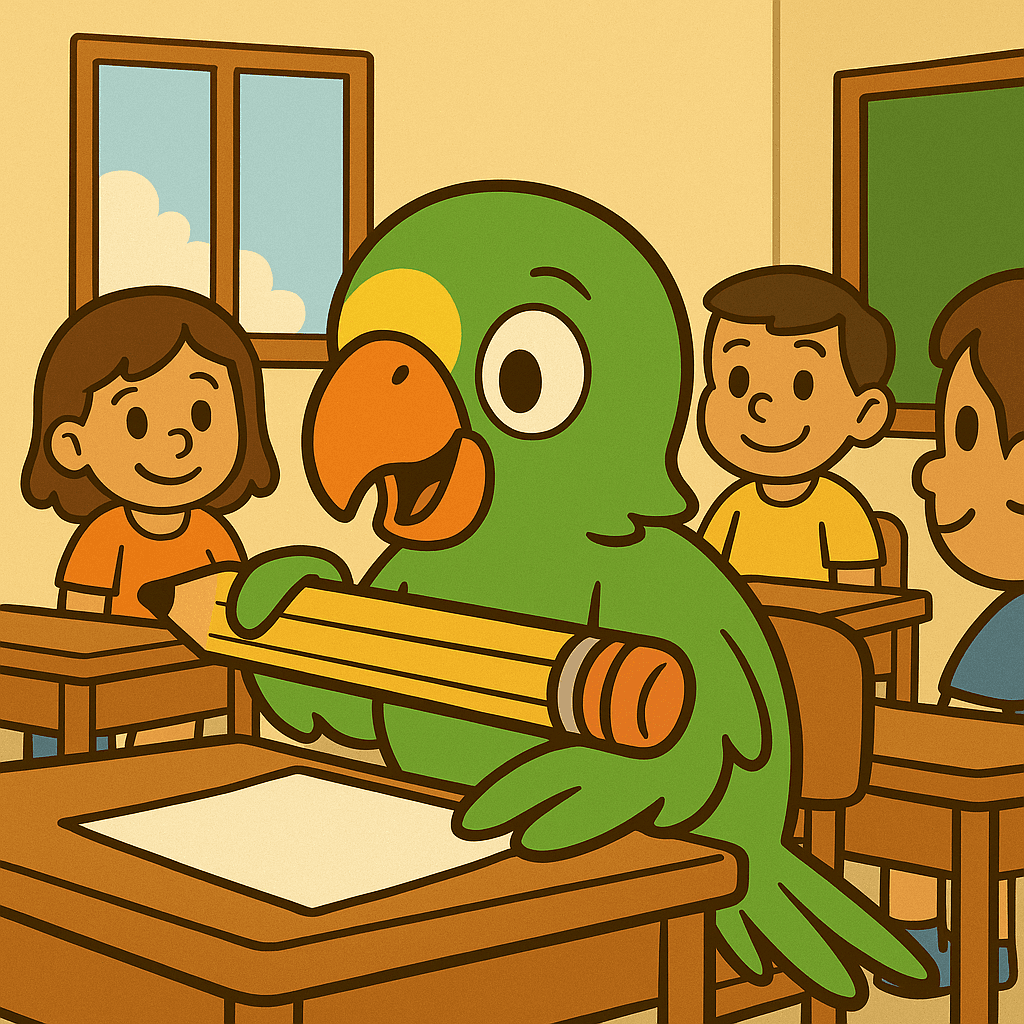
In January 2024, I landed in Vichada to work as a rural teacher, knowing that leaving behind city life in Bogotá would bring plenty of surprises. Classes had barely started when a very particular visitor burst into the classroom: a green parrot with a yellow forehead, playful with the children and capable of repeating with striking accuracy some of the words heard mid-lesson. A lover of fruit and any pencil left within reach, he became a daily presence for the students.
Everyone in the small village where we live knows Lorenzo, an Amazonian yellow-crowned parrot who was rescued as a chick and never had his wings clipped or was locked in a cage. When the time came to leave, he simply didn't: he flies free through the settlement, perches in the tallest trees, keeps company with cyclists, slips into houses to sample fruit, but always comes home — undisturbed by dogs or cats alike.
The best part is that his favorite place is the school; he genuinely seems like just another student. Every morning he arrives with the children, attends class, and at lunchtime you find him in the canteen pecking from his friends' plates. He has never bitten a single child — as if he knows they are harmless, unlike adults, with whom he keeps a certain distance.
"There are so many of them," Zaira told me one day when her new pencil mysteriously disappeared. We searched through bags and pencil cases until we realized Lorenzo was quiet… and happily gnawing on it. In moments like that, all you can do is laugh. A peacemaker by nature, I bought Zaira another pencil and now offer Lorenzo twigs or small sticks whenever the lesson gets dull.
Lorenzo has played a starring role in natural science: when we studied the classification of living things and reached birds, he showed up on cue and became our live model for drawing. His wings, beak, feet, and colors were on display in real time, to everyone's wonder. In a Spanish class, Marianita wrote a piece about his adventures titled "Las Travesuras de Lorenzo," which was published in the school newspaper and reached a journalism fellowship run by Fundación Para La Libertad de Prensa.
His story shows what real freedom looks like: rescued from a fallen nest, carefully raised, now able to fly as high as he wants — and he chooses to stay with us. I know it may not be the most natural arrangement for a parrot to live alongside humans, but there is something beautiful and singular in that choice.
One afternoon, as I watched him lift off from the schoolyard, a gust moved through the classroom that came from no open window, and for a second I felt what Lorenzo must feel: the open air, the height within reach — and still, the wish to stay.
As a teacher, I came here to teach, but I keep learning — from my students, from their families, and in this case from a dignified bird who reminds me how important it is to give a voice to those who "only need someone to speak for them".
For Lorenzo, flying free in nature means living with the community. Some days he spends hours foraging or resting in the sun, but he always comes back to the school, his favorite corner — a small testament to respect and empathy toward animals.
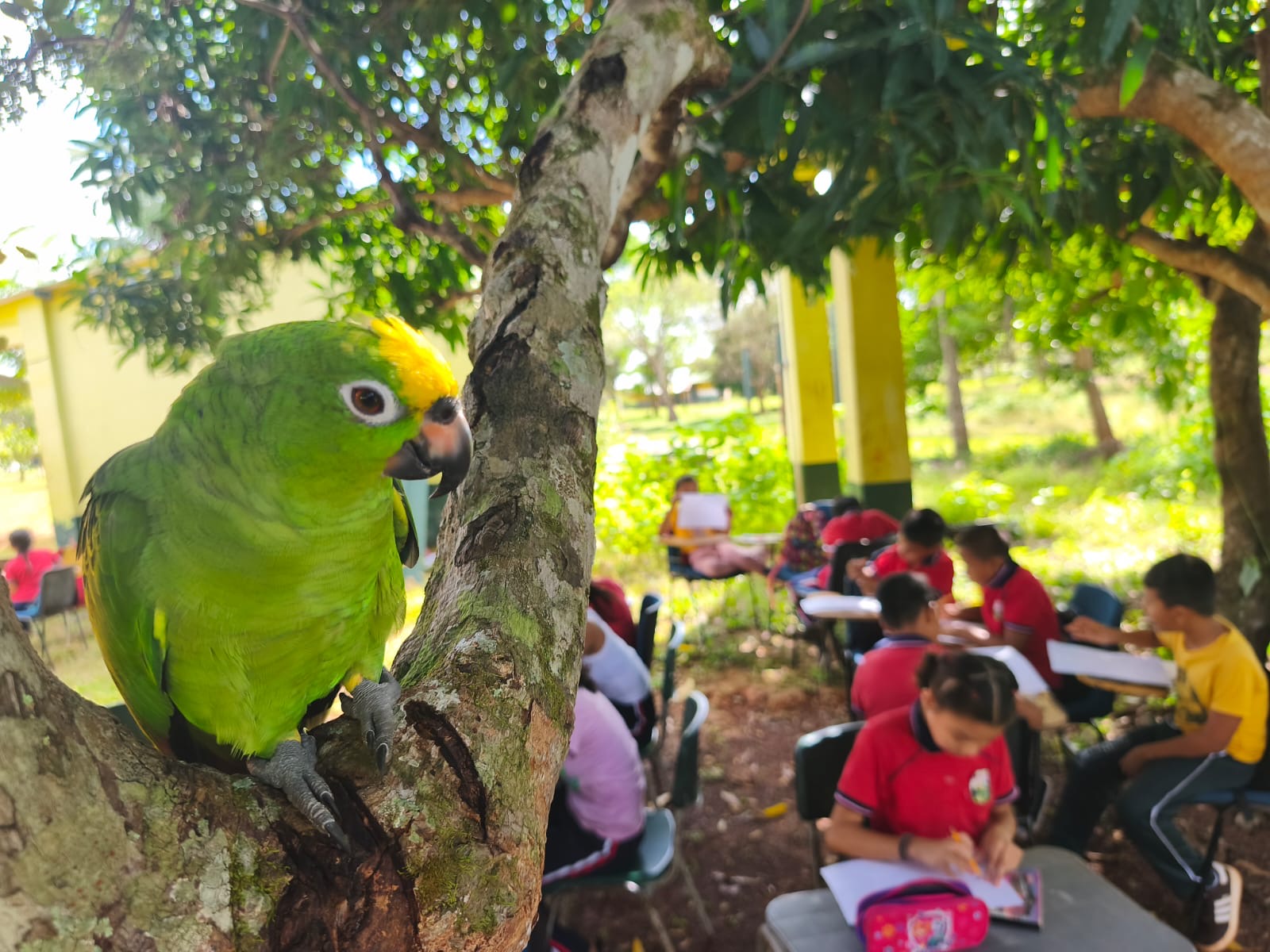
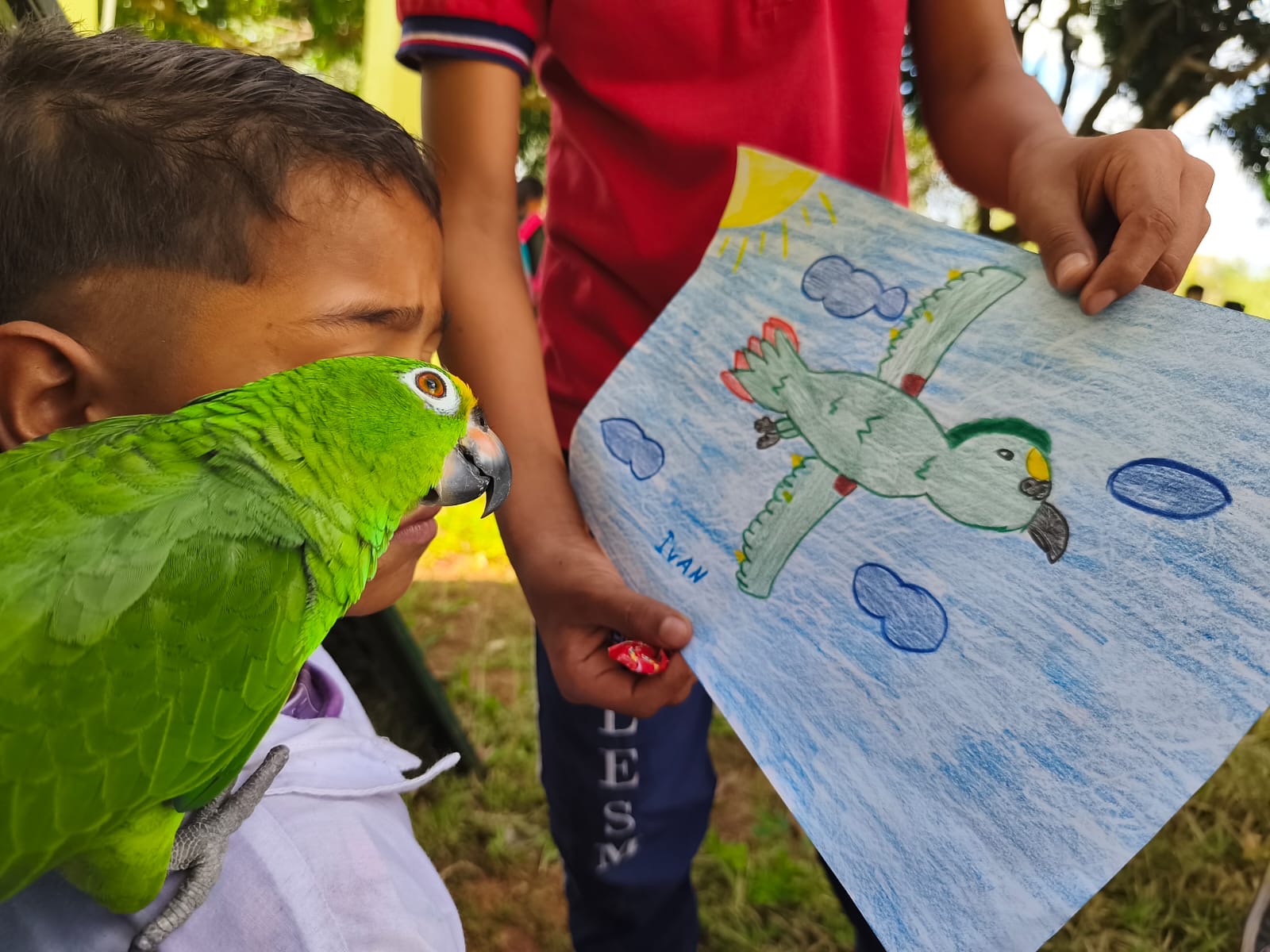
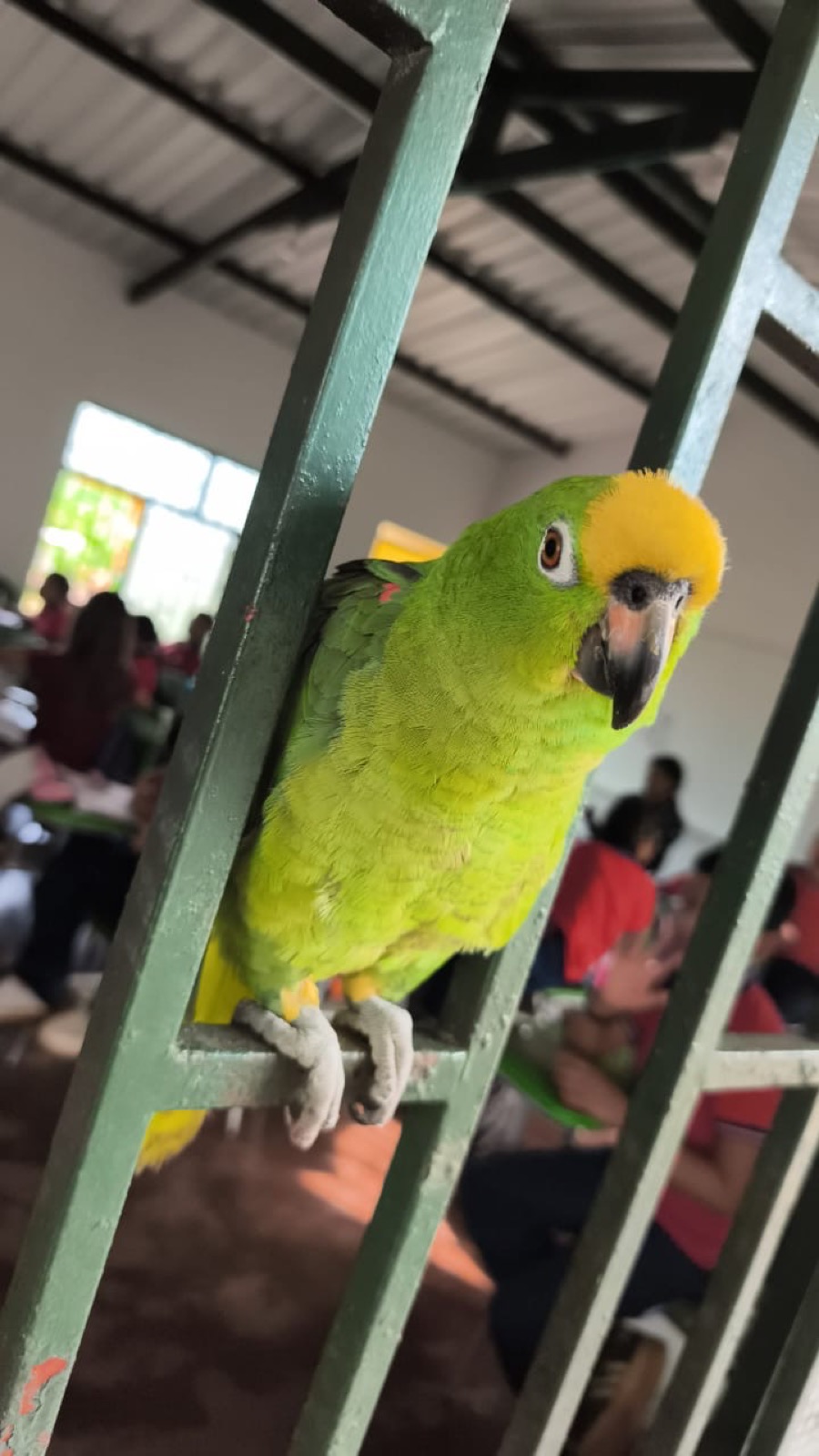
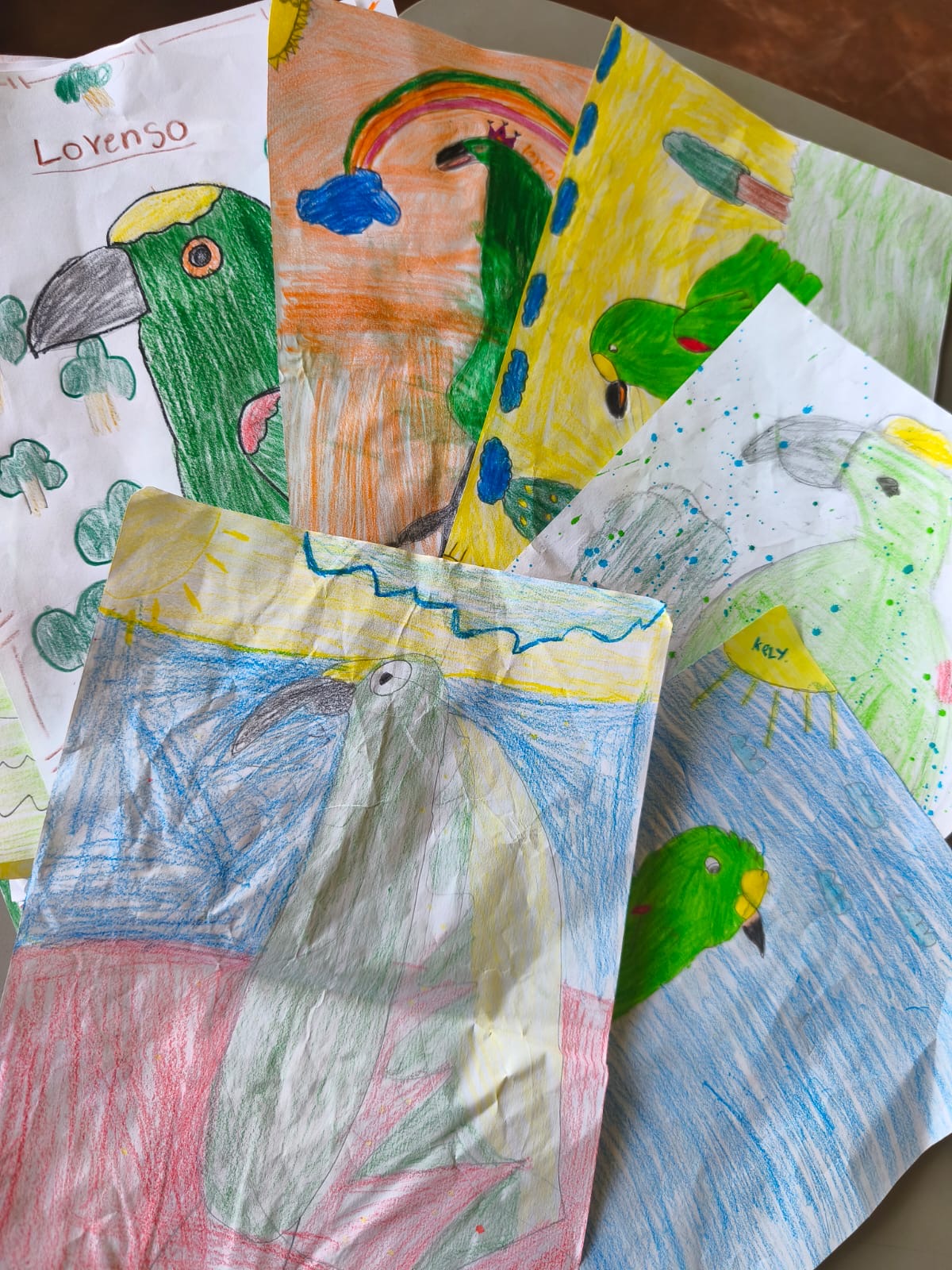
📸 Photos by teacher Elver Camilo Gómez Hincapié.
Analysis and reflections from Fundación Loros
Community — neighbors, families, teachers, and students — is not limited to a human group. It reaches across species when we share in mutual care. By offering Lorenzo, a parrot who chooses to stay with us, shelter, food, and freedom of movement, we build a support network that recognizes the value of every life. Every act — from the farmer who plants fruit trees to the mother who shares a piece of fruit at recess — reflects a shared commitment: to protect our environment and its inhabitants, regardless of species.
Because of this multi-species community, Lorenzo does not just survive — he belongs. Neighbors respect him. Children welcome him. Teachers include him in their lessons. True freedom grows when we care for our shared world together — humans and animals alike.