My great inspiration
By Laura Manuela Cuervo Peñuela · Colombia, Tunja · Yellow-crowned amazon (Amazona ochrocephala)
My story began on a weekend, when I was 9 years old, in the city of Tunja. I remember waking up early with my mom to make a Christmas wreath — a school assignment. I was in fifth grade. Shortly after five in the morning, we started hearing what sounded like a child crying, coming from behind our apartment complex. There were a lot of trees, and we couldn't see anything. It had been going on so long that we grew worried.
As daylight came, we spotted high up in one of the trees some green leaves with colorful markings, moving. Through binoculars, we discovered that the "child" crying and screaming for his mother, in desperation, was a little parrot. We waited to see if his owner would come, but nobody did. At the time, on the ground floor of our building, there were some kids around my age — but they were cruel to animals, and we were afraid that if the parrot wouldn't let himself be caught, they would hurt him.
So my dad decided to catch him in a burlap sack to keep him safe. It wasn't easy: we spent several hours trying. He bit and scratched my brother and my dad more than once. We finally caught him and set up a cage we had at home. He was very nervous and a little aggressive — he wouldn't eat or drink — so we covered the cage with a blanket, hoping it would calm him down. Luckily, it worked for those first few days.
I remember spending hours beside his cage, studying the colors of his plumage: his yellow crest, his pink shoulders, and the tip of his tail and wings, all different colors. He looked like a rainbow. Over time, and after many bites, we earned his trust — until finally he would only let me pet him.
Nobody asked about him as the days passed, so we adopted him, so to speak. Years went by and we became best friends. We went to the park together, I let him loose around the house, I dressed him in my toys' clothes and he let me. Now I think he was very patient not to attack me. I was always an introverted child who found it hard to make friends, so he was my company. He kept me company while I watched TV, did homework, and he decided for himself whether he wanted to stay with me or go back to his cage. I also started taking him outside to trees to sit in the sun, and he would come back on his own when it was time.
He was real company for me. He defended me from my mom's scolding and my brother's pranks. The whole neighborhood knew him, and people would say hello to him.
When I turned 13, I got a severe pneumonia and was hospitalized for a long time. I missed him so much. But when I came home, my parents — following the advice of the pulmonologist treating me — decided to take him to a nearby refuge or sanctuary where there were more parrots. The doctor explained that the fine dust he released when he shook his wings could make my condition worse.
I cried a lot and hated them for making that decision. I went a while without speaking to them, because I felt like they were taking away my best friend. He didn't understand why we were leaving him there. It still hurts to think about what he felt — he probably thought we had abandoned him. But it was the best thing for him. At that sanctuary there were more parrots of his species and others too; he wouldn't be alone anymore.
We went every single weekend to visit him and bring his favorite cookies — he loved Mu de leche and ate them happily — but it was clear the separation had affected him. He no longer let himself be pampered the same way. Over time, the staff at the home earned his trust. Then one day they told us he had "escaped." We assume the staff member he trusted most had taken him to keep.
That was very hard for me. I still think about it and cry, because I would have wanted to say goodbye. Many people believe animals don't feel, but they suffer separations just the same as we do.
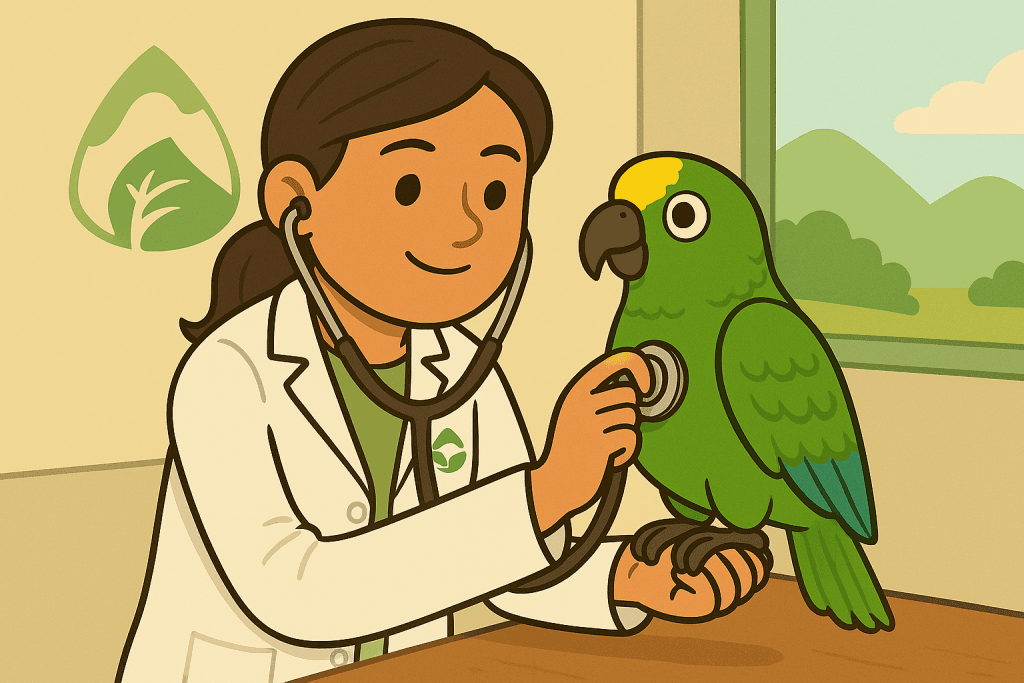
When I finished school, I decided to study veterinary medicine. I had always loved animals and had many pets — I was "the pet girl" where I lived — but I studied the field above all because of him, because of the impact he had on me as a child. He was one of the pets I loved most and who marked my life most deeply.
I chose to write my thesis on psittacines, at the Corpoboyacá transit center, to help parrots in captivity manage and regulate stress and prevent it from affecting their time in rehabilitation centers. It was a sad and happy experience at the same time, because I never stopped thinking about him. Sometimes I would call his name, hoping he might appear among the seized birds — but he never did.
Because of him, I am the person and the professional I am today. His name was Paco, and I was his Lalita. He will always be in my heart.
Analysis and reflections from Fundación Loros
Lalita and Paco's story shows how a genuine bond between a girl and a parrot can shape an entire life. From that morning in Tunja — when at just nine years old she found the frightened little parrot in a tree — Lalita learned the value of protecting another living being. That first encounter, between capture attempts and bites, taught her family that acting fast sometimes saves lives.
As she earned Paco's trust, Lalita found in him a one-of-a-kind companion: a patient friend whose colorful feathers brightened her homework afternoons and who took her side in everyday mischief. When pneumonia forced the girl to leave him at a sanctuary, the pain of that goodbye revealed just how deep the bond ran. Lalita understood that protecting a bird doesn't end at caring for it at home — it means finding the right environment for its wellbeing.
Years later, that lesson became her calling: studying Veterinary Medicine to focus on the care of psittacines in captivity, helping them manage stress and improving their lives through rehabilitation. Although Paco disappeared without saying goodbye, the legacy of their friendship guided Lalita to become a professional, convinced that every parrot deserves respect, attention, and — when possible — a path back to freedom.