What does it take to free a parrot?
How we care for every step at Loros Wildlife Sanctuary
Releasing a parrot is not simply "opening a door".
It is the end (and the beginning) of a complex, delicate, and deeply ethical process.
At Loros Wildlife Sanctuary, every release is a considered decision, based on the animal's wellbeing, safety, and real capacity to survive in the wild.
Because freedom is not an event — it is a shared responsibility.
Not a protocol — a general picture of what's needed
This article does not aim to be a technical protocol, nor a formal guide for other institutions.
Its purpose is to give the general public a clear idea of what is needed — at minimum — to carry out a responsible release of parrots that have been rehabilitated after surviving illegal trade.
A second chance requires preparation
Many of the parrots that arrive at the sanctuary were victims of illegal trade:
they lived in cages, alone, with clipped wings, malnourished, with no contact with others of their species.
Before releasing them, we must undo all that damage and help them remember what it means to be free.
On average, each release involves at least three months of active preparation, though this can vary:
-
It may take less time for young individuals or those raised in adequate conditions.
-
It may require much more time for older birds or those with severe trauma.
Throughout the process, the animals are assessed and supported by biologists, veterinarians, and specialized caregivers.
How do we know when a parrot is ready to return to the wild?
At Loros, we have defined a set of minimum essential criteria for authorizing a release. Here are the most important:
1. Time and adaptation to the environment
-
At least 1 month in health quarantine, plus another month of preparation.
-
The bird must have spent at least 4 weeks at the release site, becoming familiar with the surroundings, sounds, and people without reacting with fear.
-
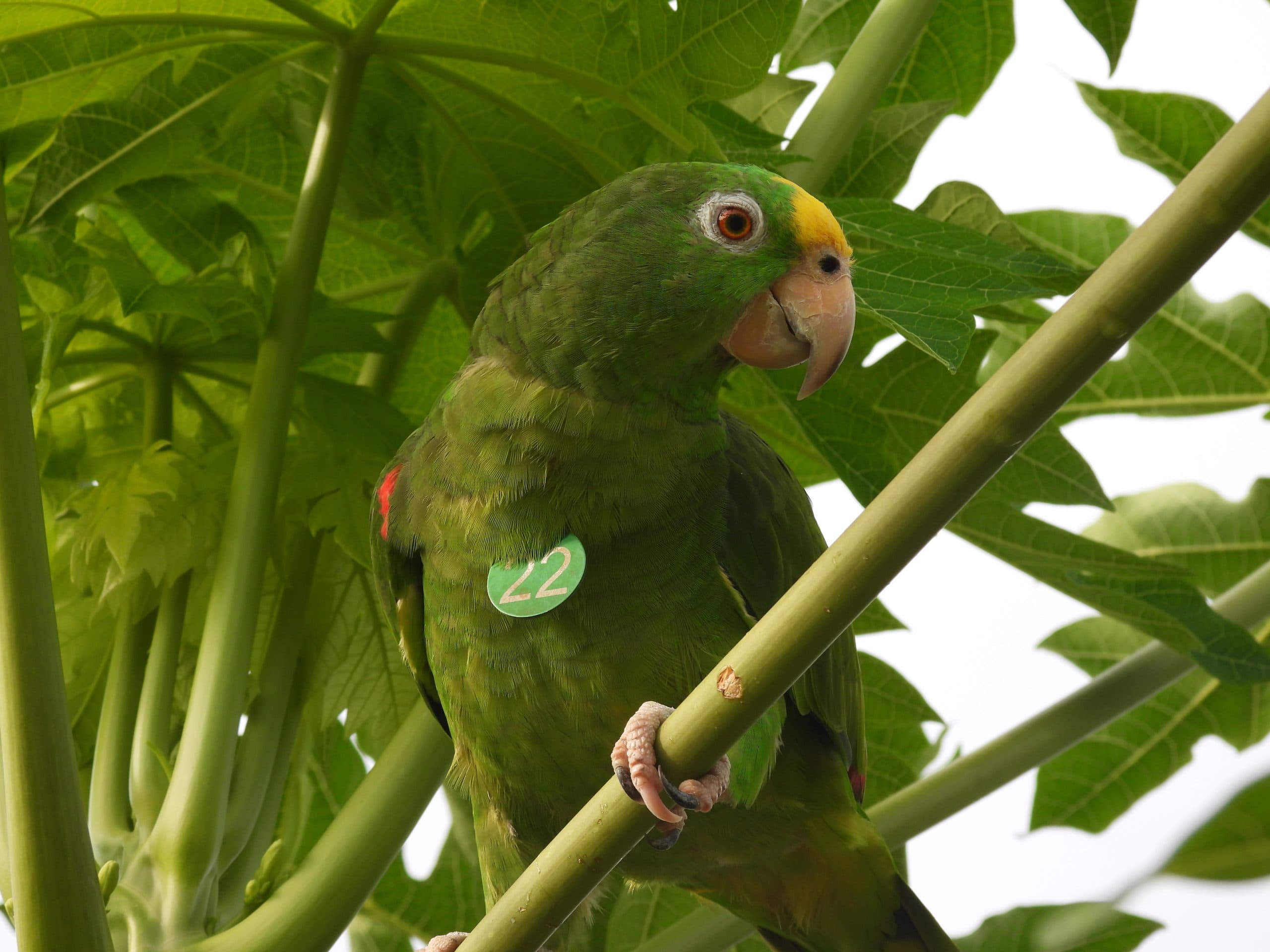
It wears a secure, comfortable identification band.
2. Health and physical condition
-
Plumage in good condition — complete and functional.
-
Good body condition, with no signs of illness.
-
No signs of extreme aging or atypical behavior.
3. Flight ability
-
Flies with control and precision in all directions.
-
Responds appropriately to stimuli (flees when it senses danger).
-
Does not collide with walls or become disoriented in flight.
-
Recovers quickly after exertion, without excessive fatigue.
4. Social behavior
-
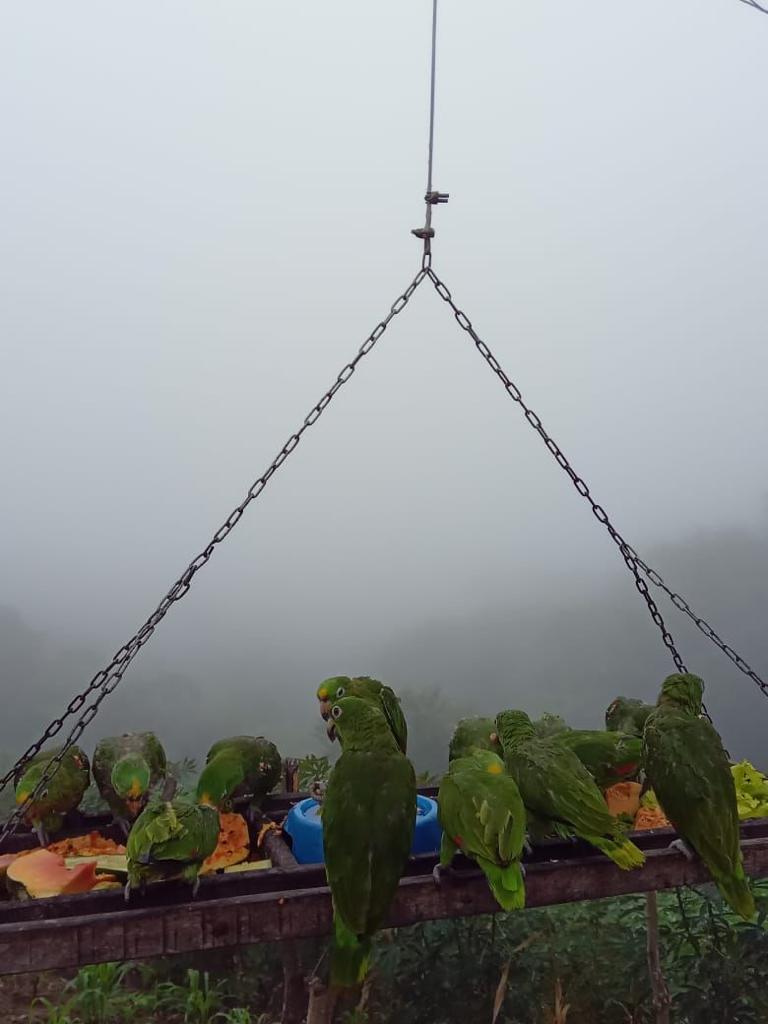
Feeds, sleeps, and perches in a group.
-
Does not seek physical contact with people (does not perch on shoulders or walk on the floor).
-
Interacts positively with other individuals, especially those already released.
-
Is part of a cohesive group of at least 10 parrots.
How does the release take place?
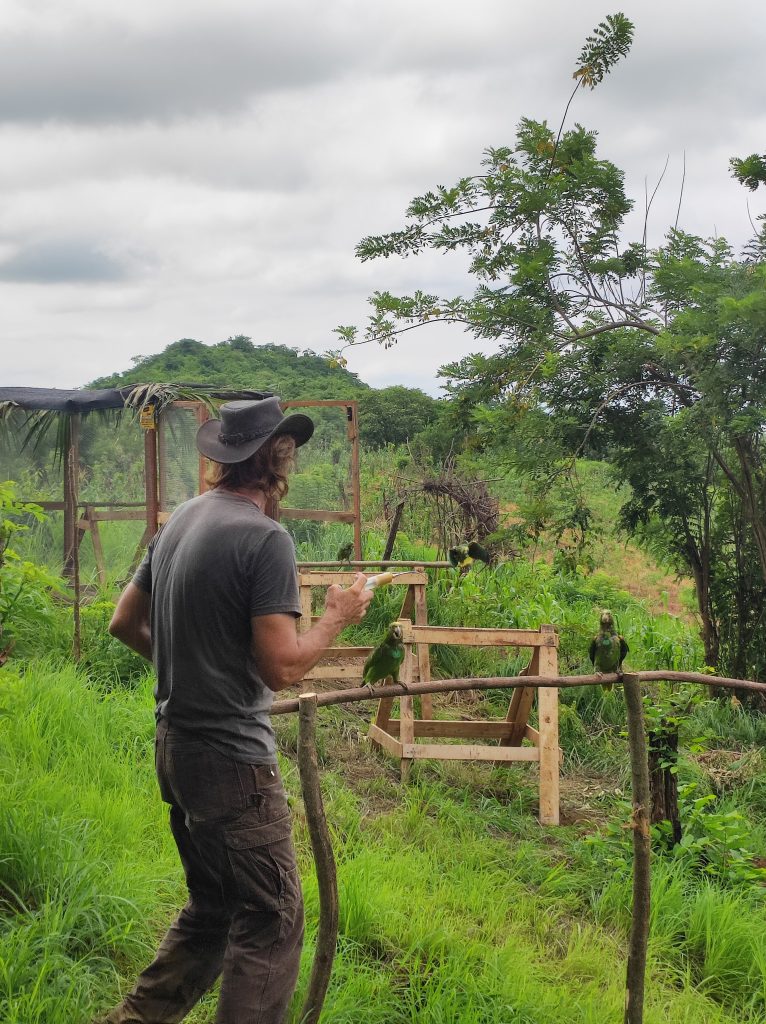
The release is a critical moment and must happen under the right conditions:
-
Priority is given to releasing the calmest individuals first, to avoid abrupt dispersal.
-
It takes place before feeding time, guiding the birds toward external feeding stations.
-
Several feeding points are set up to prevent conflict.
-
Ideally, other parrots of the same species are already outside — fed and settled, so they don't perceive the newcomers as intruders.
-
Releases are avoided during storms or heavy rain. Stable weather or light drizzle is preferred.
-
The site must have nearby trees or structures where newly released birds can take shelter if needed.
During the month following release, the birds receive food support twice a day, with continuous monitoring.
The three months after release: the real beginning
A release is not a happy ending.
It is the start of a new stage, full of challenges.
At Fundación Loros, we apply a strategy of progressive adaptation, designed to respect each animal's individual pace.
This includes:
-
Keeping feeders and water stations active, with fresh food, every day.
-
Observing their movements, reactions, and feeding patterns.
-
Identifying risky behaviors, such as coming down to the ground, where they become easy prey for dogs or other predators.
-
Temporarily reintegrating any individual that shows no clear signs of adaptation.
What about "instinct"?
We often hear phrases like:
"They're animals — they have instinct, they'll know what to do."
But instinct is not an automatic switch.
It is like a language or a physical skill: it requires practice, exposure, and memory.
Could you learn Mandarin in a week, just because people in China speak it?
Or run a marathon after years without moving, simply because "all humans know how to run"?
Parrots raised or kept in domestic environments need time to understand this new world. We make sure that transition is gradual, safe, and guided. Step by step.
What are we aiming for with a release?
"The two main behaviors we want to establish are:
first, flying through the subconscious mind, like walking without thinking about where to place your feet;
and second, finding and staying close to the feeding station."
– Chris Biro
It is not enough for a bird to be able to fly.
It must know how to live free.
And that means navigating, socializing, feeding, staying safe, and adapting to a changing environment.
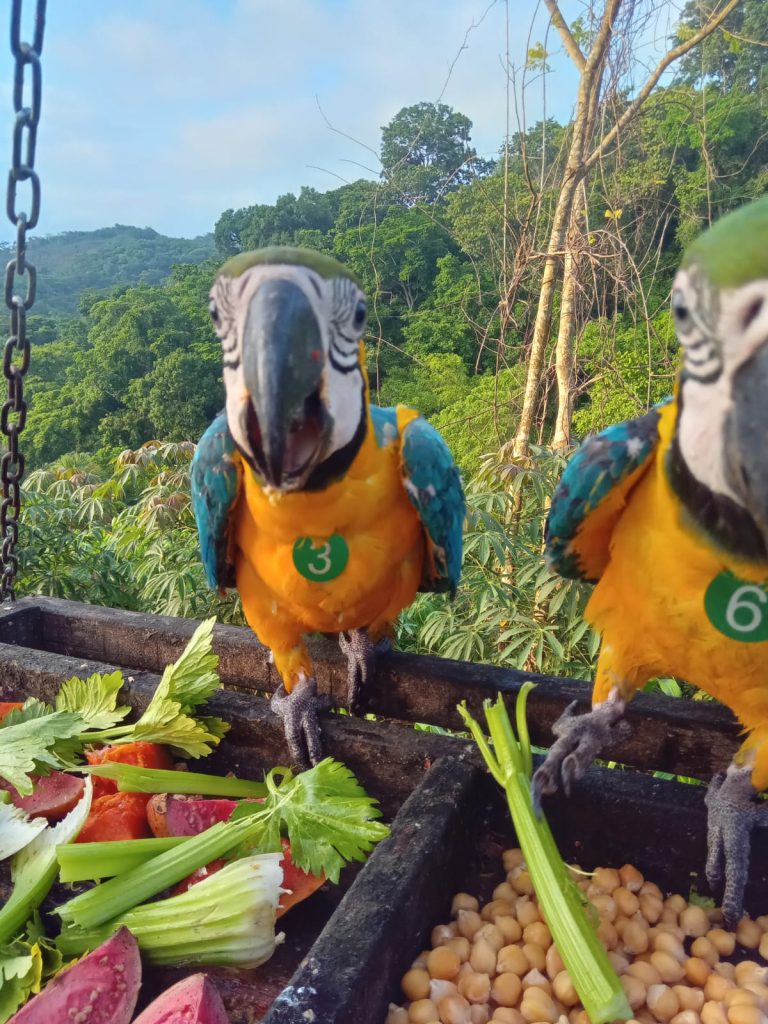
Releasing is not letting go — it is caring more carefully than ever
At Fundación Loros, every release is an act of trust.
An ethical commitment to life, freedom, and the future of species.
We don't rush the process.
We don't release animals just "because they're healthy now".
We only release when there is a real probability of success — both biological and social.
And when a flock crosses the sky, we know it is not the end.
It is only the beginning of a new life in the wild.
Want to see how we release rescued parrots in Colombia?
-
Watch our videos on YouTube https://www.youtube.com/@loros-wildlife-sanctuary
-
Follow us on Instagram: @fundacionloros
Open review
Reviews of this article
This text gets corrected with input from the field. You can review the whole article below, or scroll back up and flag a specific paragraph while you read. We read every submission before publishing it.
This article has no published reviews yet. If something you read contradicts your experience, misses a nuance, or you can add to it from your own fieldwork, write it here: we read all of it.
Leave your review
You can review the whole article from here, or flag a specific paragraph while you read.