Sponsor a Species
Sponsor a species · Monthly support
Help them fly again
Set your gift and activate your sponsorship in under two minutes.
1/4 · Amount
Choose your monthly gift
Every month, your gift sustains the rehabilitation and return to freedom of rescued parrots and macaws.
Prices in US dollars (USD). Charged in Colombian pesos: ≈ $ 100.000 per month.
Your gift matters: it joins work already underway.
10 especies
Psittacines on the path back to freedom
21.888
Trees of the tropical dry forest committed to planting
520 ha
Under management in the tropical dry forest
A foundation that shouldn't have to exist
Giving freedom back isn't opening a cage. It's teaching a whole flock to fly, to find food in the wild, to recognize a predator and to trust their own — until they can return as one and stay.
It's slow, hard, expensive work. It shouldn't have to exist. But it does — and it began with a single parrot.
Our story
How it all began
In 2019, in a Cartagena apartment, a green-and-yellow chick arrived in a cardboard box. They raised it by hand —a syringe, a spoon, the internet as the only vet— not yet knowing that this small green body would start something. They named him Beethoven. He was the very first.
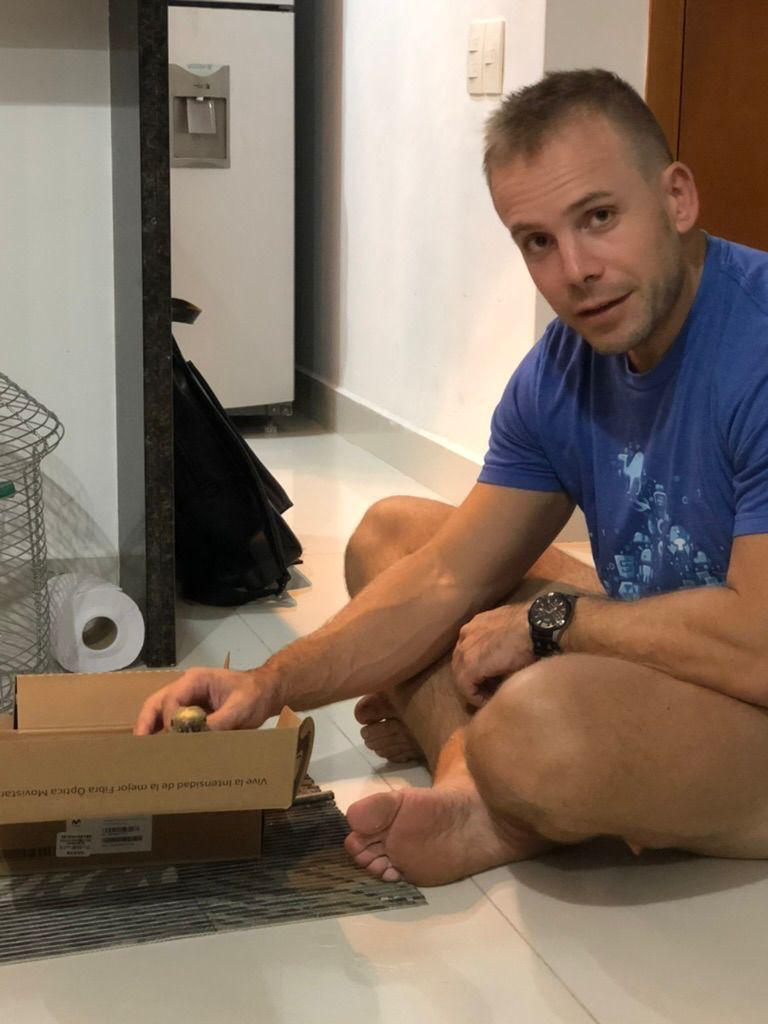
Alejandro Rigatuso and Beethoven · Cartagena, 2019 — Fundación Loros' first parrot.
Read the full story →From one parrot to a reserve
In 2022, the environmental authority granted Alejandro a permit to rehabilitate parrots. A few arrived at first; soon, dozens. And behind them, thousands more — the ones seized in Colombia every year.
The foundation grew with them. It bought land so rehabilitated parrots could fly free again, and biologists and scientists —from Colombia and abroad— joined the work. What began in an apartment is now a reserve.
But the problem is vast, and that is why we need you.
What one parrot made possible
Years later, what once fit in a cardboard box is a reserve of over 500 hectares: hundreds of rescued birds and a whole community —volunteers, biologists, farmers, schools, scientists and environmental authorities— working to give a second chance to those who never should have lost their freedom.
The method you fund isn't just our experience: it's published, peer-reviewed science.
 Published in · Peer-reviewedBird Conservation InternationalCambridge University Press · 2026 · Open access
The method we published
The journey home, in 5 stages
Every parrot you sponsor returns to the wild the same way: gradually, in stages, never all at once. From rebuilding flight inside the aviary to full independence in the forest, the bird advances by milestones — and we step back at each one. As a sponsor, you follow every step.
1 / 5
Inside the aviary
Rebuilds fitness and bonds with its own flock.
- Group flight between stations
- Building flock cohesion
- A natural diet — no human food
You get updates from this stage
What your sponsorship includes
- ✓Photos & videos of the rehabilitation process. Feeding, training, releases and monitoring.
- ✓Updates from our field rangers. What's happening on the ground, from the people who watch over them.
- ✓Updates from our veterinarian. Health, recovery and welfare notes.
- ✓A monthly report. Progress of the species' process, by email.
- ✓Testimonials from our team. Voices from the rangers, vets and trainers.
- ✓Recognition. Your name in our sponsors list and a mention on social media.
What you sponsor is a process — not a pet. When you sponsor a species you fund its rehabilitation and release process — food, veterinary care, free-flight training, post-release monitoring and the community work that keeps released birds safe.
From $30/month
Macaws
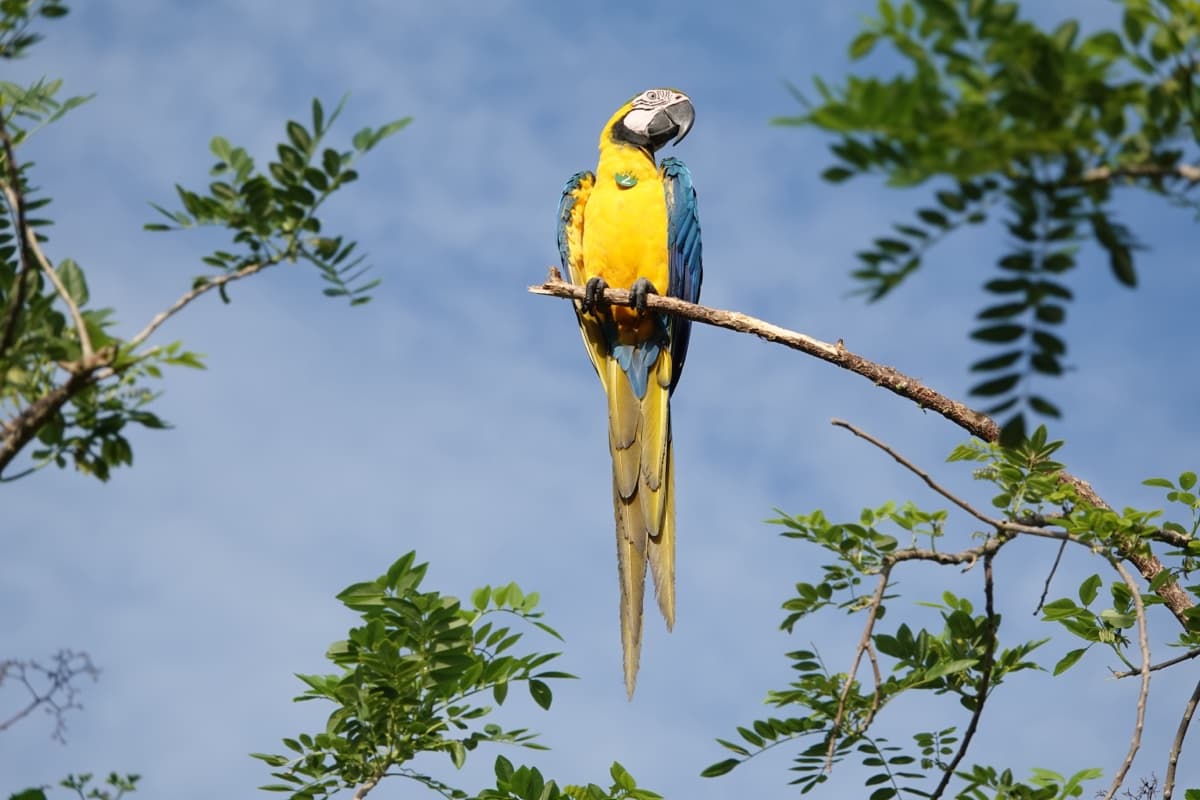
Ara ararauna
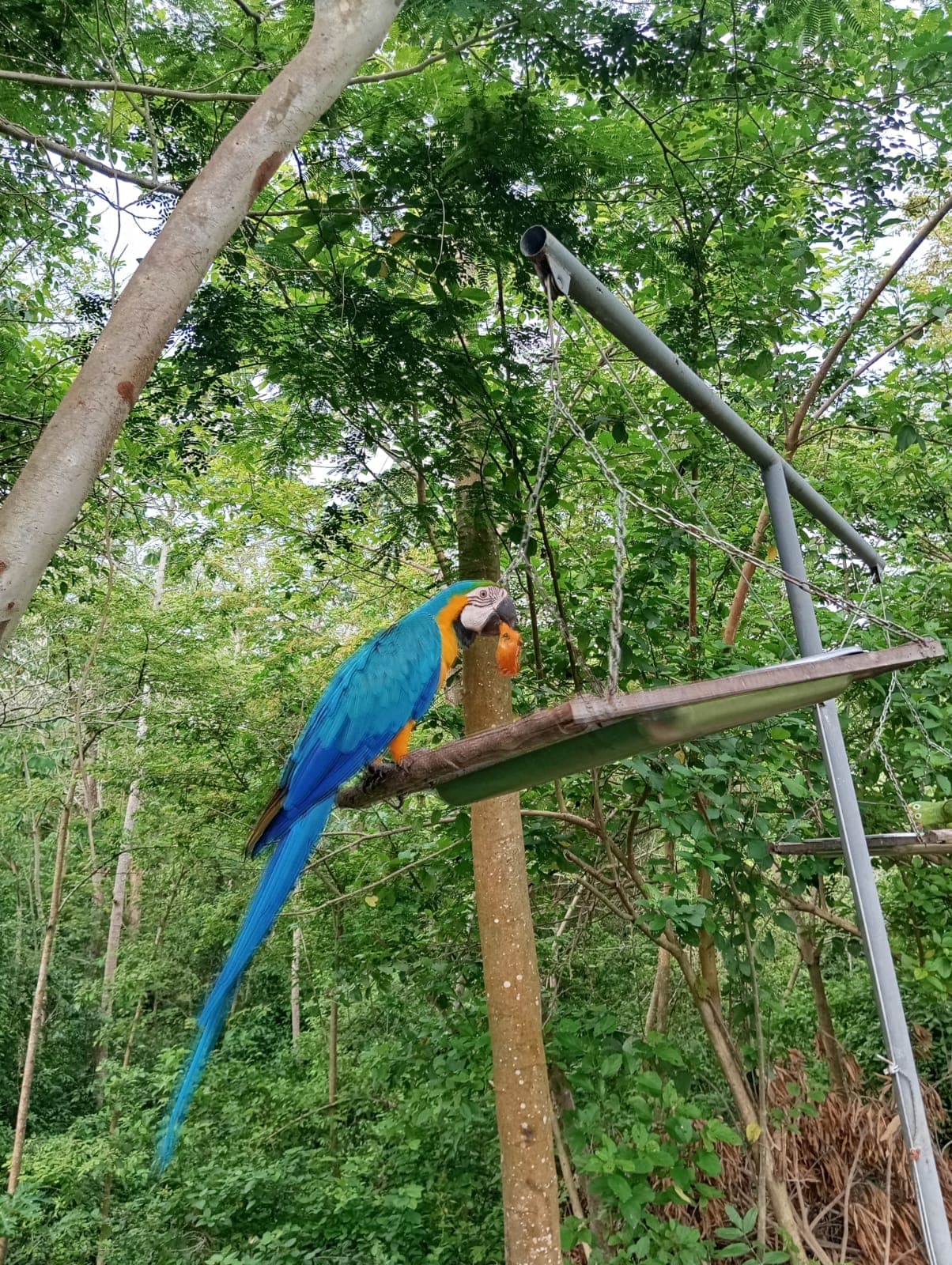
Blue-and-yellow macaw
One of the most recognizable macaws in the tropics: deep blue back, yellow chest and a white facial mask. They form stable pairs that fly together above the forest. In Colombia, populations have been pressed by the illegal pet trade.
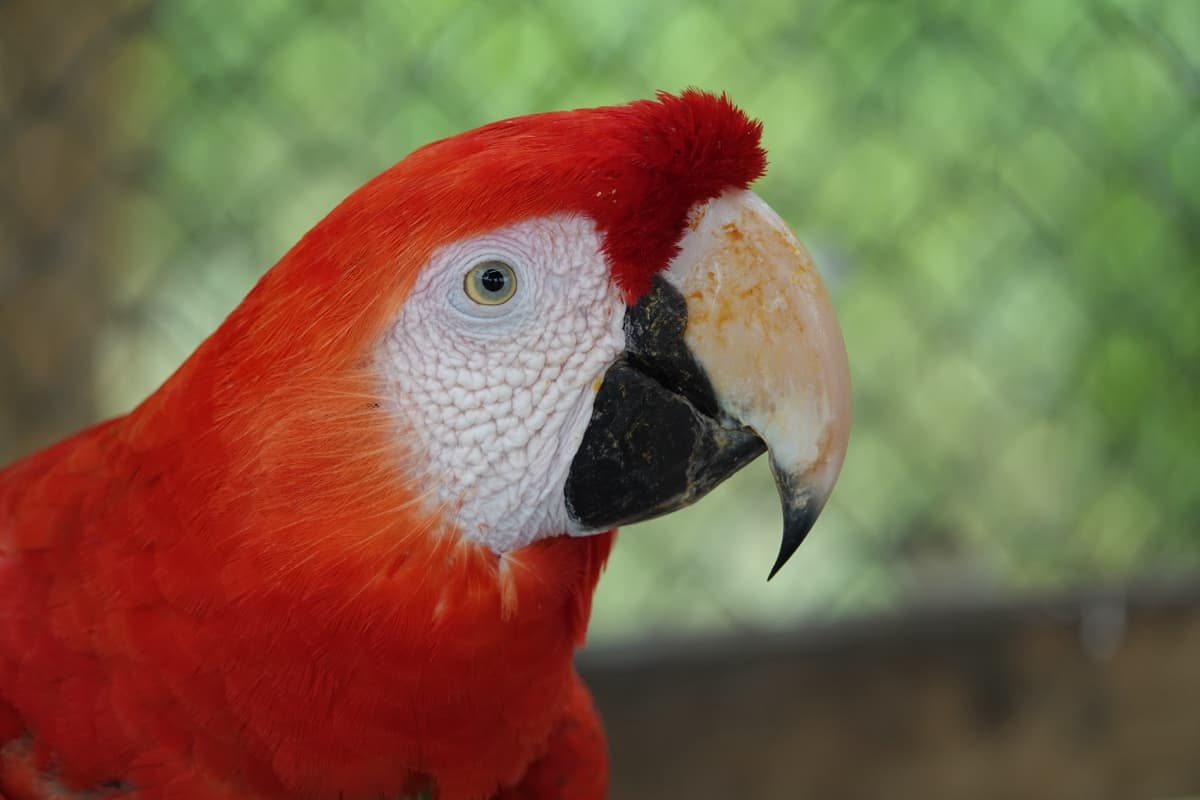
Ara macao
Scarlet macaw
Known in Colombia as «guacamaya bandera» because its red, yellow and blue colours echo the national flag. They form lifelong pairs and need huge trees to nest — their recovery depends on mature, connected forests like the reserve's.
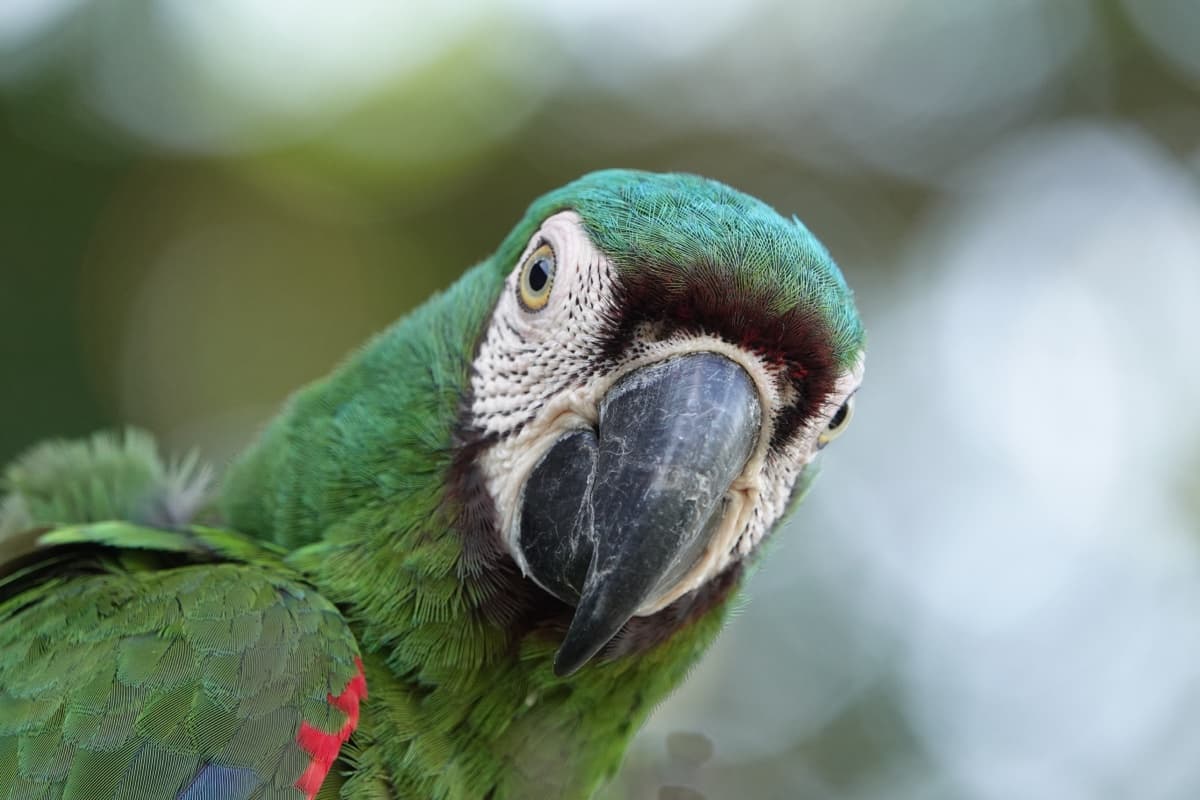
Ara severa
Chestnut-fronted macaw
A small macaw, mostly green, with chestnut forehead and cheeks and a flash of red beneath the wing. It flies in family flocks. Though its population is stable, in the Caribbean region it is pressed by the illegal capture of chicks.
From $14/month
Parrots
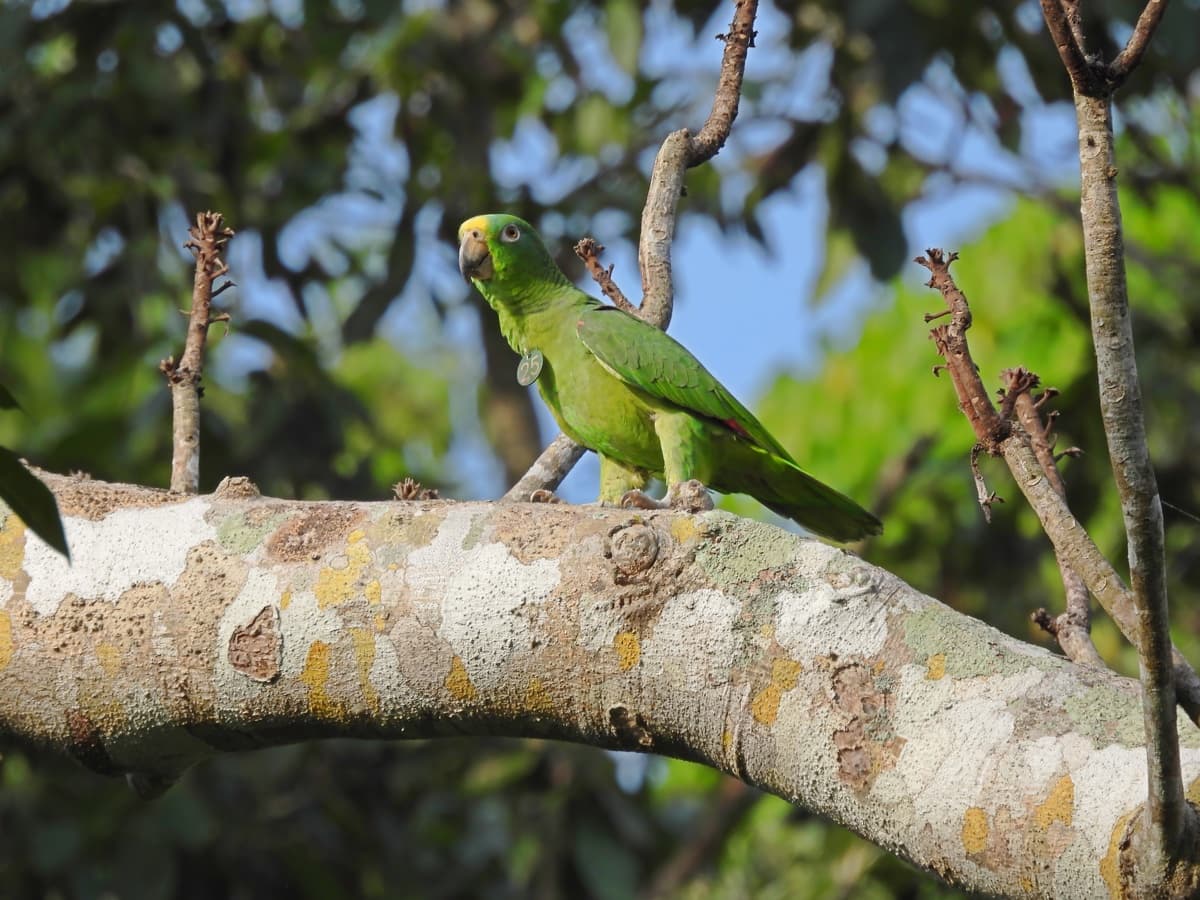
Amazona ochrocephala
Yellow-crowned amazon
Our flagship species. A large green parrot with yellow forehead and crown. The most-trafficked parrot in Colombia, and the reason Fundación Loros was founded. Its release was the subject of our peer-reviewed paper in Bird Conservation International.
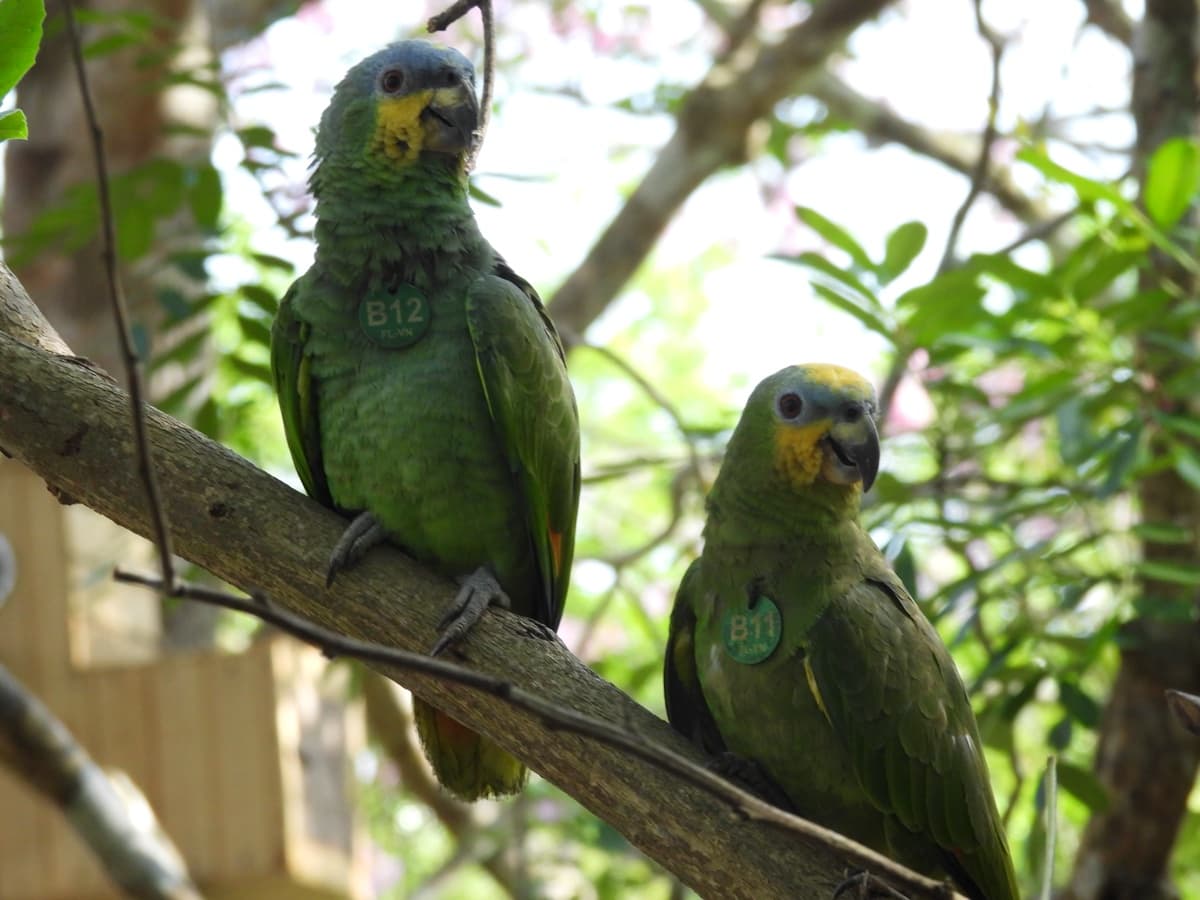
Amazona amazonica
Orange-winged amazon
A common amazon of northern South America: green body, blue forehead, yellow cheeks and an orange wing patch that gives the species its name. Lives in pairs and noisy flocks; several rescued individuals share spaces during rehabilitation in the reserve.
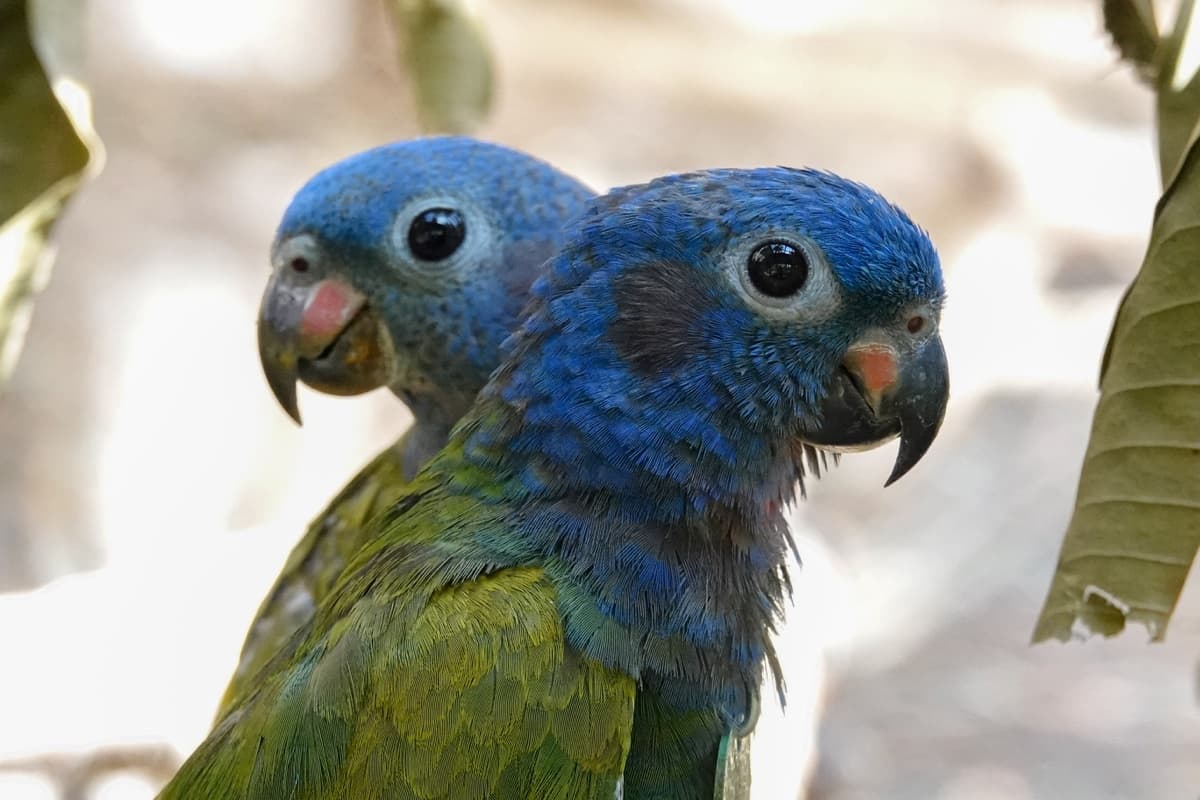
Pionus menstruus
Blue-headed parrot
Mid-sized parrot recognized by an entirely cobalt-blue head and chest over a green body. It flies in compact flocks at dawn and dusk. In Colombia it is a frequent target of the illegal trade because it readily learns sounds.
From $9/month
Conures & parakeets
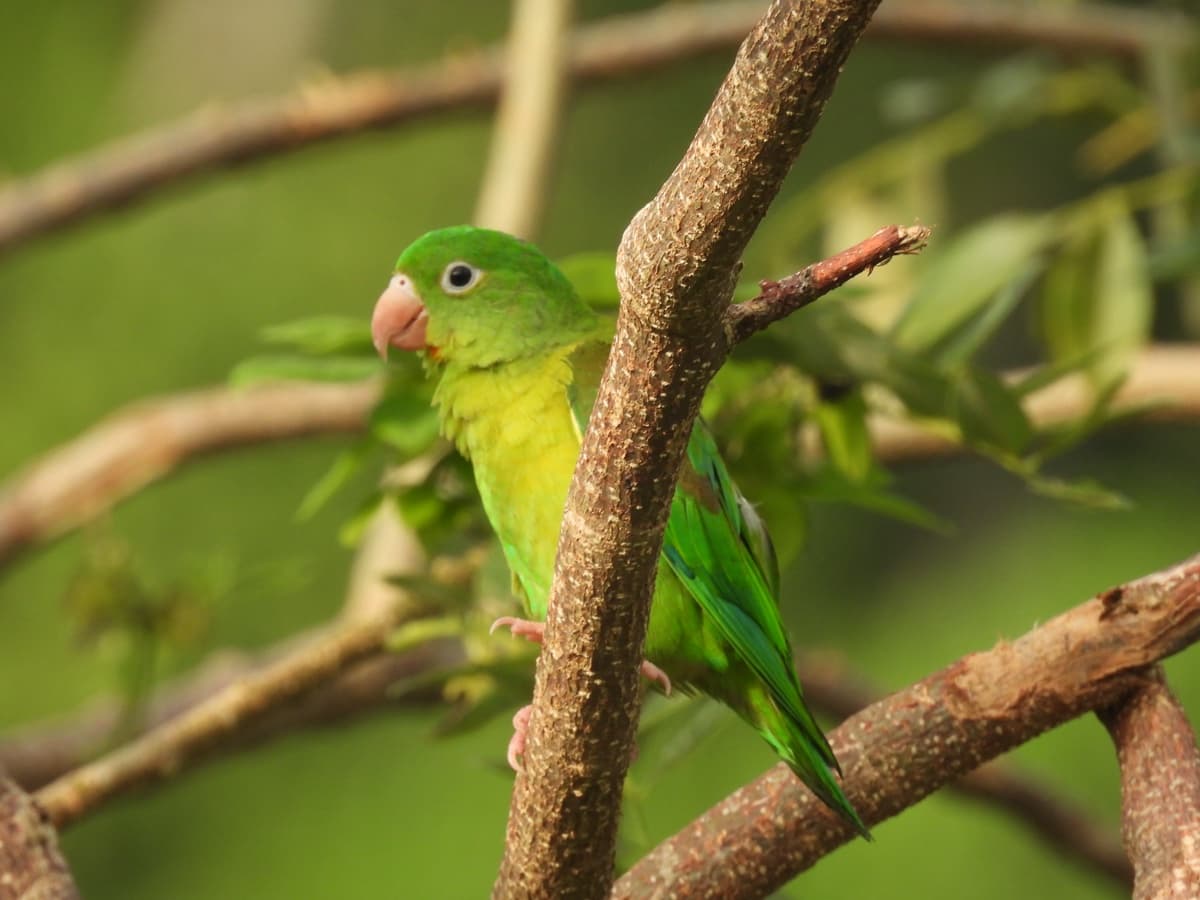
Brotogeris jugularis
Orange-chinned parakeet
A small, bright-green parakeet with an orange chin and a bronze wing patch. Flies in noisy, swift flocks above the dry-forest canopy. One of the most abundant parrot species in the region, though still vulnerable to the illegal trade.
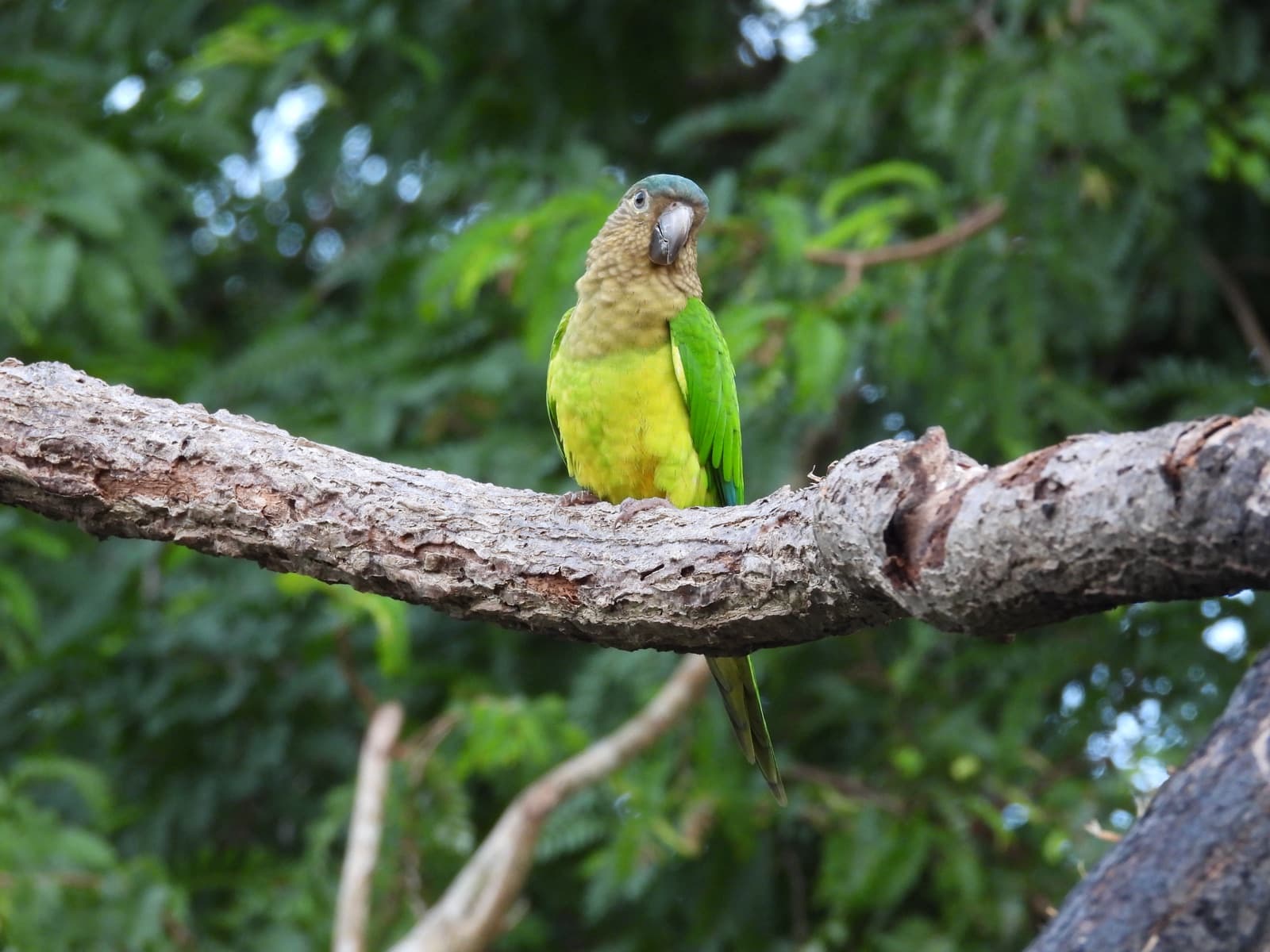
Eupsittula pertinax
Brown-throated parakeet
A small green parakeet with a dusky brown face and throat. Common in the Colombian Caribbean, it lives in noisy flocks and nests in cavities and arboreal termite mounds, helping disperse dry-forest seeds. Though abundant, it is also taken by the illegal pet trade.
Live from the reserve
The species you sponsor, in the field
Field notes from our team featuring the eight species in this program. This is the rehabilitation your sponsorship funds — as it happens.

2 months ago
Bryam David, the Visitor Who Brought Art
Alejandro Rigatuso

4 months ago
Seven Years of Canopy and Number 15 Is Finally Free
Alejandro Rigatuso

4 months ago· 10.4464, -75.2616
Loreta (#14) Didn't Move Despite the Thunder
Omar Enrique Verdugo Cabeza

5 months ago
Erica Montoya and the Treasure of Every Corner
Alejandro Rigatuso

5 months ago
Three Species, One Single Crown
Alejandro Rigatuso
5 months ago
Number One Always Knew the Way Back
Omar Enrique Verdugo Cabeza
Not sure which species?
Every sponsorship funds the same process — rescue, rehabilitation, free-flight training and release. Pick the one that moves you.