Birdwatching beyond the walls of Cartagena
A private morning among 200+ species — toucans, parrots and the macaws we set free — in a tropical dry forest and recognized eBird hotspot, an hour from the city.
Free hotel & Airbnb pickup in Cartagena
Verified credentials
- Peer-reviewed scienceBird Conservation International · Cambridge
- eBird hotspot200+ species documented
- Legally authorizedCARDIQUE · Res. 1972/2022
- Registered tour operatorRNT 236330 · Colombia
Book direct: 10% off the price on TripAdvisor, Airbnb, and GetYourGuide.
At a glance
Pickup & return
From your hotel or Airbnb in Cartagena
Private door-to-door transport, round-trip included
Duration
6 hours
Morning shift 5:30 AM – 11:30 AM · Afternoon shift 12 PM – 6 PM
Price
USD $150 per person
Children up to 18 years old pay 50%. All inclusive.
Group
Max. 5 people per guide
Small groups, bilingual guide Spanish/English.
Minimum age
7 years
No maximum age. Suitable for those in good physical condition.
What's included
Everything, no extras
Private door-to-door transport + breakfast or welcome snack + farewell snack + bilingual guide + activity + native tree planting.
Tree planting included
A native tree
Each visitor plants their own tree in the tropical dry forest restoration zone.
Location
Near Cartagena
35 km from Cartagena · see on Google Maps →
Languages
English and Spanish
Private birdwatching: 200+ species where the sky is filling up again.
The tropical dry forest of Villanueva holds more than 200 bird species — from toucans and trogons to Amazonian parrots and macaws in the process of reintegration. The birdwatching outing is private, led by specialist guides who know every nesting site, every water source, and every peak activity window of the day. For experienced birders or those who want to start right, this is one of the most accessible hotspots on the Colombian Caribbean coast.
The day starts early with a traditional breakfast by the lake and a short talk about the foundation's work. Then we head out along forest trails and edge zones with binoculars, a field guide, and a spotting scope where applicable. You'll see resident and migratory birds, along with the released psittacines that now form stable flocks in the wild. Before the day closes, you plant a native tree and visit the nursery that sustains the habitat restoration work.
Why there are so many birds here: 35 km from Cartagena.
The tropical dry forest is one of Colombia's most threatened ecosystems — but also one of the most biodiverse when it's protected. The Fundación Loros reserve protects 1,300 acres in Villanueva, Bolívar — land where the foundation releases and monitors individuals rescued from illegal trade, and where forest restoration is drawing in more and more wildlife.
The full value of your experience is reinvested in the foundation's mission: rehabilitation of psittacines, forest restoration, post-release monitoring, and partnerships with farmers who sustain the ecological corridor.
"A great opportunity to view three species of macaws and numerous parrot species that are being rehabilitated to be released to the wild." — Peter S., Viator (abril 2025)
A glimpse of the reserve
A recognized eBird hotspot
Loros Wildlife Sanctuary is an official eBird hotspot with 200+ documented species — from common residents to genuinely hard-to-find birds. Among the most sought-after by birders:
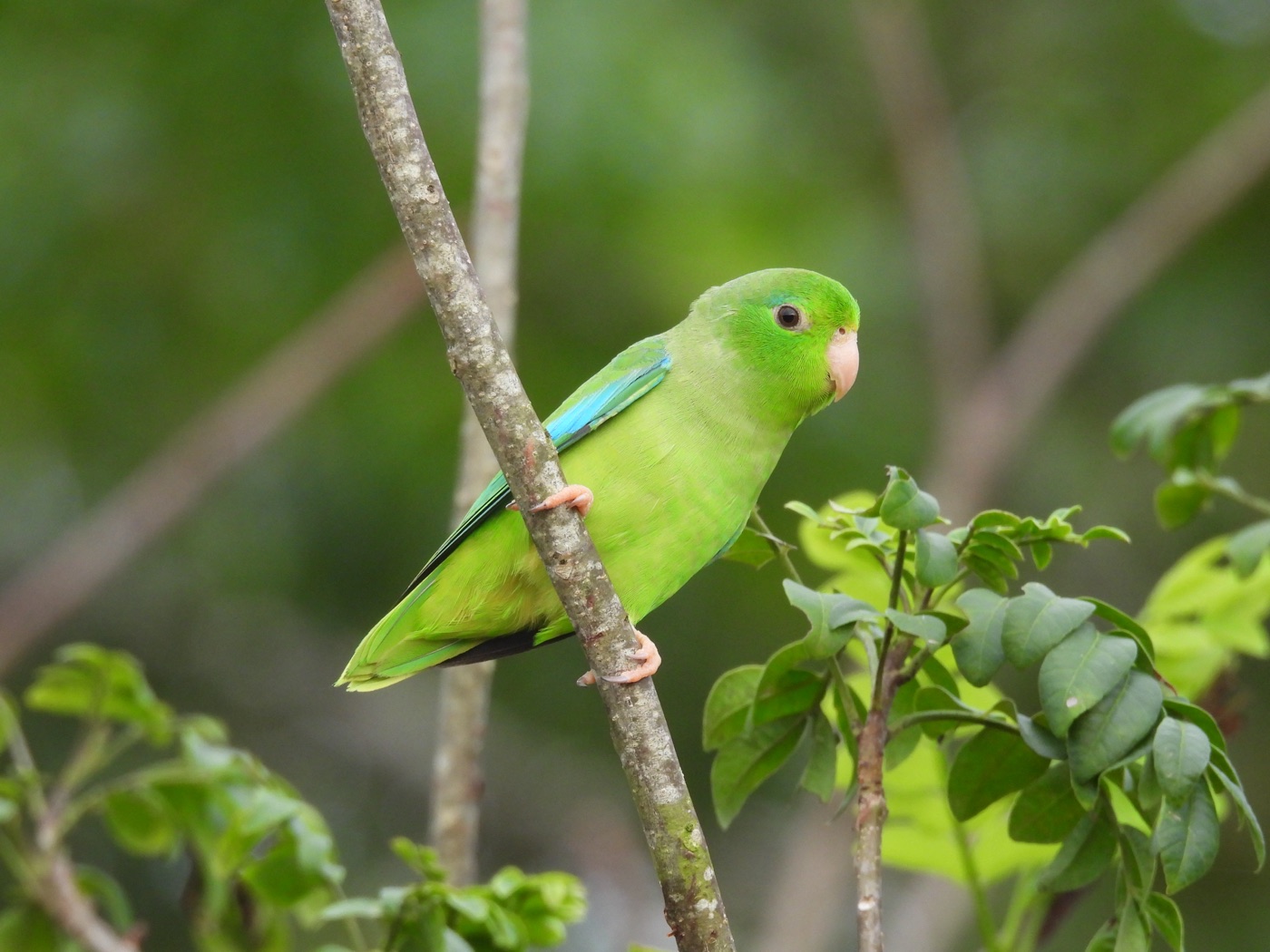
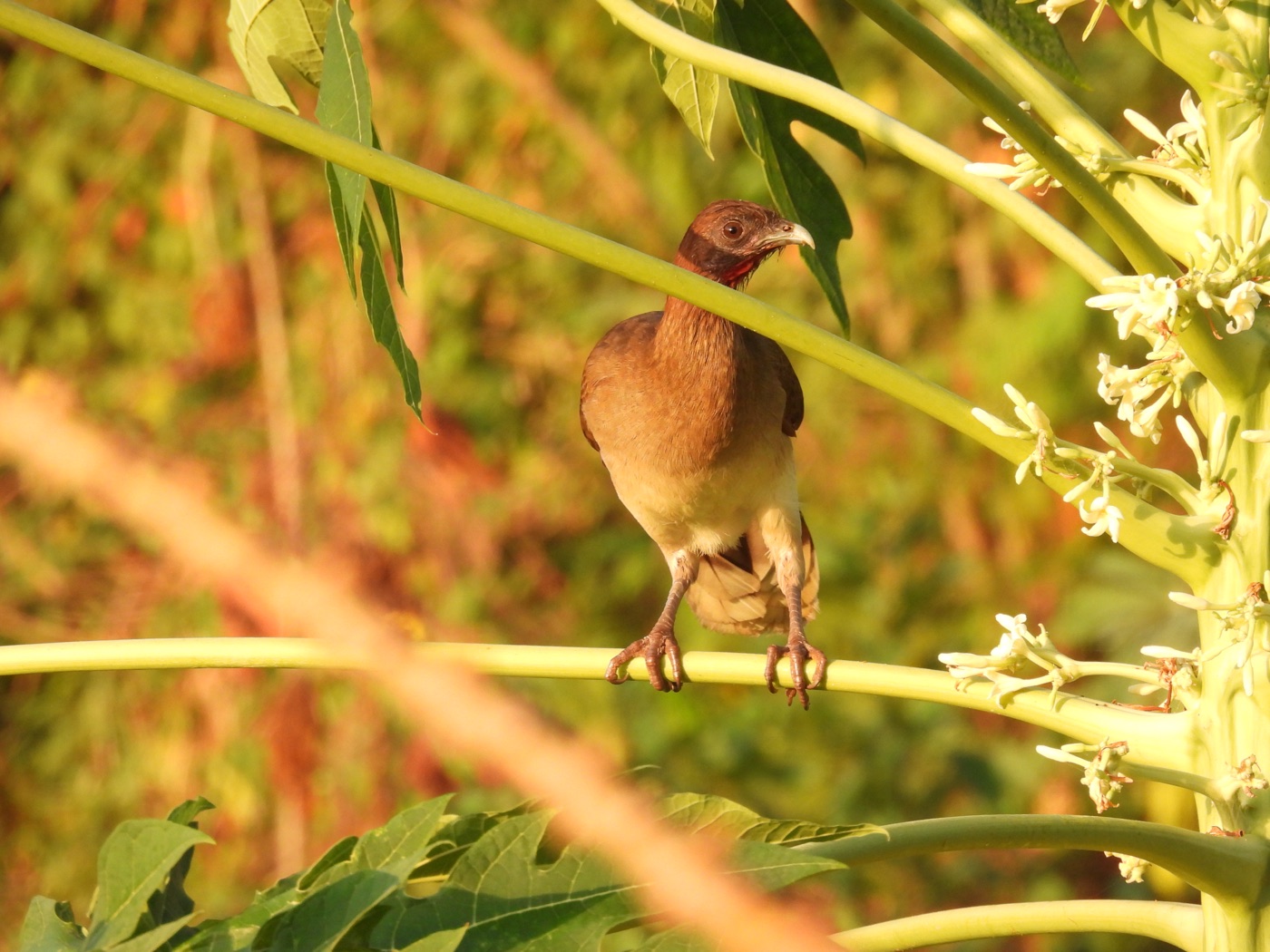
- Endemic: Forpus spengeli (Turquoise-winged Parrotlet), Ortalis garrula (Colombian Chachalaca)
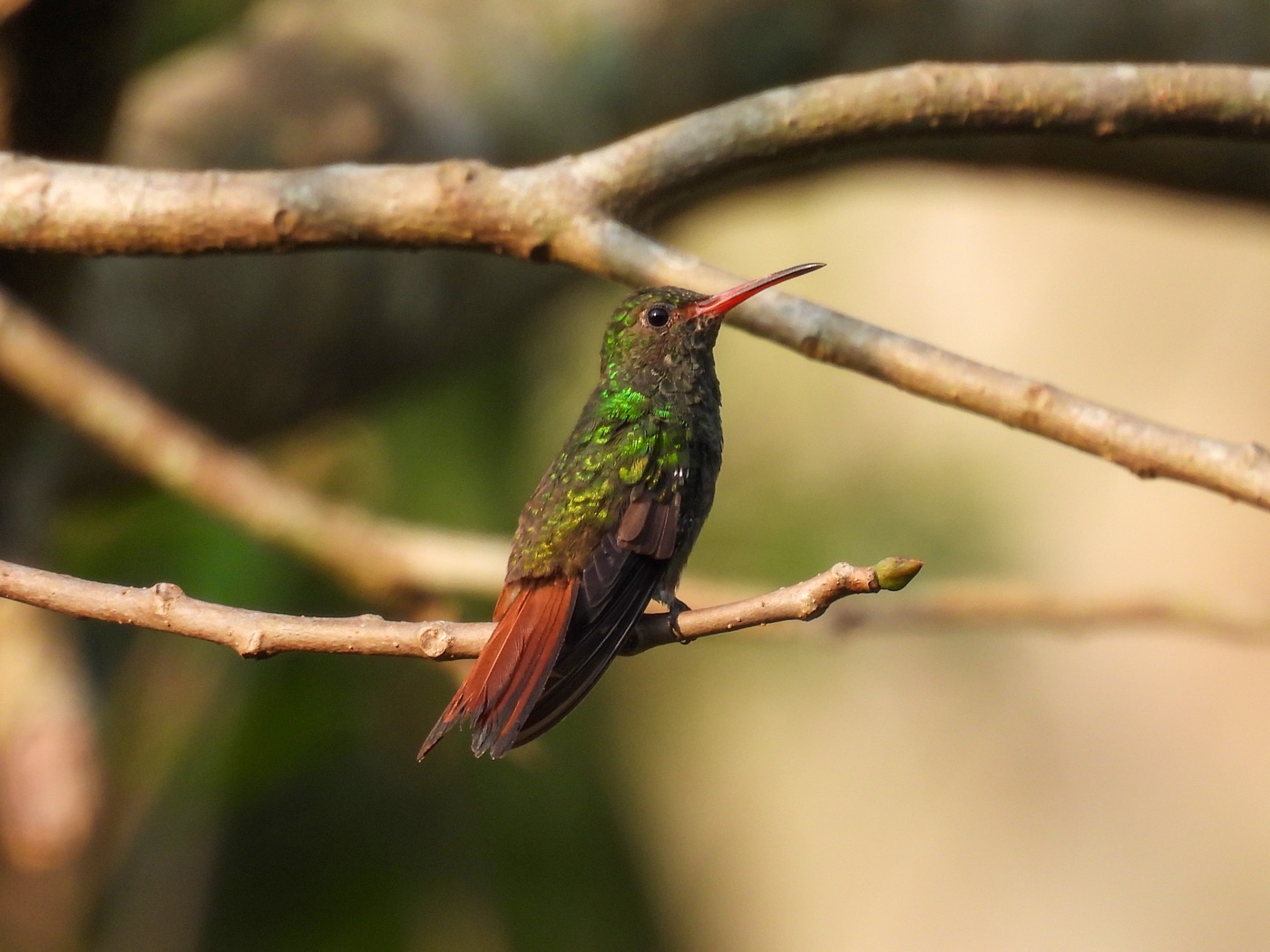
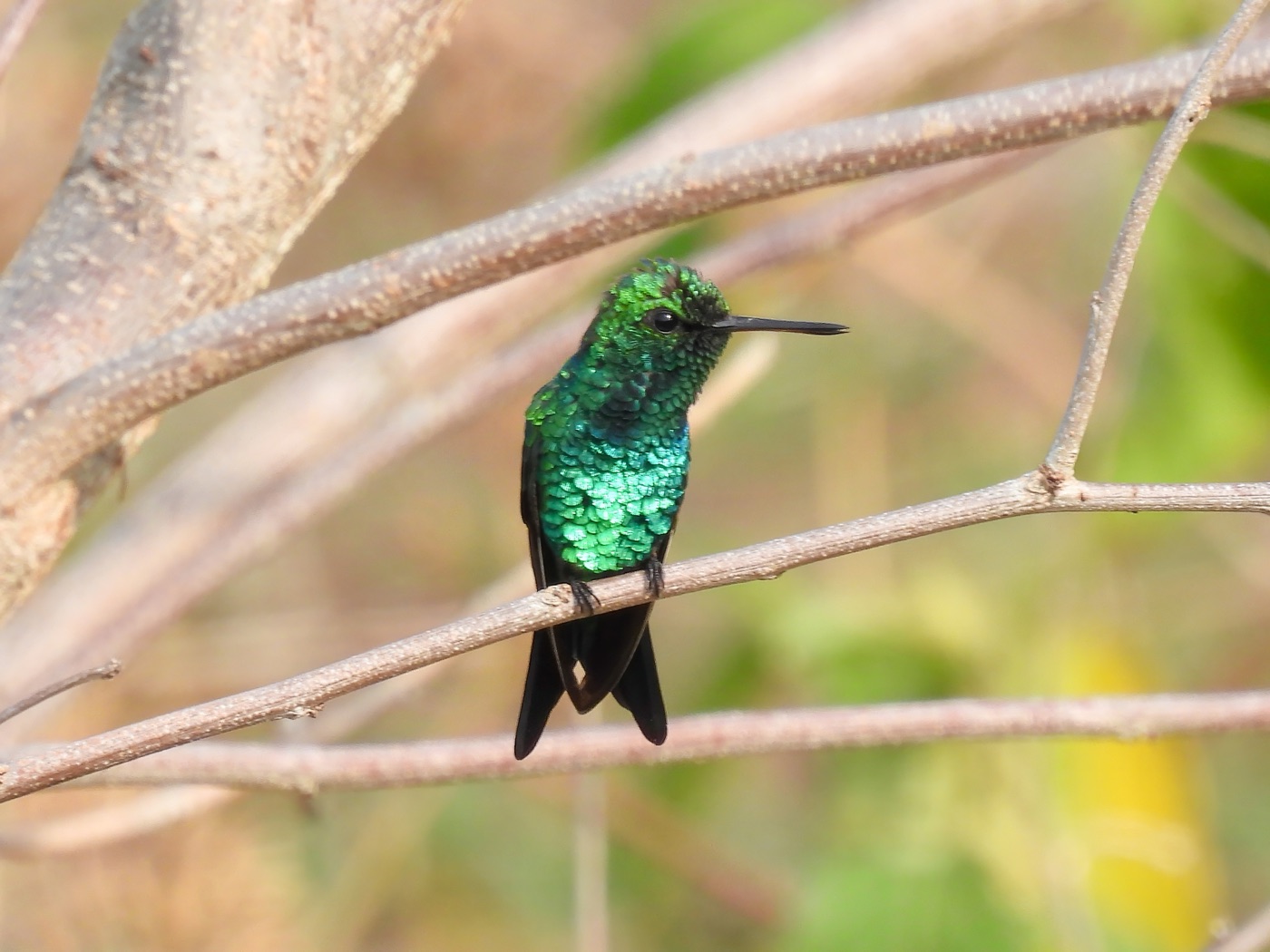
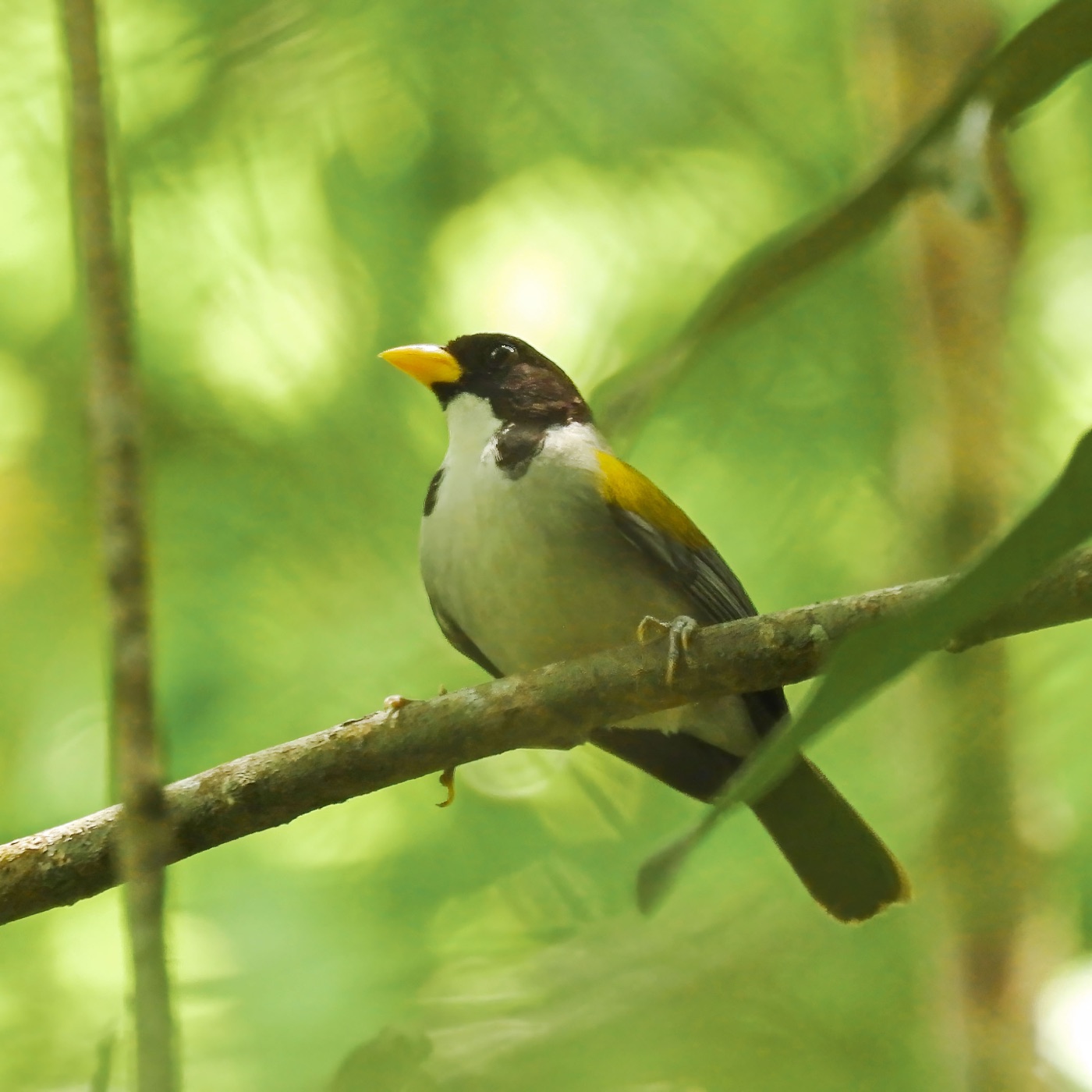
- Near-endemic: Arremon schlegeli (Golden-winged Sparrow), Chlorostilbon gibsoni (Red-billed Emerald), Nonnula frontalis (Grey-cheeked Nunlet), Picumnus cinnamomeus (Chestnut Piculet), Thamnophilus melanonotus (Black-backed Antshrike), Synallaxis candei (White-whiskered Spinetail), Saucerottia saucerottei (Steely-vented Hummingbird), Chrysuronia goudoti (Shining-green Hummingbird)
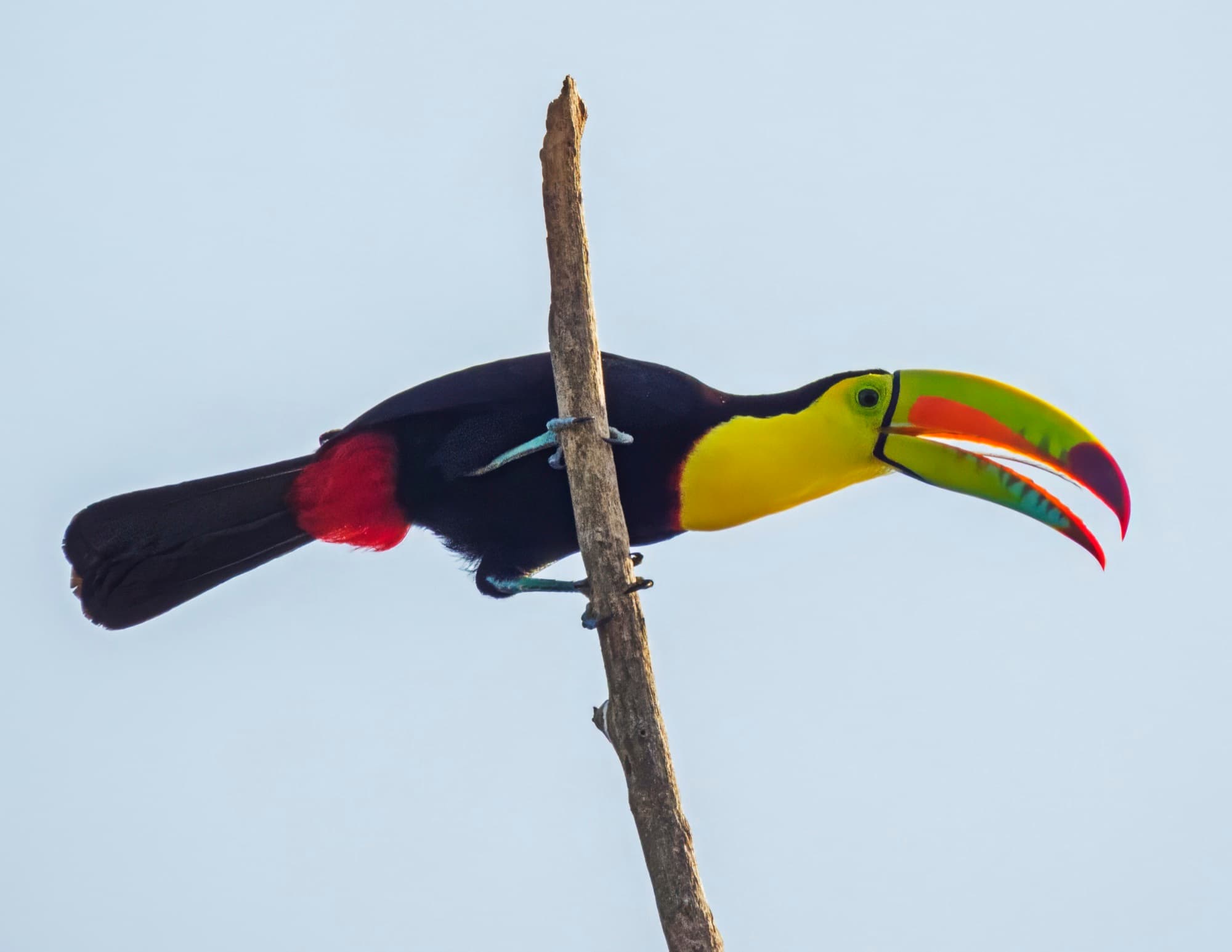
- Charismatic: Ramphastos sulfuratus (Keel-billed Toucan)
- Rare: Coccyzus lansbergi (Grey-capped Cuckoo)
Parrots & macaws
Parrots and macaws you may see
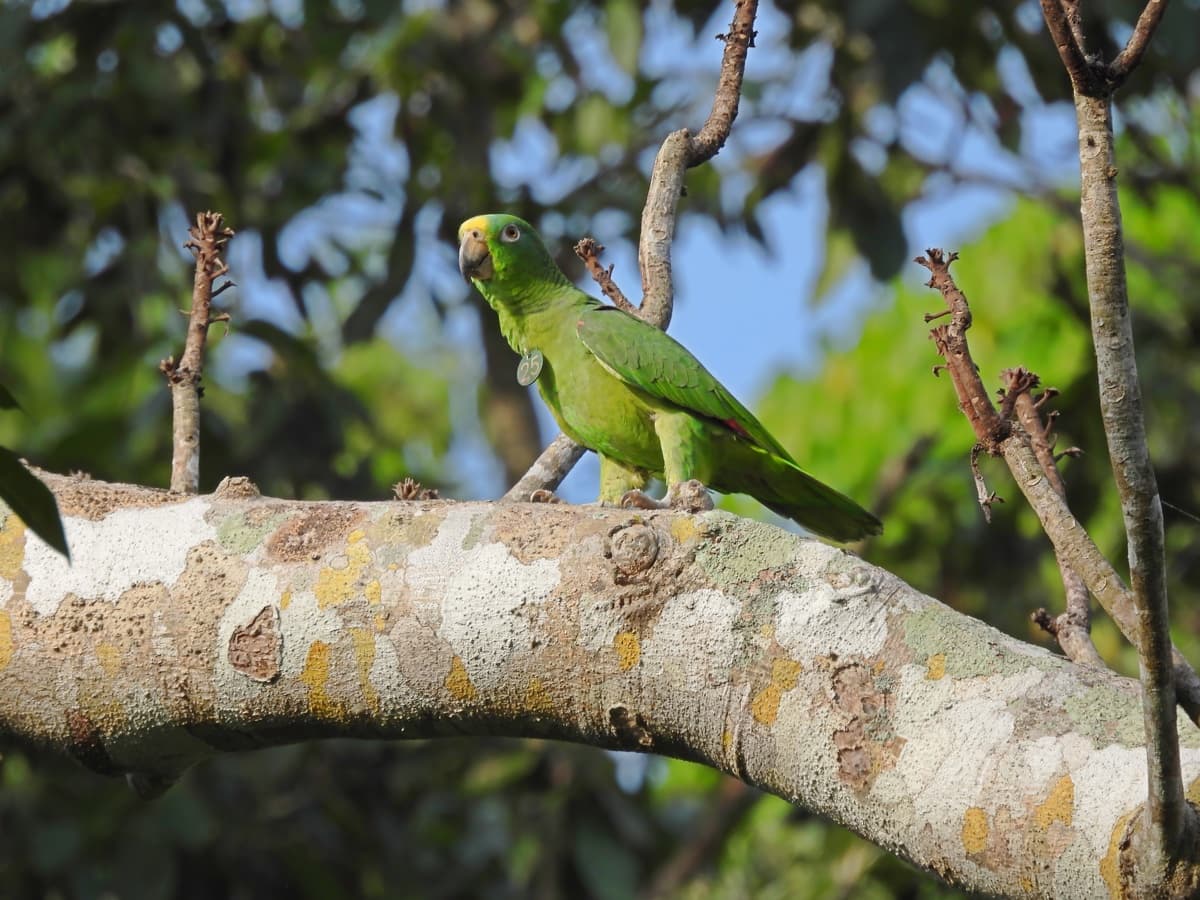
Amazona ochrocephala · Flagship species
Loro frentiamarillo
Our flagship species. A large green parrot with yellow forehead and crown and a red wing patch. The most-trafficked parrot in Colombia, and the reason Fundación Loros was founded: to give a second chance to individuals rescued from captivity and return breeding flocks to the tropical dry forest.
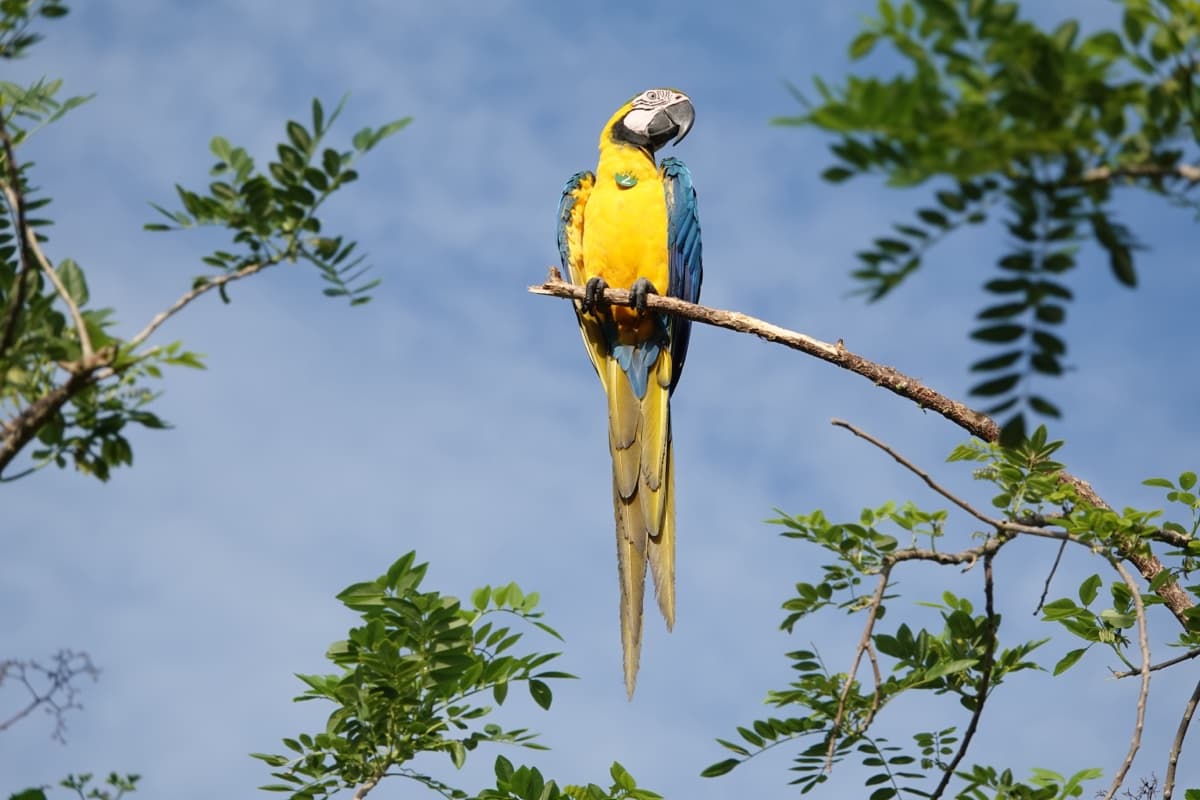
Ara ararauna
Guacamayo azul y amarillo
One of the most recognizable macaws in the tropics: deep blue back, yellow chest, and a white facial mask with black lines. They form stable pairs that fly together above the forest. Their diet centers on seeds, fruits, and palm nuts. In Colombia, populations have been pressed by the illegal pet trade.
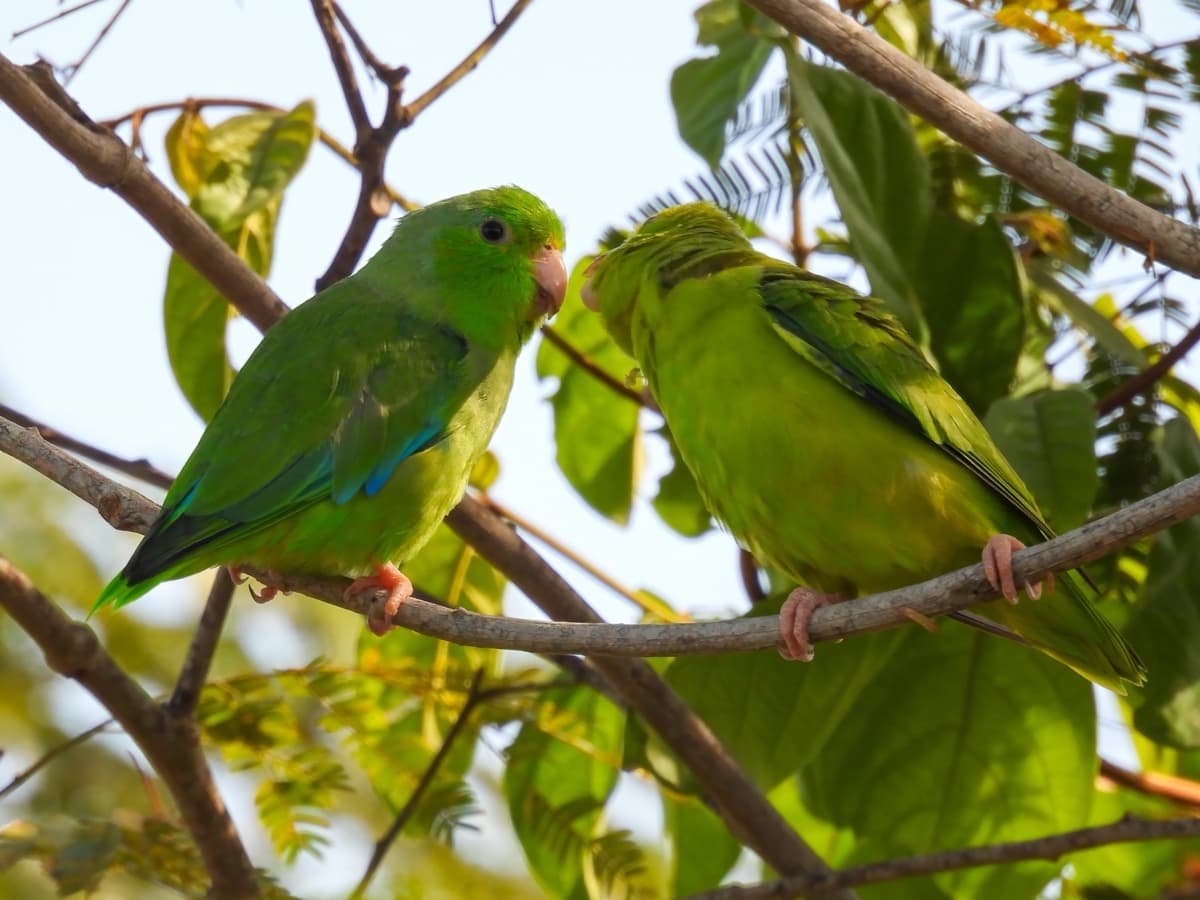
Forpus spengeli
Cotorrita aliturquesa
The smallest of Colombia's parrots — barely 12 cm. Bright green with a turquoise touch on the wings. Endemic to northern Colombia, it lives in small flocks in dry forests and open areas. Its size makes it a frequent target of the illegal trade; in the reserve we see them in flocks over the yarumo trees.
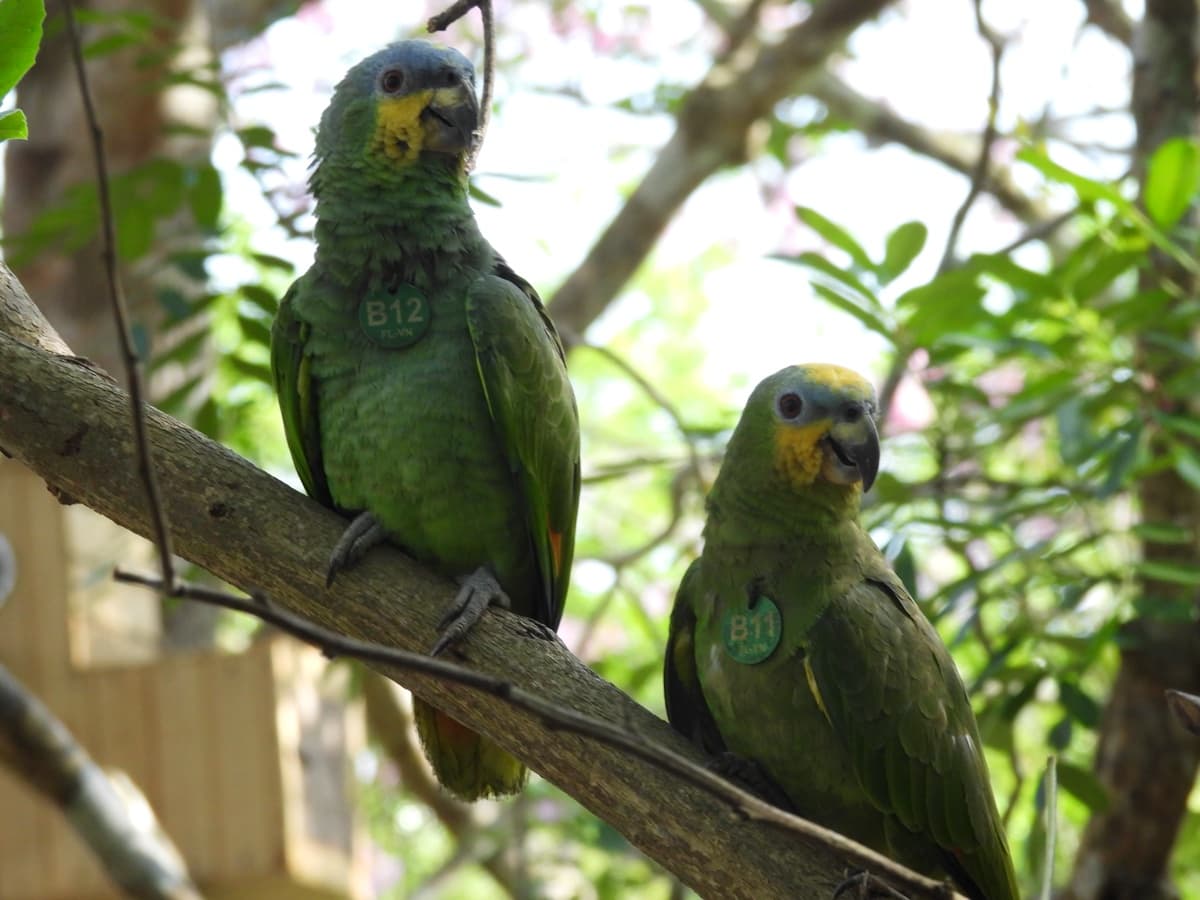
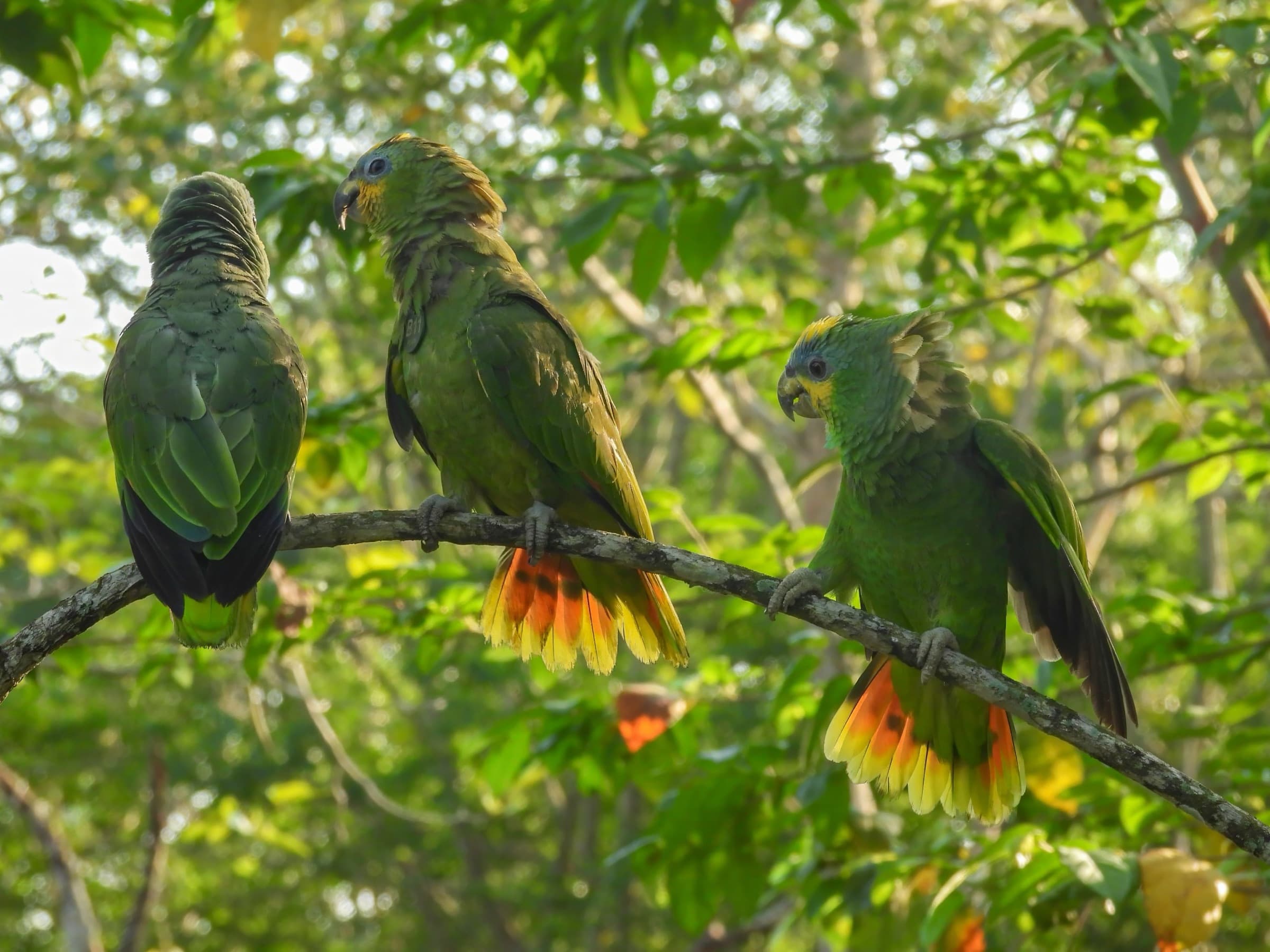
Amazona amazonica
Lora frentiazul
A common amazon of northern South America: green body, blue forehead, yellow cheeks and throat, and an orange wing patch that gives the species its name. Lives in pairs and noisy flocks in lowland forests. Frugivorous and granivorous. In the reserve, several individuals rescued from the illegal trade share spaces during rehabilitation.
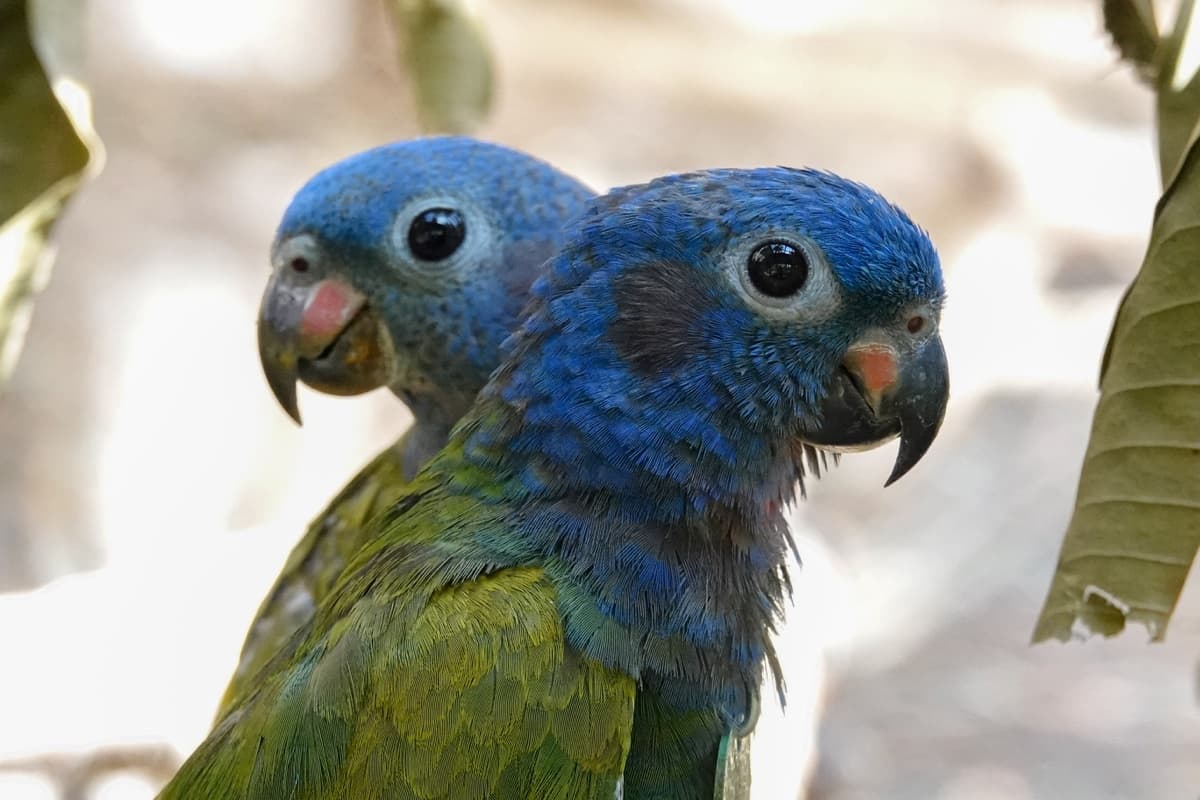
Pionus menstruus
Loro cabeciazul
Mid-sized parrot easily recognized by an entirely cobalt-blue head and chest over a green body, with a reddish bill. It flies in compact flocks at dawn and dusk. Frugivorous and granivorous; favors forest edges and areas with emergent trees. In Colombia it is a frequent target of the illegal trade because it readily learns sounds.
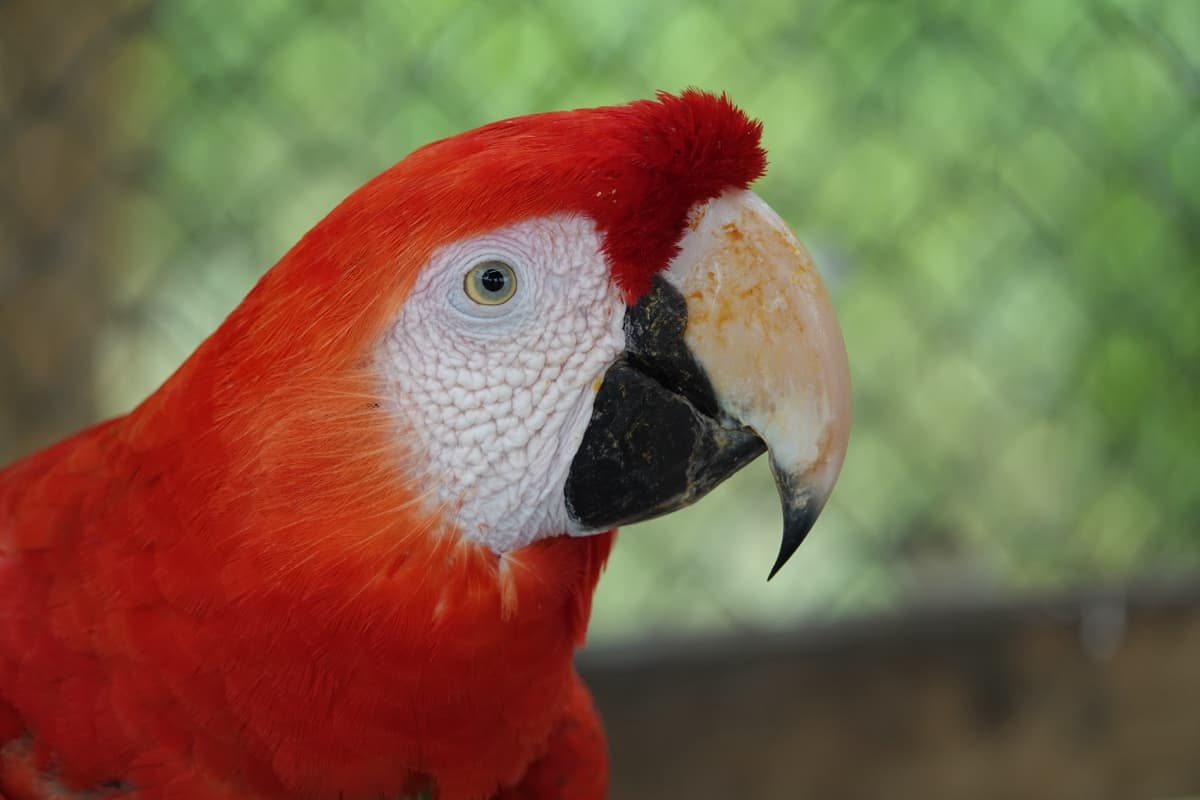
Ara macao
Guacamaya bandera
Known in Colombia as 'guacamaya bandera' because its red, yellow, and blue colors echo the national flag. Bare white facial skin furrowed by red feather lines and a powerful pale bill. They form lifelong pairs. They need huge trees and cavities to nest — their recovery depends on mature, connected forests like the reserve's.
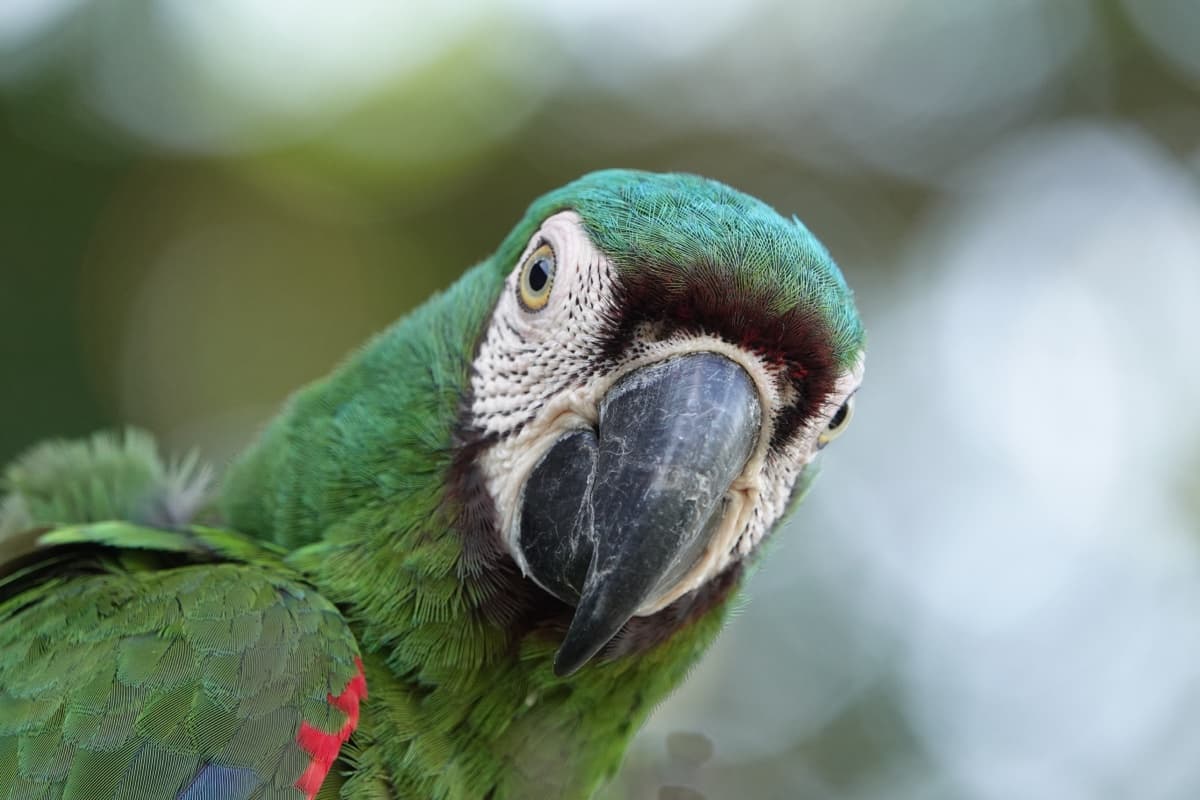
Ara severa
Guacamayo cariseco
A small macaw, mostly green, with chestnut forehead and cheeks and a flash of red beneath the wing. It flies in family flocks and perches in tall trees, where its sharp call announces its arrival. Frugivorous and granivorous. Though its population is stable, in the Caribbean region it is pressed by the illegal capture of chicks.
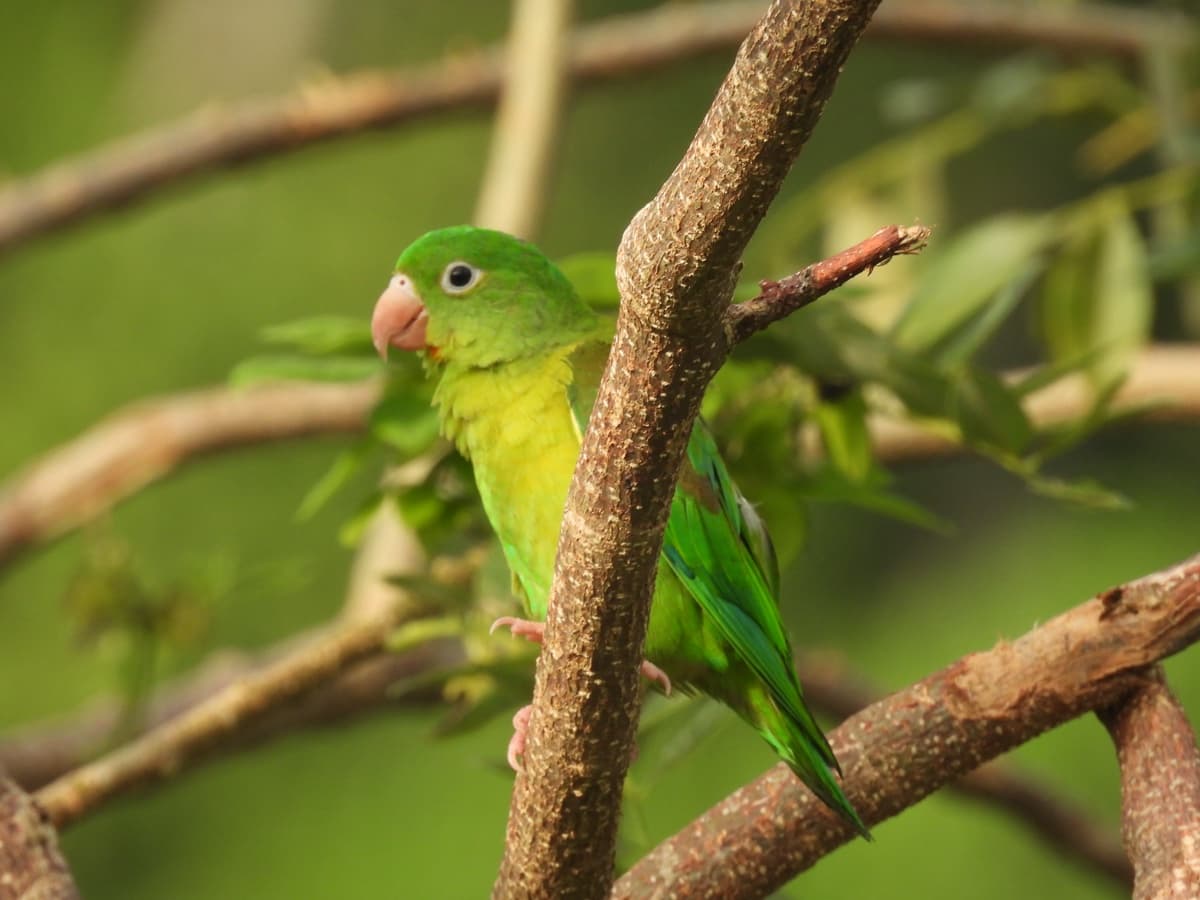
Brotogeris jugularis
Periquito alibronceado
A small, bright-green parakeet with an orange chin patch and a bronze wing patch that gives it its name. Flies in noisy, swift flocks above the dry-forest canopy. Frugivorous and nectarivorous: visits flowering and fruiting trees. One of the most abundant parrot species in the region, though still vulnerable to the illegal trade.
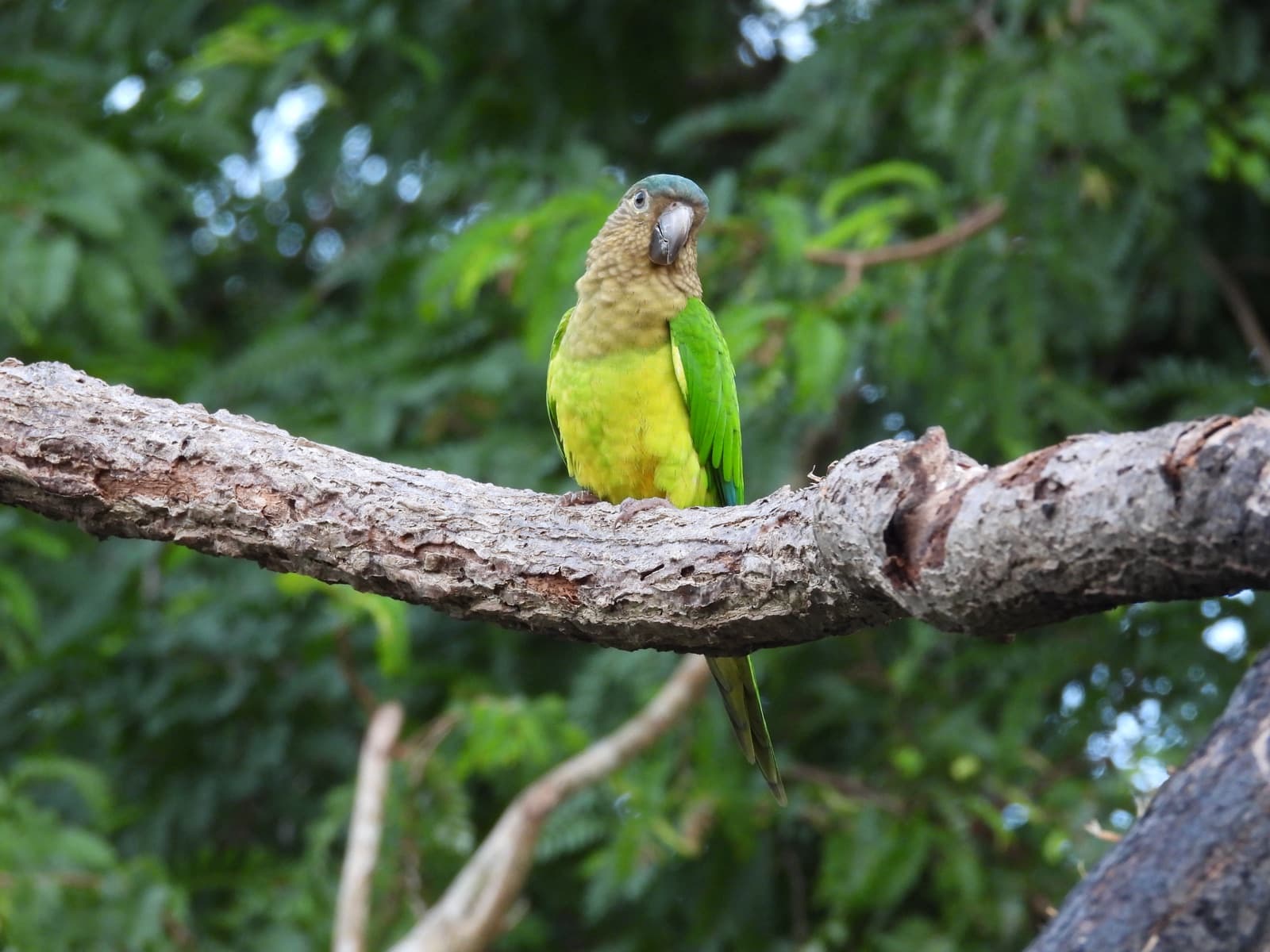
Eupsittula pertinax
Cotorra carasucia
A small, green parakeet with a dusky brown face and throat —the trait behind its Spanish name «carasucia», meaning dirty-face— and a yellowish belly. Native to northern South America and common in the Colombian Caribbean, it lives in noisy, restless flocks and nests in cavities and arboreal termite mounds. Frugivorous and granivorous, it helps disperse dry-forest seeds. Though abundant, it is also taken by the illegal pet trade.
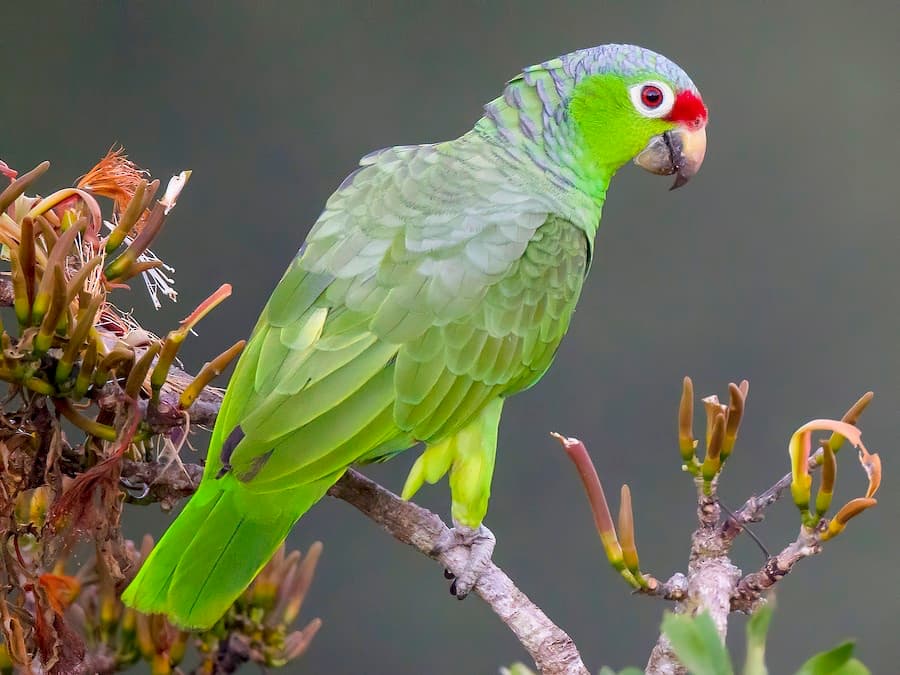
Amazona autumnalis
Lora frentirroja
A green amazon about 32–35 cm long, unmistakable for its red forehead, yellow cheeks, and a bluish wash over the crown, plus the red patch that shows on the wing. It inhabits humid and semi-deciduous forests from Central America to north-western South America, reaching the Caribbean lowlands in Colombia. It flies in pairs and flocks and feeds on fruits, seeds, nuts, and flowers. Like other amazons, it suffers from habitat loss and capture for the illegal trade.
Birds of the reserve
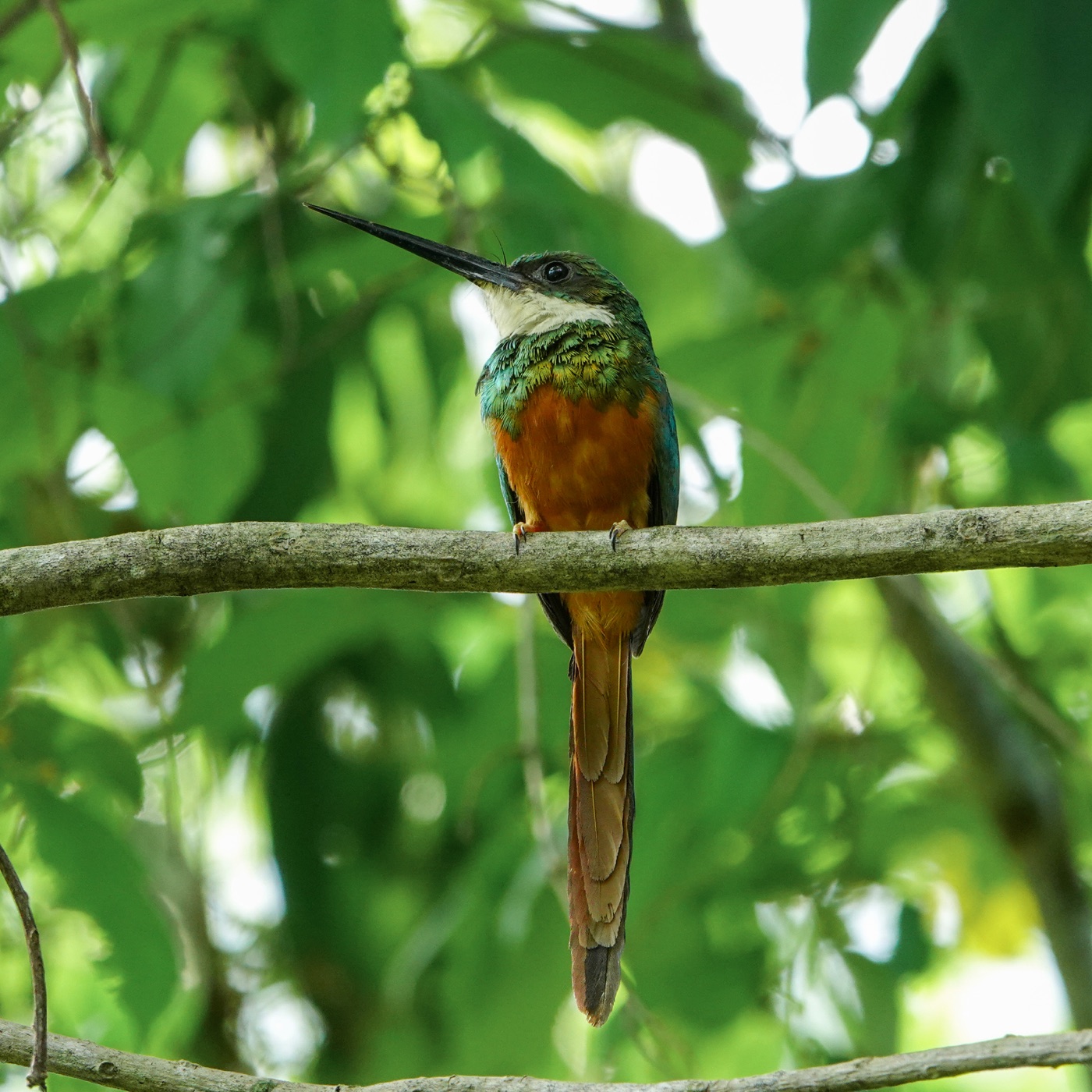
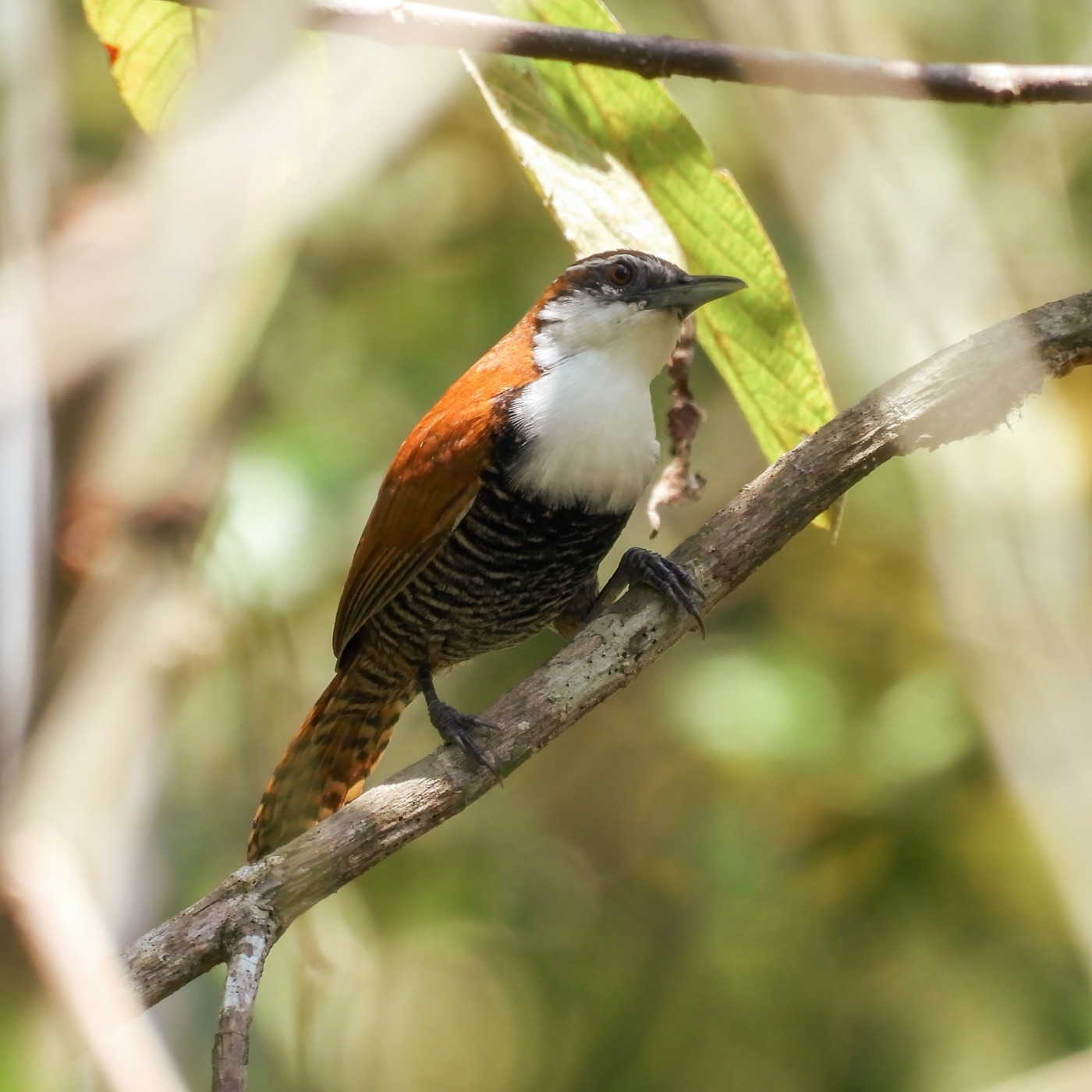
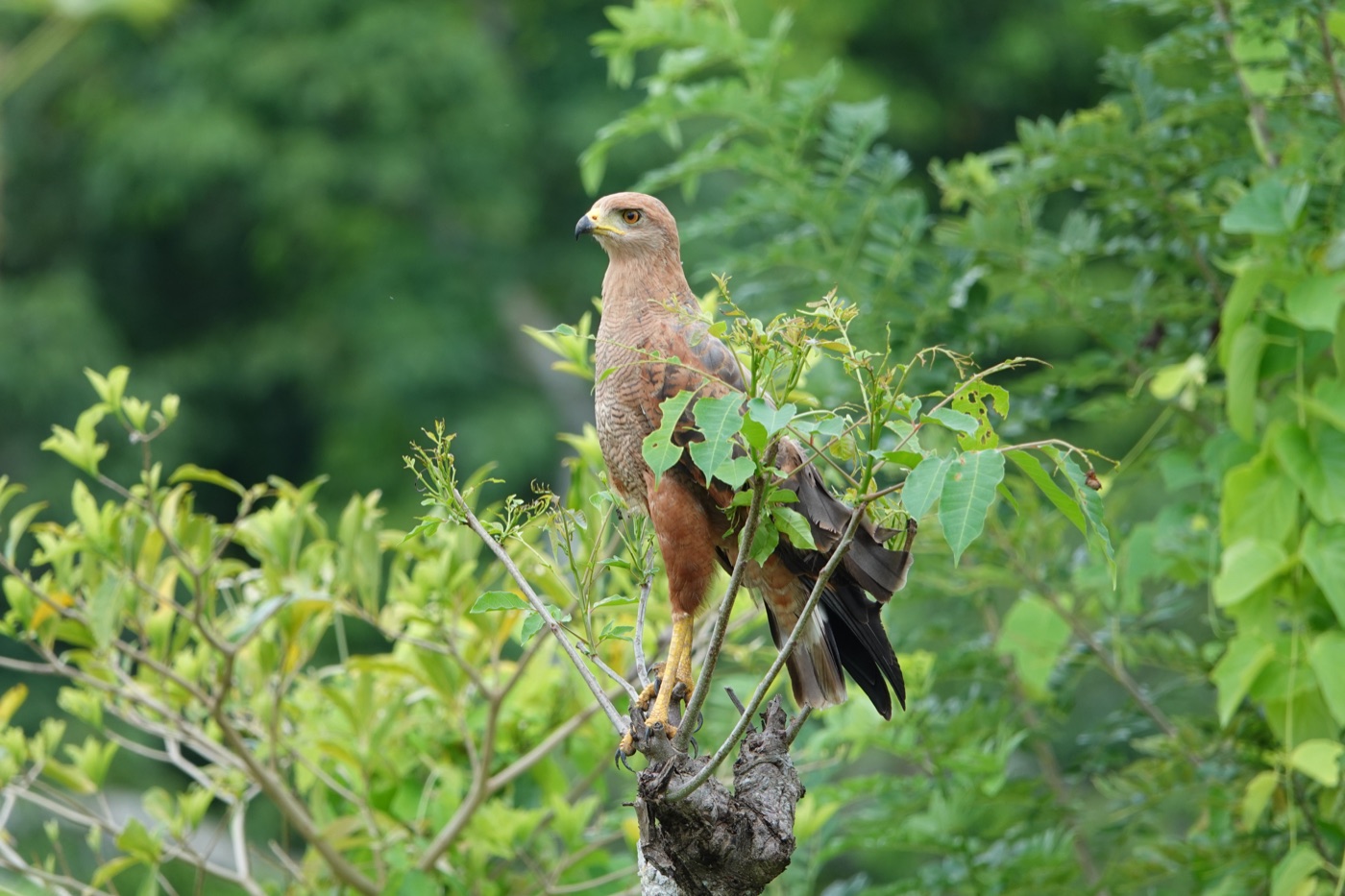
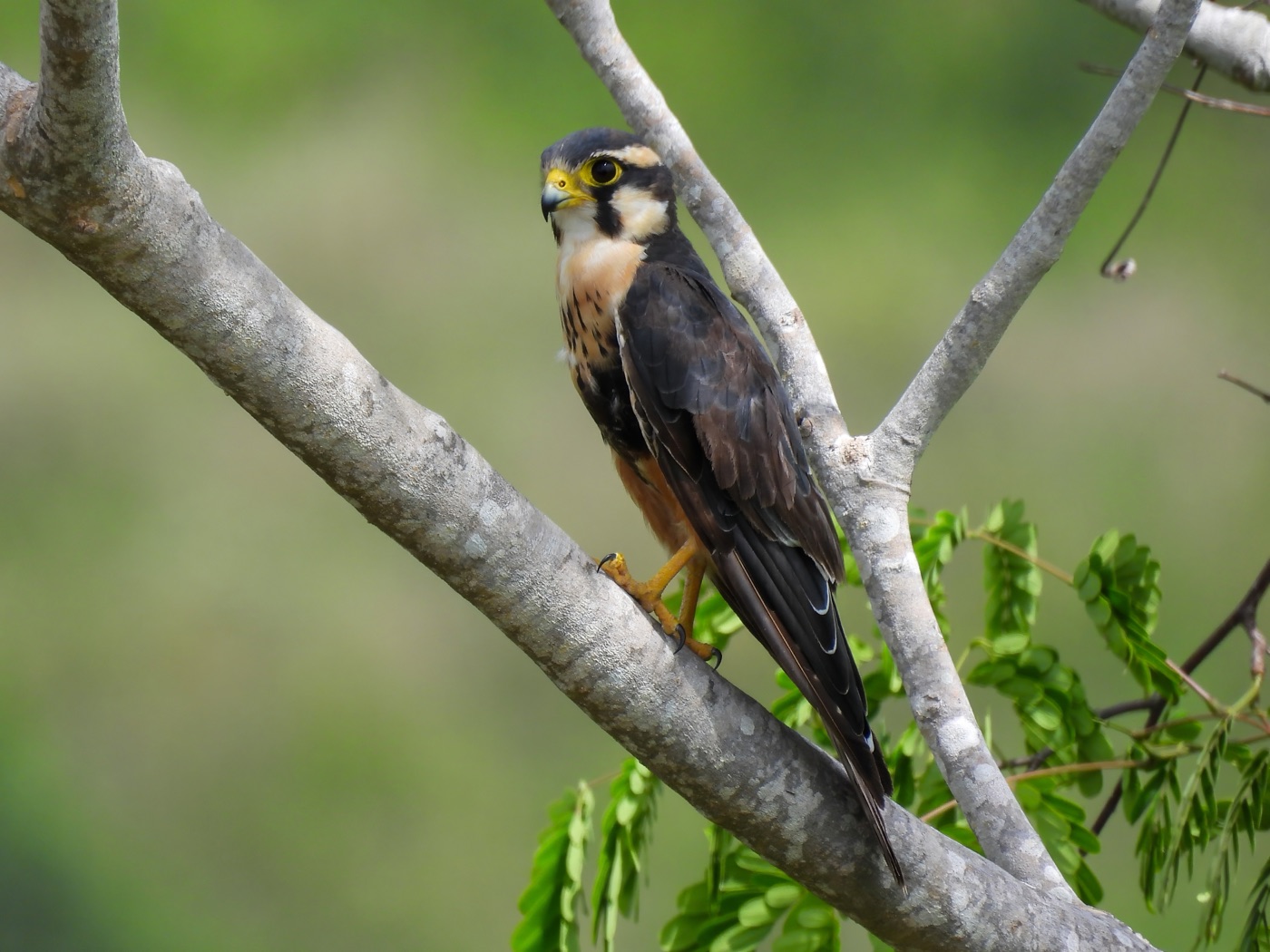
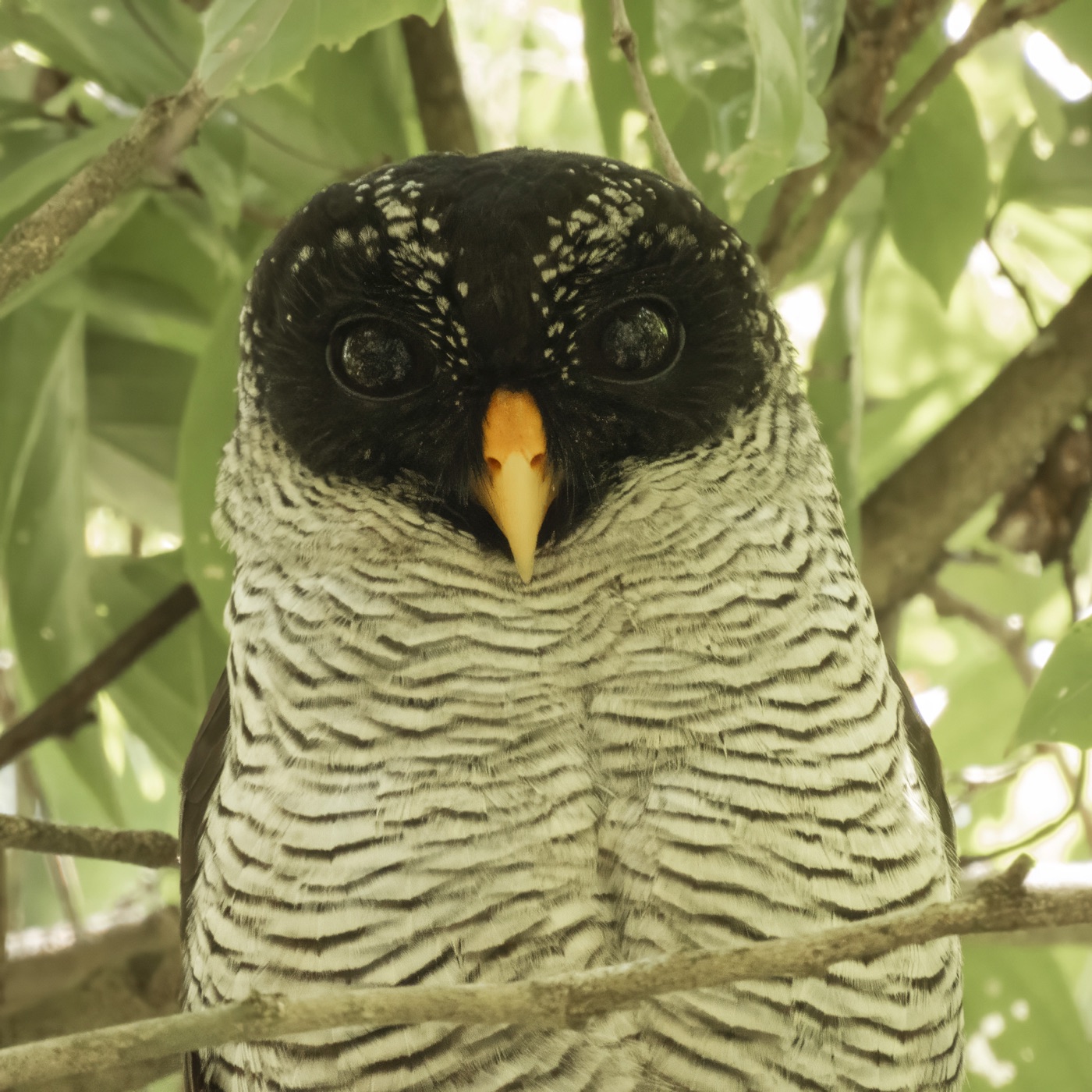
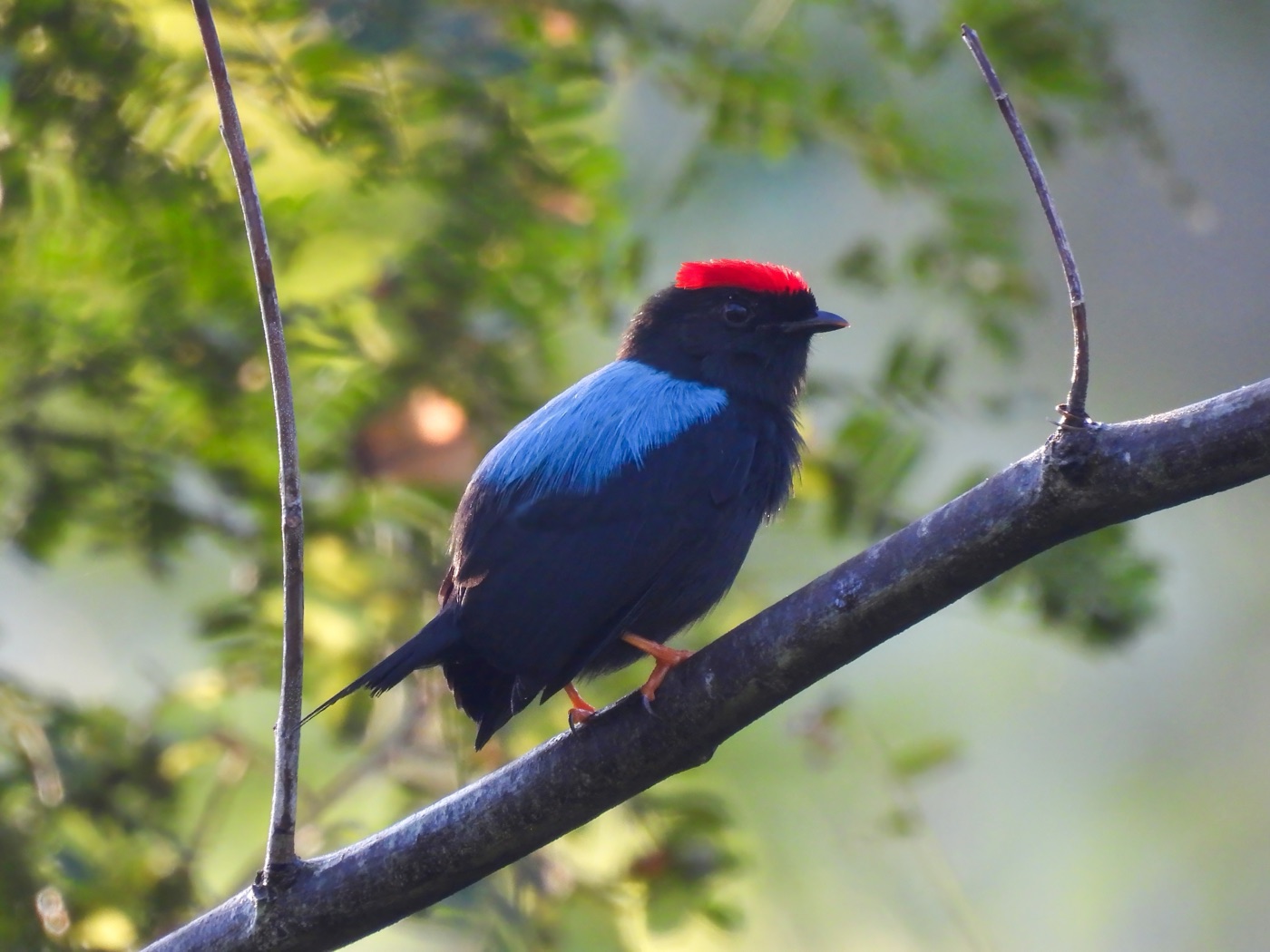
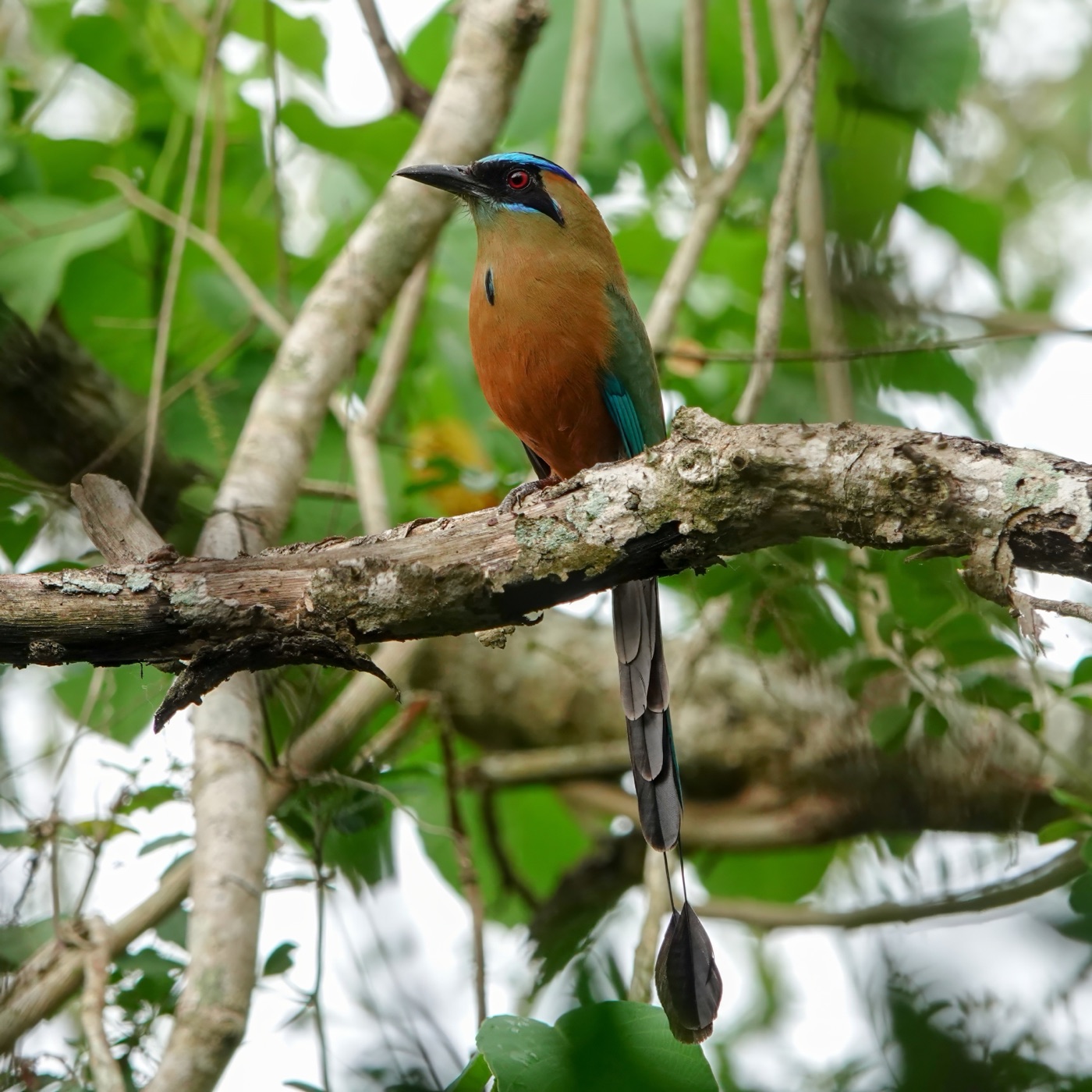
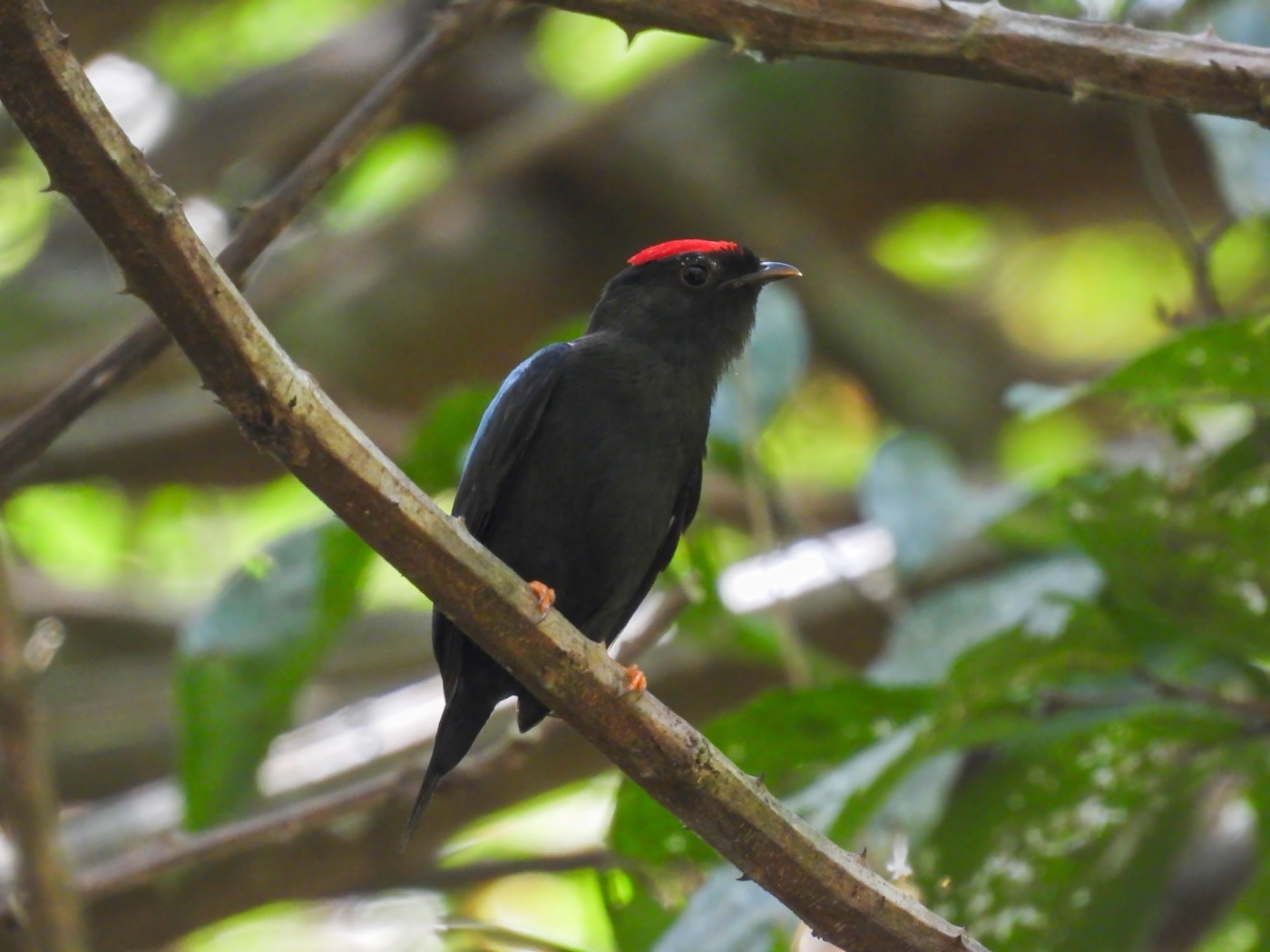
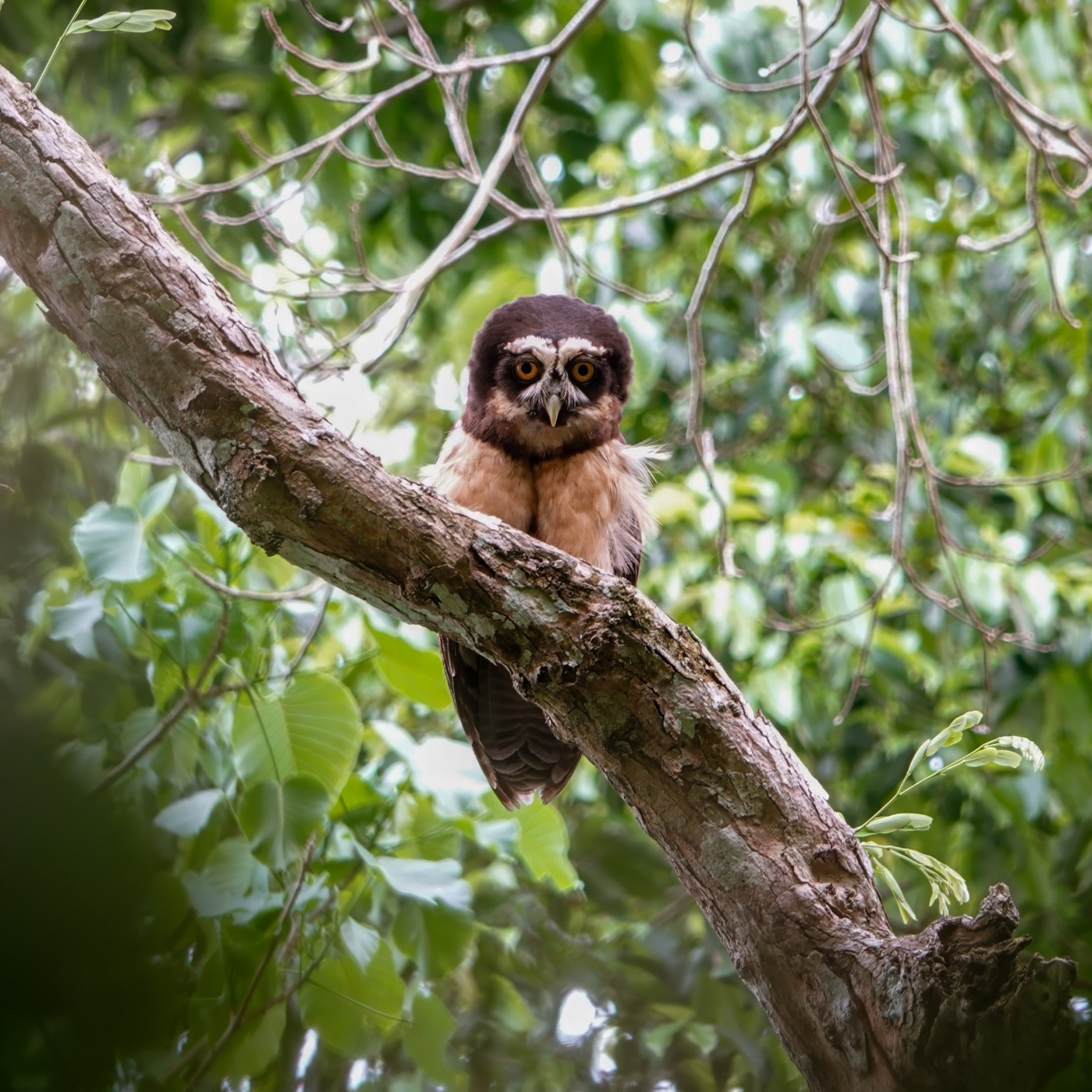
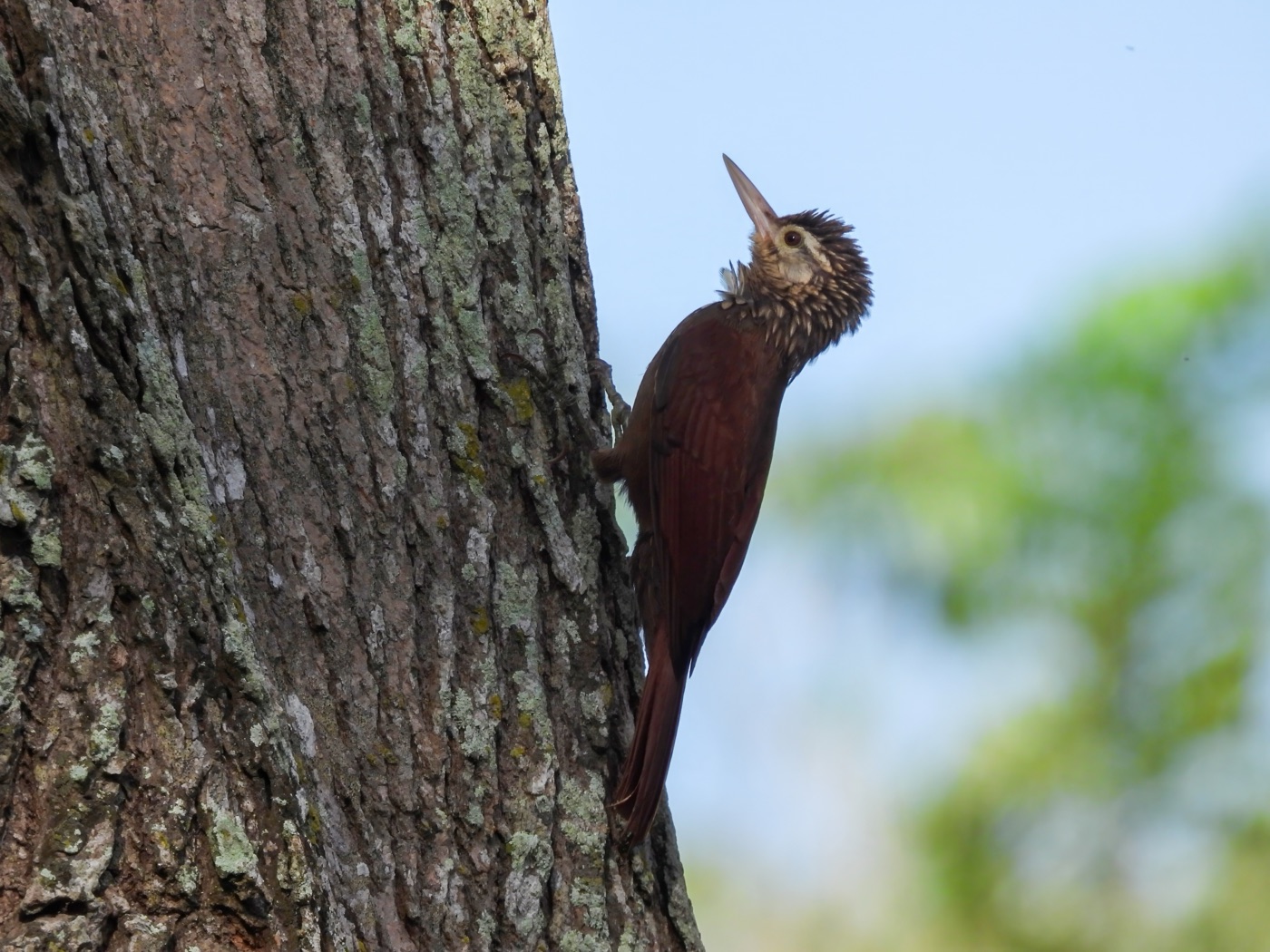
A few of the residents our guests have photographed on the trails — hummingbirds, manakins, motmots, jacamars, owls and more.
Itinerary
How your day looks
Choose the shift that works best for you. Both cover all the stations of The Wildlife Freedom Journey — only the start time changes.
5:30
12:00
60 min
Pickup at your hotel
We pick you up in Cartagena in private door-to-door transport. Approximately 1 hour to Villanueva, Bolívar.
6:30
13:00
30 min
Arrival and breakfast by the lake
Welcome with a traditional breakfast made with ingredients from our farm.
Arrival and welcome snack
On the afternoon shift we welcome you with a snack by the lake before we start.
7:00
13:30
30 min
Conservation talk
How the foundation works: rehabilitation, reintegration, and restoration of the tropical dry forest.
7:30
14:00
150 min
Birdwatching outing
Guided trail walk through forest and edge zones, with binoculars, a specialist guide, and a spotting scope where applicable. Up to 200 species possible, including toucans, parrots, and macaws in the wild.
10:00
16:30
30 min
Plant your native tree
You plant your own native tree in the tropical dry forest restoration zone. It's your physical legacy — the same tree that will give food and shelter to the released parrots tomorrow.
10:30
17:00
30 min
Farewell snack
Fresh fruit and natural juices before heading back.
11:00
17:30
30 min
Farewell and return
We return to Cartagena by private transport. Estimated arrival at 11:30 (morning shift) or 18:00 (afternoon shift).
The Wildlife Freedom Journey
Your place on the trail
Each experience covers some of the 11 stations in the real rehabilitation and reintegration process. The ones you'll go through are highlighted.
Breakfast at the Lake
Fruit Kitchen
Feeding the birds
Flight exercises
Tití Monkey Trail
Nursery · tree selection
Horseback ride along the trail
Release point
Agroecological point
Commemorative tree planting
Toast and certificate
Trail closure
Today we didn't just release birds. We released a broader, deeper idea of what it means to live freely.
Alejandro Rigatuso · Founder, Fundación Loros
The impact behind your visit
Real numbers from the Foundation's work
Every experience you book funds this measurable, verifiable work. These are the numbers behind Colombia's only specialized center for psittacines.
100+
Birds released and site-faithful
Parrots and macaws that flew back to the forest
150+
Birds in active rehabilitation
Rescued from illegal trade and in the process of reintegration
500 ha
Protected tropical dry forest
One of the most threatened ecosystems in the Caribbean
20.000+
Trees planted in the reserve
Nursery on-site · native species and fruit trees
1.000+
Parrots seized per year in Colombia
The reason the Foundation exists
Our commitment
Regenerative tourism
Pioneers in Colombia
Net positive impact — we leave every place better than we found it.
It's real, hands-on work: on every experience you become an active agent who restores ecosystems — returning rescued animals to the wild and bringing back the tropical dry forest, Colombia's most threatened ecosystem.
Tree planting. Every visitor plants a native tree that will shelter and feed the rehabilitated animals — so we leave the forest better than we found it.
It even pairs with citizen science — parrot-sighting contests and eBird checklists that turn your visit into real conservation data.
Voices from the forest
What they saw, what they heard
Ha sido una experiencia bonita viendo las aves en su fase de recuperación para ponerlas de nuevo en libertad. El entorno muy bonito.
GetYourGuide traveler· España
GetYourGuide · Octubre 2025
A great opportunity to view three species of macaws and numerous parrot species that are being rehabilitated to be released to the wild.
Peter S.
Viator · Abril 2025
A fantastic experience, an absolute MUST from Cartagena.
GetYourGuide traveler· Francia
GetYourGuide · Agosto 2025
Our time with the parrots and macaws at Fundacion Loros was wonderful. We learned how to tell the difference between parrots and macaws, prepared their food, and could nature watch and hear birds and parrots all around.
1crazycatlady
Tripadvisor · Febrero 2026
I cannot recommend this activity enough! The guides were absolutely incredible, we learned so much about how they rehabilitate the birds and all about the different kinds of birds. We got to see monkeys and an array of wild birds and lizards.
Grace· Reino Unido
GetYourGuide · Diciembre 2025
These testimonials are real customer reviews. They can be verified on:
All together · October 2026
This month, 23 people from 4 countries got involved with the foundation
🇺🇸 United States 13 · 🇦🇺 Australia 2 · 🇪🇸 Spain 1 · 🇨🇴 Colombia 1
Frequently asked questions
What's included in the price?+
Round-trip transport from Cartagena, breakfast (morning shift) or a welcome snack (afternoon shift) and a farewell snack of fruit and juice, bilingual guide español/inglés, all program activities, and the conservation contribution.
Do you offer discounts for children or groups?+
Children up to 18 years old pay 50%. For groups of more than 6 people or special inquiries, write to us using the inquiry button and we'll send you a personalized quote.
What is the minimum and maximum age?+
The minimum age is 7 years. There is no maximum age — the experience is suitable for people in good general physical condition. If you have questions about the difficulty level for your group, contact us.
What size are the groups?+
We work with small groups: a maximum of 5 people per bilingual guide. This lets us offer a personalized experience, respect the wildlife, and keep a comfortable pace for everyone.
What should I bring?+
Comfortable, breathable clothing, closed-toe shoes with good grip (no sandals), cap or hat, sunscreen, insect repellent, camera, and water (we provide reusable bottles). For birdwatching and hiking, long trousers are better.
Where do you pick us up, and what time?+
We pick you up at your hotel, accommodation, or an agreed meeting point in Cartagena, in private door-to-door transport. Two shifts are available: morning (pickup 5:30 AM, return ~11:30 AM) and afternoon (pickup 12:00 PM, return ~6:00 PM). The exact point and time are confirmed 24 hours in advance via WhatsApp.
What is the cancellation policy?+
Cancellations more than 72 hours in advance: full refund. Between 72 and 24 hours: 50% refund. Less than 24 hours or no-show: no refund. If we cancel due to weather or safety reasons: full refund or rescheduling.
Is it suitable for people with reduced mobility?+
Some experiences involve hiking on uneven terrain. For guests with reduced mobility, we have adapted options (UTV tours, observation from the farm). Tell us your situation through the inquiry option and we'll put together something that works for you.
What languages is the experience offered in?+
All our guides are bilingual in Spanish and English. If your group needs another language, write to us in advance and we'll see what we can arrange.
Where is the best birdwatching near Cartagena?+
At Loros Wildlife Sanctuary, 35 km from Cartagena: an official eBird hotspot with 200+ wild bird species — toucans, parrots and the macaws we release — in tropical dry forest. Private guided tour, with hotel pickup.
Book
Book your experience
Keep exploring
Other experiences at the reserve
 ATV
ATVATV reserve patrol
Who it's for
For those who want a bit more adrenaline — patrolling and protecting the reserve on four wheels.
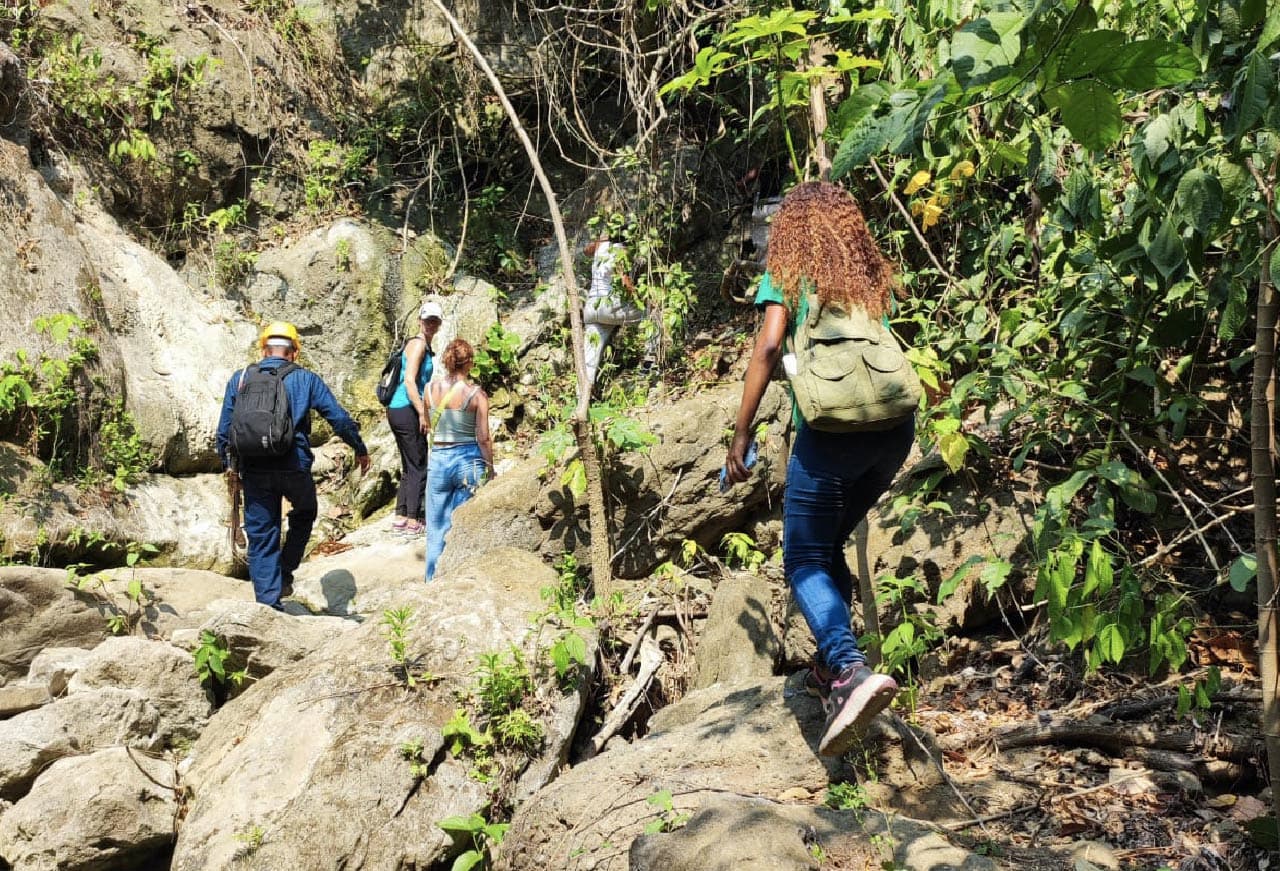 Extreme hiking
Monkey's Creek
Who it's for
For fit adventurers ready for a demanding trek deep into the tropical dry forest.
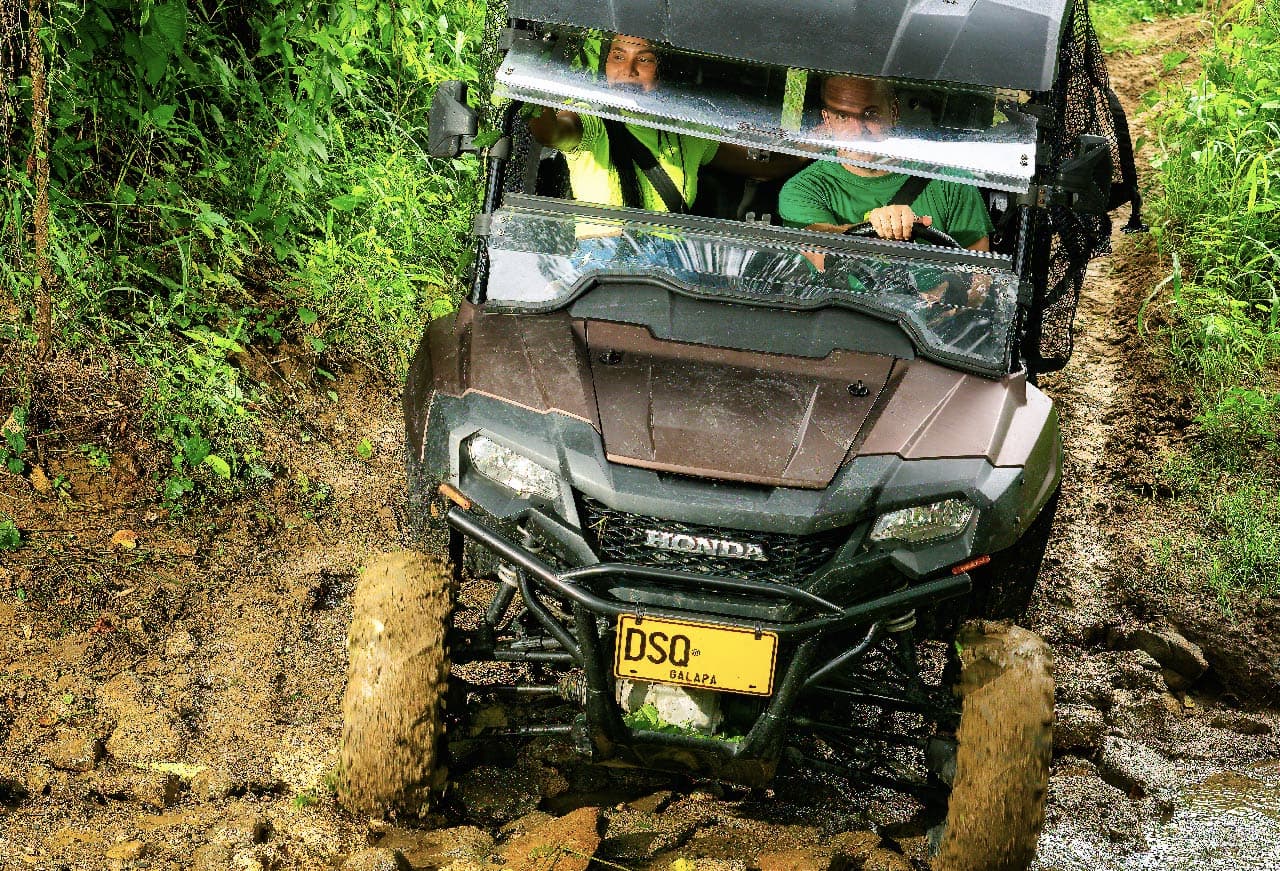 UTV
UTVUTV wildlife safari
Who it's for
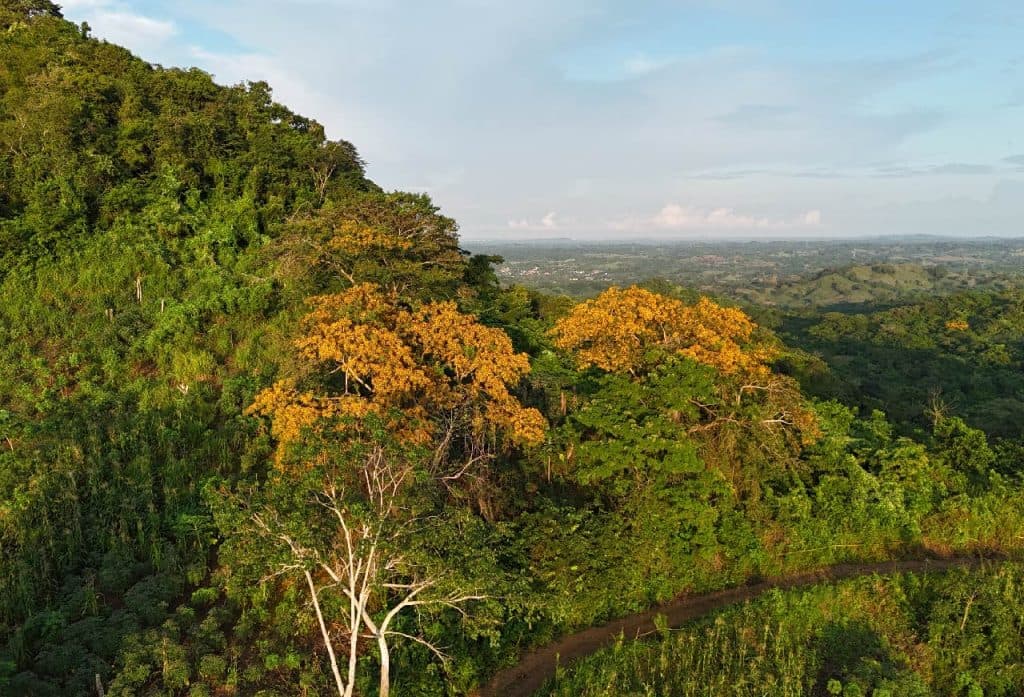
For families and groups who want to cover more ground in comfort, with big mountain views.
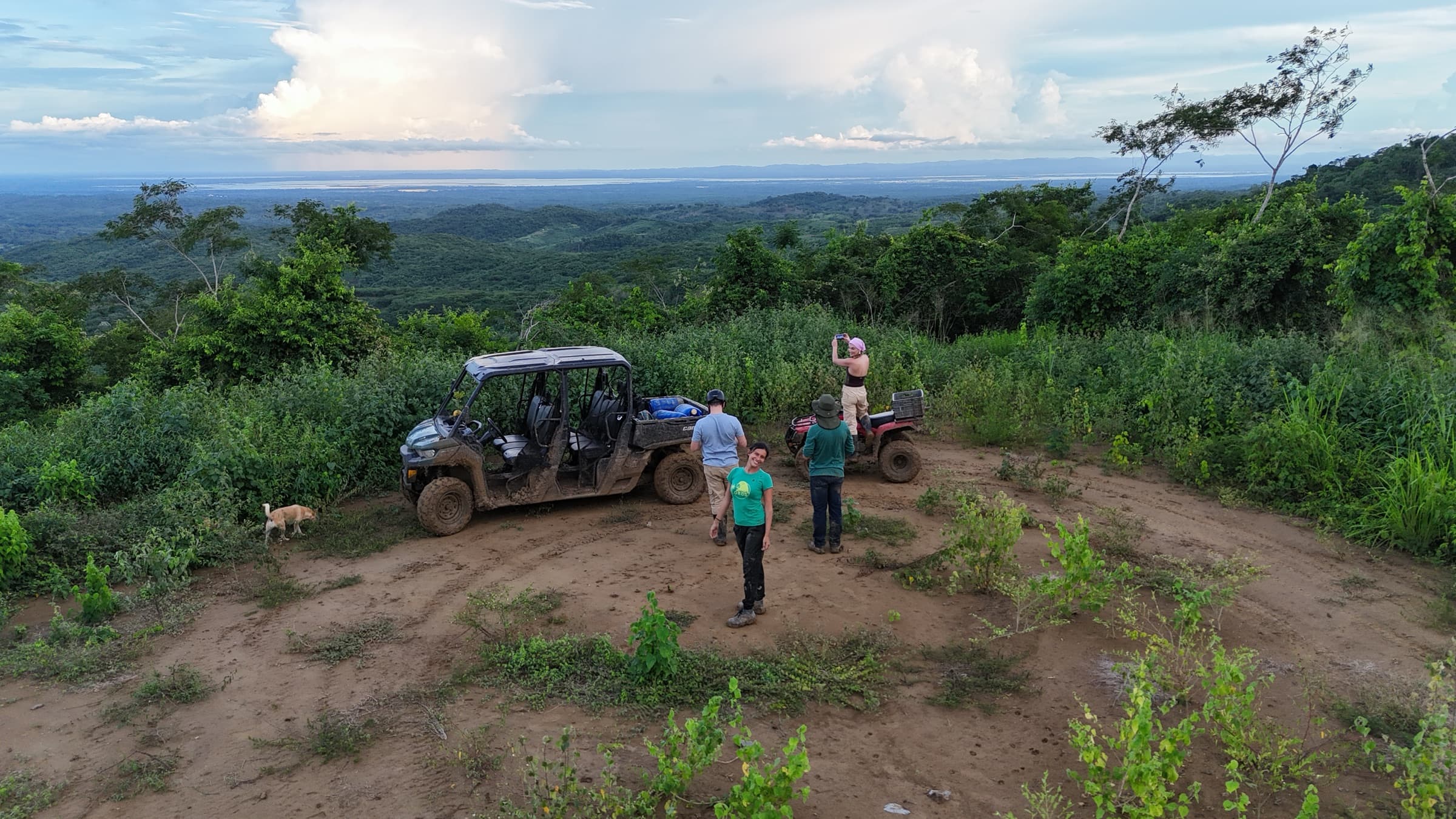 UTV + Horseback
UTV & horseback at sunset
Who it's for
For those who want two rides in one — engine and hoof — closing at golden hour.
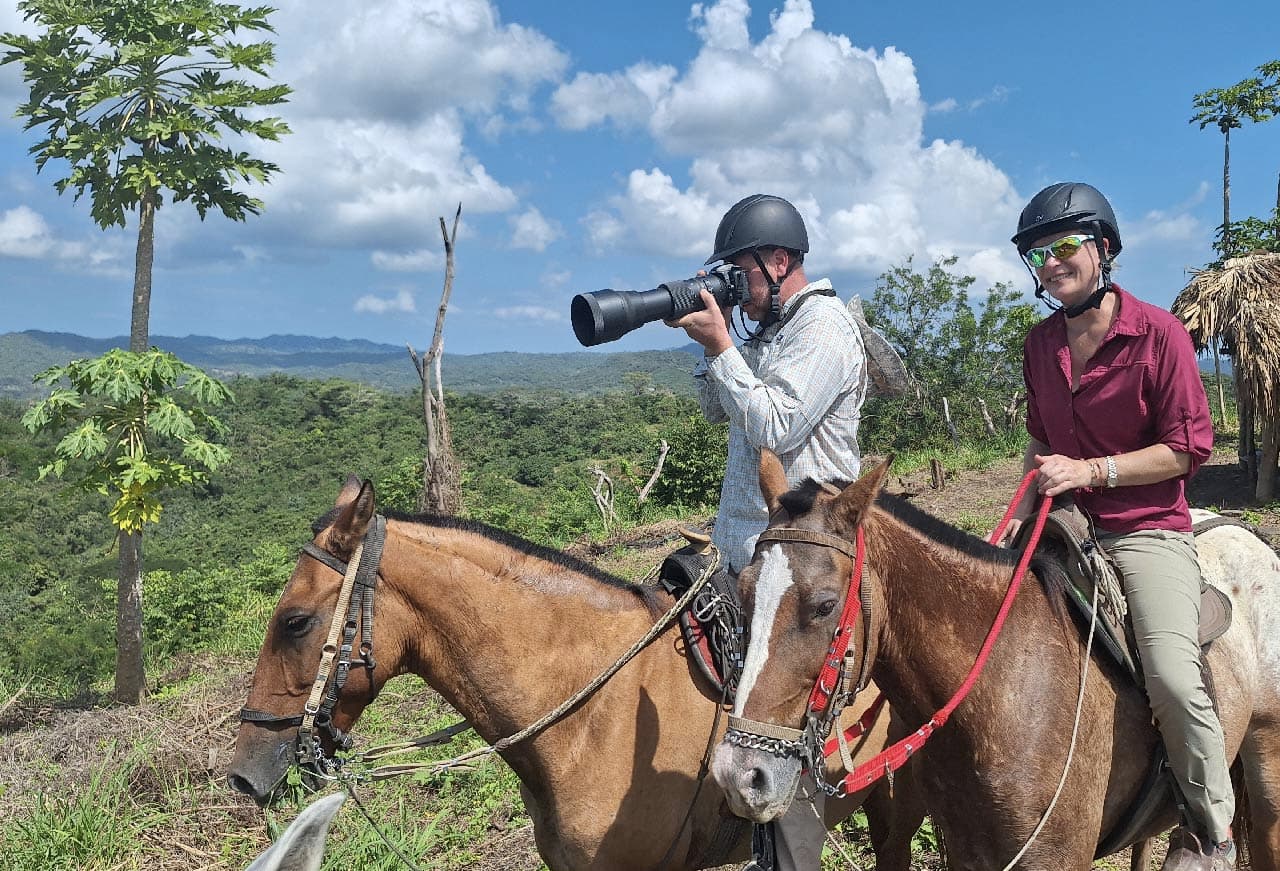 Horseback
Panoramic horseback ride
Who it's for
For those who'd rather go at a calm pace, on horseback, connecting with the land.
 Volunteer
Sanctuary volunteer day
Who it's for
For travelers who want hands-on days with the rescued parrots and the team.
 Volunteer
Tití reintroduction volunteer
Who it's for
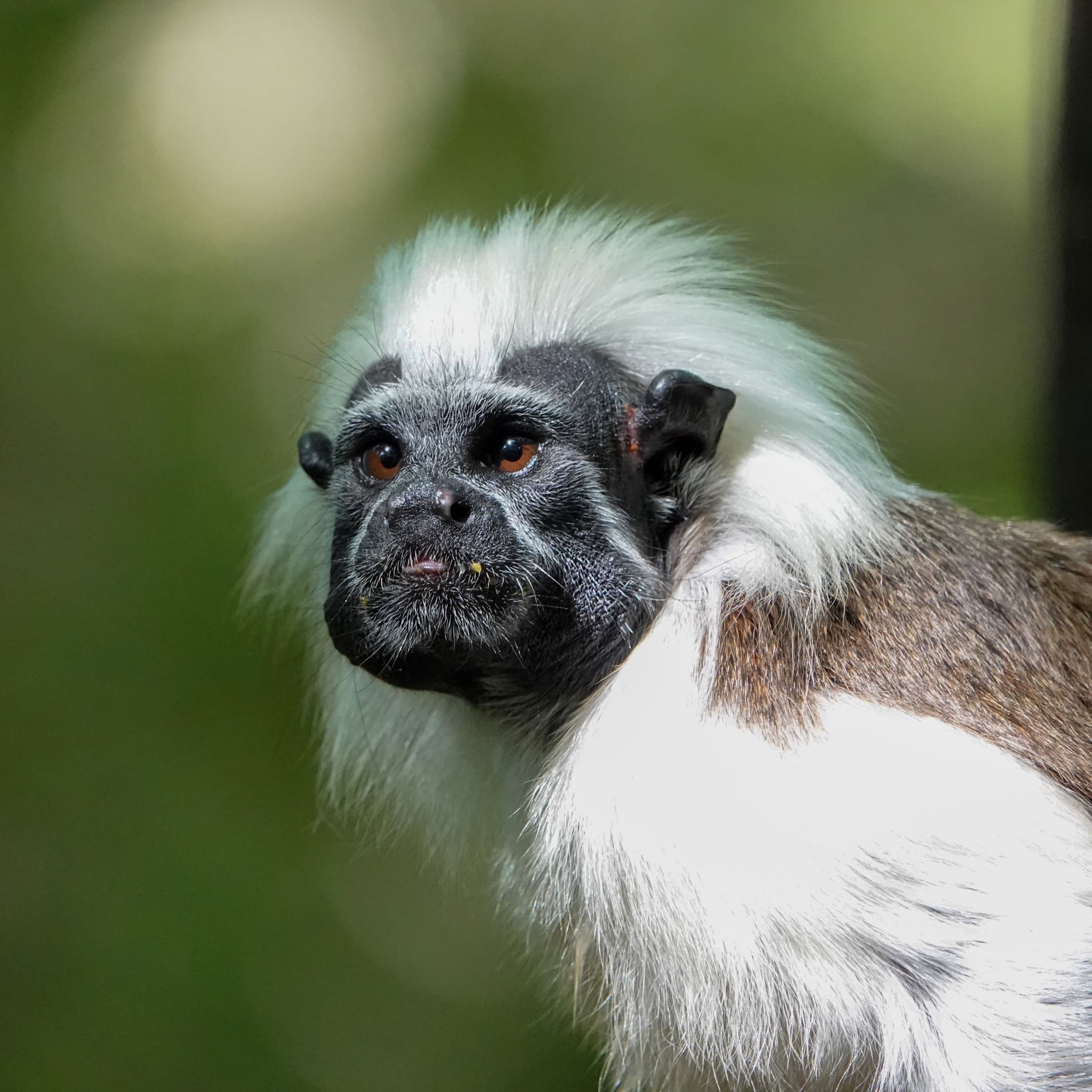
For those drawn to primates — joining the reintroduction of the cotton-top tamarin.