Sponsor the Scarlet macaw
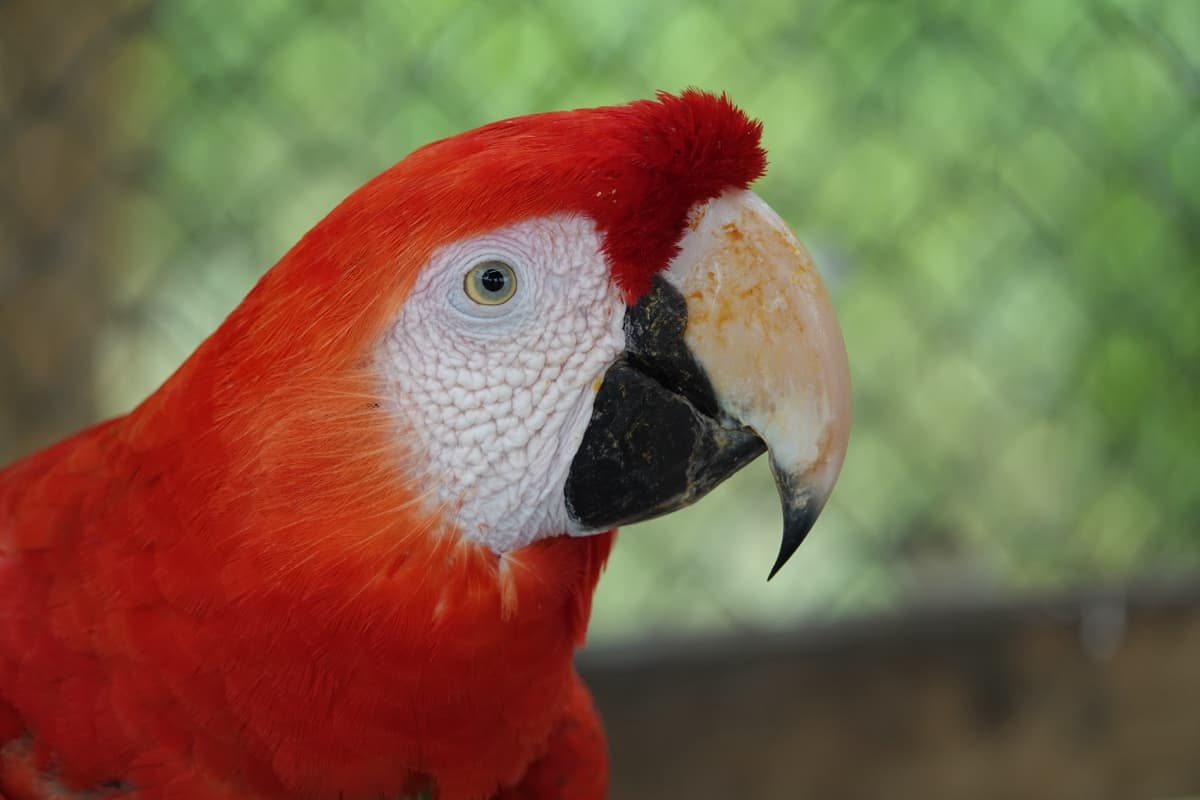
Sponsor the Scarlet macaw · Ara macao
Help them fly free again
Your monthly gift prepares a whole flock of Scarlet macaws, rescued from trafficking, to return to the forest. They don't go back alone — they return together, as they should. You'll get photos and updates from every step of their journey to freedom.
2/5 · Amount
Choose your monthly gift
Each month, your gift sustains the rehabilitation and release of your species.
Prices in US dollars (USD). Charged in Colombian pesos: ≈ $ 100.000 per month.
Your gift matters: it joins work already underway.
10 especies
Psittacines on the path back to freedom
21.888
Trees of the tropical dry forest committed to planting
520 ha
Under management in the tropical dry forest
A foundation that shouldn't have to exist
Giving freedom back isn't opening a cage. It's teaching a whole flock to fly, to find food in the wild, to recognize a predator and to trust their own — until they can return as one and stay.
It's slow, hard, expensive work. It shouldn't have to exist. But it does — and it began with a single parrot.
Our story
How it all began
In 2019, in a Cartagena apartment, a green-and-yellow chick arrived in a cardboard box. They raised it by hand —a syringe, a spoon, the internet as the only vet— not yet knowing that this small green body would start something. They named him Beethoven. He was the very first.
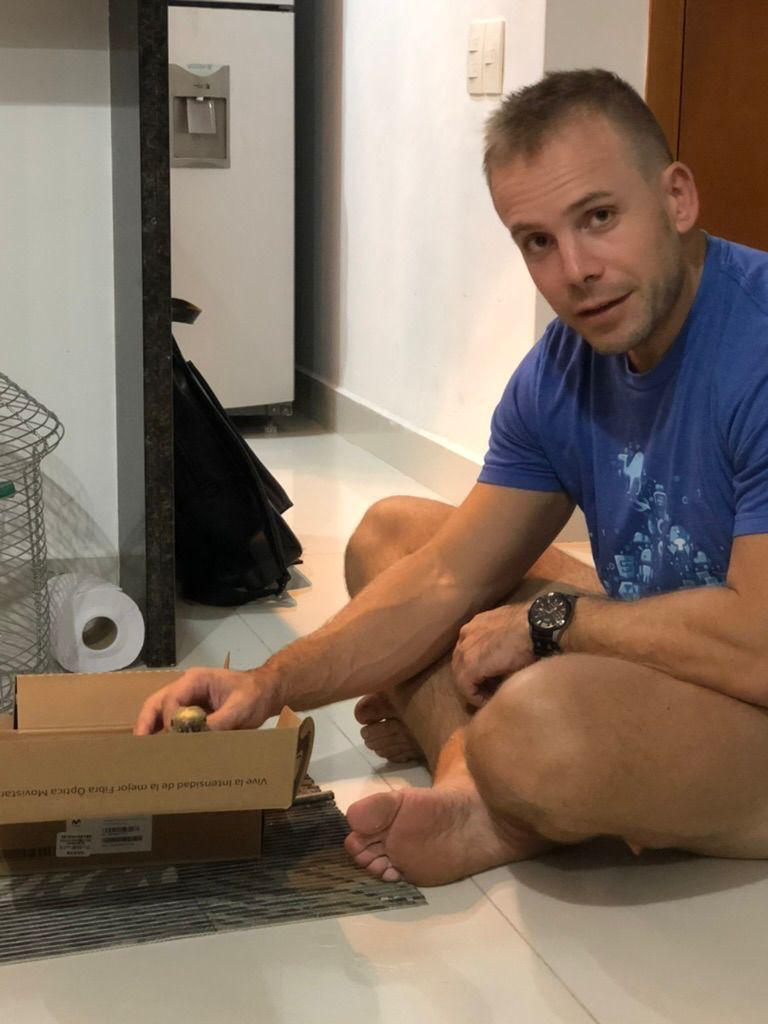
Alejandro Rigatuso and Beethoven · Cartagena, 2019 — Fundación Loros' first parrot.
Read the full story →From one parrot to a reserve
In 2022, the environmental authority granted Alejandro a permit to rehabilitate parrots. A few arrived at first; soon, dozens. And behind them, thousands more — the ones seized in Colombia every year.
The foundation grew with them. It bought land so rehabilitated parrots could fly free again, and biologists and scientists —from Colombia and abroad— joined the work. What began in an apartment is now a reserve.
But the problem is vast, and that is why we need you.
What one parrot made possible
Years later, what once fit in a cardboard box is a reserve of over 500 hectares: hundreds of rescued birds and a whole community —volunteers, biologists, farmers, schools, scientists and environmental authorities— working to give a second chance to those who never should have lost their freedom.
The method you fund isn't just our experience: it's published, peer-reviewed science.
 Published in · Peer-reviewedBird Conservation InternationalCambridge University Press · 2026 · Open access
About the Scarlet macaw
Known in Colombia as «guacamaya bandera» because its red, yellow and blue colours echo the national flag. They form lifelong pairs and need huge trees to nest — their recovery depends on mature, connected forests like the reserve's.
Its journey back to the wild
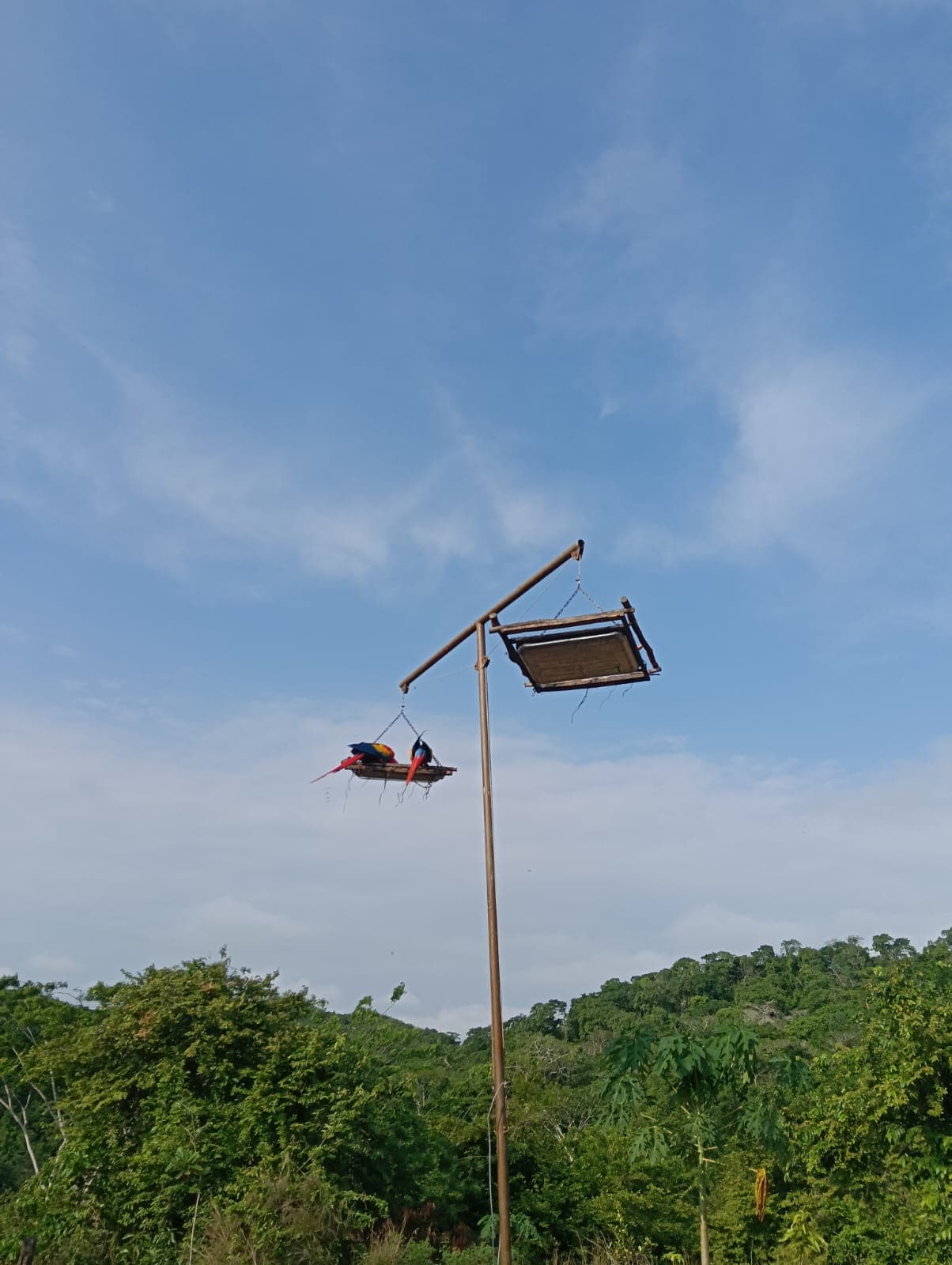
Every individual follows the same open method: rescue and health evaluation, then free-flight training through increasingly complex environments (pre-release), and finally release with months of feeder-based post-release monitoring back in the tropical dry forest. Your sponsorship keeps that whole process running.
Live from the reserve
The Scarlet macaw in the field
Real field notes from our team — keepers, rangers, the vet, neighbours — from the days this species turns up around the reserve. Every note is reviewed before we publish it.

2 months ago
Bryam David, the Visitor Who Brought Art
Alejandro Rigatuso

5 months ago
Erica Montoya and the Treasure of Every Corner
Alejandro Rigatuso

5 months ago
Three Species, One Single Crown
Alejandro Rigatuso
5 months ago
The Veterans Who Show the Way
Alejandro Rigatuso
5 months ago
Fifty-Seven Returns at Villanueva
Alejandro Rigatuso
6 months ago
Two Reds at the Cerro Aviaries
Alejandro Rigatuso
What you sponsor is a process — not a pet. When you sponsor a species you fund its rehabilitation and release process — food, veterinary care, free-flight training, post-release monitoring and the community work that keeps released birds safe.
As a sponsor you receive photos and videos of the process, updates from our rangers and veterinarian, a monthly report, team testimonials, and recognition in our sponsors list and on social media.
Ready to give them back the sky?
$30/month funds this species’ rehabilitation process. Monthly sponsorship via PayPal opens soon — meanwhile you can support this work today.