Annotated windows
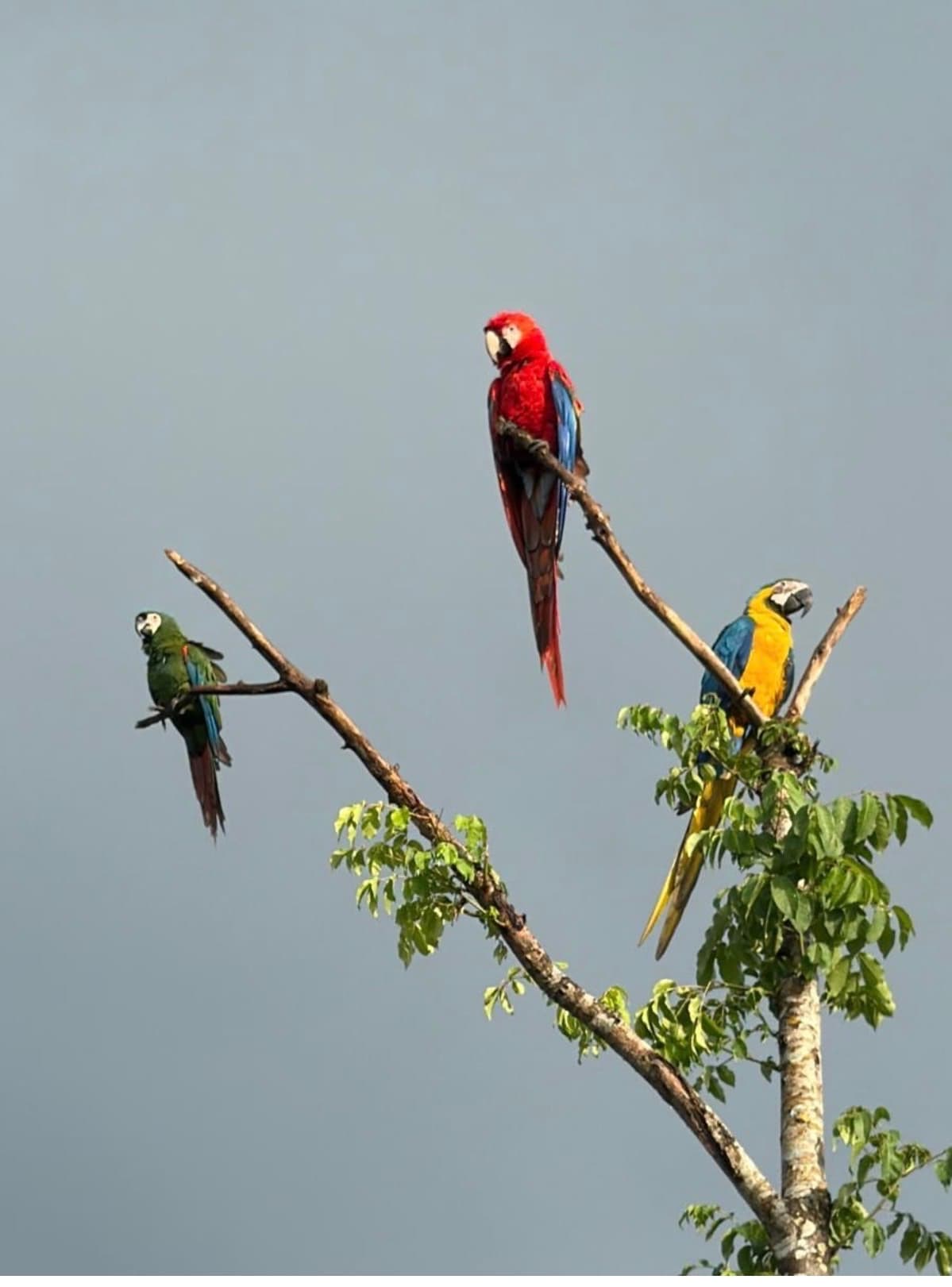
A way to explain our photos: point to each individual, species or landscape element and tell its story.
Version 1 · Minimal (current)
Who is who on this branch
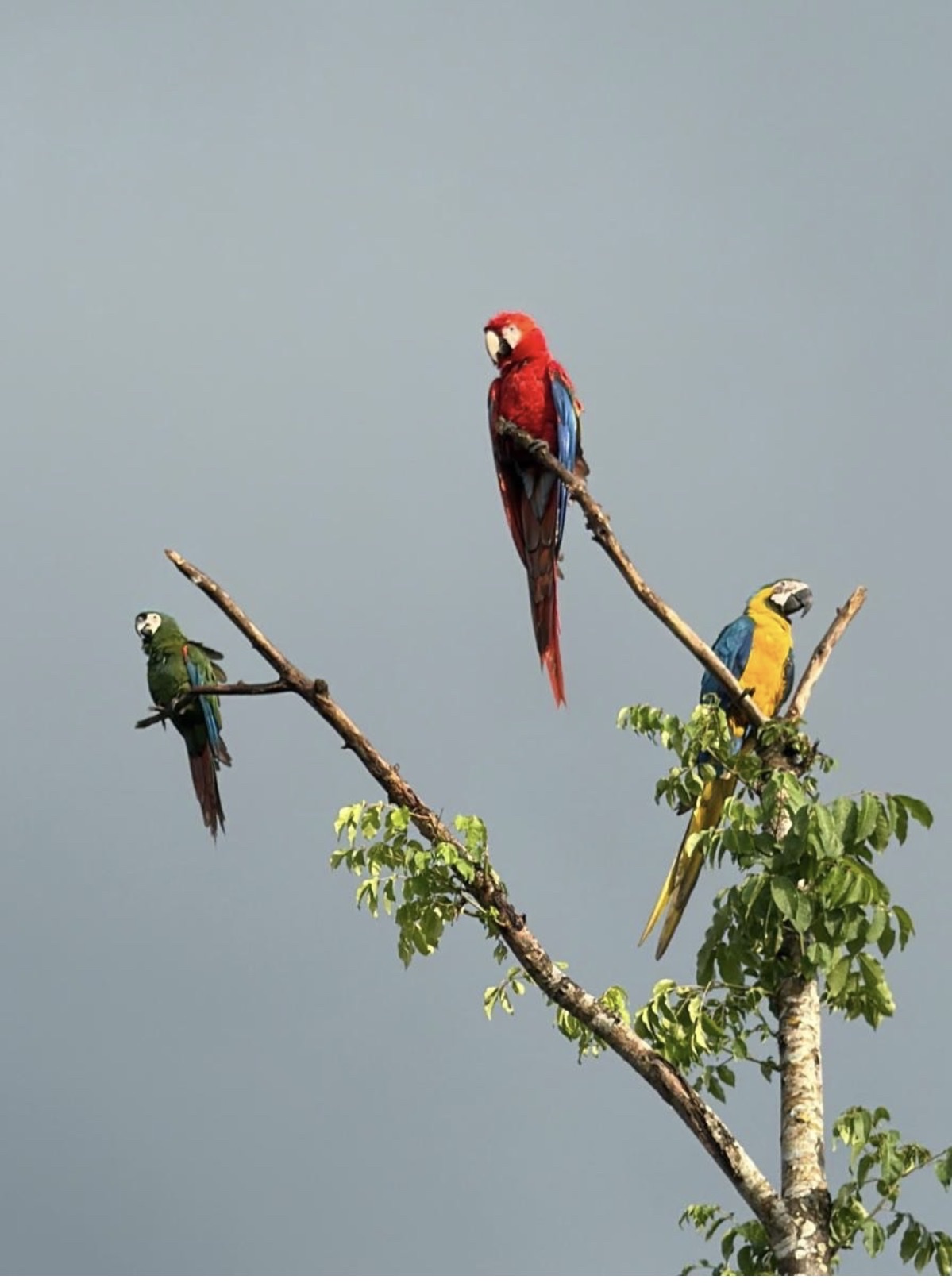
One perch, three macaw species and the tree that brings them together. Hover or tap each number.
- 1Ara severus
Chestnut-fronted macaw
The smallest of the macaws. Green, with chestnut forehead and cheeks; flies in family flocks.
- 2Ara macao
Scarlet macaw
Red with yellow and blue — the colors of the flag. Forms lifelong pairs and nests in large trees.
- 3Ara ararauna
Blue-and-yellow macaw
Deep blue back, yellow chest and a white facial mask. Feeds on seeds, fruits and palm nuts.
- 4Spondias mombin
Jobo (yellow mombin)
A tree native to the tropical dry forest. Its fruit feeds countless species: macaws, parrots, monkeys and fruit-eating birds.
This jobo branch (Spondias mombin) brings three of the tropical dry forest macaws of the Colombian Caribbean into a single frame: the chestnut-fronted macaw (Ara severus), the scarlet macaw (Ara macao) and the blue-and-yellow macaw (Ara ararauna). Their gathering is no accident: the jobo is a native tree whose fruiting draws many frugivorous species —macaws, parrots, monkeys and birds— to a single resource. That is why we record the date of every photo: fruit availability shifts with the tree's phenology and with the season (dry or rainy), and knowing when an image was taken helps us read the animals' behavior and plan our monitoring. These "annotated windows" are the first step toward a system for identifying and tracking individuals from field photographs.
Three wild macaws sharing a perch at Los Loros Reserve. An annotated-card prototype.
Version 2 · Glass · neon
Who is who on this branch
- Ara severus
Chestnut-fronted macaw
The smallest of the macaws. Green, with chestnut forehead and cheeks; flies in family flocks.
- Ara macao
Scarlet macaw
Red with yellow and blue — the colors of the flag. Forms lifelong pairs and nests in large trees.
- Ara ararauna
Blue-and-yellow macaw
Deep blue back, yellow chest and a white facial mask. Feeds on seeds, fruits and palm nuts.
- Spondias mombin
Jobo (yellow mombin)
A tree native to the tropical dry forest. Its fruit feeds countless species: macaws, parrots, monkeys and fruit-eating birds.
This jobo branch (Spondias mombin) brings three of the tropical dry forest macaws of the Colombian Caribbean into a single frame: the chestnut-fronted macaw (Ara severus), the scarlet macaw (Ara macao) and the blue-and-yellow macaw (Ara ararauna). Their gathering is no accident: the jobo is a native tree whose fruiting draws many frugivorous species —macaws, parrots, monkeys and birds— to a single resource. That is why we record the date of every photo: fruit availability shifts with the tree's phenology and with the season (dry or rainy), and knowing when an image was taken helps us read the animals' behavior and plan our monitoring. These "annotated windows" are the first step toward a system for identifying and tracking individuals from field photographs.
Version 3 · Scientific
Who is who on this branch
- 01Ara severus
Chestnut-fronted macaw
The smallest of the macaws. Green, with chestnut forehead and cheeks; flies in family flocks.
- 02Ara macao
Scarlet macaw
Red with yellow and blue — the colors of the flag. Forms lifelong pairs and nests in large trees.
- 03Ara ararauna
Blue-and-yellow macaw
Deep blue back, yellow chest and a white facial mask. Feeds on seeds, fruits and palm nuts.
- 04Spondias mombin
Jobo (yellow mombin)
A tree native to the tropical dry forest. Its fruit feeds countless species: macaws, parrots, monkeys and fruit-eating birds.
This jobo branch (Spondias mombin) brings three of the tropical dry forest macaws of the Colombian Caribbean into a single frame: the chestnut-fronted macaw (Ara severus), the scarlet macaw (Ara macao) and the blue-and-yellow macaw (Ara ararauna). Their gathering is no accident: the jobo is a native tree whose fruiting draws many frugivorous species —macaws, parrots, monkeys and birds— to a single resource. That is why we record the date of every photo: fruit availability shifts with the tree's phenology and with the season (dry or rainy), and knowing when an image was taken helps us read the animals' behavior and plan our monitoring. These "annotated windows" are the first step toward a system for identifying and tracking individuals from field photographs.
Version 4 · Field note
Who is who on this branch
- 1Ara severus
Chestnut-fronted macaw
The smallest of the macaws. Green, with chestnut forehead and cheeks; flies in family flocks.
- 2Ara macao
Scarlet macaw
Red with yellow and blue — the colors of the flag. Forms lifelong pairs and nests in large trees.
- 3Ara ararauna
Blue-and-yellow macaw
Deep blue back, yellow chest and a white facial mask. Feeds on seeds, fruits and palm nuts.
- 4Spondias mombin
Jobo (yellow mombin)
A tree native to the tropical dry forest. Its fruit feeds countless species: macaws, parrots, monkeys and fruit-eating birds.
This jobo branch (Spondias mombin) brings three of the tropical dry forest macaws of the Colombian Caribbean into a single frame: the chestnut-fronted macaw (Ara severus), the scarlet macaw (Ara macao) and the blue-and-yellow macaw (Ara ararauna). Their gathering is no accident: the jobo is a native tree whose fruiting draws many frugivorous species —macaws, parrots, monkeys and birds— to a single resource. That is why we record the date of every photo: fruit availability shifts with the tree's phenology and with the season (dry or rainy), and knowing when an image was taken helps us read the animals' behavior and plan our monitoring. These "annotated windows" are the first step toward a system for identifying and tracking individuals from field photographs.
Version 5 · Editorial · bold
Who is who on this branch
- 1Ara severus
Chestnut-fronted macaw
The smallest of the macaws. Green, with chestnut forehead and cheeks; flies in family flocks.
- 2Ara macao
Scarlet macaw
Red with yellow and blue — the colors of the flag. Forms lifelong pairs and nests in large trees.
- 3Ara ararauna
Blue-and-yellow macaw
Deep blue back, yellow chest and a white facial mask. Feeds on seeds, fruits and palm nuts.
- 4Spondias mombin
Jobo (yellow mombin)
A tree native to the tropical dry forest. Its fruit feeds countless species: macaws, parrots, monkeys and fruit-eating birds.
This jobo branch (Spondias mombin) brings three of the tropical dry forest macaws of the Colombian Caribbean into a single frame: the chestnut-fronted macaw (Ara severus), the scarlet macaw (Ara macao) and the blue-and-yellow macaw (Ara ararauna). Their gathering is no accident: the jobo is a native tree whose fruiting draws many frugivorous species —macaws, parrots, monkeys and birds— to a single resource. That is why we record the date of every photo: fruit availability shifts with the tree's phenology and with the season (dry or rainy), and knowing when an image was taken helps us read the animals' behavior and plan our monitoring. These "annotated windows" are the first step toward a system for identifying and tracking individuals from field photographs.
Version 6 · Aurora · gradient
Who is who on this branch
- 1Ara severus
Chestnut-fronted macaw
The smallest of the macaws. Green, with chestnut forehead and cheeks; flies in family flocks.
- 2Ara macao
Scarlet macaw
Red with yellow and blue — the colors of the flag. Forms lifelong pairs and nests in large trees.
- 3Ara ararauna
Blue-and-yellow macaw
Deep blue back, yellow chest and a white facial mask. Feeds on seeds, fruits and palm nuts.
- 4Spondias mombin
Jobo (yellow mombin)
A tree native to the tropical dry forest. Its fruit feeds countless species: macaws, parrots, monkeys and fruit-eating birds.
This jobo branch (Spondias mombin) brings three of the tropical dry forest macaws of the Colombian Caribbean into a single frame: the chestnut-fronted macaw (Ara severus), the scarlet macaw (Ara macao) and the blue-and-yellow macaw (Ara ararauna). Their gathering is no accident: the jobo is a native tree whose fruiting draws many frugivorous species —macaws, parrots, monkeys and birds— to a single resource. That is why we record the date of every photo: fruit availability shifts with the tree's phenology and with the season (dry or rainy), and knowing when an image was taken helps us read the animals' behavior and plan our monitoring. These "annotated windows" are the first step toward a system for identifying and tracking individuals from field photographs.
1234- 01Chestnut-fronted macaw · Ara severus
The smallest of the macaws. Green, with chestnut forehead and cheeks; flies in family flocks.
- 02Scarlet macaw · Ara macao
Red with yellow and blue — the colors of the flag. Forms lifelong pairs and nests in large trees.
- 03Blue-and-yellow macaw · Ara ararauna
Deep blue back, yellow chest and a white facial mask. Feeds on seeds, fruits and palm nuts.
- 04Jobo (yellow mombin) · Spondias mombin
A tree native to the tropical dry forest. Its fruit feeds countless species: macaws, parrots, monkeys and fruit-eating birds.
Instagram Story · 9:16 · 1080 × 1920
1234- 01Chestnut-fronted macaw · Ara severus
- 02Scarlet macaw · Ara macao
- 03Blue-and-yellow macaw · Ara ararauna
- 04Jobo (yellow mombin) · Spondias mombin
Instagram Post · 4:5 · 1080 × 1350
Ara macao
Scarlet macaw
Red with yellow and blue — the colors of the flag. Forms lifelong pairs and nests in large trees.
Instagram Story · 9:16 · 1080 × 1920
Ara macao
Scarlet macaw
Red with yellow and blue — the colors of the flag. Forms lifelong pairs and nests in large trees.
Instagram Post · 4:5 · 1080 × 1350
Carrusel · 4:5 · 7 imágenes
1234Who is who on this branch
4 anotaciones · desliza →
01 · Portada · puntos
1234Ara severus
Chestnut-fronted macaw
The smallest of the macaws. Green, with chestnut forehead and cheeks; flies in family flocks.
02 · Chestnut-fronted macaw
1234Ara macao
Scarlet macaw
Red with yellow and blue — the colors of the flag. Forms lifelong pairs and nests in large trees.
03 · Scarlet macaw
1234Ara ararauna
Blue-and-yellow macaw
Deep blue back, yellow chest and a white facial mask. Feeds on seeds, fruits and palm nuts.
04 · Blue-and-yellow macaw
1234Spondias mombin
Jobo (yellow mombin)
A tree native to the tropical dry forest. Its fruit feeds countless species: macaws, parrots, monkeys and fruit-eating birds.
05 · Jobo (yellow mombin)
Planting jobo, regrowing the forest
- Jobo can regrow from a single strong branch planted in the ground.
- Psittacids —parrots and macaws— love the jobo.
- The regenerative work of our rangers: planting jobo.
06 · Interpretación
You can help too, always.
loros.org/como-ayudar
07 · Cómo ayudar
Reel · 9:16 · 7 imágenes
1234Who is who on this branch
4 anotaciones · desliza →
01 · Portada · puntos
1234Ara severus
Chestnut-fronted macaw
The smallest of the macaws. Green, with chestnut forehead and cheeks; flies in family flocks.
02 · Chestnut-fronted macaw
1234Ara macao
Scarlet macaw
Red with yellow and blue — the colors of the flag. Forms lifelong pairs and nests in large trees.
03 · Scarlet macaw
1234Ara ararauna
Blue-and-yellow macaw
Deep blue back, yellow chest and a white facial mask. Feeds on seeds, fruits and palm nuts.
04 · Blue-and-yellow macaw
1234Spondias mombin
Jobo (yellow mombin)
A tree native to the tropical dry forest. Its fruit feeds countless species: macaws, parrots, monkeys and fruit-eating birds.
05 · Jobo (yellow mombin)
Planting jobo, regrowing the forest
- Jobo can regrow from a single strong branch planted in the ground.
- Psittacids —parrots and macaws— love the jobo.
- The regenerative work of our rangers: planting jobo.
06 · Interpretación
You can help too, always.
loros.org/como-ayudar
07 · Cómo ayudar
Interactive · Guess & reveal
Who lives on this branch?
Count how many species you can spot… then tap each point to reveal them.
Where this is going
This is a first piece of a larger system. Each marker could stop being static and become an identified individual: a specific bird with its own history — when it arrived, its rehabilitation, its release, where it has been seen again. The same annotated window would serve to tag monitoring photos and to power a future enrichment system that links each image to field data.