Our approach to parrot rehabilitation and release
Validated by peer review in Bird Conservation International (2026). A framework for parrot rehabilitation and release in the tropical dry forest. Last updated: May 2026 · Living document.
What this document is
This is not a protocol. A protocol says "do A, then B, then C". What follows is something different and prior: the method by which Fundación Loros thinks about parrot rehabilitation and release (parrots, parakeets, conures and macaws) in the tropical dry forest of Villanueva, Bolívar, around Cerro El Peligro. It is the reasoning layer —principles, evidence, ethics and approach— from which the concrete field procedures are later derived. Its single ultimate goal is for every bird to develop the ecological skills it needs to survive and reproduce without depending on humans.
The method rests on three mutually reinforcing pillars:
- The best available scientific evidence on which factors actually increase post-release survival in parrots (not mere behavioural response in captivity).
- A compassionate rehabilitation ethic: neither tame, nor instil fear.
- The operational knowledge of the field team and of the territory.
The method focuses on birds coming from captivity (confiscations, voluntary surrenders, ex-pets) and on chicks/juveniles under human care. It does not cover the clinical management of adult wild birds that enter due to accident or trauma, which follow a separate veterinary route and, in most cases, a direct release once recovered.
What is NOT the focus of this document. We deliberately do not dwell on the classical topics of wildlife rehabilitation —intake, quarantine, clinical stabilisation, biosecurity, veterinary assessment. Those topics are important and we apply them following the sector's standard best practices. Nor will you find here the checklists and step-by-step procedures: those operational protocols are derived from this method and documented separately. Here we want to concentrate on the essence of the Fundación Loros method and on what sets it apart from more classical approaches: dilution of dependence through capability development rather than aversion, site fidelity as a safe harbour, social learning within the flock, and the human's role as a temporary guide.
An open and living method. We do not present this as a closed truth, but as a method under construction that we share publicly so others can discuss, challenge, replicate and improve it. Every released cohort and every external contribution —from academia, other organisations or the community— is incorporated to refine it. We work from the premise that conservation moves forward faster when knowledge is shared than when it is hoarded.
Not a recipe. This rehabilitation model is not meant to be applied to the letter. It is a reasoning framework, not an instruction manual. Before defining a rehabilitation and release plan, the team must analyse the complete situation: the history of each parrot, the team's own capabilities and availability, the state of the surrounding community, the state of the forest and its resources, the predator situation at the site, and the applicable legal framework. From that diagnosis a tailored plan is built, with the same goal always — to develop an independent animal with strong ecological capabilities — even if the path to get there changes from case to case. Applying the method mechanically, without reading the context, contradicts its very spirit.
Philosophy and guiding principles
Progressive dilution of the relationship with the human, not induced aversion
The bird's dependence on people is not "broken" by frightening it. It is diluted as the bird develops its own capabilities and finds in its species and environment everything it once obtained from the caretaker. Distancing is a consequence of competence development, not a goal pursued through fear.
This translates into a practical handling rule: minimise affectionate handling, do not let the bird perch on the caretaker, do not speak to it or feed it for entertainment, and favour take-offs and landings on natural structures rather than on people. Human contact is not eliminated — it is restricted to functional roles: clinical handling, monitoring, station maintenance — because every unnecessary affective interaction delays independence.
Developing ecological capabilities is what matters most
This is the central principle of the method, and the others derive from it. A release is not evaluated by the moment the cage opens, but by what the bird is able to do afterwards: fly with strength and precision, move between resources, forage on wild food, recognise its surroundings, integrate into a flock and orient itself in the landscape.
The key —and what sets our method apart from a more classical view— is that many of those skills cannot be developed inside the aviary. A sense of orientation, flight in real conditions (with wind, with terrain, dodging predators), and above all the ability to not only recognise but FIND food and water in a living, changing territory, are competencies that are completed mainly in the wild, after release — no aviary, however well designed, can substitute for that phase. The aviary provides physical condition and a social base; the remaining competencies are acquired in the territory.
That is why release is not the end of the process, but the beginning of real learning. And that is why the bird cannot be "released and abandoned": during that critical phase, the human (as a temporary guide maintaining stations, shelters and accompaniment) and, above all, the flock (with more experienced individuals who know routes, resources and dangers) play a central role as guides who help the rehabilitating bird adapt to the post-release environment. The whole method is organised around building basic capabilities before release and accompanying the development of the decisive capabilities after it.
The human is a temporary guide
The Fundación Loros team plays a scaffolding role: it sustains the process while the bird needs it and withdraws in a planned manner as the bird gains autonomy. The criterion of success for the caretaker is to become progressively dispensable to the bird.
There is a strong correlation between site fidelity and survival
Birds that remain faithful to a known site —where feeding stations, roosts and the flock are— survive more than those that disperse erratically (White 2012; Tetzlaff 2019). The whole architecture of devices (stations, shelters, artificial nests) is designed to anchor the bird to a safe territory during the transition, not to retain it by force.
Separation by cohorts
Birds do not arrive equal nor do they start from the same point. The method groups individuals by life history, because that determines which capabilities they lack and at what pace they can advance:
- Chicks and juveniles under human care: they have not yet developed capabilities; the main risk is imprinting and dependence.
- Parrots with long captivity histories (ex-pets, old confiscations): usually arrive with imprints, strong human bonds, poor flight condition and, sometimes, anomalous behaviours. They are the most difficult candidates and require the longest process.
- Wild birds arrived by accident (outside the scope of this document): retain their capabilities; their route is clinical and of rapid release.
Mixing cohorts with different needs and rhythms delays some and pressures others. Initial separation allows the method to be adjusted to the species and to the history of each bird.
Why we do not use aversion training
There is no solid evidence supporting that aversion training —neither to predators nor to humans— increases post-release survival in parrots. The few controlled studies available in parrots find no effect on actual survival in the wild (only, at best, on behaviour measured inside the aviary), and the broader literature warns that in birds the effect is the weakest and most inconsistent of all taxa.
The operational position of the method goes beyond "there is no evidence": fear is counterproductive through a concrete causal chain:
Fear generates stress and distrust, reduces learning and can trigger disorderly escapes. A panic escape can end in disorientation, and disorientation in hunger and thirst. A hungry, lost bird ends up begging for food in unsafe places —near people, roads or settlements— which is exactly the outcome we wanted to avoid.
This does not mean raising "tame" birds. It means that caution towards humans and predators is cultivated by the routes that actually work: group housing with their own species, minimal and neutral human contact, social learning in the flock, and —above all— a good selection of release site with low predation pressure.
Second-order consequences that concern us. Beyond the lack of evidence of benefit, aversion training drags along indirect effects that may be net negative: hypervigilance that reduces foraging time and degrades body condition precisely when the bird most needs to build reserves; chronic stress and immunosuppression, which shift mortality from predation to disease and starvation; generalisation of fear to harmless stimuli —including the feeders and waterers the bird depends on during soft release; interference with social learning in the flock; and the risk of habituation when models are used instead of real predators, which can leave the bird worse off than if it had never been "trained". None of these costs is offset by a demonstrated survival benefit.
These consequences are well documented in the general animal welfare literature and in studies of other taxa; their specific magnitude in released psittacines has not been precisely quantified.
What we see in the field. In our experience, and to our surprise, the most skittish animals are recaptured as often as the most docile ones. Our interpretation is that, during the first weeks of release —and particularly the first three days— if a bird becomes disoriented and lost, especially in the dry season with the suffocating heat of the tropical dry forest, it fails to find water or food; out of desperation it approaches humans and ends up recaptured. In other words: hunger eclipses aversion. A hungry and thirsty bird will go towards people no matter how much fear has been instilled in it. That is why we prefer to develop calm, stress-free parrots, capable of navigating those critical first days with composure and returning to their feeders and waterers. The dilution of the relationship with the human is achieved through capability development, never through induced aversion.
Training based on positive reinforcement, never on punishment
Learning the behaviours we seek —locating the feeder, flying between stations, returning to the aviary, integrating into the flock— is built with positive reinforcement: the animal is rewarded when it performs the desired behaviour. We never use punishment, fright or coercion.
This is the propositive face of the previous principle: if fear is counterproductive, the correct tool is its opposite. Positive reinforcement is not only more effective at fixing stable behaviours, but also protects the bird's welfare, lowers its stress level and maintains its willingness to learn. Rewarding what we want to see is, moreover, fully compatible with diluting dependence: we reinforce ecological behaviours (flying, exploring, foraging, returning to the safe site), not the affective bond with the caretaker.
Learning takes time: progressive and gradual development
The development of ecological capabilities is necessarily progressive and gradual. Just as a human cannot learn Mandarin in a week —no matter how many millions of people speak it around them— a parrot cannot learn "the language of nature" overnight. Learning requires time, and that time is different for each animal. And here age changes everything: just as a child acquires a language with an ease that an adult would envy, a young parrot learns much faster than one that has spent years in captivity (see the sensitive learning period below). The "time" that matters, then, is not the length of a long aviary curriculum, but the maturation of the accompanied bird —before and, above all, after release—.
This principle is supported by documented practice. The free-flight method described by Woodman, Biro & Brightsmith (2021) organises learning into six levels of increasing complexity (from level 0, indoors, to level 5, complex landscapes with real predators and demanding weather): the bird only advances to the next level when it has mastered the previous one, imitating the process by which wild birds acquire their skills under the guidance of their parents and the flock. Applied systematically, that gradual escalation achieved zero losses from predation or disorientation across more than 500 flight-months, with full development of flock flight, landscape navigation and wild food consumption.
The operational conclusion is direct: our task is not to rush the bird, but to accompany it for as long as its learning requires. If we manage to sustain that accompaniment —adjusted to the rhythm of each individual— we increase its real chances of surviving in the wild.
The sensitive learning period: the fledgling age
Age is the factor that most influences the speed and quality of learning. Young parrots, in the post-fledgling stage (approximately 2 to 6 months), go through a sensitive learning period of maximum learning capacity: if they are accompanied in the right environment during that window, they develop flight, navigation, foraging, flock cohesion and predator response in the same period in which wild chicks would do so under the guidance of their parents. This is why a young bird can reintegrate well after surprisingly short training, while the formal "curriculum" matters less than catching the right developmental moment.
This defines two distinct routes within our work, which should not be confused:
- Birds close to the post-fledgling stage. Here we have evidence —our own and from the practice of Chris Biro and Paulina Garzón— that they reintegrate very well, with high survival, site fidelity and flock cohesion. It is the route with the strongest backing.
- Birds that have lived many years in captivity. Their process is much slower and their prognosis more uncertain. We do not rule them out (see §4), but we honestly acknowledge that more studies on the effectiveness and survival rates of this route are needed before making strong claims.
In other words: when the free-flight method is applied to young birds in their sensitive learning period, we stand on solid ground; when it is applied to long-captive adults, we stand on exploratory ground.
We leverage the bird's instincts, we do not fight them
A thread runs through the entire method: instead of imposing behaviours through artificial conditioning, we organise the process around the bird's natural instincts and let them do the work. Two of those instincts are particularly powerful.
Sociability. Parrots are intensely gregarious, and that flock cohesion is a tool, not an obstacle. We exploit it deliberately —for example, in the staggered release (see §5)—: a newly released bird stays near the aviary while its companions are still inside, because the social bond anchors it to the site more strongly than any stimulus we could impose.
The pair bond. One of the most striking observations of our field work is the effect of pair formation on the bird's relationship with humans. When a parrot forms a pair bond, its social world reorganises completely around its mate and the flock, and its tolerance of or interest in people can fade with remarkable speed. The formation of a single pair can be sufficient for a bird to reorganise its relationship with people and become appropriately cautious.
This observation —consistent with the central role the literature assigns to the pair bond in the social ontogeny of parrots, although here we report it as a field finding and not as a controlled experimental result— contains the cleanest argument in favour of our approach: a healthy distance from the human emerges from the bird's own biology —its development, its sociability, its pair bond— and does not need to be induced with fear. Where nature already provides the mechanism, aversion training is superfluous.
The evidence base supporting the method
This method is not a collection of good intentions; each central decision is supported by what the parrot reintroduction literature identifies as a determinant of survival.
- The size of the release cohort is the most robust predictor. In the reintroductions of the scarlet macaw (Ara macao) in Peru and Costa Rica, the number of released birds explained close to 70% of the variation in survival (Brightsmith et al., 2005). Releasing few individuals at a time is consistently associated with lower success rates.
- Site predation pressure and habitat quality dominate the outcome. White et al.'s (2012) review of 47 parrot reintroductions found that site predation threat was the strongest and most consistent factor, followed by habitat quality and the duration of supplementary feeding. No training compensates for a bad site.
- Prolonged supplementary feeding (ideally >12 months) is associated with higher success (White et al., 2012). Withdrawing food too soon is one of the avoidable causes of failure.
- The presence of conspecifics ("kernel flock") facilitates integration. In the successful reintroduction of the yellow-shouldered parrot (Amazona barbadensis) on Margarita Island, the released birds joined wild groups and the population grew substantially (Sanz & Grajal, 1998). In the reintroduction of the Spix's macaw (Cyanopsitta spixii, 2022), wild Illiger's macaws were used as heterospecific "mentors" precisely to leverage social learning (Purchase et al., 2024).
- Soft release and flight training appear systematically in programmes that work, while "hard" releases (sudden release, without accompaniment) and birds without flight condition fail predictably. Even with extensive training, the Puerto Rican parrot (Amazona vittata) suffered significant mortality from raptors, confirming that the site/predation factor outweighs individual behavioural preparation (White et al., 2005).
- Aversion training shows no effect on survival. The controlled trial of Lopes et al. (2017) on Amazona aestiva found no difference in survival between trained and untrained birds. The study of aversion to humans on Amazona auropalliata in Costa Rica (Tailor et al., 2026) found that simple monospecific housing without human contact produces the same effect as an intensive aversive protocol. The meta-analysis of Tetzlaff et al. (2019) notes that, among all taxa, programmes with birds are the ones that benefit least and need the most refinement. When anti-predator training has shown any effect in birds (houbara bustard; van Heezik et al., 1999), it was with a live predator, not models, and at the cost of injuries during the process.
- A recent case reinforces this convergence. The reintroduction of six blue-and-yellow macaws (Ara ararauna) in southeast Brazil, using free-flight training and a temporary kernel flock of trained adults, achieved 100% survival and 0% predation with no supplementary food or water for over a year, and without any specific predator-aversion training (Brightsmith et al., 2024). The paper reports 83% formal "success" because one of the six was recaptured and re-released — none died. Recommended reading: the case lands almost point-by-point the approach proposed here — fledgling window (release between 5.5 and 7 months), social instincts that dilute the relationship with the human as weaning ends, and learning the environment in the environment. Two caveats in good faith: the cohort was small (6 birds, below the large-cohort threshold the literature recommends; the kernel flock covered part of that function), and the release site had low raptor pressure — the predator-avoidance test was softer than in forests with denser predator communities. The direction matches our own data on Amazona ochrocephala: develop capabilities, not induce fear.
- Our own results back the method. In Fundación Loros's first release —18 young Amazona ochrocephala, confiscated from the wildlife trade and prepared with free flight—, 72% were still alive and returning to the feeders at one year (94% at one month, 89% at three months), with feeder use by 100% of the birds, 100% flock cohesion and 94% site fidelity (Brightsmith, Rigatuso, Biro & Geiszler, 2026). These are notably high figures for a de novo reintroduction, without a pre-existing wild population, in an inhabited landscape, and now peer-reviewed in Bird Conservation International. As an internal contrast, a subsequent conventional soft release at the same site showed much lower fidelity and survival (~25% at nine months) despite an established flock and feeding stations — a preliminary observation that reinforces why we prioritise free flight with young birds.
Conclusion of the framework: the investment with the highest return is in site, cohort size, conspecifics, soft release, sustained feeding, candidate selection and flight capacity — not in instilling fear.
Starting point: evaluation and cohort formation
Before entering the five-stage process, each bird goes through a preparatory phase that defines whether it is a release candidate and in which cohort. Intake, quarantine and clinical assessment follow the sector's standard best practices and are not the focus of this document (see §1); here we concentrate on what is proper to the method: how we select and group the birds.
Releasability assessment. The following are evaluated: flight capacity and willingness, degree of imprinting or human bond, baseline avoidance response to people, physical condition, anatomical integrity (wings, beak, feet) and life history. We do not discard a parrot for being highly humanised: we understand that its rehabilitation process may simply take more time. Distancing from the human is achieved by developing capabilities, not by excluding the bird. Only birds with incapacitating injuries or conditions that irreversibly compromise their survival are assigned to non-releasable programmes (education, assisted reproduction or permanent sanctuary), where they can also play a valuable role as mentors or as a social nucleus for other birds.
Identification. Each individual receives an identification tag/ring and an individual file is opened (species, origin, assessment, cohort, milestones). Identification is the basis for subsequent monitoring and for traceability before CARDIQUE.
Cohort formation. With the above information, birds are grouped by species and life history, seeking to assemble sufficiently large release cohorts (see §5).
Key success factors
These are the factors the method prioritises, in approximate order of impact on survival:
- Release cohort size (≥ 20 birds). The highest-return factor. Large cohorts dilute individual predation risk, reinforce flock cohesion and improve threat detection. Small cohorts are associated with appreciably poorer outcomes.
- Existence of a kernel flock (conspecifics in the area). The presence of individuals of the same species —wild or previously released— in the release area accelerates social integration, learning of routes and resources, and site fidelity. When there is no wild population, the released birds themselves must constitute that nucleus, which reinforces the importance of cohort size. In fact, one of the explicit aims of the method is to found a nucleus or pioneer flock —a spatially stable founding flock— at sites where the species is no longer present: a young, large and cohesive cohort can itself become that nucleus, without the need for a pre-existing population or for captive birds used as social attractants.
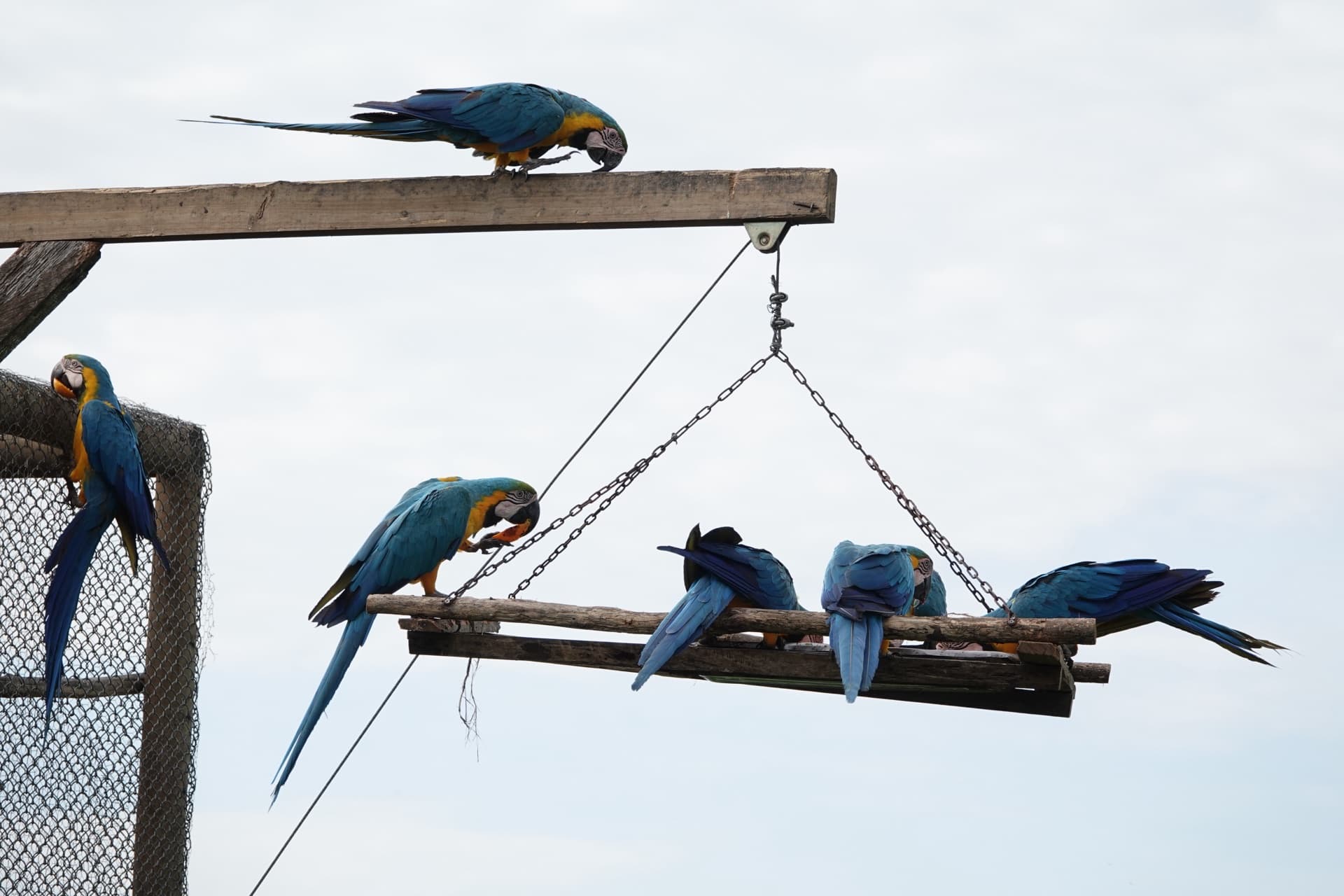
- Soft, staggered release with sustained supplementation. The bird reaches freedom and continues to have access to feeding stations while it learns to exploit the forest; food is withdrawn gradually, never abruptly, and only when there is evidence of wild foraging. And although the training and the cohort are group-based (≥20 birds), the release event itself must not be massive: once the group is ready, we release in a staggered manner, one or two individuals per day. This reduces group dispersion, avoids the chaos of a mass release and lets caretakers monitor each bird's progress. The mechanism is purely social: the first ones released stay near the aviary because their companions are still inside; they explore more slowly, locate and use the outdoor feeder, and —doing so within sight of those still inside— show them the way. The bird's own sociability thus organises the transition.
- Habitat quality and seasonality. The site must offer wild food, nesting cavities, water and shelter. In the tropical dry forest of the Colombian Caribbean, phenology is markedly seasonal, so the release calendar must coincide with periods of greater resource availability. Knowledge of the wild diet (e.g., the foundation's documentation work on wild foods) feeds directly into this selection.
- Predator management and pressure at the site. This is the strongest predictor in the literature. The density of raptors and terrestrial predators is evaluated and sites with low-to-moderate pressure are preferred. The goal is not to "train" the bird against the predator, but to choose a site where the predator does not overwhelm it.
- Community awareness and participation. Work with the community is an operational component of the method, not an add-on. A site surrounded by people who recognise, value and do not recapture the birds is part of habitat quality, and directly reduces mortality from capture and road accidents. In our method, the community does not only observe: it participates in the process, and we work with it in three complementary circles:
- Local farmers (campesinos), linked to the operation (for example, through land-use agreements that turn them into allies and guardians of the territory rather than potential hunters).
- Schools, where environmental education plants a generation that protects rather than captures.
- Neighbours within the immediate radius of the release site, who play the most critical role: they are a buffer ring. If a newly released bird becomes disoriented or lost —and, thirsty or hungry, looks for water and food near the houses—, it is most likely to end up precisely among the neighbours. An informed, empathetic ring of neighbours in contact with the foundation is what turns that moment of risk into a rescue: they alert us, they do not recapture, and they allow the bird to be reincorporated.
In parallel with rehabilitation, we run training sessions, awareness events, geo-targeted social media campaigns aimed at the area around the site, tree-planting and volunteer programmes at the foundation. The people of the territory become co-authors of the recovery of their own fauna, which makes conservation sustainable beyond the foundation's presence.
- Community and tourism monitoring. Local residents and project visitors become an observation network that reports sightings, problems and reincorporations. It turns post-release surveillance into something sustainable and low-cost.
- Flight capacity (strength, dexterity, precision). A bird that does not fly strongly is not released. Flight competence is a non-negotiable requirement to advance to release.
- Free-flight training. The bird is taught by flying: it learns to move between stations and natural perches, gaining muscle mass, endurance, orientation and confidence. It is the central "training" of the method — and it is the opposite of fear.
Key devices
All field infrastructure shares the same double goal: gradual transition from the aviary to the forest and site fidelity to the safe place.
- Post-release feeding stations. Elevated points used exclusively by the rehabilitating birds, where balanced food is offered and natural habits are promoted. They are the anchor of site fidelity and the instrument by which the transition is regulated (recalling that hunger, well managed, is the motivator that sustains the process).
- Mobile perches or scaffolds (flight stations). These are the destinations to and from which the parrot flies during training. When the bird reaches the perch it receives positive reinforcement: each station can carry a small dish where the reward is placed the moment the animal performs the desired behavior. Because they are mobile, they get repositioned to progressively increase distance and difficulty, and they are used both inside and outside the aviary. Flying the bird between these stations is what is known as stationing, and it is one of the fundamental differences from the traditional free-flight method: in the classic approach the parrot often lands on the human, whereas here it flies from station to station. The human stops being the landing point and becomes the one who organizes the route — consistent with the role of temporary guide and the dilution of the affective bond (see §2).
- Shelters or roosts. Safe overnight structures or sites that concentrate the flock, reduce nocturnal dispersion and reinforce group cohesion and territorial fidelity.
- Artificial nests. Provide nesting cavities when the habitat is deficient in them, favouring reproductive establishment and the long-term permanence of the released population.
- Identification tags/rings. Allow individual tracking, reading of sightings by the community and tourism, and an honest evaluation of survival.
The five stages of the process
Movement from one stage to the next does not happen on a calendar, but by milestones: the bird advances when it demonstrates the competencies of the previous stage. The human reduces their presence at each step.
Stage 1 — Inside the aviary: group formation and physical baseline
Objective: to build social cohesion and basic physical condition.
The bird is integrated into a group of its own species, receives adequate and varied feeding (natural diet: local fruits and seeds, never human or processed food) and begins group flight training between stations inside the aviary. Training is always carried out in a group —never individually— because one of the central objectives of this stage is to build social cohesion: the birds learn to synchronise, to move together, and to read one another. Environmental enrichment is introduced that invites exploration and the solving of natural challenges. The Chris Biro video below illustrates this dynamic.
Role of the human: minimal and neutral. Handling without affection, no perching on the caretaker, health evaluations using appropriate tools and at a respectful distance.
Criteria to advance:
- Social cohesion of the group. The group stays together throughout the day, with a similar flight level; the birds eat and sleep together (in pairs or stable subgroups). There are no isolated individuals spending most of the day alone.
- Group size matched to the release site. Group size is one of the key success factors in psittacine rehabilitation projects: there is a documented correlation between small groups and low post-release survival. As an operational rule:
- If a nucleus flock is already established at the release site, the group to be released must be cohesive and made up of at least 10 individuals (ideal figure).
- If no nucleus flock exists at the site, we recommend releasing groups of at least 20 individuals.
- Functional flight between internal aviary stations.
- Adequate body condition and plumage, no signs of disease.
Example in practice
Stage 2 — The threshold: inside and outside the aviary
Objective: for the bird to get to know the outside and to learn that the release site is its safe harbour.
Controlled access is opened. The bird begins to leave and enter the aviary, alternating both worlds with the security of being able to return. At this stage we seek to consolidate the most important behaviour of the whole process: going and returning to the aviary. Returning to the release site IS safe; that site is the harbour from which the bird can explore the world and gradually build its mental navigation map. We want the return to become a dominant behavioural pattern.
There are two key behaviours worked on at this stage:
- Locating the feeder (the feeding stations).
- Returning to the aviary.
This is also the stage where the staggered release takes place (see §5): the aviary is not opened for the whole group at once; instead, one or two individuals at a time are released definitively. Because the rest of the cohort remains inside, the first ones released stay anchored near the aviary out of pure sociability, explore the threshold calmly and, by using the outdoor feeder within sight of their companions, pave the way for the next ones. The threshold, then, is not crossed in a stampede but in turns.
Role of the human: the caretaker observes the bird's behaviour and decides whether it is safe for it to go out, or whether the outing should be intermittent. Maintenance of stations; no reinforcement of the affective bond.
Criteria to advance:
- The bird locates and uses the feeder with confidence.
- Returns spontaneously to the aviary.
- Flies with more strength and precision.
- Group cohesion during movements.
- Favourable phenological window. Ideally, the transition to Stage 3 (full freedom) should coincide with a season of high fruit and water availability across the territory. In Villanueva, Bolívar, the optimal window is May to July, when the dry forest produces an abundance of mango, mamoncillo and other local fruits. The worst windows are November (excessive rainfall) and March (extreme drought): if release happens in those months for any reason, Stage 2 becomes especially critical — getting lost during those seasons can be fatal.
Example in practice
Stage 3 — First days outside the aviary: growing exploration
Objective: for the bird to expand its exploration while keeping the aviary as its base.
It is no longer only about leaving and returning to the aviary: the bird begins to explore more. It makes circular flights, moves between stations and starts to fly with other parrots, but always returning to the aviary. Supplementary feeding remains fully active. It is the most delicate phase: the bird is free but not yet self-sufficient.
At this stage the bird also begins to develop navigation skills — not just flight musculature. It learns to orient itself in the landscape, to recognise reference points and to return effortlessly to the release site. Navigation is an ecological capacity as critical as flight itself.
Role of the human: intensive accompaniment and monitoring; reading of tags; recording of who uses the stations and who forages. Caretakers guide the birds gradually toward higher zones, installing perches, feeders and nests at height, moving them away from the ground and from human presence, never using aversive stimuli that could generate stress or chaotic flight. Behaviour is always shaped through positive reinforcement.
Behavioural evaluation: if a bird seeks out people for fun or company —that is, if social attraction toward humans persists in freedom, beyond food seeking— we recommend returning it to Stages 1 and 2 until it finds a companion or a stable social group with which it stays. Social affinity should be oriented toward conspecifics, not toward humans.
Criteria to advance: permanence and site fidelity; frequent group flights; consolidated navigation skills — the bird orients itself and returns without hesitation; first signs of wild foraging; social orientation toward conspecifics rather than people; absence of disorderly escapes or of begging in unsafe areas.
Example in practice
Stage 4 — More height, more distance, more foraging
Objective: growing ecological autonomy with high and sustained group cohesion.
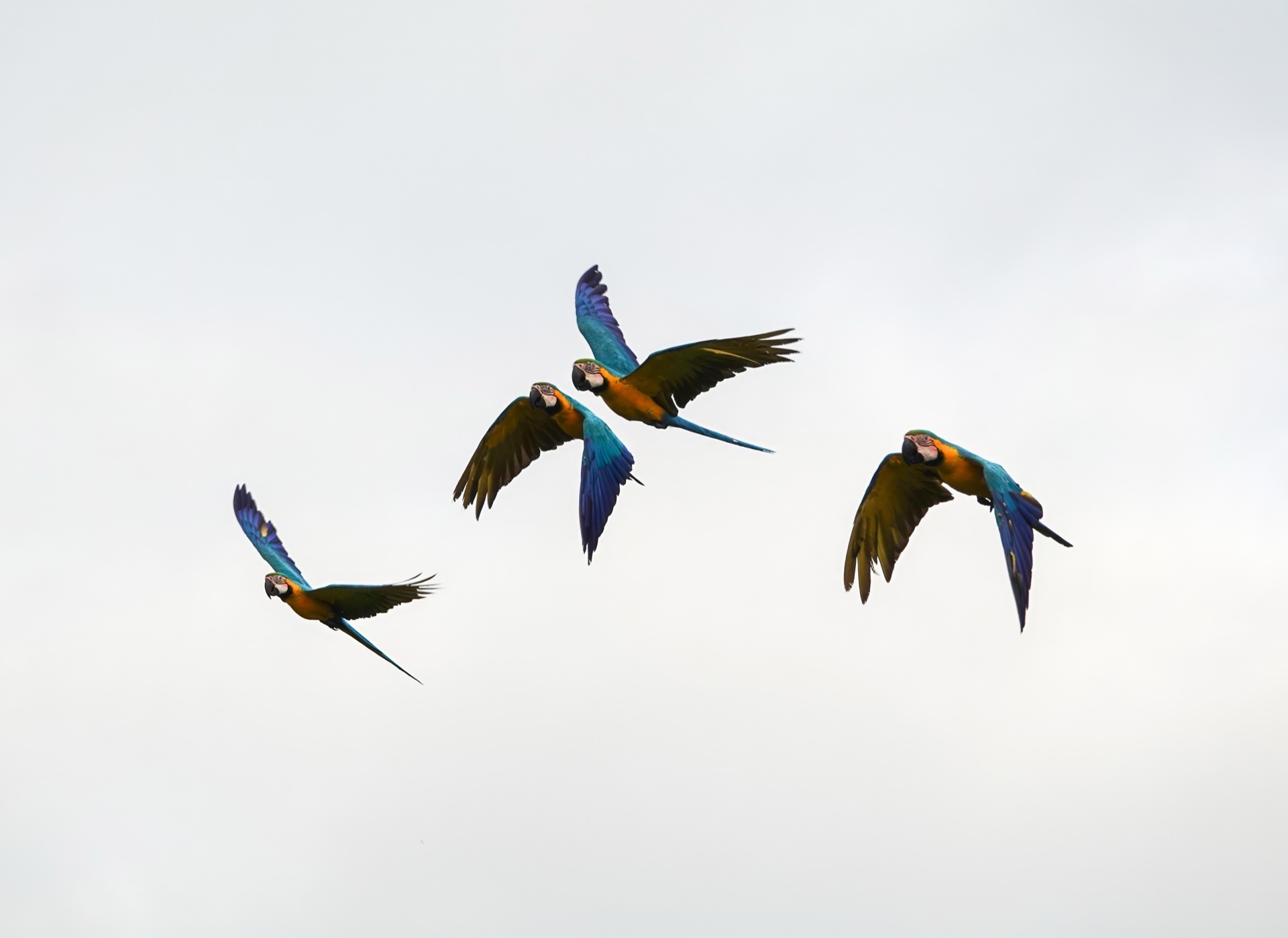
The flock gains height, distance and wild foraging time, with flights that may reach 1, 2, 3 or even 5 kilometres depending on the species. As the bird flies more, it consolidates its mental map of the territory and its navigation skills: it learns to return effortlessly from increasing distances, to read landmarks and to find its food on its own. Its functional dependence on the stations naturally decreases.
Much of what they discover, we never present to them: they find it themselves. Some foods were already part of their diet in the aviary and they only had to locate them across the territory (West Indian elm, Guazuma ulmifolia; yellow mombin, Spondias mombin; wine palm, Attalea butyracea). Others were never introduced: they explored them on instinct, tasted them and, in many cases, learned from the wild flocks already resident in the territory — Spanish plum (Spondias purpurea), Spanish lime (Melicoccus bijugatus), Achatocarpus nigricans, earpod tree (Enterolobium cyclocarpum), among others. Documenting these field discoveries is a core piece of the foundation's work; we maintain an open video series — Wild foods: what parrots eat in Colombia's tropical dry forest — updated with every new discovery.
They are particularly drawn to the yellow silk-cotton (Cochlospermum vitifolium), a tree they never met in captivity which has become one of their favourites. It is the clearest example of the principle: the aviary prepares the body; the forest teaches the rest.
Wild foraging · documented
A note on water. In the tropical dry forest, during the dry season, finding water is as critical as finding food. The birds we release in the Los Loros territory drink from tree cavities where rainwater is retained — we have never seen them descend to a jagüey or open pond. To locate those cavities they need to explore the canopy; to explore calmly they need a water and food backup that sustains them through the learning. That is why, especially during Stages 3 and 4, we keep drinkers accessible near the aviary and the stations — a bridge that holds until the bird builds its own mental map of water sources across the forest.
Field observation
It is important to note that supplementary food is not necessarily reduced at this stage, because there are usually new individuals entering the release process who still need it; what changes is not the food supply but the bird's autonomy to do without it. Group cohesion consolidates: the flock flies, eats and learns together — the flock raises the flock.
Role of the human: progressive withdrawal as a reference point; the bridge begins to be dismantled for the individual, although the stations remain for the cohort.
Criteria to advance: wild foraging as the main source of food; wide movements with return; decreasing and voluntary use of the stations.
A flock at liberty
Mental map of the territory
Stage 5 — Independence: sporadic returns
Objective: a fully independent bird, faithful to the territory but not to people.
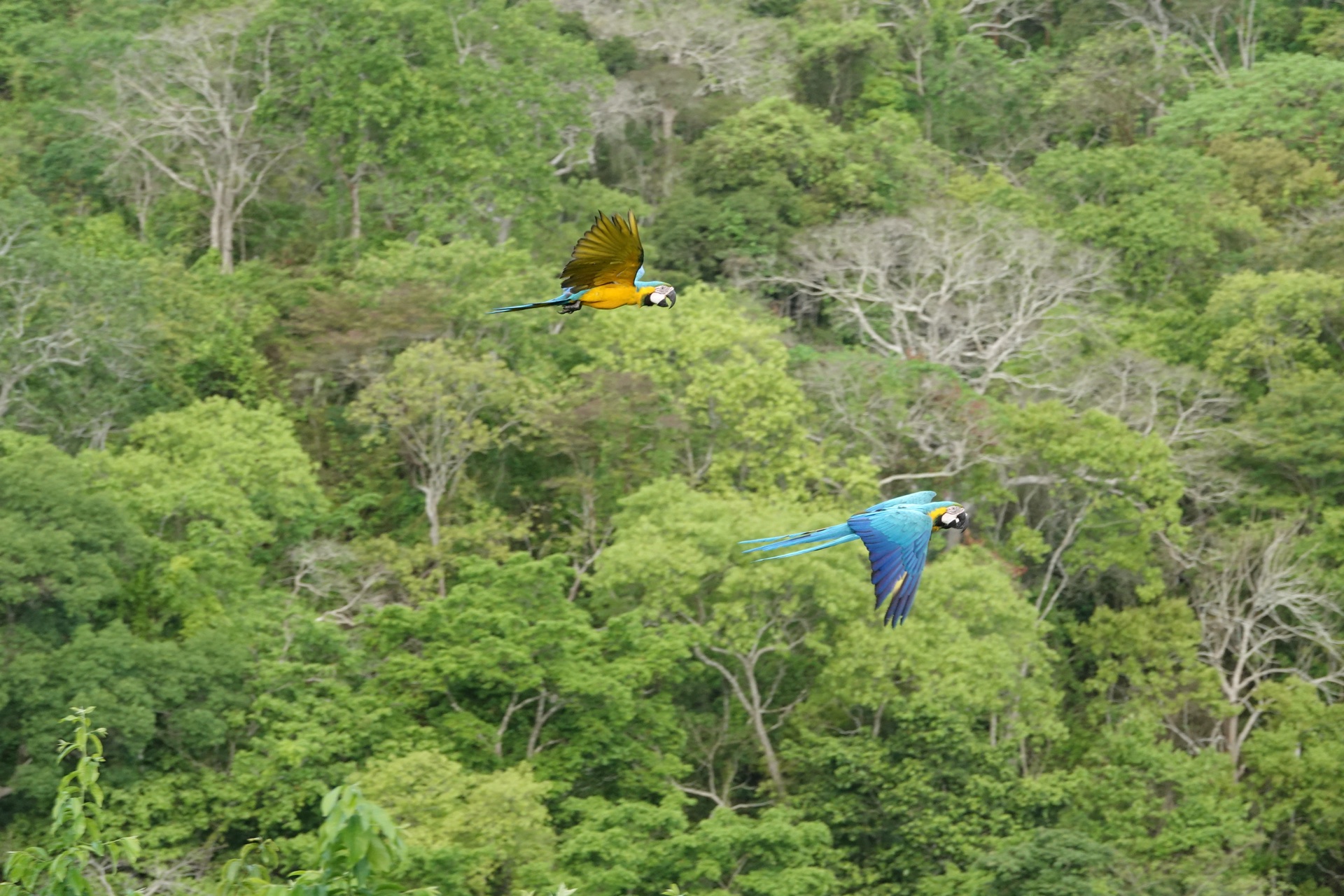
The birds are completely independent. They may return to the release point, but no longer out of dependence, rather as part of their territory. Their movements cover a much wider radius: flights of 5, 10, 15 or even 20 kilometres in a single day. They maintain high, stable flock cohesion and territorial fidelity, and at best they begin to use nests and reproduce in the wild. The human has withdrawn as a provider; they remain as an observer.
Success indicators: sustained survival over time; cohesive flock with site fidelity; complete wild foraging; integration with conspecifics; reproductive events in the wild.
Independence · documented
Monitoring, metrics and learning
Release is not the end of the work, but the beginning of its evaluation. Without monitoring there is no way to know what works or to improve the method.
- Central metric: actual post-release survival (not behavioural response in captivity). Survival rates and causes of loss are estimated (predation, human recapture, starvation/disease, disappearance).
- Tools: tag readings by team, community and tourism; telemetry on a subsample; records of station and roost use; community reports; photographic documentation at a distance (minimum 3 m, without interfering).
- Process indicators: flock cohesion, site fidelity, progress in wild foraging, absence of begging in unsafe areas.
- Method revision criteria: if survival falls below expectations despite applying the key factors, the site (predation pressure, habitat quality, proximity to settlements) and the cohort size are reviewed first, not "lack of training". If human mortality predominates (recapture, electrocution), community work and site selection are reinforced.
The double job of the tag
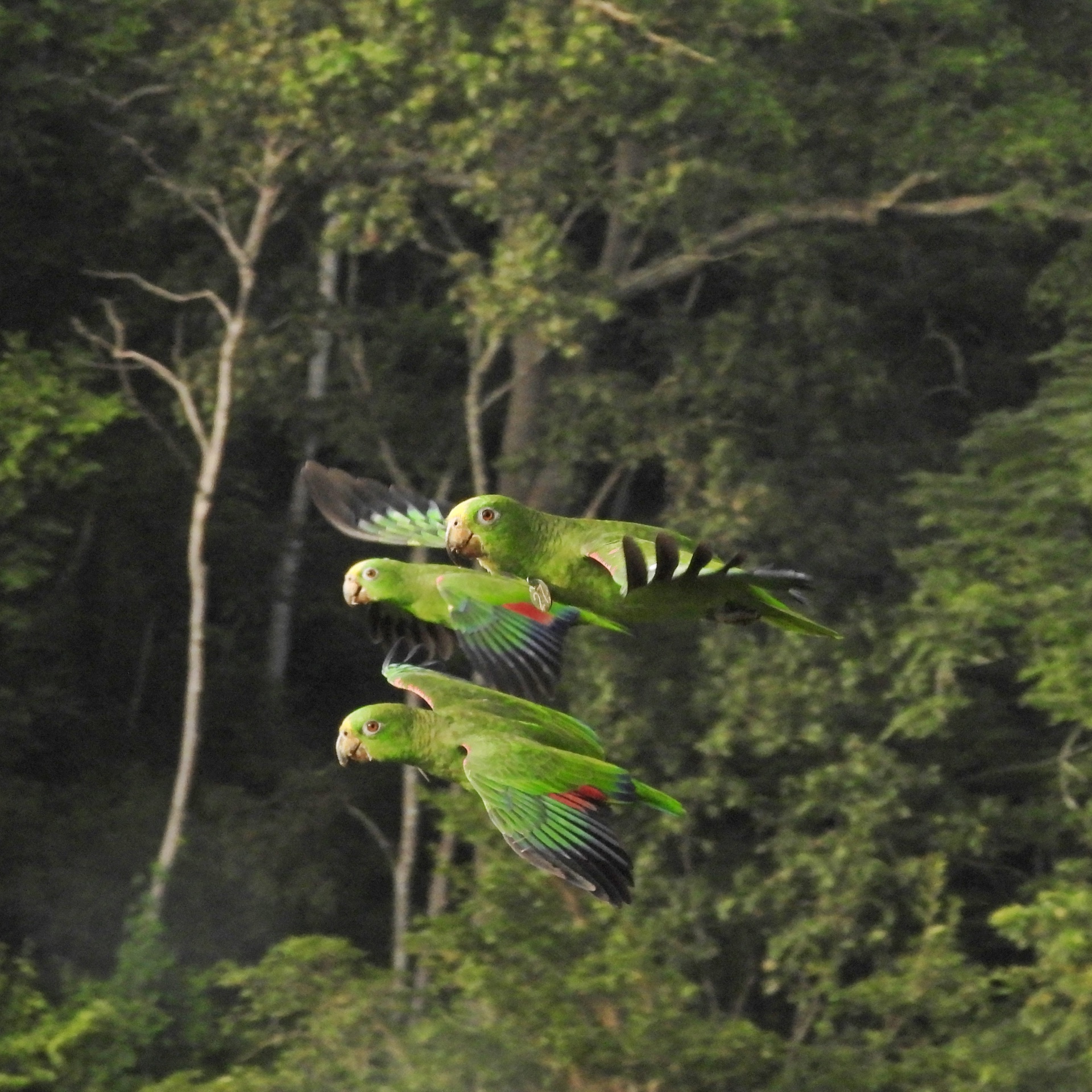
The method is a living document: each released cohort generates data that is incorporated into the next. Documenting and, when possible, publishing these results contributes evidence to a field that needs it.
Welfare and ethics of handling
Welfare does not compete with conservation: it enables it. A chronically stressed bird learns worse, gets sick more often and survives less.
What we DO NOT do:
- Treat the parrot as a pet (talk to it or caress it for entertainment, kiss it, take selfies with it, let it perch on the shoulder).
- Hand-feed it for entertainment, or offer it human or processed food.
- Keep it isolated, bored or without natural stimuli.
- Induce fear, stress or frights as a method.
- Release it suddenly, without accompaniment, or release it if it does not fly strongly.
- Carry out chaotic, noisy or crowd-attended releases that trigger panic escapes.
What we DO do:
- Keep the bird in a group with its own species, with enrichment and social life.
- Evaluate its health with respect, using appropriate tools.
- Observe, listen and understand its needs, reinforcing only desired behaviours.
- Offer a varied natural diet at appropriate stations.
- Favour flight and landing on natural structures, not on people.
- Release softly, in a planned and calm manner, in a group, with sustained accompaniment.
Operational exception: non-weaned chicks may indeed be syringe-fed, at the caretaker's discretion, as part of the care necessary for their survival.
Synthesis
Parrot rehabilitation at Fundación Loros can be summed up in one idea: to release is not to let go. It is to accompany each bird in recovering what captivity took from it —flight, judgement, social life, the ability to read the forest— so that the day of release is just one more step in a process that continues until the bird no longer needs us.
We do not tame and we do not instil fear, because neither of those things returns a bird to freedom. Taming binds it to the human; fear disperses it towards danger. Between those two extremes we choose a third path, the only one the evidence supports: develop capabilities, anchor to a good site with its flock, and withdraw in time.
Acknowledgements
This method did not emerge from nothing: it stands on the shoulders of those who paved the way for free flight applied to conservation. We are especially grateful to Chris Biro, Donald Brightsmith and Tinka Plese, whose knowledge and guidance helped shape the method described here.
Chris Biro developed and systematized the free-flight techniques on which our work is based over the course of decades, and coined — within the world of parrot rehabilitation — the term "Human Guided Behavioural Development", which names the approach. Alejandro Rigatuso, founder and director of Fundación Loros, was a student of Chris Biro, and much of the methodological backbone of this document comes from that training. To Donald Brightsmith we owe the scientific rigor and the articulation of this work with the psittacine reintroduction literature.
To Tinka Plese — zoologist and founder of Fundación AIUNAU — we owe core contributions on the ethical side of the method: never using fear as a management tool, sustaining calm environments throughout rehabilitation, and treating soft release as the mandatory closing phase of the process. Her three-decade trajectory with sloths, anteaters and armadillos broadened and refined the framework we apply to psittacines.
Evidence base (key references)
- Brightsmith, D., Hilburn, J., del Campo, A., et al. (2005). The use of hand-raised psittacines for reintroduction: a case study of scarlet macaws (Ara macao) in Peru and Costa Rica. Biological Conservation, 121(3), 465–472.
- Tailor, R., Gordon, T., Gil Carrasco, R., Vigo-Trauco, G., & Brightsmith, D. J. (2026). Aversion Training in Psittacine Release: A Case Study with Confiscated Amazona Parrots in Costa Rica. Birds, 7(1), 7.
- Lopes, A. R. S., Rocha, M. S., Mesquita, W. U., et al. (2017). The influence of anti-predator training, personality and sex in the behavior, dispersion and survival rates of translocated captive-raised parrots. Global Ecology and Conservation, 11, 146–157.
- Purchase, C. et al. (2024). Reintroduction of the Extinct-in-the-Wild Spix's Macaw (Cyanopsitta spixii) in the Caatinga Forest Domain of Brazil. Diversity, 16(2), 80.
- Sanz, V., & Grajal, A. (1998). Successful Reintroduction of Captive-Raised Yellow-Shouldered Amazon Parrots on Margarita Island, Venezuela. Conservation Biology, 12(2), 430–441.
- Brightsmith, D. J., Rigatuso, A., Biro, C., & Geiszler, D. (2026). Successful release of confiscated Amazona parrots using free-flight training. Bird Conservation International, 36, e24, 1–10. — Results of Fundación Loros's first release (72% at one year).
- Tetzlaff, S. J., Sperry, J. H., & DeGregorio, B. A. (2019). Effects of antipredator training, environmental enrichment, and soft release on wildlife translocations: A review and meta-analysis. Biological Conservation, 236, 324–331.
- van Heezik, Y., Seddon, P. J., & Maloney, R. F. (1999). Helping reintroduced houbara bustards avoid predation: effective anti-predator training and the predictive value of pre-release behaviour. Animal Conservation, 2(3), 155–163.
- White, T. H. Jr., Collazo, J. A., & Vilella, F. J. (2005). Survival of Captive-Reared Puerto Rican Parrots Released in the Caribbean National Forest. The Condor, 107(2), 424–432.
- White, T. H. Jr., Collar, N. J., Moorhouse, R. J., et al. (2012). Psittacine reintroductions: Common denominators of success. Biological Conservation, 148(1), 106–115.
- Woodman, C., Biro, C., & Brightsmith, D. J. (2021). Parrot Free-Flight as a Conservation Tool. Diversity, 13(6), 254. — Describes the six levels of progressive environmental exposure.
- Brightsmith, D. J., Biro, C., Mendes, H. F., & Woodman, C. (2024). Free Flight Training as a Tool for Psittacine Reintroductions. Birds, 5(3), 522–542. — Application of free flight to macaws, with high survival and site fidelity.
Want to replicate or discuss this method?
We share this framework openly so others can discuss, challenge, replicate and improve it. Conservation moves faster when knowledge is shared.