By Alejandro Rigatuso, Fundador y Director de Fundación Loros
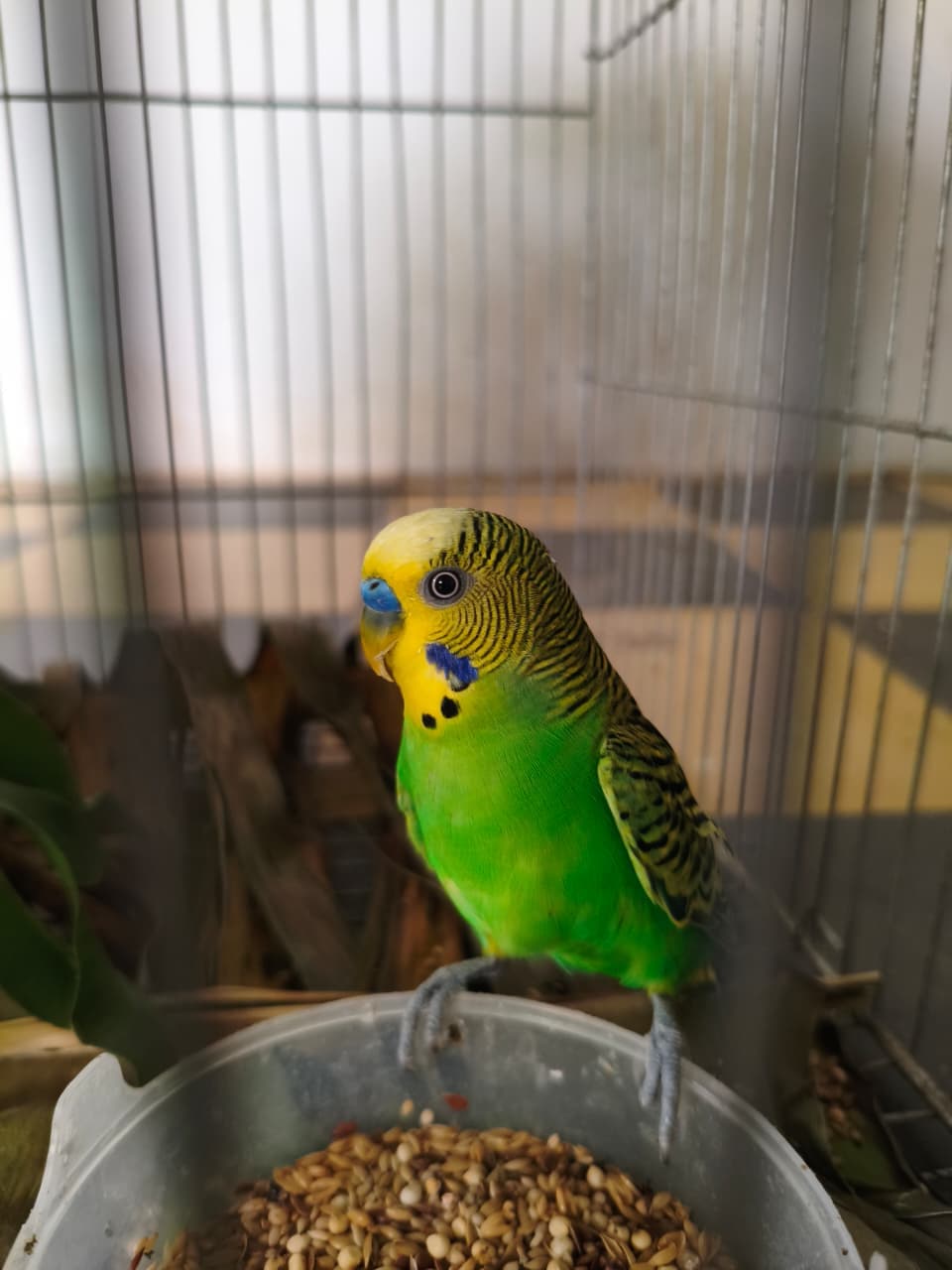
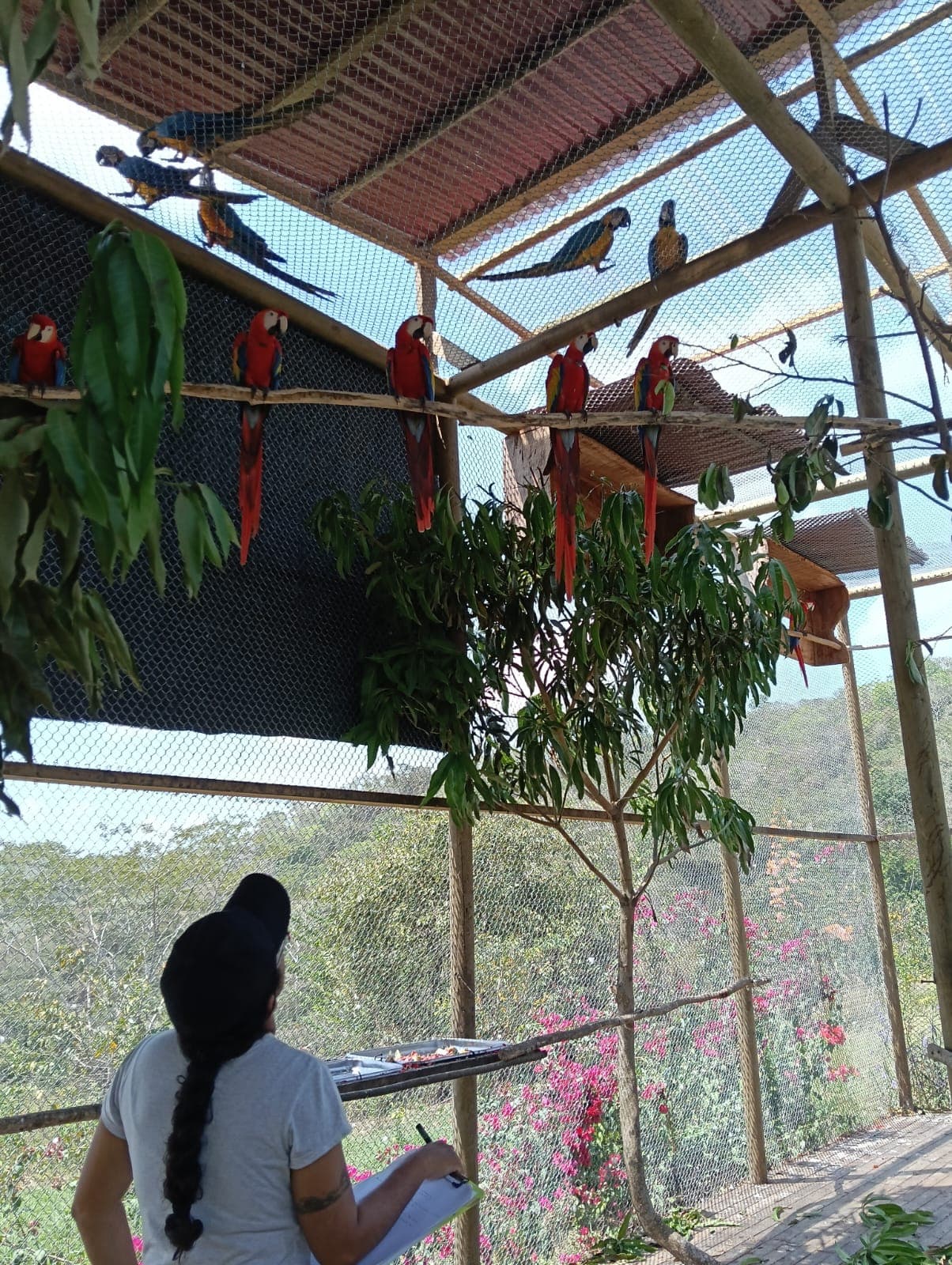
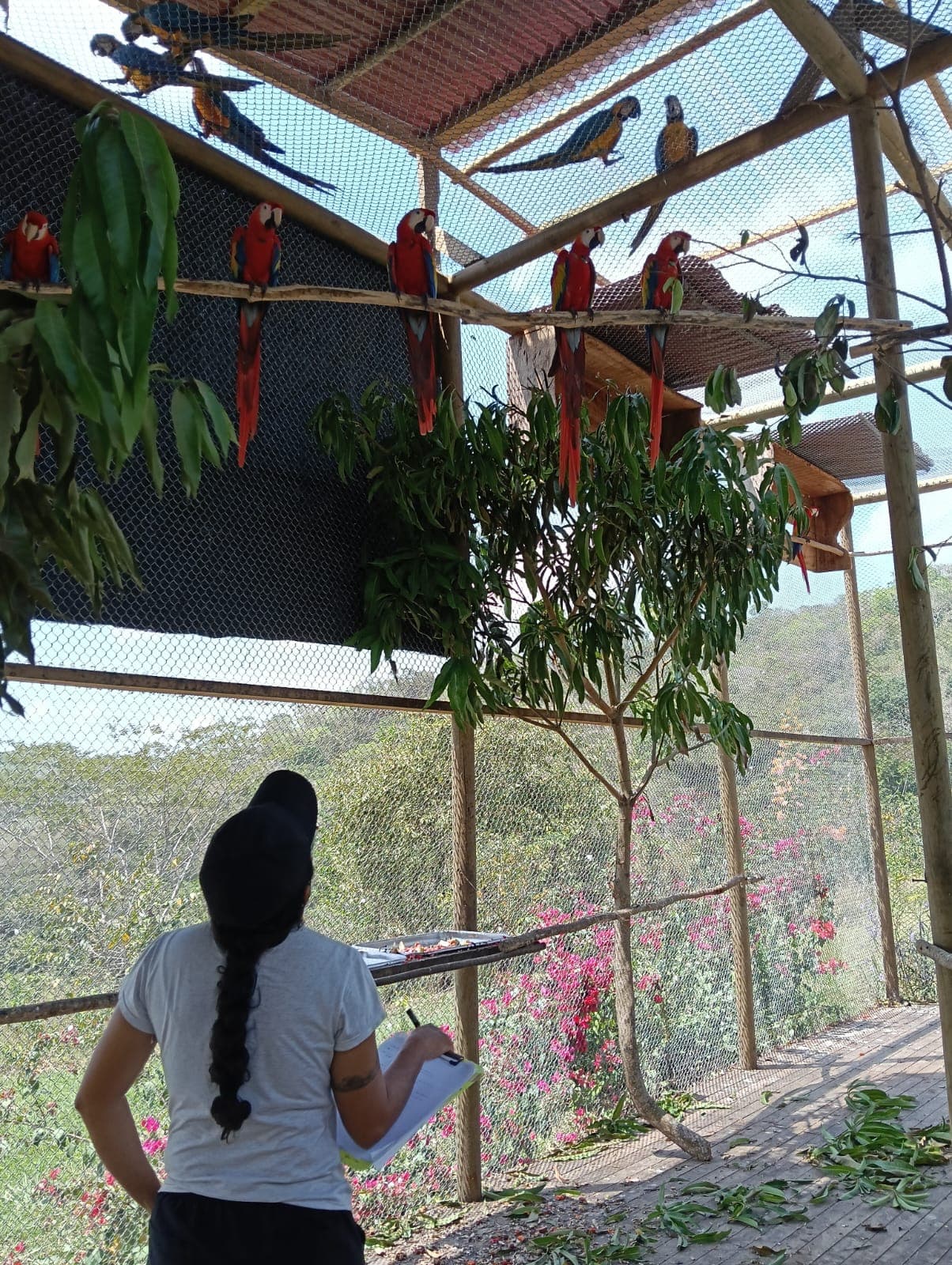
On Thursday, March 12th, veterinarian Alesandra moved through each of the aviaries at Fundación Loros with clipboard in hand, logging data and assessing the flock with the unhurried precision of someone who knows their craft well. Among the day's tasks was the initial intake of three birds that had completed quarantine: a pionus, a yellow-fronted parrot, and a male budgerigar (*Melopsittacus undulatus*) who had until then been waiting his turn in a small cage near the house. This last one arrived in acceptable condition — actively flying, his green and yellow plumage the kind that makes you stop and look twice. Alesandra noted something worth recording: in this species, the ceres of adult males turn a deep, vivid blue, a trait clearly visible on this individual and one that serves as a mark of identity. He will soon be moved to the Decameron aviary.
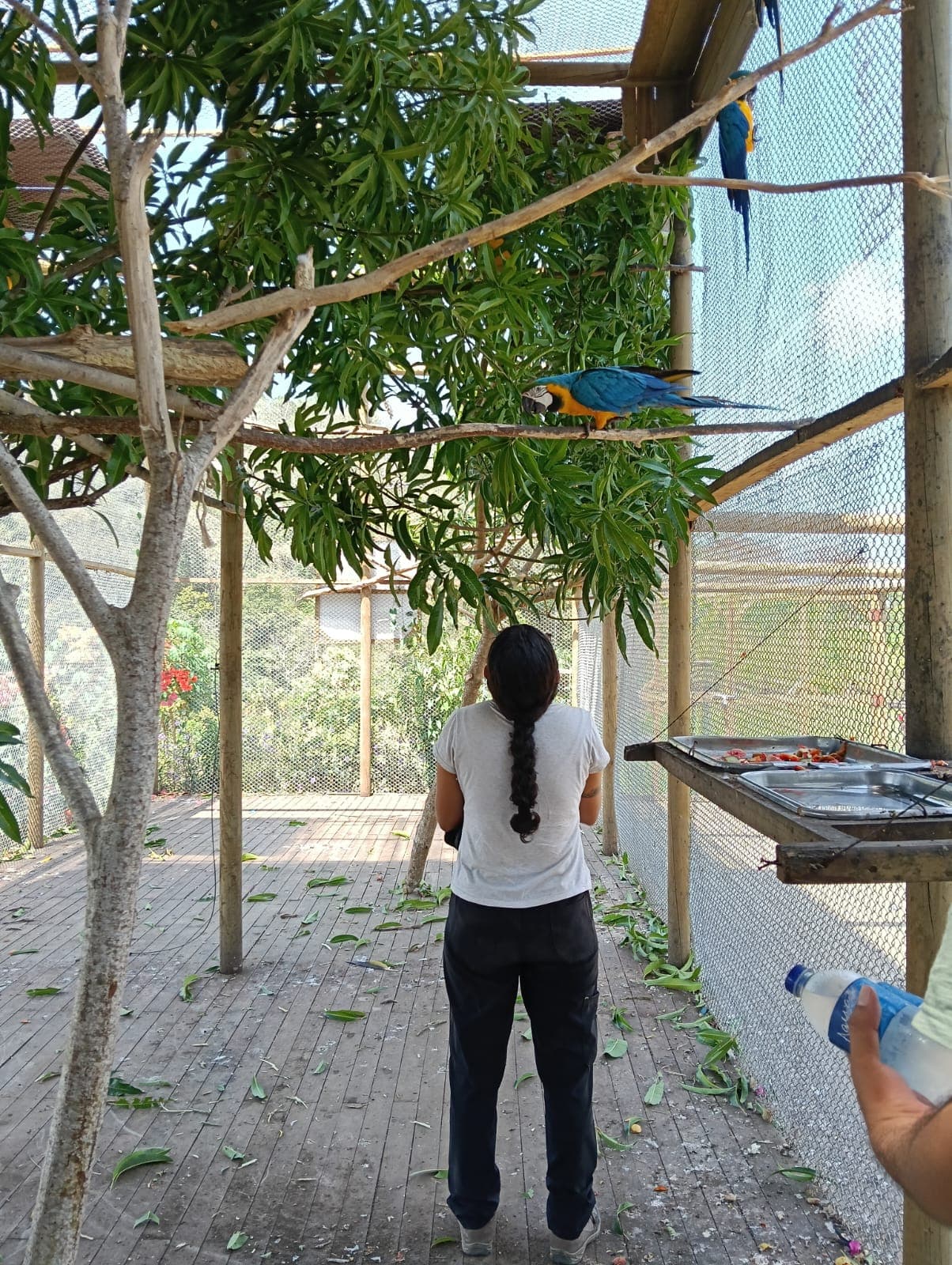
But the day also brought a concern. A blue-and-yellow macaw — B139, *Ara ararauna* — arrived with a body condition score of just 2 out of 9, her keel bone so prominent it left no room for doubt about the gravity of her state. Alesandra started her on basic treatment and drew a blood sample: Dr. Ana had previously identified two distinct species of hemoparasites circulating in the collection, each requiring a different protocol, and without knowing which one they're dealing with this time, the appropriate treatment remains on hold. Alejandro authorized processing the sample immediately. Now it's a matter of waiting for what the blood has to say.
About the author
Alejandro Rigatuso · Fundador y Director de Fundación Loros
Alejandro Rigatuso arrived at Fundación Loros after years as Vice President of Growth Marketing at Toptal, bringing with him an unconventional perspective: he knows an animal is well by its eyes, "bright, wide open." Lorenzo, the first parrot released, recaptured several times and always set free to fly again, marked him forever. At dusk, around five-thirty, you'll find him at the Mirador de las Ciénagas or wandering around Cerro El Peligro, envisioning observation towers and hundreds of native parrots soaring over a reserve that an entire community calls their own.
Stay in touch
Get news from the reserve
Before-and-after photos, management protocols, events and the story of each individual — straight to your inbox.