Wild foods of the parrots
What released parrots choose to eat when they return to the forest. A field record by Fundación Loros and the visitors who come to the reserve.
One question decides everything else in a rehabilitation process: when the parrot returns to the forest, what will it eat? If we cannot answer that with specific trees and specific seasons, we are not releasing — we are abandoning.
So we document on video what released parrots choose to eat in the tropical dry forest of Villanueva. Every tree identified enters the forest nursery's list: we propagate it, give it to neighbors and plant it in the reserve. Field observation → nursery → planting: that is the loop.
Many of these videos were recorded by visitors birdwatching and volunteers — not just the team. Citizen science is what lets us multiply the monitoring without militarizing the forest. Access is open: the full series lives in a public YouTube playlist.
The aviary trains the body; the forest teaches the rest.
Who documents
Three sources recording the same scene
Wild-diet monitoring is not an isolated technical task: it is a network. When a flock returns to a tree, someone — team, visitor or neighbor — records it.
Field team
The people in the reserve every day: they identify new behaviors, calibrate the cameras and maintain the archive.Regenerative tourism
Visitors who come to birdwatch. Their time, their camera and their attention double the monitoring coverage.Citizen science
Neighbors and volunteers who report trees where they saw parrots. The open playlist is the shared repository.
The video series
Each clip documents a real scene: a specific tree, a season, a flock. The subject is always the Yellow-crowned Amazon (Amazona ochrocephala) — the species with the most released individuals in our sanctuary. The playlist keeps growing with every new observation.
Red mombin · Spondias purpurea
Papaya · Carica papaya
Earpod tree (guanacaste) · Enterolobium cyclocarpum
Scene recorded by Maicol González Guzmán during a visit to the sanctuary.
Siam cassia · Senna siamea
Spanish lime (mamoncillo) · Melicoccus bijugatus
Red mombin — leaves · Spondias purpurea
Tamarind · Tamarindus indica
Mother of cocoa · Gliricidia sepium
Bay cedar (guásimo) · Guazuma ulmifolia
Corozo machín · Achatocarpus nigricans
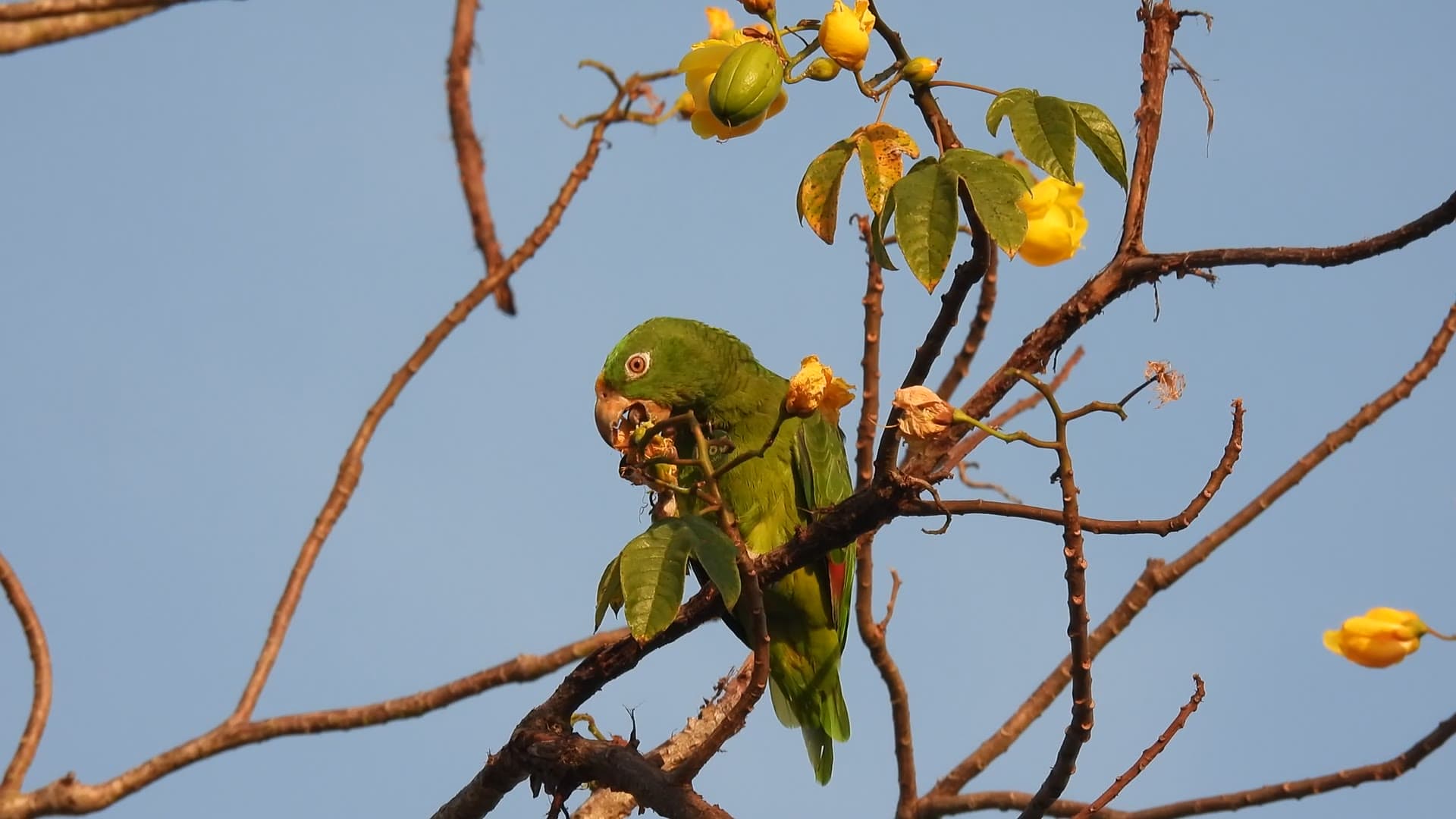
Yellow silk-cotton · Cochlospermum vitifolium
Olivo · Quadrella odoratissima
What we learned
Eleven trees documented on video. Five were part of the aviary diet; the other six the birds discovered on their own. All of them now enter the picker as field evidence.
| Tree | Scientific name | In the aviary? | In the picker before? |
|---|---|---|---|
| Red mombin | Spondias purpurea | Yes | No |
| Papaya | Carica papaya | Yes | No |
| Earpod tree | Enterolobium cyclocarpum | No | Yes (other species) |
| Siam cassia | Senna siamea | No | No |
| Spanish lime | Melicoccus bijugatus | Yes | No |
| Tamarind | Tamarindus indica | Yes | No |
| Mother of cocoa | Gliricidia sepium | Partial | No |
| Bay cedar | Guazuma ulmifolia | Yes | Yes (other species) |
| Corozo machín | Achatocarpus nigricans | No | No |
| Yellow silk-cotton | Cochlospermum vitifolium | No | No |
| Olivo | Quadrella odoratissima | No | No |
In the aviary? = whether the species was part of the captive diet before release. In the picker before? = whether the tree was in the fauna ↔ tree picker at the nursery before this documentation.
Who we plant for
Explore trees and wildlife
Pick a fauna species to see which trees to plant for it, or flip the mode to see which wildlife depends on a tree. Every relationship is backed by at least two independent research efforts.
Scarlet macaw
Ara macao
Plant for this species (6)
- Nesting●●●P1
Kapok tree (Ceiba pentandra)
Cavity in emergent tree
- Nesting●●●P1
Sandbox tree (Hura crepitans)
Cavity
- Food●●●P1
Kapok tree (Ceiba pentandra)
Seeds and flowers
- Food●●●P1
Sandbox tree (Hura crepitans)
Seeds
- Food●●●P1
Wild cashew (Anacardium excelsum)
Fruits and seeds
- Food●●P1
Panama tree (Sterculia apetala)
Oil-rich seeds
Cross-referenced from three independent research efforts (Claude · Perplexity · ChatGPT). Only relationships agreed on by ≥ 2 sources are included, restricted to the approved tropical dry forest catalogue of Los Loros.
Living flora-fauna atlas
Explore the full atlas
From video to nursery
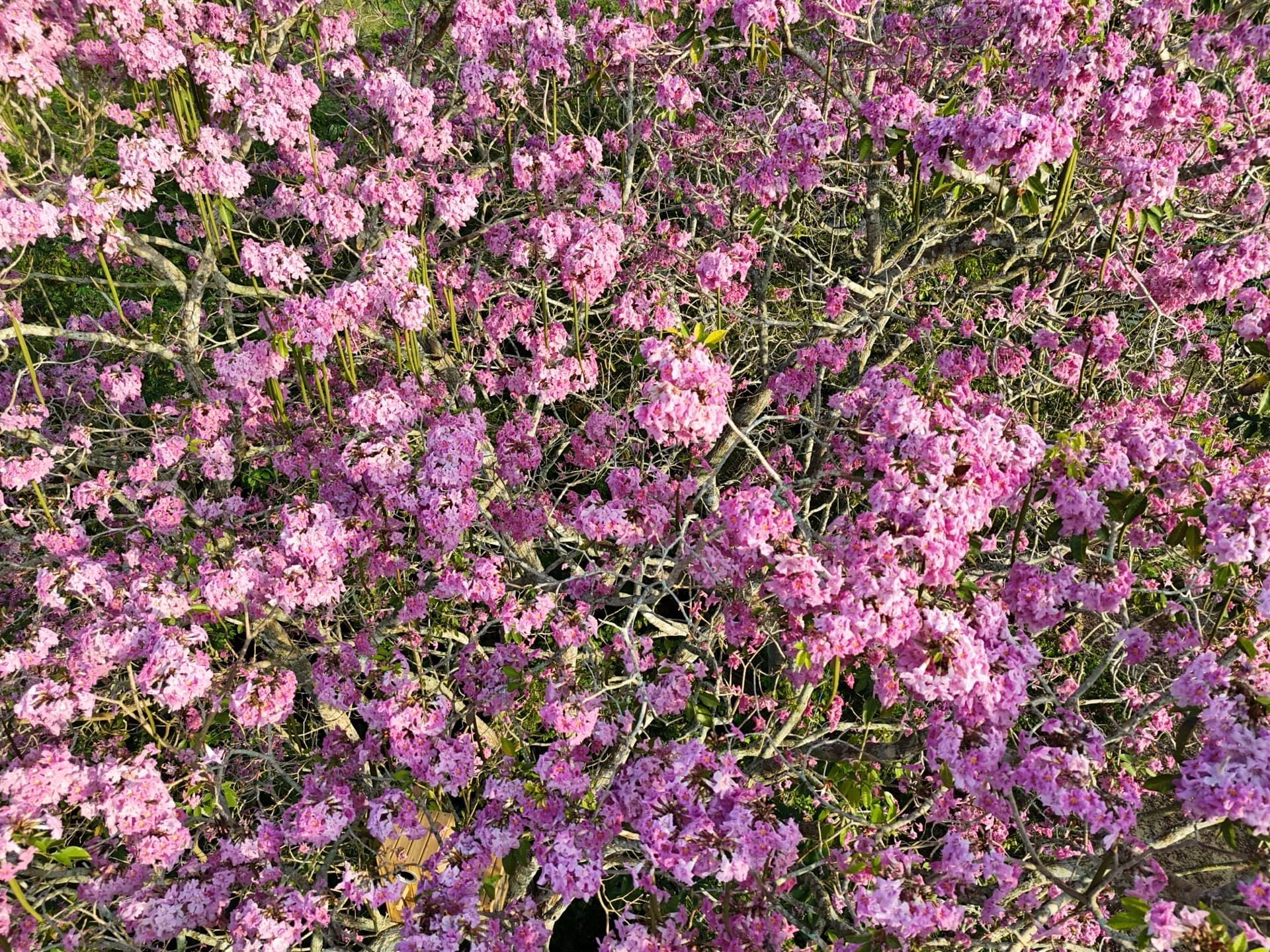
The trees you see them eat — we grow them
Every tree the picker recommends, we propagate at the forest nursery and give it to neighbors and partners. When you come to plant, donate a tree or volunteer, you leave behind one of the trees you saw being eaten above.
How to take part
Documenting wild diet is not a closed technical task. Anyone who walks the reserve with a camera — neighbor, volunteer, visitor — can add an observation. Three paths:
- Birdwatching at the reserve — the videos you record during a guided visit can enter the corpus if the subject is clearly identified. Plan a visit through How to get here.
- Field volunteering — planting and monitoring days at the reserve. Dates and signup live on How to help.
- Donate a tree or a nest — sustains the nursery and the monitoring operation. Every donated tree may be one of those in the picker.
Come document the next scene
The tree that is not yet on the list probably already has parrots on it. Someone just has to record it.