Camera traps in the reserve
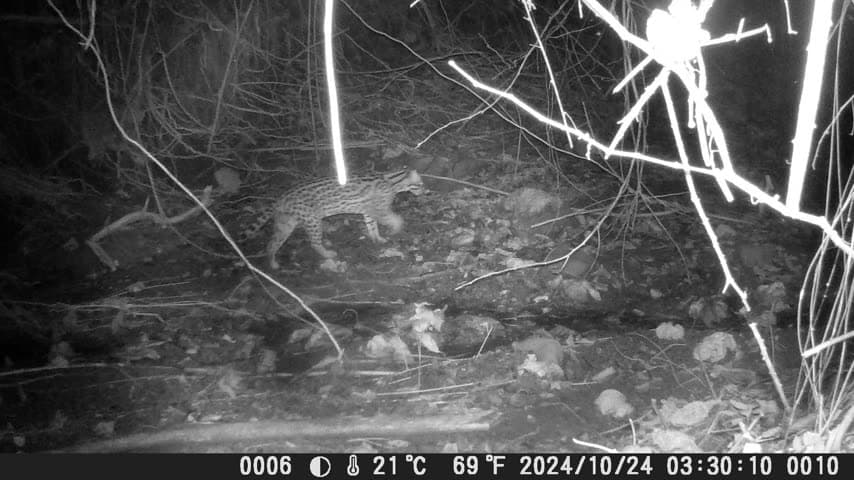
What the forest does when no one is watching. Twelve wild species captured on video by the camera-trap network of Fundación Loros, in Villanueva, Bolívar.
Camera traps are our sensory extension. A person walking through the forest displaces wildlife; a fixed camera, in silence, records the territory's real behavior. Every trigger confirms who lives here and guides us where to strengthen protection.
We place the units along trails, stream edges, and fallen logs —natural crossing points for medium-sized mammals— calibrated to trigger on motion and infrared. Batteries and cards are rotated weekly; the footage is reviewed by the team and catalogued by species, time, and location. We accumulate a time series that grows year by year.
The gallery below gathers the most revealing records to date. Ordered from highest to lowest ecological sensitivity: it begins with top carnivores, followed by omnivores, specialists, ungulates, and large rodents. The presence of felids —ocelot and jaguarundi— is the strongest signal of a functional ecosystem.
Active monitoring
The video archive
Ordered by ecological sensitivity — starting with top carnivores.
Allies on the ground
A single watch network
This watch is not held by a single entity.
— Fundación Loros
Our own caretakers on the ground. Daily shifts, feeding, health, and record-keeping.
— Colombian Navy
Regular patrols of the corridor by the marine infantry as institutional support.
— Allied farmers
Community watch by the rural neighbors who know the forest better than anyone.
— Regenerative tourism
Volunteers and visitors who look after the reserve with their presence and contribution.
Continue the series
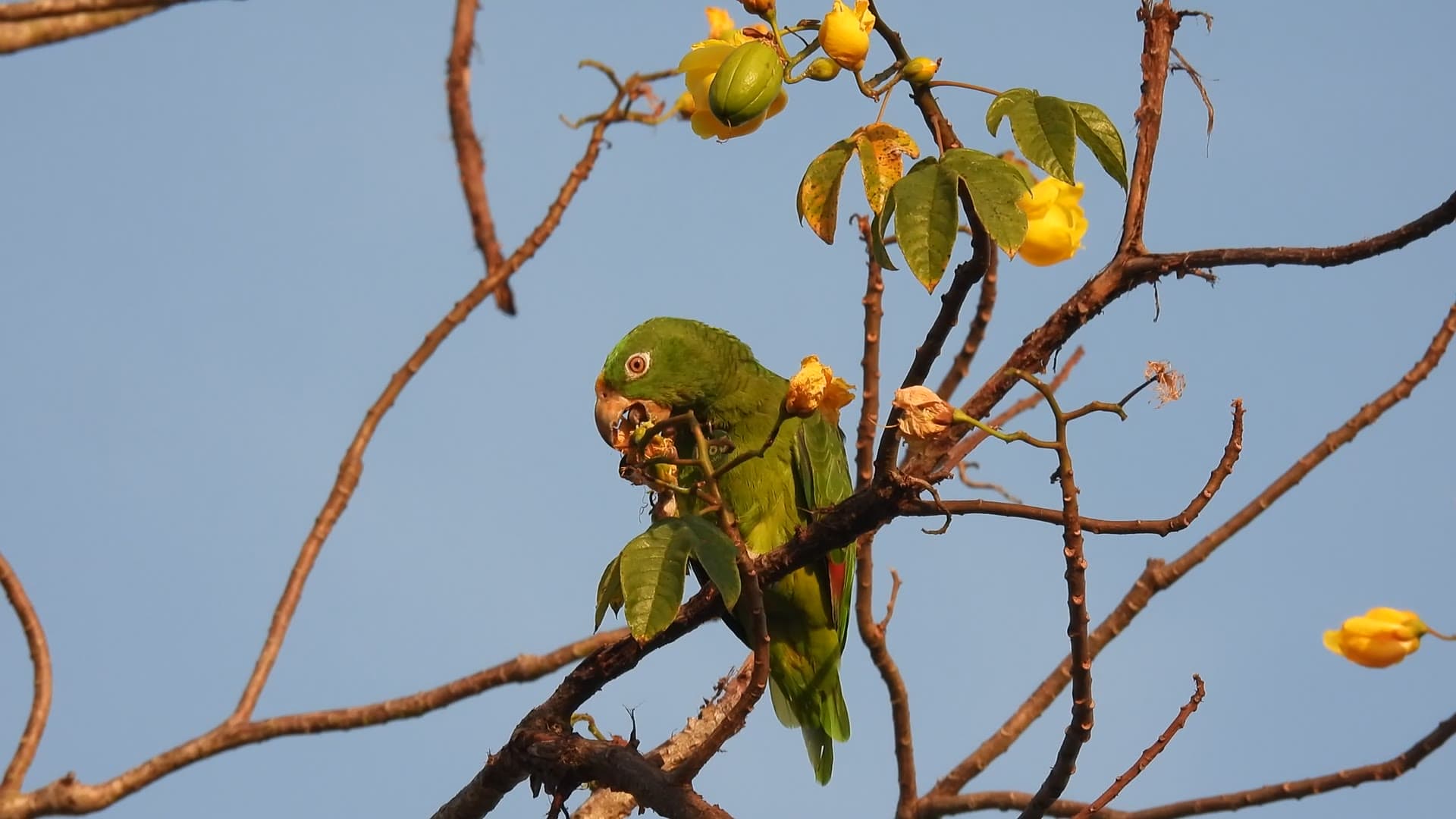
What released parrots eat
If camera traps record who lives in the forest when we're not there, the wild-foods series documents what released parrots choose to eat when they return to it. Twelve trees documented on video, with the community as co-author.
Help us sustain the monitoring
Every camera trap, every battery, every team hour in the field is sustained by donations. If what you see here moves you, support it.