My Pepe Bello
By David Alejandro Caballero De la Cruz · Colombia, Barranquilla · Orange-chinned parakeet (Brotogeris jugularis)
Hi, I'm David and I'm 11 years old. This is my story:
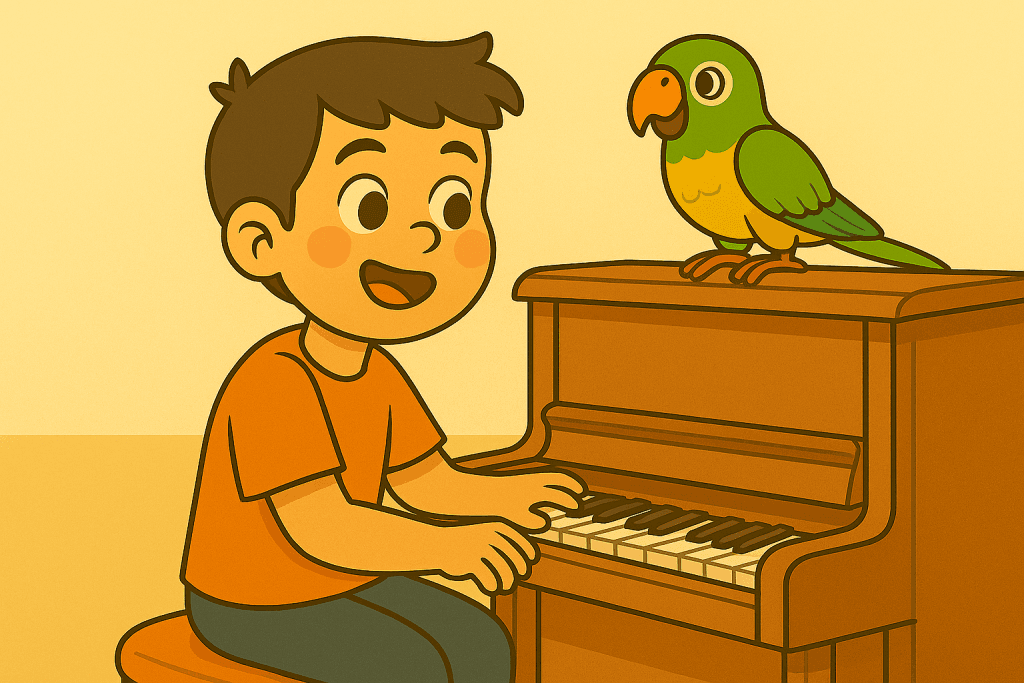
My dad gave him to me. From the very first moment, we were friends: the instant he saw me, Pepe would call out a tender "turrutoturo" — the same sound he made when I left for school or came back from a trip.
Once I traveled to Cartagena and left him in my grandparents' care. The day I returned, the moment he heard my voice, he screamed that "turrutoturo" with such excitement it seemed like he was mixing scolding with stories of his days without me.
He walked behind me like a loyal puppy, though to me he was better than any dog: a companion made of feathers, laughter, and secrets.
Over time, I looked into how to care for him and learned that green parakeets need a varied diet of fruits, vegetables, and seeds, and that they are very social birds: they live in flocks and miss their own kind when left alone. I understood then that loving him meant enriching his cage with toys, sharing fresh fruit, and above all giving him the company of other parakeets — not keeping him isolated.
The day he escaped, something inside me broke. I searched every branch, every corner of the house, until I looked out into the yard and saw a flock of green parakeets fluttering through the trees — and heard a bright "turrutoturo". In that moment I understood that his destiny was to fly free among his own.
Every morning he would pass by my window and land in the tree next door, leaving me that same song as a reminder that, even free, we would always be friends.
"My Pepe Bello" — as I proudly call him — taught me that those who truly love, set free. Today I picture him happy, exploring the world on his green wings, reunited with others of his kind, living a thousand adventures under the sun of our land.
**There was a parakeet who dreamed of flight,
Pepe they called him, longing for the sky;
he gazed through the bars thinking of the sea,
and dreamed of open skies where he could sing.His owner David cared for him without rest,
but Pepe wanted the whole world to explore;
he practiced and practiced until he could leap,
and one day at last he left his cage behind."I'm free!" his wings seemed to cry out,
but emptiness came quickly to find him,
a loneliness that made him think
that David's home was where he belonged.By night he kept his song to himself,
longing for those eyes that gave him love;
he passed by the house where he had lived,
missing the friend who had always cared for him.He saw the window and chose not to return,
though his sad soul was beginning to ache;
he was free, but he could not give in,
my Pepe Bello, I come to give you thanks.**
– Song written by: David Caballero (11 years old)
Analysis and reflections from Fundación Loros
At Fundación Loros we learn every day that parrots are not gifts or toys. Captivity can cause them serious — even fatal — accidents when they end up in inexperienced hands. David had the wisdom to research how to give Pepe a varied diet of fruits, vegetables, and seeds, and to understand that these birds need the company of their own species to truly thrive.
The connection between David and Pepe shows that affection crosses species lines: an 11-year-old boy and a parakeet can share a deep bond, built on tenderness, respect, and that unmistakable "turrutoturo" that joins their voices.
But a parrot's true place is its flock. These birds are social animals that live in groups and support one another. Keeping them isolated, or releasing them without preparation, puts their wellbeing and their lives at risk.
When Pepe took flight and found other parakeets calling to him, his integration was natural — but this is not always the case. Releasing a parrot that has lived in captivity must be a responsible process: gradual rehabilitation, adaptation to the environment, and ongoing monitoring. Rehabilitation must include flight training, flock formation, and recognition of natural foods; adaptation to the environment must happen step by step.
For all these reasons, we ask families not to give parrots as gifts. Instead, enjoy watching them free in nature reserves or parks, take part in workshops and volunteer experiences, and practice birdwatching. If you want to attract parakeets to your surroundings, plant fruit trees — mangoes, mamoncillo, plums, guava, banana, jobo, zapote, depending on your region — and discover which fruits the local species prefer. That is how we help these remarkable birds live in community, free and healthy.
Pepe lives happily with his flock, and David can watch them from his window — both of them free. That is how it should be: protecting and respecting the freedom of every individual.