Senderismo · Trekking · Caminata
Senderismo en la Reserva Natural Los Loros
Caminata y trekking guiados en la Reserva Natural Los Loros, a solo 35 km de Cartagena. Tres niveles: básico (3 km), intermedio (7 km) y avanzado (10–15 km).
$75.000 por persona ($95.000 domingos y festivos) · Cobro mínimo por 7 personas ($525.000) · Plan en español, solo para residentes en Colombia.
De un vistazo
Precio
$75.000 por persona
Domingos y festivos, $95.000. Cobro mínimo por 7 personas ($525.000), aunque vayan menos. Solo residentes en Colombia.
Duración
3 a 3½ horas
Horarios a coordinar con el grupo, normalmente 6:00–9:30 a.m. o 7:00–10:30 a.m.
Cupo
Desde 1 · máximo 40
Cobro mínimo por 7 personas ($525.000). Experiencia grupal, no privada. Ideal para amigos y empresas.
Caminata
Elige tu nivel
Básico 3 km · Intermedio 7 km · Avanzado 10–15 km, según el grupo.
Idioma
Español
La caminata se realiza solo en español.
Reserva
Con 48 horas de anticipación
Reserva y paga en línea, o escríbenos para coordinar la fecha del grupo.
Requisitos
Caminar bien · tolerar el calor
Incluye picnic
4–5 frutas + jugos
Cuatro o cinco variedades de fruta fresca y jugos hidratantes, a mitad del camino.
Dónde
Reserva de Fundación Loros
Ver en Google Maps →
Esta caminata es nuestra forma de abrirle la reserva a quienes viven en Colombia. No es un tour turístico: es una invitación a caminar el bosque con nosotros, ver de cerca cómo rescatamos, rehabilitamos y liberamos loros y guacamayas, y ser parte —por una mañana— del trabajo que sostiene este territorio.
Es una experiencia grupal (mínimo 7, máximo 40 personas) y en español, solo para residentes en Colombia. Ideal para grupos de amigos y empresas.
Todo lo que pagas va a la rehabilitación de loros y guacamayas y a los gastos operativos de Fundación Loros, una organización sin ánimo de lucro.
¿Eres turista o viajero? Este plan es solo para residentes en Colombia. Para nuestros programas turísticos, visita Wildlife Conservation Experiences →
Incluido · a mitad del camino
Un picnic en pleno bosque seco
Paramos a descansar con un picnic de 4 o 5 variedades de fruta fresca de temporada y jugos naturales hidratantes. Un momento para recuperar energía, disfrutar el paisaje del bosque seco tropical y compartir con el grupo antes de seguir el sendero.
Elige tu nivel
La caminata se adapta al grupo. Cuéntanos cuál prefieren cuando nos escribas y ajustamos la distancia y el ritmo.
Básico
3 km
Terreno suave. Ideal para disfrutar el bosque sin exigencia, a paso tranquilo.
Intermedio
7 km
Con algunas subidas. Es el plan más pedido: un poco de reto y buenas vistas.
Avanzado
10–15 km
Todo tipo de terreno, según el grupo. Para quienes quieren caminar en serio.
Cómo es la caminata
Qué haremos juntos
Un recorrido por la reserva, en un turno de la mañana. Estos horarios son de referencia (plan de 7 km): la distancia y la duración cambian según el nivel que elijas.
6:00
30 min
Charla inicial
Cómo rescatamos, rehabilitamos y liberamos loros y guacamayas.
6:30
20 min
Recarga de estaciones en libertad
Ayudamos a reponer las estaciones de alimentación de los guacamayos que ya viven libres.
6:50
20 min
Preparación de alimentos
Preparamos el alimento de los loros que están en rehabilitación.
7:10
45 min
Caminata guiada — ida
Salimos a recorrer el bosque seco tropical con guía. La distancia depende del nivel del grupo.
7:55
25 min
Picnic a mitad de camino
Una pausa con 4 o 5 variedades de frutas y jugos hidratantes para refrescar antes de volver.
8:20
40 min
Caminata guiada — vuelta
El regreso por el sendero, a paso tranquilo, cerrando el recorrido.
9:00
15 min
Recarga final y cierre
Completamos las estaciones de alimentación y nos despedimos.
Nuestro compromiso
Turismo regenerativo
Pioneros en Colombia · Impacto neto positivo — dejamos cada lugar mejor de lo que estaba.
Es trabajo real, con las manos: en cada experiencia te conviertes en un agente activo que restaura ecosistemas — devolviendo a los animales rescatados a la naturaleza y recuperando el bosque seco tropical, el ecosistema más amenazado de Colombia.
En esta caminata te enfocas en tres de estas actividades: Patrullaje de la reserva, Preparación de alimento y Reabastecimiento de agua para los animales. Las demás forman parte de nuestras otras experiencias.
Siembra de árboles
Cada visitante siembra un árbol nativo que dará refugio y alimento a los animales rehabilitados — así dejamos el bosque mejor de lo que estaba.
Patrullaje de la reserva
Recorrer la reserva ahuyenta a cazadores y a quienes roban madera, y nos permite monitorear a los animales liberados. Más presencia, más seguridad.
Ejercicios de vuelo
Las aves vuelan de estación en estación y desarrollan el músculo y la resistencia que necesitan para sobrevivir — entrenando en plena libertad.
Preparación de alimento
Preparamos las dietas de los animales en rehabilitación y ya en libertad. Una buena nutrición es la base de toda recuperación.
Cosecha de frutos y semillas
Junto a los visitantes recogemos frutos y semillas de los árboles de la reserva para alimentar a la fauna que cuidamos.
Reabastecimiento de agua
Rellenamos las estaciones de hidratación de los animales libres. Los loros recién liberados aún no saben dónde beber y vuelven sedientos — y en la sequía, el agua salva vidas.
Enriquecimiento del hábitat
Dentro de los aviarios con ramas, flores y frutos; afuera con perchas, nidos y comederos. Un entorno más rico significa animales más sanos.
Construcción de nidos
Construimos e instalamos nidos — clave para que los loros se queden fieles al sitio y vuelvan a reproducirse en libertad.
Y se combina con ciencia ciudadana — concursos de avistamiento de loros y listas en eBird que convierten tu visita en datos reales de conservación.
En imágenes
Así se vive la caminata
Grupos de la región recorriendo el bosque seco con nuestro equipo.


Así se ve la reserva
El territorio
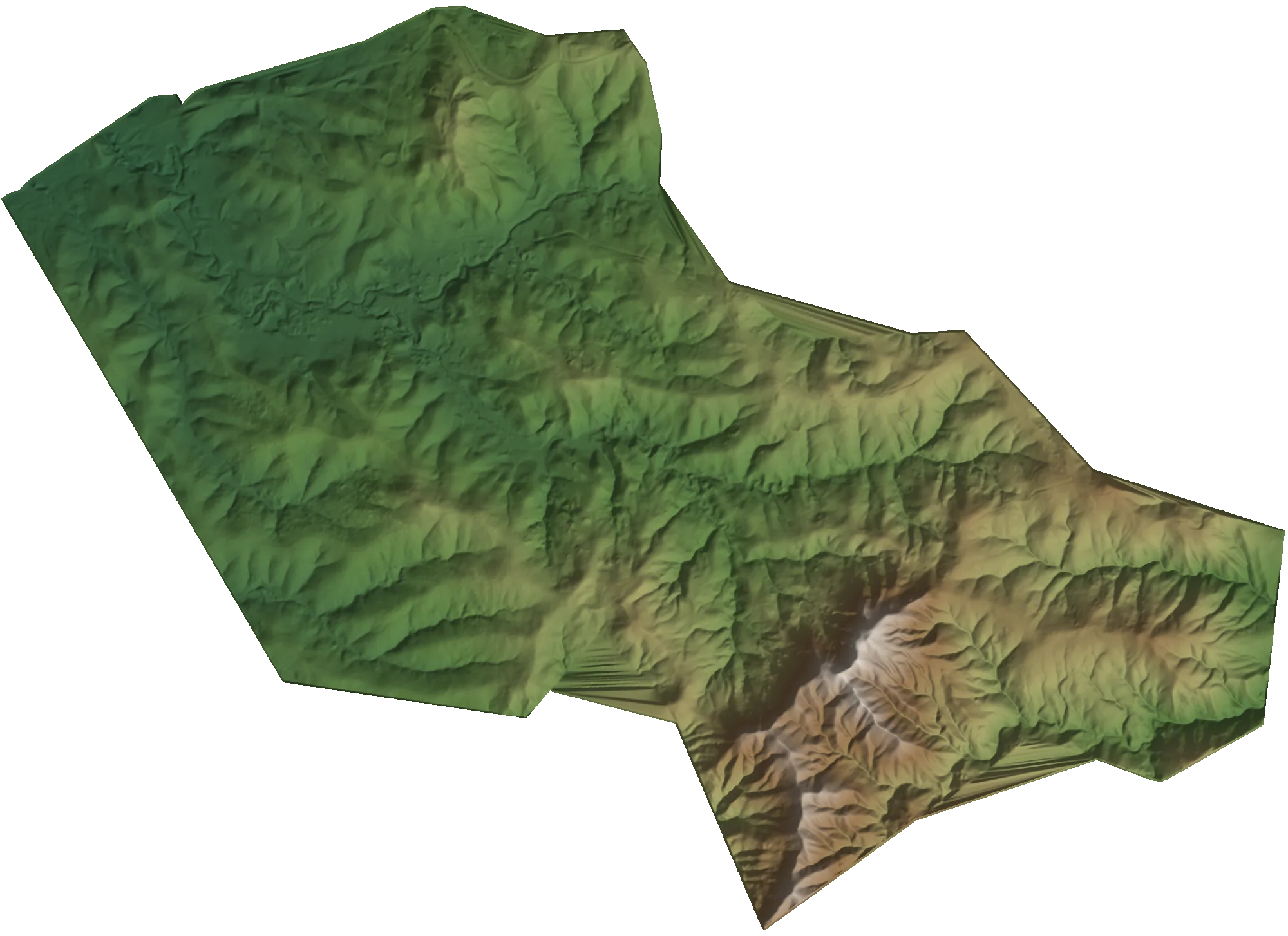
La reserva en 3D
Explora el relieve real de la reserva: gira el mapa y mira por dónde vamos a caminar. En azul, los arroyos; en ocre, las vías y los senderos.
Territorio
Los Loros
Villanueva, Bolívar · Colombia
Qué vas a ver
Las especies que puedes ver
Estas son las especies de loros y guacamayas que habitan la reserva —muchas rescatadas del tráfico ilegal—. Durante la caminata vas a ver y escuchar varias de ellas.
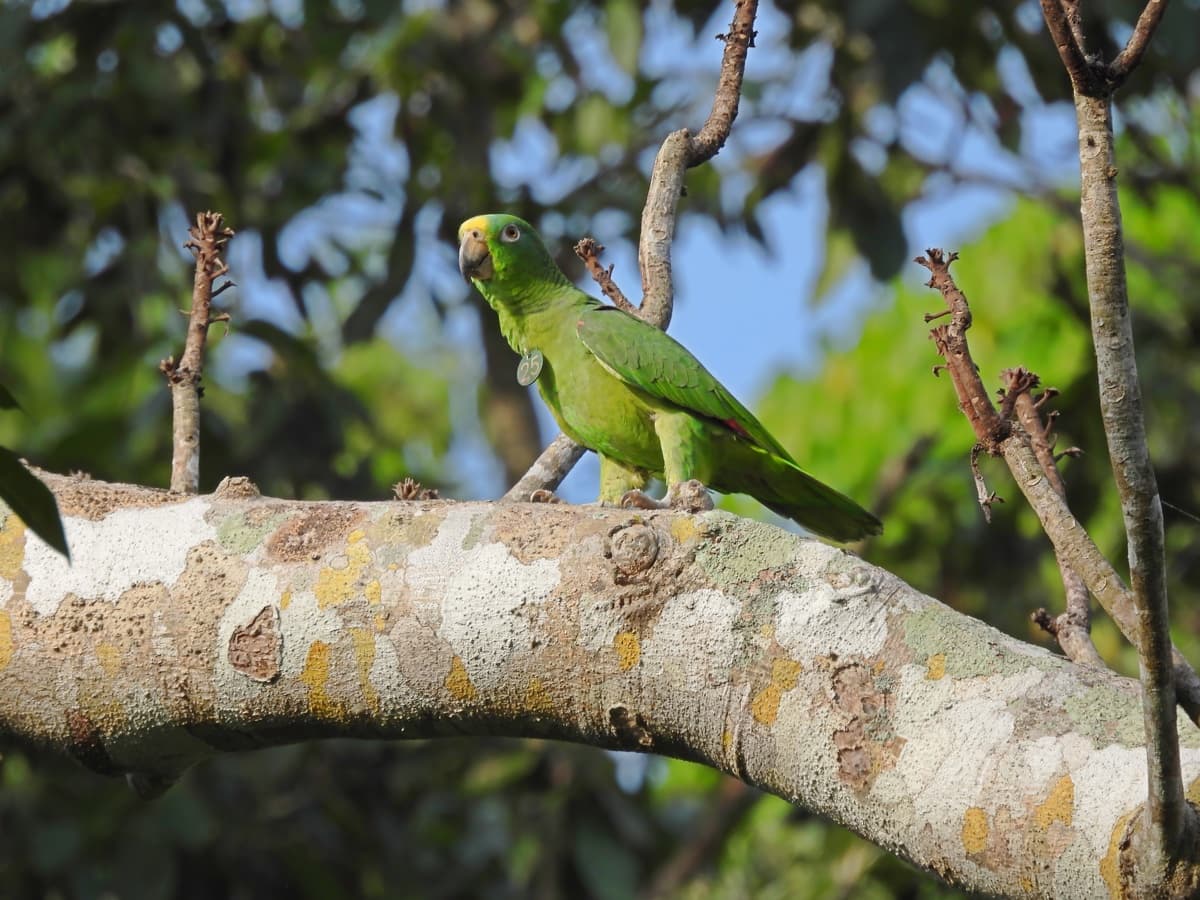
Amazona ochrocephala · Flagship species
Loro frentiamarillo
Our flagship species. A large green parrot with yellow forehead and crown and a red wing patch. The most-trafficked parrot in Colombia, and the reason Fundación Loros was founded: to give a second chance to individuals rescued from captivity and return breeding flocks to the tropical dry forest.
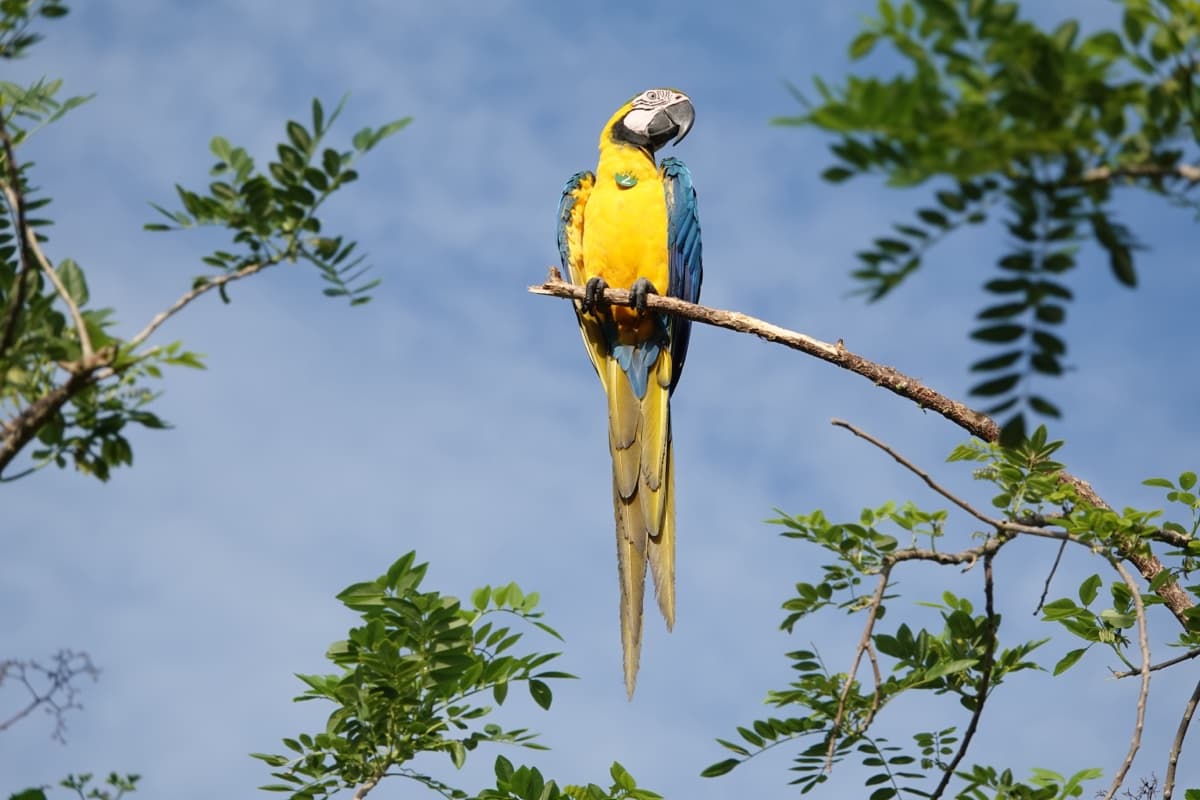
Ara ararauna
Guacamayo azul y amarillo
One of the most recognizable macaws in the tropics: deep blue back, yellow chest, and a white facial mask with black lines. They form stable pairs that fly together above the forest. Their diet centers on seeds, fruits, and palm nuts. In Colombia, populations have been pressed by the illegal pet trade.
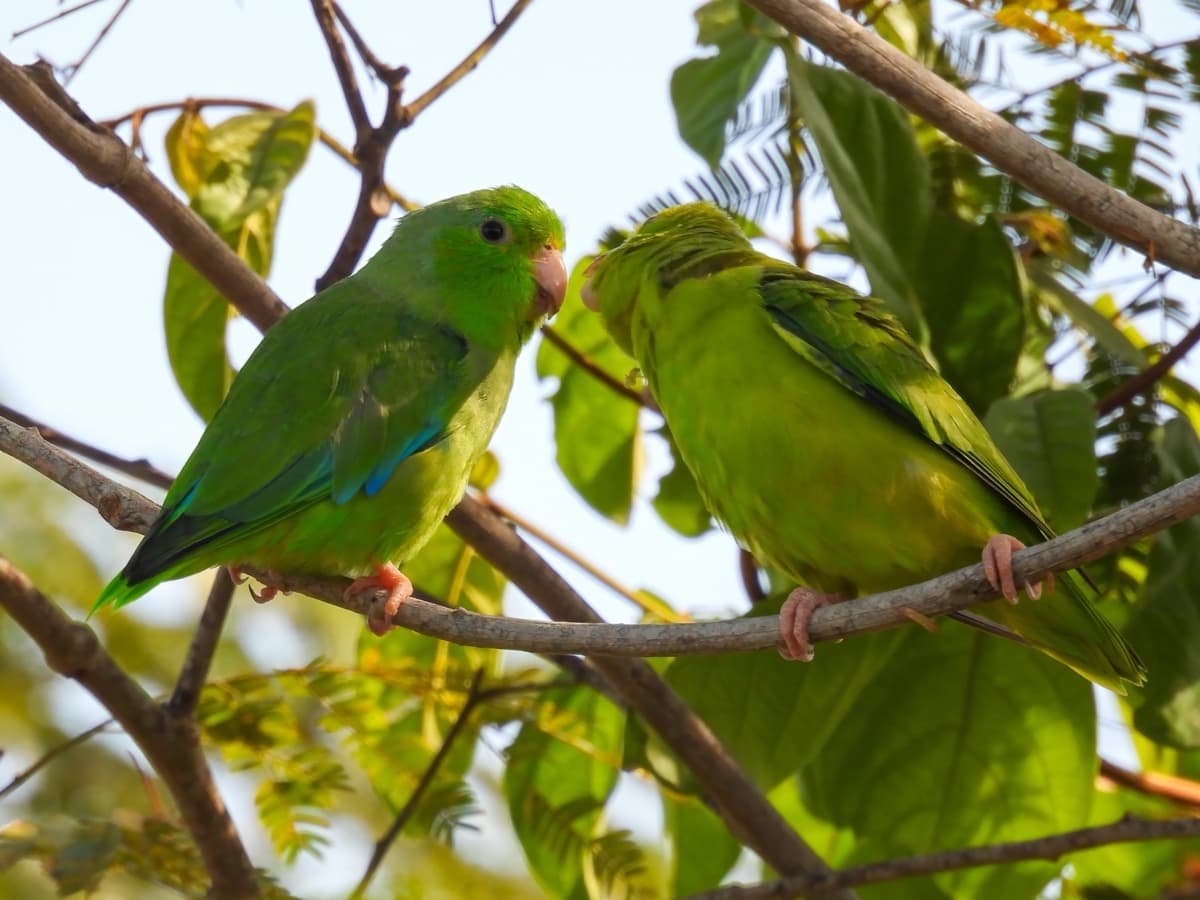
Forpus spengeli
Cotorrita aliturquesa
The smallest of Colombia's parrots — barely 12 cm. Bright green with a turquoise touch on the wings. Endemic to northern Colombia, it lives in small flocks in dry forests and open areas. Its size makes it a frequent target of the illegal trade; in the reserve we see them in flocks over the yarumo trees.
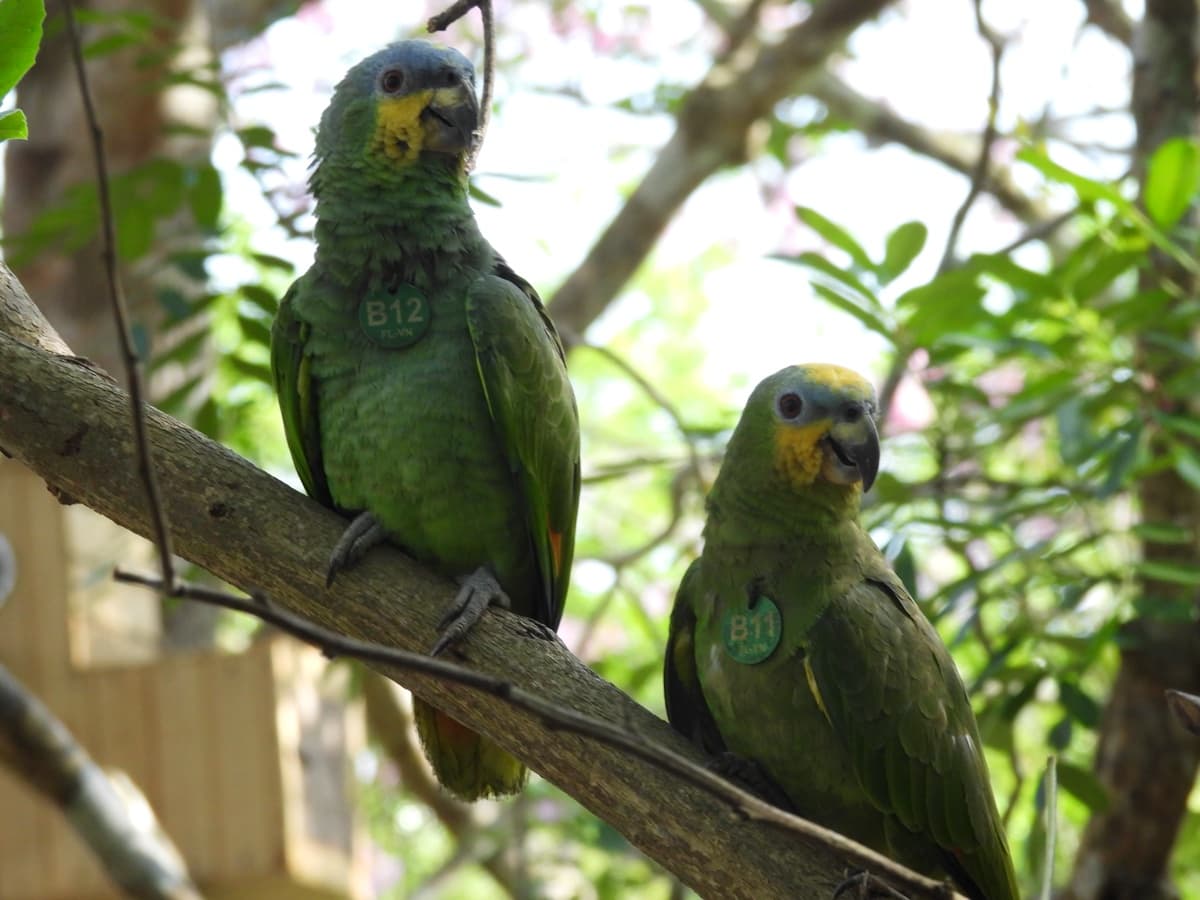
Amazona amazonica
Lora frentiazul
A common amazon of northern South America: green body, blue forehead, yellow cheeks and throat, and an orange wing patch that gives the species its name. Lives in pairs and noisy flocks in lowland forests. Frugivorous and granivorous. In the reserve, several individuals rescued from the illegal trade share spaces during rehabilitation.
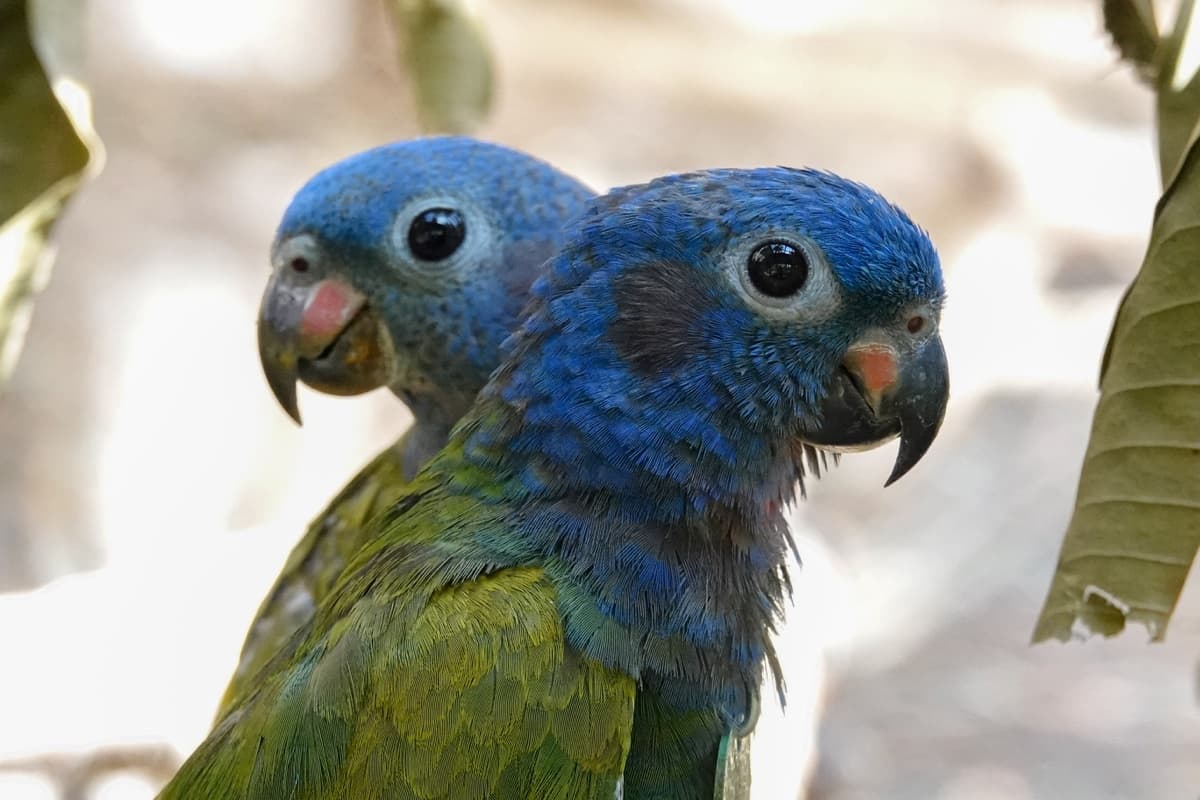
Pionus menstruus
Loro cabeciazul
Mid-sized parrot easily recognized by an entirely cobalt-blue head and chest over a green body, with a reddish bill. It flies in compact flocks at dawn and dusk. Frugivorous and granivorous; favors forest edges and areas with emergent trees. In Colombia it is a frequent target of the illegal trade because it readily learns sounds.
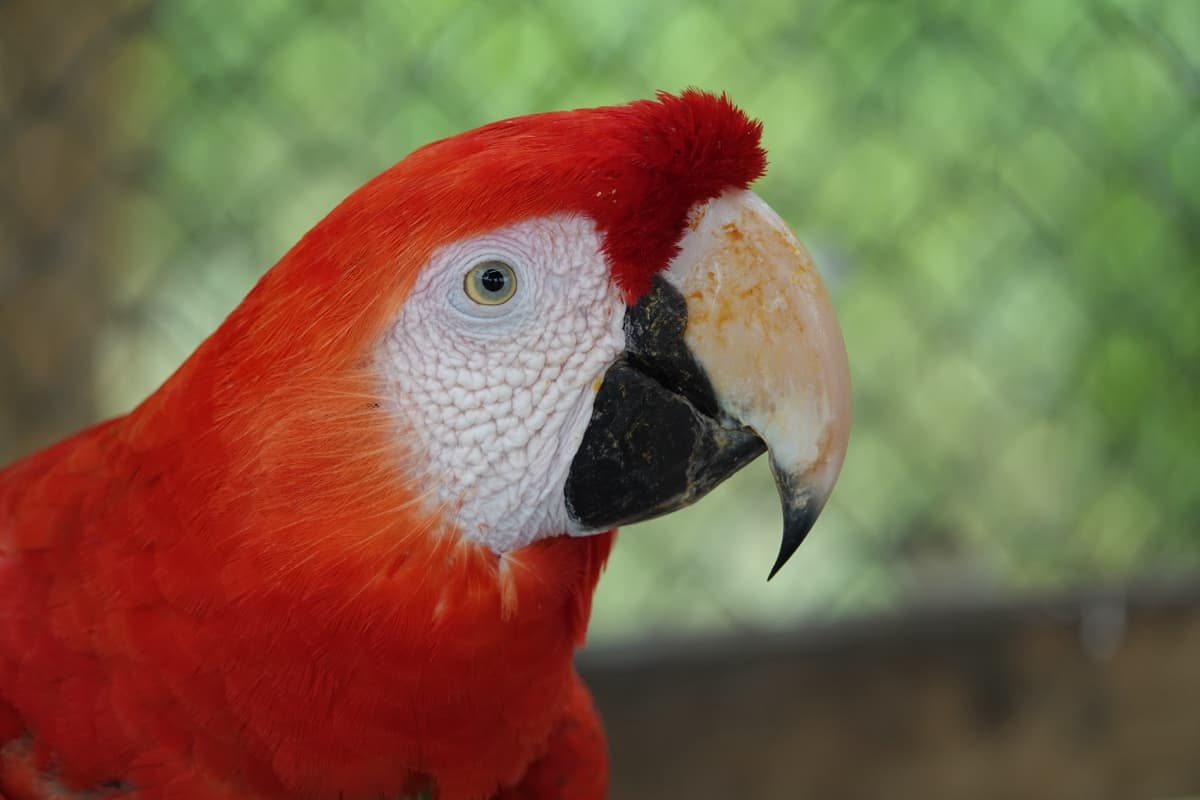
Ara macao
Guacamaya bandera
Known in Colombia as 'guacamaya bandera' because its red, yellow, and blue colors echo the national flag. Bare white facial skin furrowed by red feather lines and a powerful pale bill. They form lifelong pairs. They need huge trees and cavities to nest — their recovery depends on mature, connected forests like the reserve's.
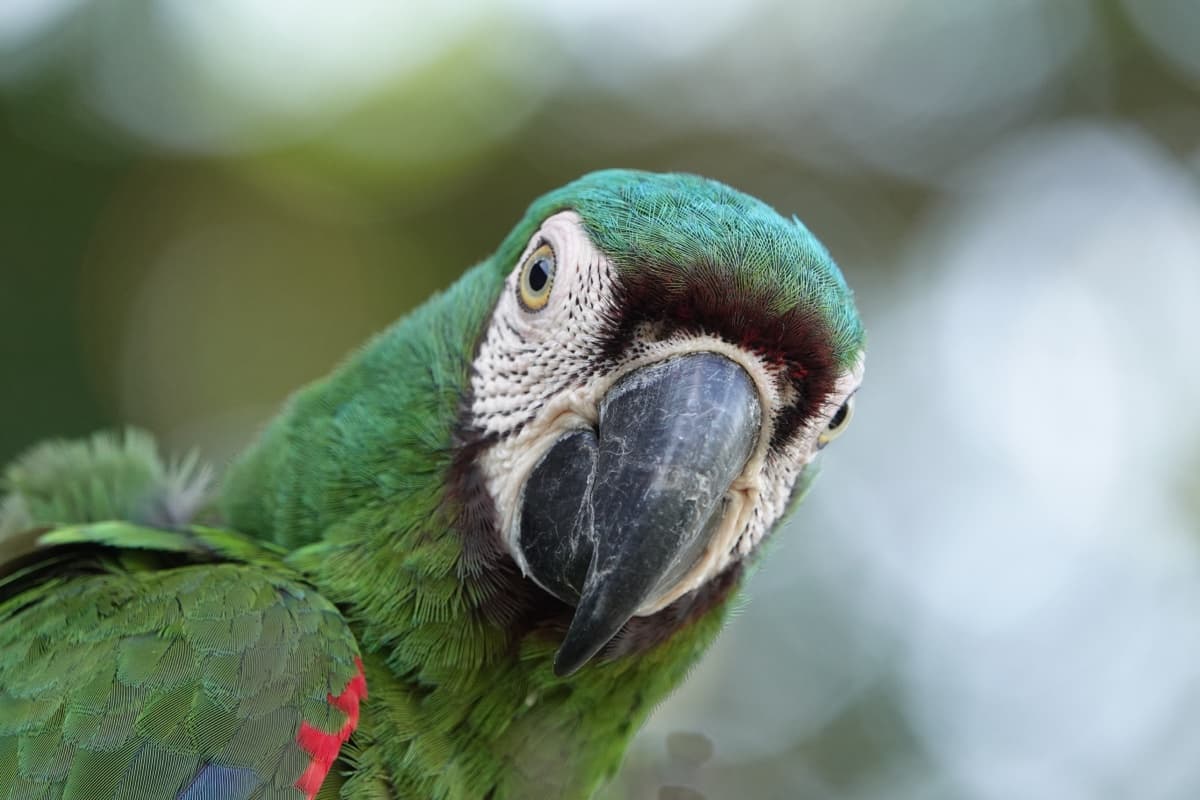
Ara severa
Guacamayo cariseco
A small macaw, mostly green, with chestnut forehead and cheeks and a flash of red beneath the wing. It flies in family flocks and perches in tall trees, where its sharp call announces its arrival. Frugivorous and granivorous. Though its population is stable, in the Caribbean region it is pressed by the illegal capture of chicks.
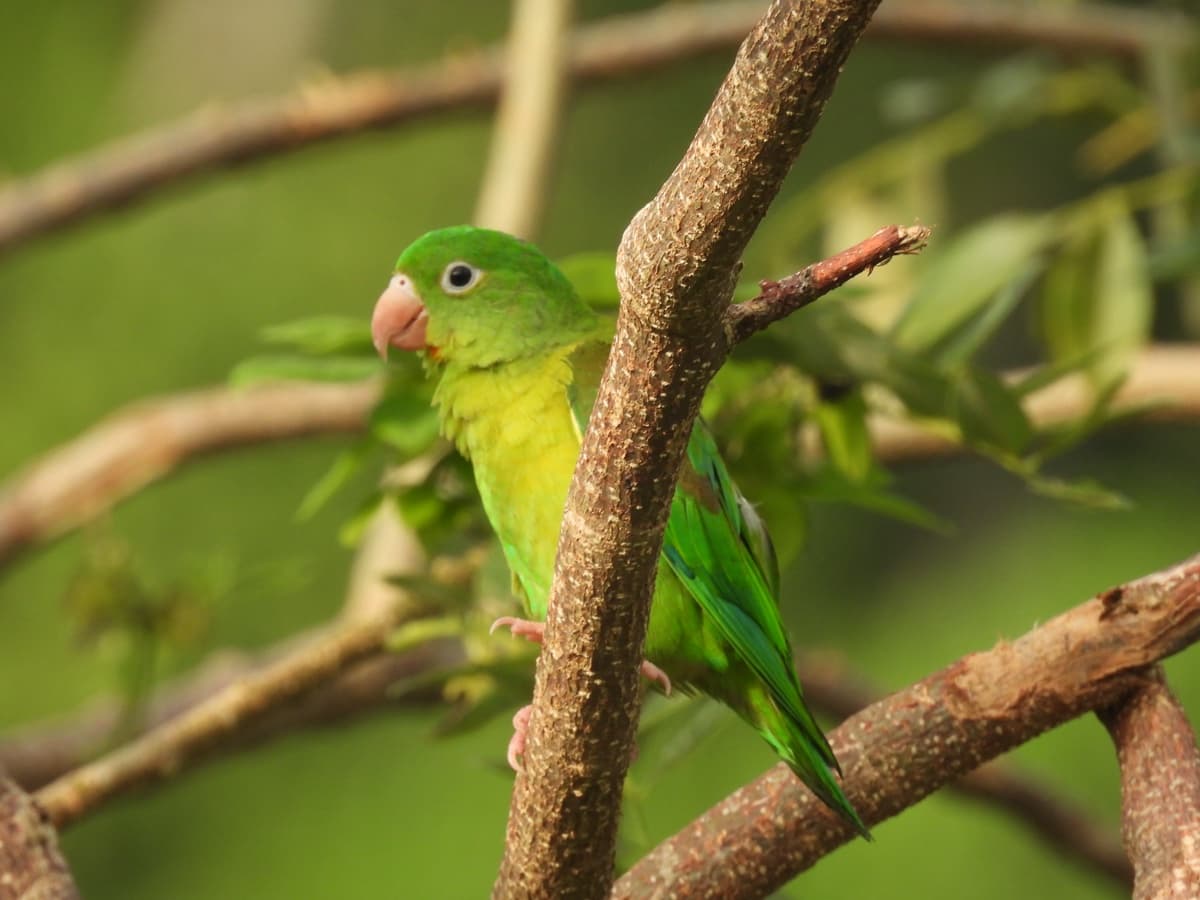
Brotogeris jugularis
Periquito alibronceado
A small, bright-green parakeet with an orange chin patch and a bronze wing patch that gives it its name. Flies in noisy, swift flocks above the dry-forest canopy. Frugivorous and nectarivorous: visits flowering and fruiting trees. One of the most abundant parrot species in the region, though still vulnerable to the illegal trade.
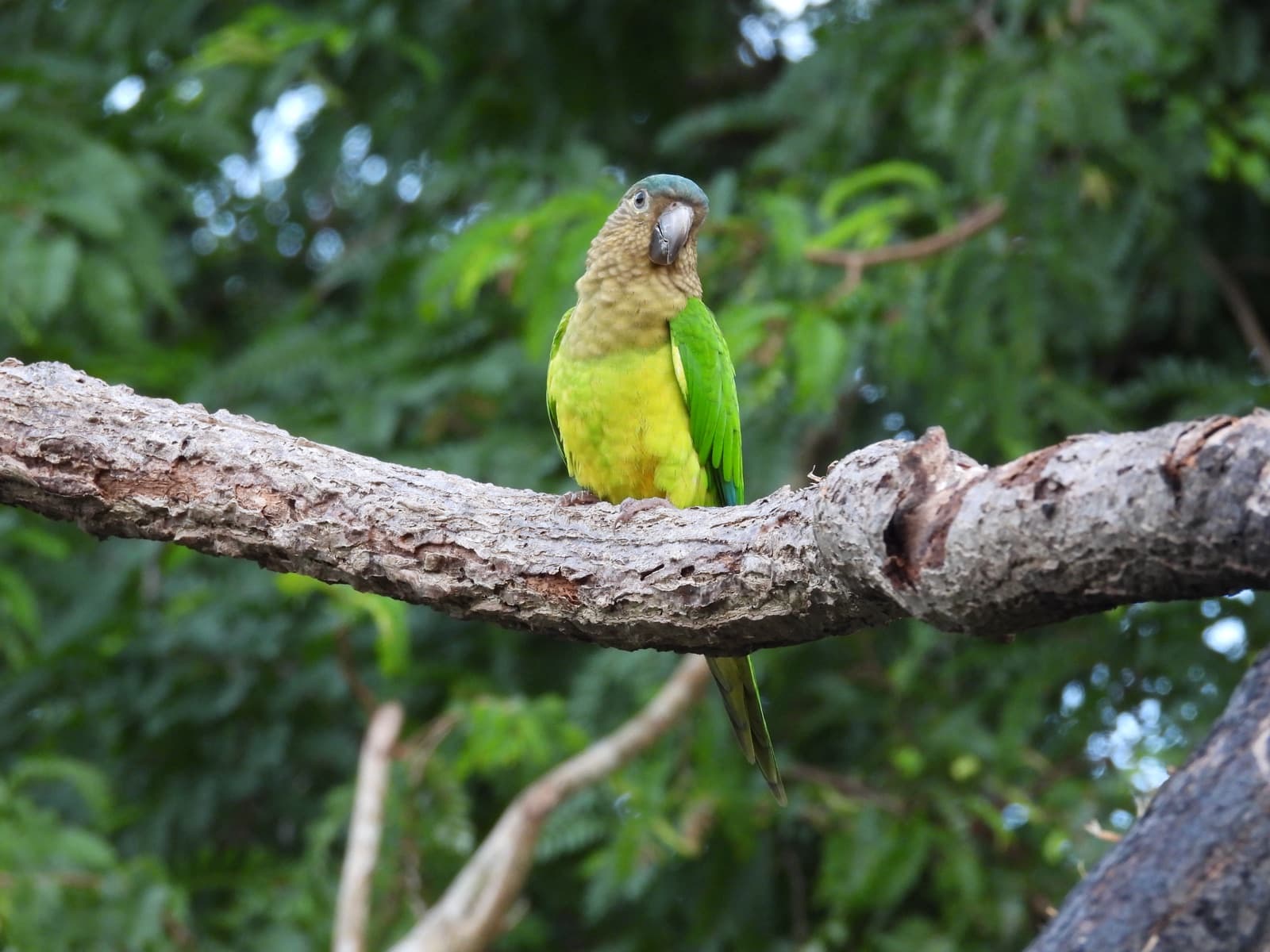
Eupsittula pertinax
Cotorra carasucia
A small, green parakeet with a dusky brown face and throat —the trait behind its Spanish name «carasucia», meaning dirty-face— and a yellowish belly. Native to northern South America and common in the Colombian Caribbean, it lives in noisy, restless flocks and nests in cavities and arboreal termite mounds. Frugivorous and granivorous, it helps disperse dry-forest seeds. Though abundant, it is also taken by the illegal pet trade.
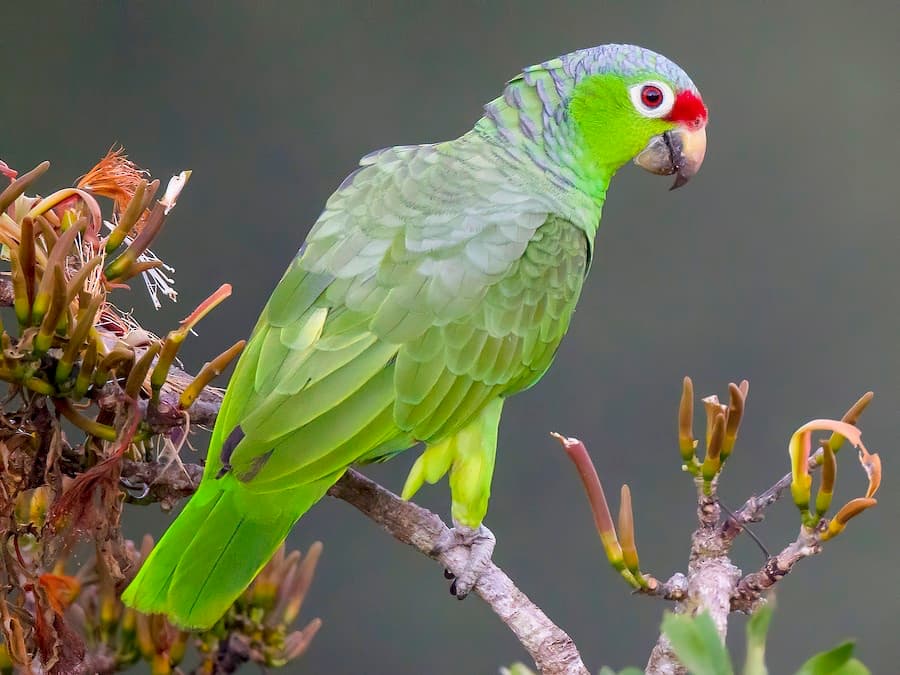
Amazona autumnalis
Lora frentirroja
A green amazon about 32–35 cm long, unmistakable for its red forehead, yellow cheeks, and a bluish wash over the crown, plus the red patch that shows on the wing. It inhabits humid and semi-deciduous forests from Central America to north-western South America, reaching the Caribbean lowlands in Colombia. It flies in pairs and flocks and feeds on fruits, seeds, nuts, and flowers. Like other amazons, it suffers from habitat loss and capture for the illegal trade.
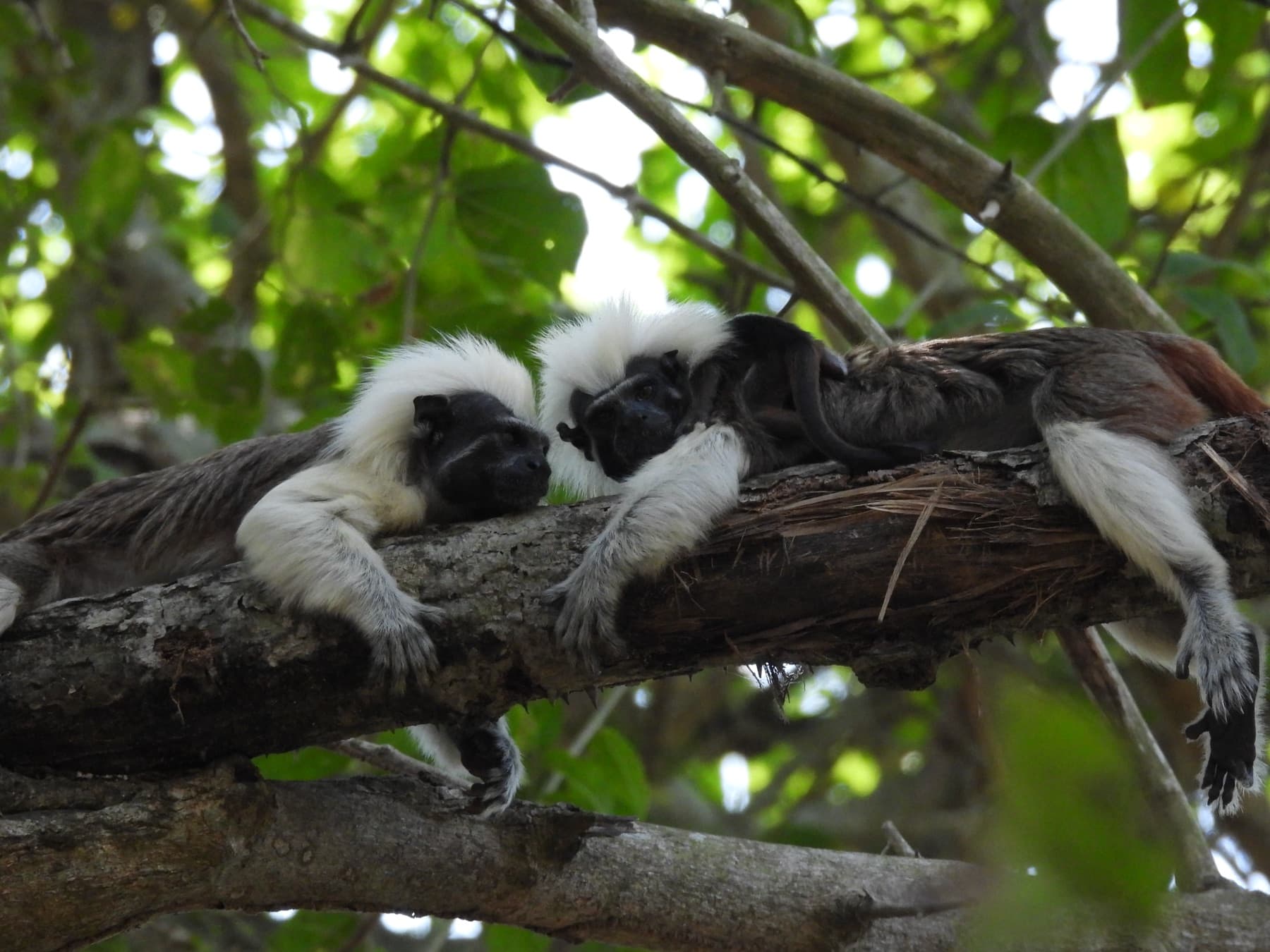
Cotton-top tamarin · Saguinus oedipus
Families that returned to the forest
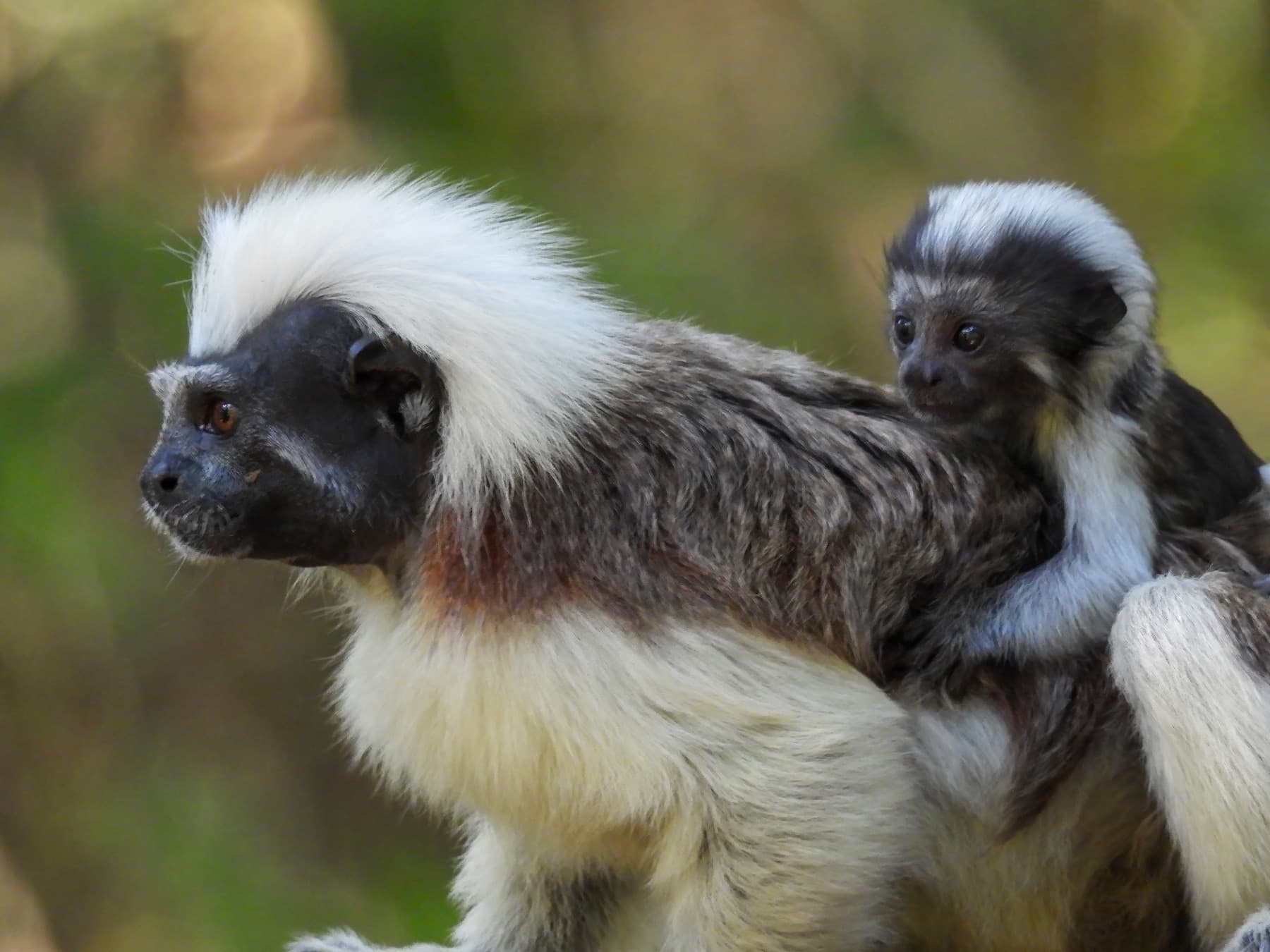
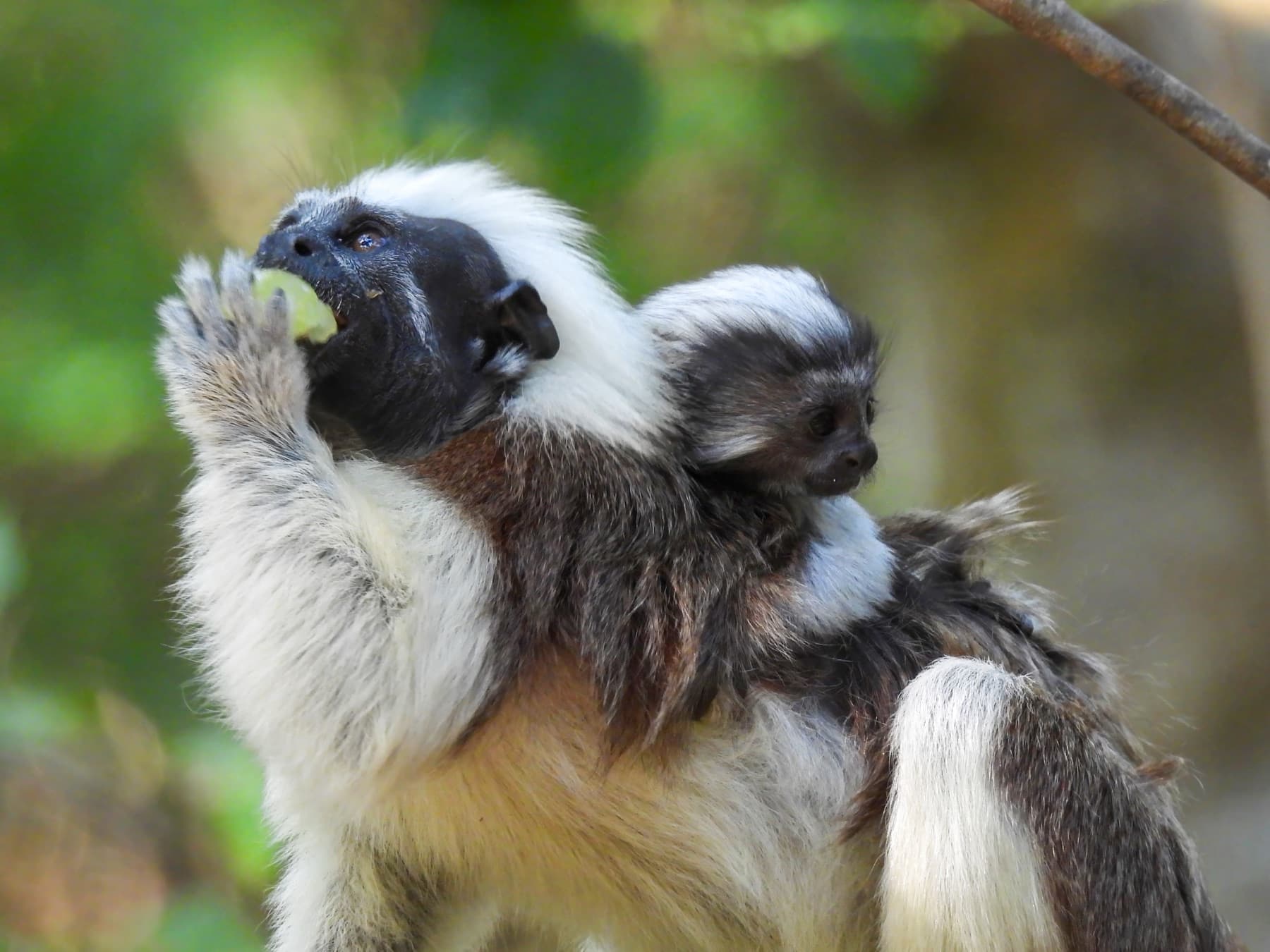
The cotton-top tamarin is a small primate endemic to Colombia's Caribbean and one of the country's most threatened species. Several families now live in the reserve — rehabilitated, released, and already breeding in the wild. On the walk, with a little luck and quiet, you might come across one of these groups up in the trees.
New generations
Born in the wild
The clearest sign that a release worked: babies born and raised in the territory, riding on their parents' backs.
Trae para donar (opcional)
Si quieres, puedes traer frutas y semillas para donar a los loros. También recibimos ropa y juguetes para nuestros trabajadores y sus familias.
Requisitos
- Poder caminar bien (según el nivel, de 3 a 15 km).
- Ser tolerante al calor.
Especial para
- Grupos de amigos
- Empresas
⚠️ All visits are by appointment. We don't take walk-ins. Coordinate your visit over WhatsApp before you come.
How to get here
By car: Uber or InDriver
It's the most convenient option and what we recommend if you don't know the area: search for "Fundación Loros — Loros Wildlife Sanctuary" as your destination and the driver will drop you at the entrance.
💡 Tip: ask the driver to go through the northern zone of Cartagena to avoid city traffic.
By bus: there is no direct route from the city center
There is no public bus running from the center of Cartagena to the foundation. Intercity buses only leave from the terminal, so coming by bus always means two legs:
- From the center to the terminal. You first have to get to the Terminal de Transporte de Cartagena, on the Carretera La Cordialidad, on the eastern side of the city (Doña Manuela area) — not the Terminal Satélite del Norte, which serves other routes. From the Historic Center it's about 30 minutes by taxi, Uber or InDriver; more at rush hour. On public transport there's the X104 Transcaribe route (Terminal – Pedro Romero – Centro), which doesn't take cash: you need a Transcaribe card, which you buy at the ticket booth in any station. That route has had detours because of roadworks, so confirm the day's routing at transcaribe.gov.co.
- From the terminal to the foundation. There you take a bus toward Villanueva or Arenal (San Estanislao): they leave every 30 minutes, the trip takes about 40 minutes and costs around COP $7,000 — confirm the day's fare at the ticket booth. Ask the driver to let you off at Fundación Loros.
⚠️ The bus is only advisable if you know the area and speak Spanish. Between the two legs and the waiting, it takes close to twice as long as going by car, and the bus has no fixed stop at the foundation: you have to ask the driver to let you off. If it's your first time out here, come by Uber or InDriver.
Reference times
By car, from closest to farthest. For the two most common starting points we've set up the route in Google Maps:
| From Santa Rosa de Lima | 15 min |
| From Lagos de Mozambique | 35 min |
| From the Terminal de Transportes — see route | 41 min |
| From Serena del Mar | 55 min |
| From Aeropuerto Internacional Rafael Núñez — see route | 59 min |
| From the Historic Center | 1 hour 5 minutes |
| From Bocagrande | 1 h 10 min |
| From Barú | 1 h 20 min |
About the road
The foundation sits on the main highway, which is in good condition — you don't have to navigate dirt tracks or rural paths.
How to get back to Cartagena
The plaza de Villanueva is a 13-minute walk away; from there the same bus runs back, dropping you again at the Terminal de Transporte de Cartagena.
⚠️ Important: this option is only practical for locals. If you're visiting from abroad, pre-arrange a car (Uber or coordinated with the foundation) to take you there and back.
Book
Reserva tu caminata comunitaria
Reserva y paga en línea, o déjanos tus datos para coordinar la fecha. El cobro mínimo es por 7 personas ($525.000): pueden ir menos y pagan igual el mínimo. Elige el nivel del grupo. La caminata se realiza en español · se reserva con 48 horas de anticipación · solo residentes en Colombia.
¿Tienes poco tiempo?
Alimenta a los loros y guacamayas liberados
Una visita de 1 hora: dales de comer con tu propio alimento. Un plan más corto, también para residentes en Colombia.