By Alejandro Rigatuso, Fundador y Director de Fundación Loros
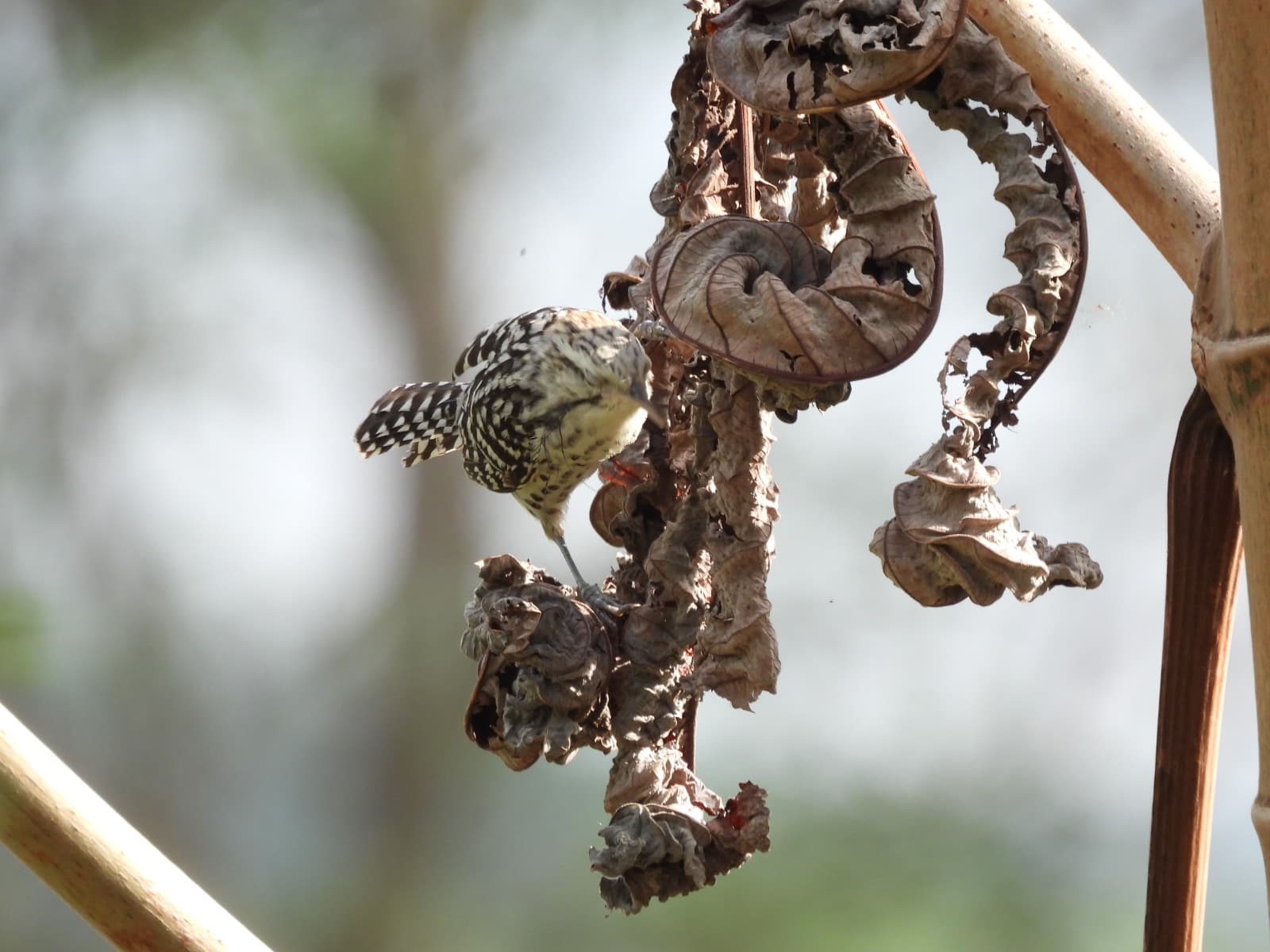
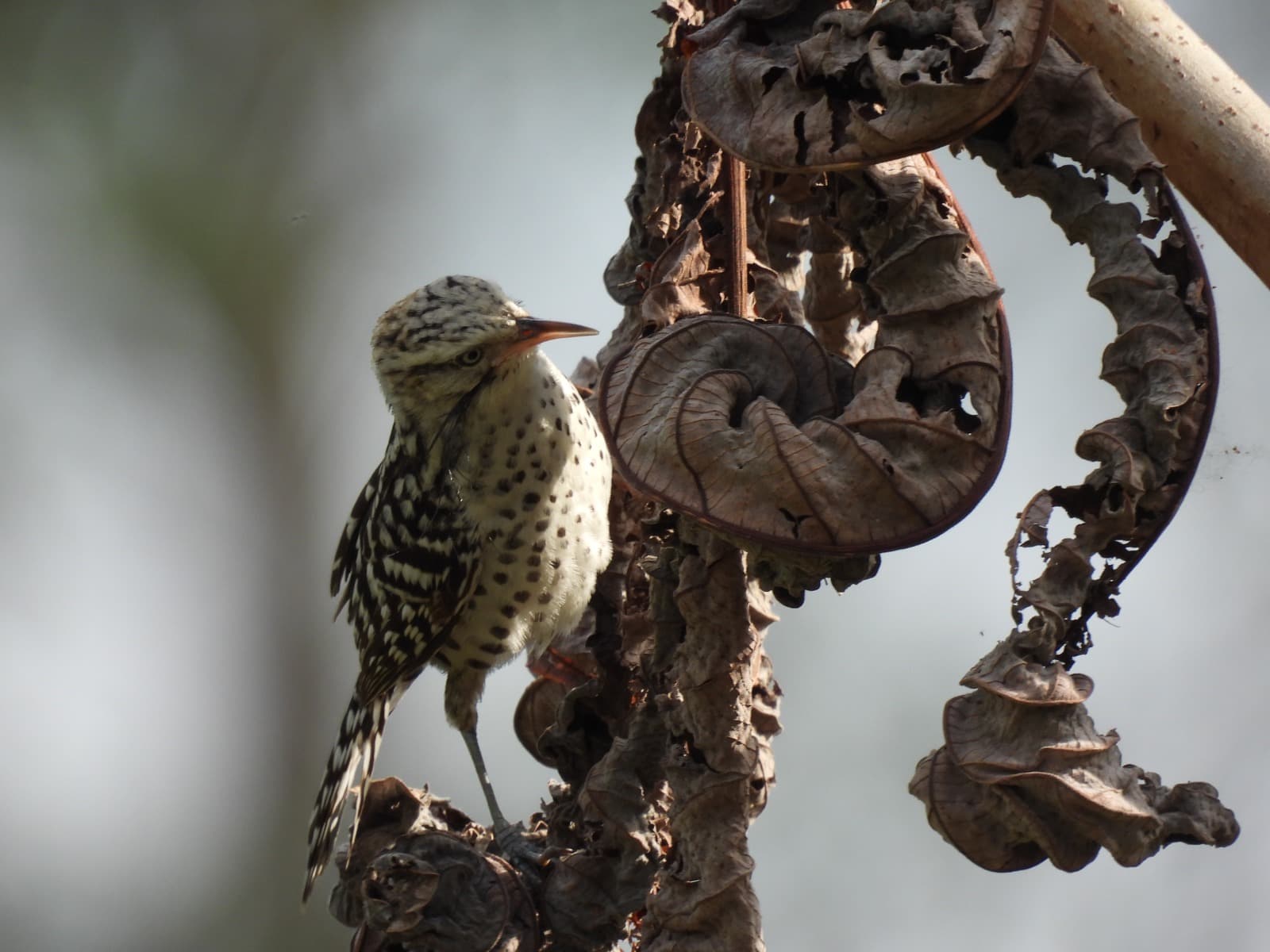
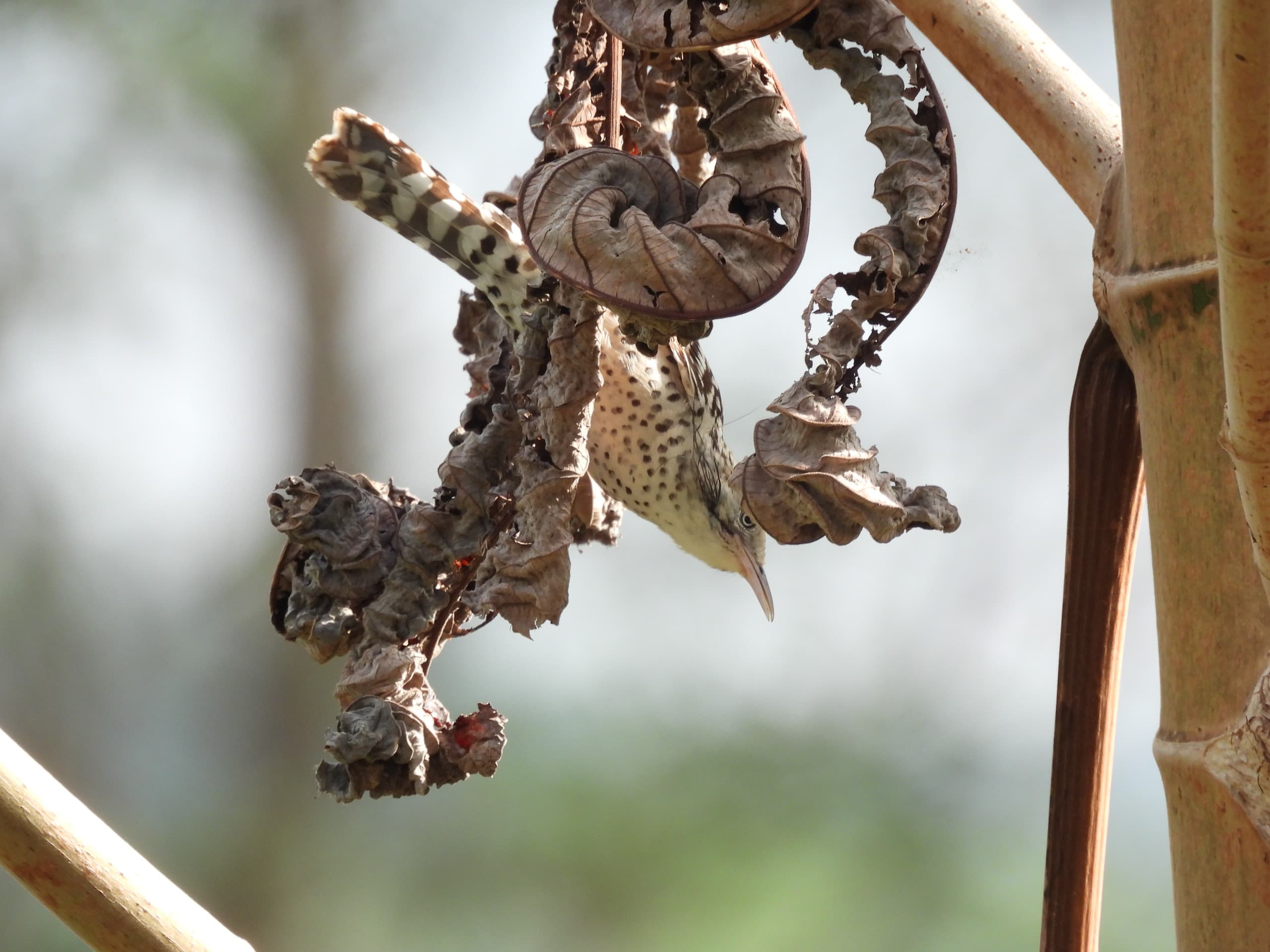
On March 18th, near the casa del paraíso, Maicol raised his camera with care and captured something he hadn't expected: a Stripe-backed Wren, Chocorocoy (Campylorhynchus nuchalis), foraging among dry branches and curled leaves, as though the world ceased to exist beyond that arid tangle. The bird moved slowly, unhurried, showing off its black-and-white mottled plumage as it nosed through the vegetation.
But it was one particular detail that kept Maicol's eye glued to the viewfinder: a black mustache, bold and clean, cutting across the bird's face with an almost comical elegance. In all his years walking the sanctuary, he had never seen that marking so pronounced on a Chocorocoy. He managed three shots before the bird vanished into the scrub.
Campylorhynchus nuchalis is a common species across the arid zones of northern Colombia, known for its boisterous character and unmistakable plumage. But that day, across the 520 hectares of Fundación Loros, one of them indulged itself — and became just a little more memorable than the rest.
About the author
Alejandro Rigatuso · Fundador y Director de Fundación Loros
Alejandro Rigatuso arrived at Fundación Loros after years as Vice President of Growth Marketing at Toptal, bringing with him an unconventional perspective: he knows an animal is well by its eyes, "bright, wide open." Lorenzo, the first parrot released, recaptured several times and always set free to fly again, marked him forever. At dusk, around five-thirty, you'll find him at the Mirador de las Ciénagas or wandering around Cerro El Peligro, envisioning observation towers and hundreds of native parrots soaring over a reserve that an entire community calls their own.
Stay in touch
Get news from the reserve
Before-and-after photos, management protocols, events and the story of each individual — straight to your inbox.