By Alejandro Rigatuso, Fundador y Director de Fundación Loros
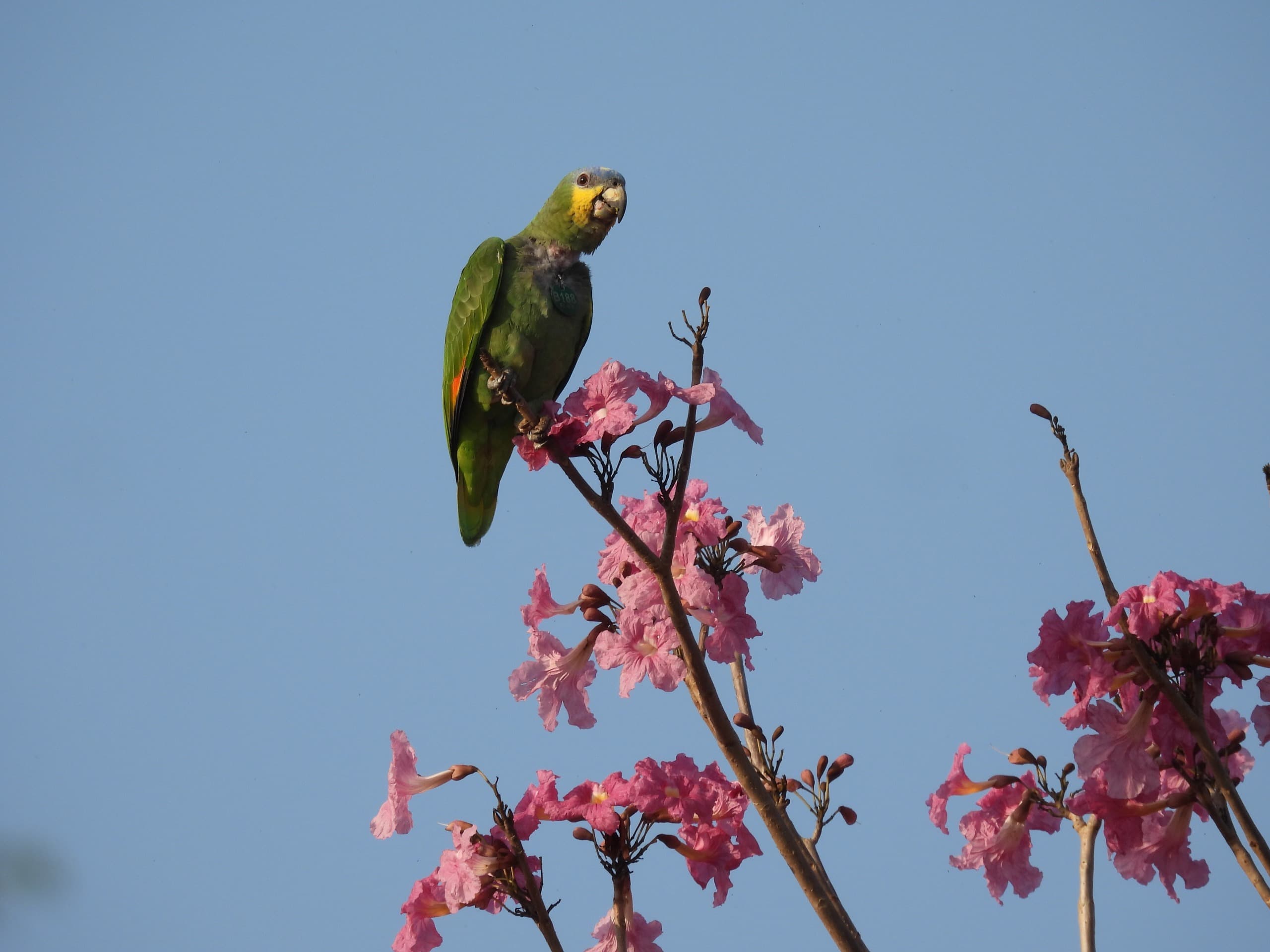
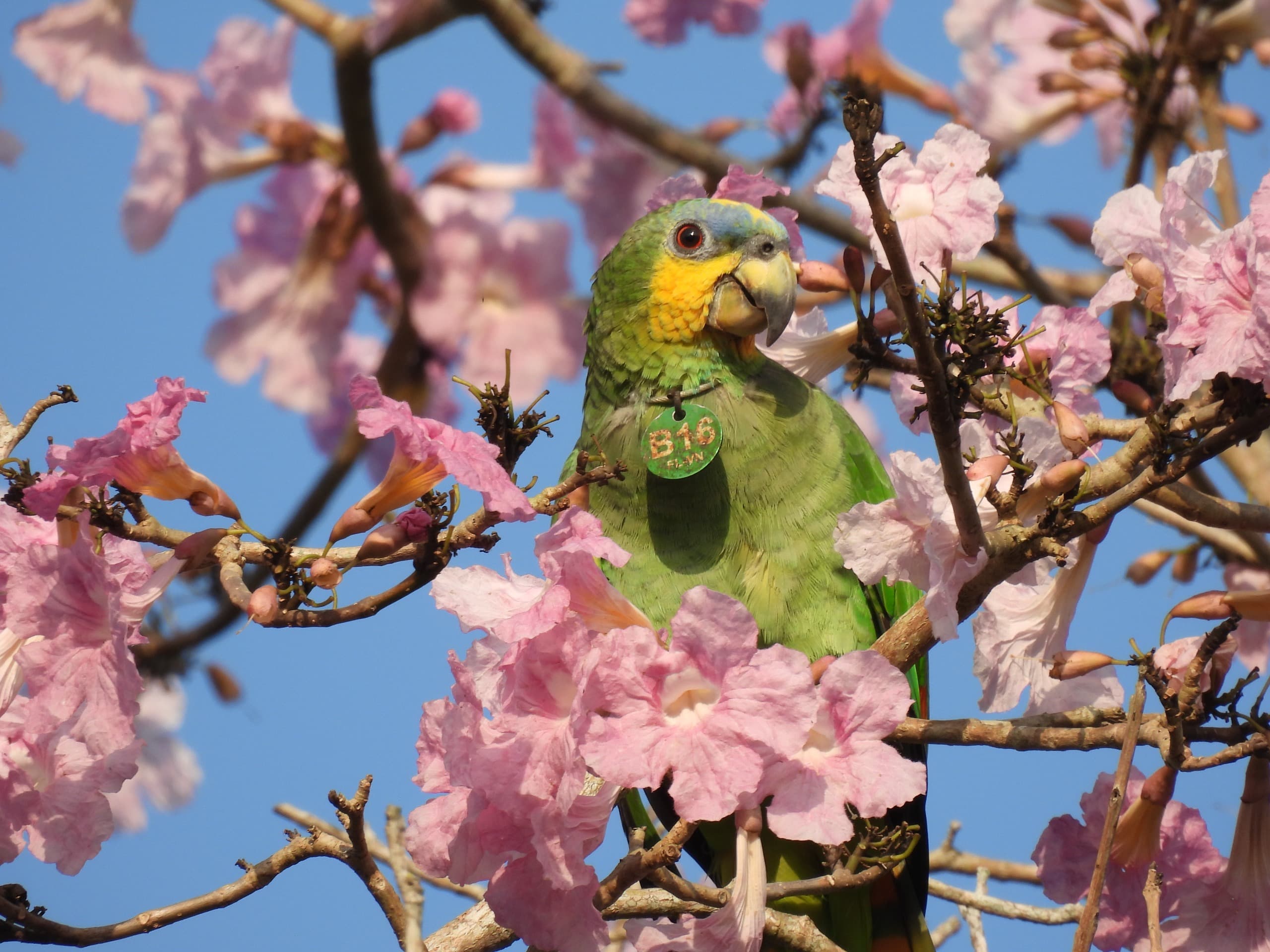
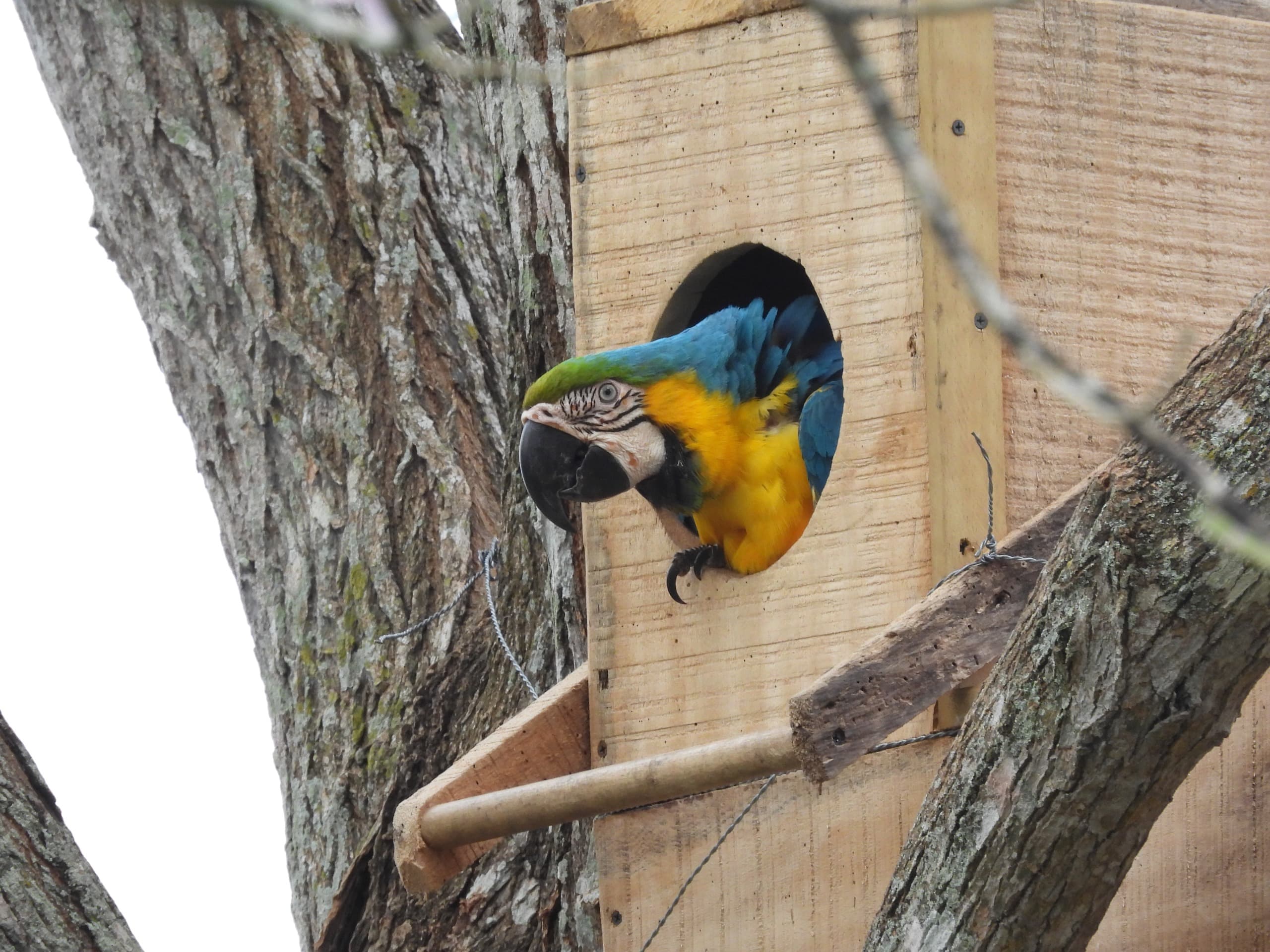
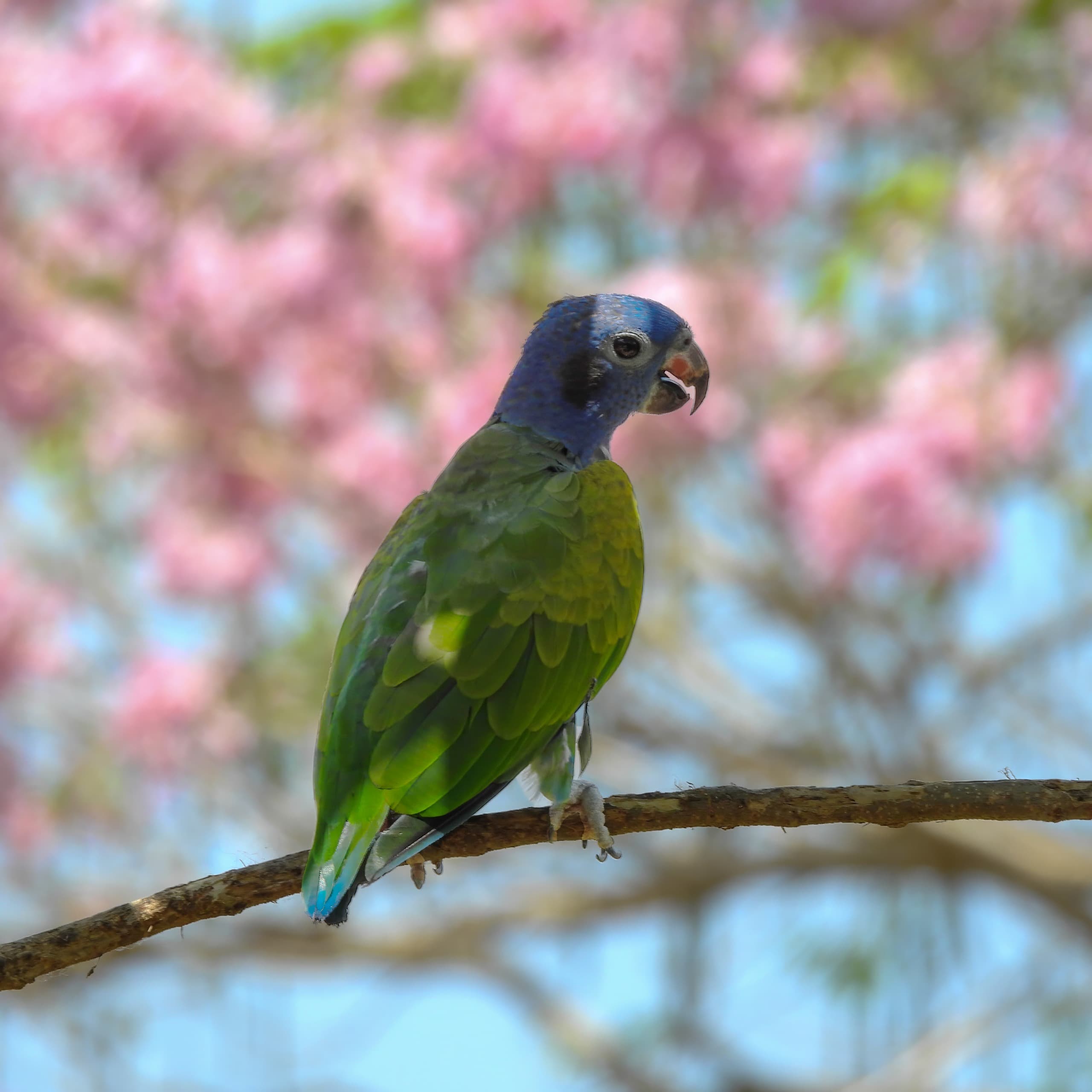
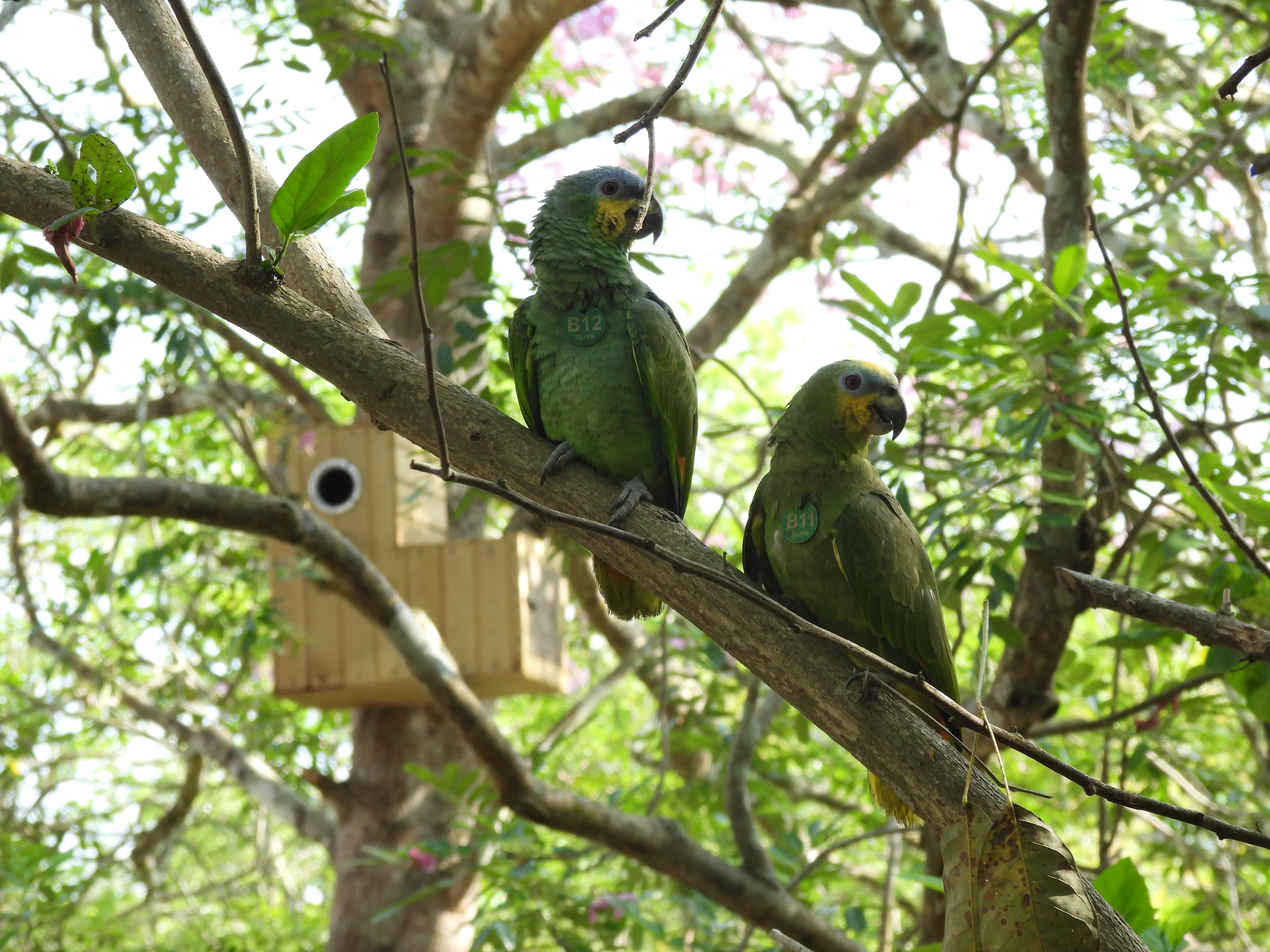
Yesterday morning, photographer Maicol walked the shoreline of the entrance lake at finca El Paraíso —where Fundación Loros was born— and found the robles (*Tabebuia* sp.) in full bloom, draped in pink flowers that set the landscape ablaze against the blue March sky. Among those branches were three visitors: an Amazonian parrot in green plumage with flashes of blue, bearing no visible band; another Amazonian identified by tag B16, perched calmly among the petals; and a blue-headed parrot (*Pionus menstruus*) its turquoise crown glowing between the blossoms. A little further along, a blue-and-yellow macaw (*Ara ararauna*) peered out with its black beak from the opening of a nest box mounted in a nearby tree.
What Maicol captured with his camera carries a layer that photographs don't reveal at first glance: all four of these individuals came to Fundación Loros as victims of wildlife trafficking. Today they live in semi-liberty within the reserve, and the place they chose to land is called, quite literally, El Paraíso — Paradise. Sometimes reality allows itself the luxury of being perfect.
About the author
Alejandro Rigatuso · Fundador y Director de Fundación Loros
Alejandro Rigatuso arrived at Fundación Loros after years as Vice President of Growth Marketing at Toptal, bringing with him an unconventional perspective: he knows an animal is well by its eyes, "bright, wide open." Lorenzo, the first parrot released, recaptured several times and always set free to fly again, marked him forever. At dusk, around five-thirty, you'll find him at the Mirador de las Ciénagas or wandering around Cerro El Peligro, envisioning observation towers and hundreds of native parrots soaring over a reserve that an entire community calls their own.
Stay in touch
Get news from the reserve
Before-and-after photos, management protocols, events and the story of each individual — straight to your inbox.