A recovery & release story · B43
Mateo: from solitude back to freedom
The story of Mateo (B43) and his brother Diego.
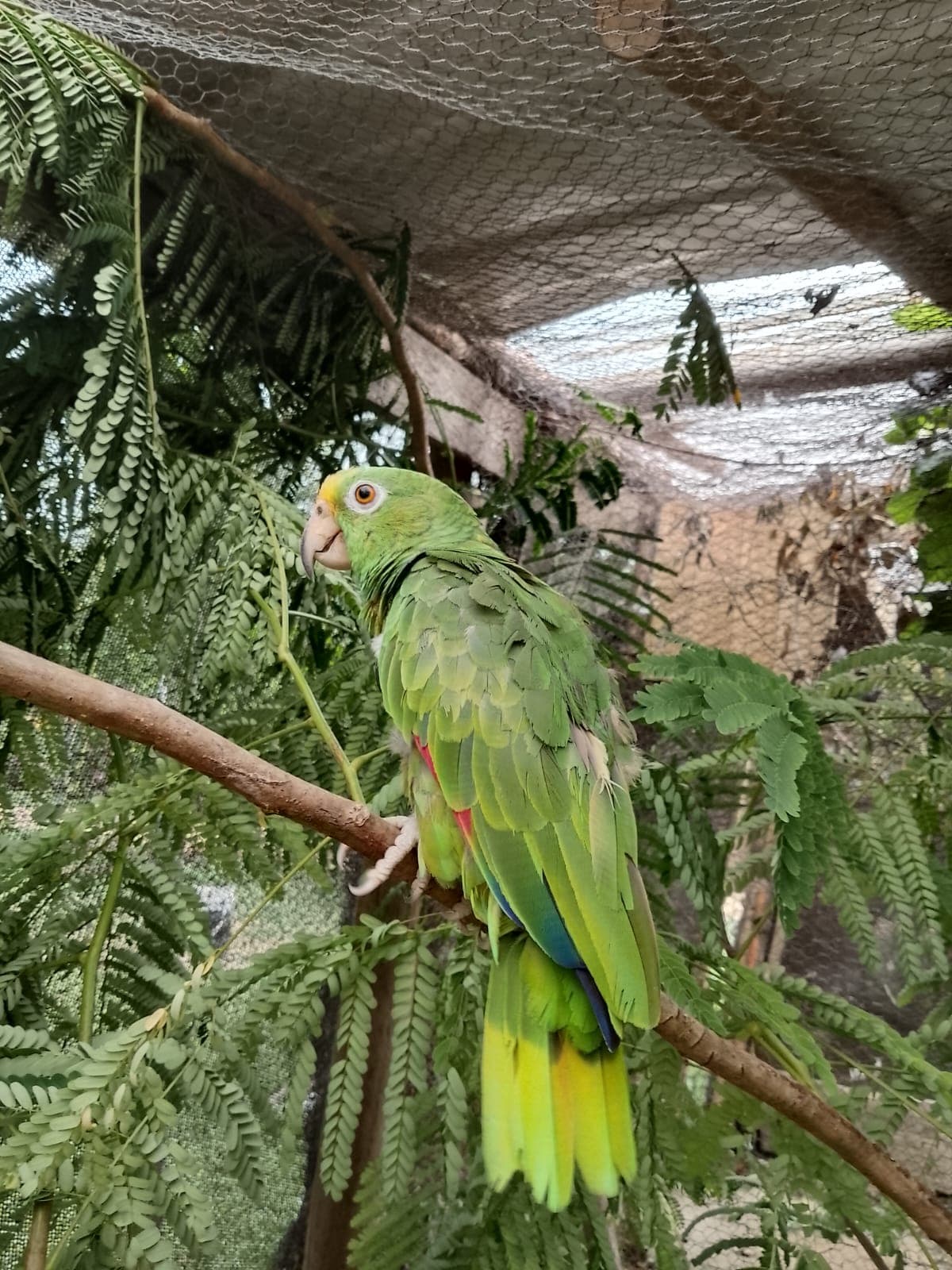
Mateo is a yellow-crowned amazon (Amazona ochrocephala). He arrived at Fundación Loros in November 2023, after being voluntarily surrendered to Barranquilla Verde together with his brother Diego. Mateo was identified as B43.
Case file
The case in data
- Species
- Amazona ochrocephala — yellow-crowned amazon
- In captivity
- April 2018 – November 2023 · over 5 years
- Date of admission
- 28 November 2023
- Start of reintegration into the wild
- 18 June 2026
- Origin
- Barranquilla
- Destination
- Fundación Loros · Cardique Wildlife Friends Network
- Authorities involved
- Barranquilla Verde · Cardique
Environmental authorities

A life within four walls
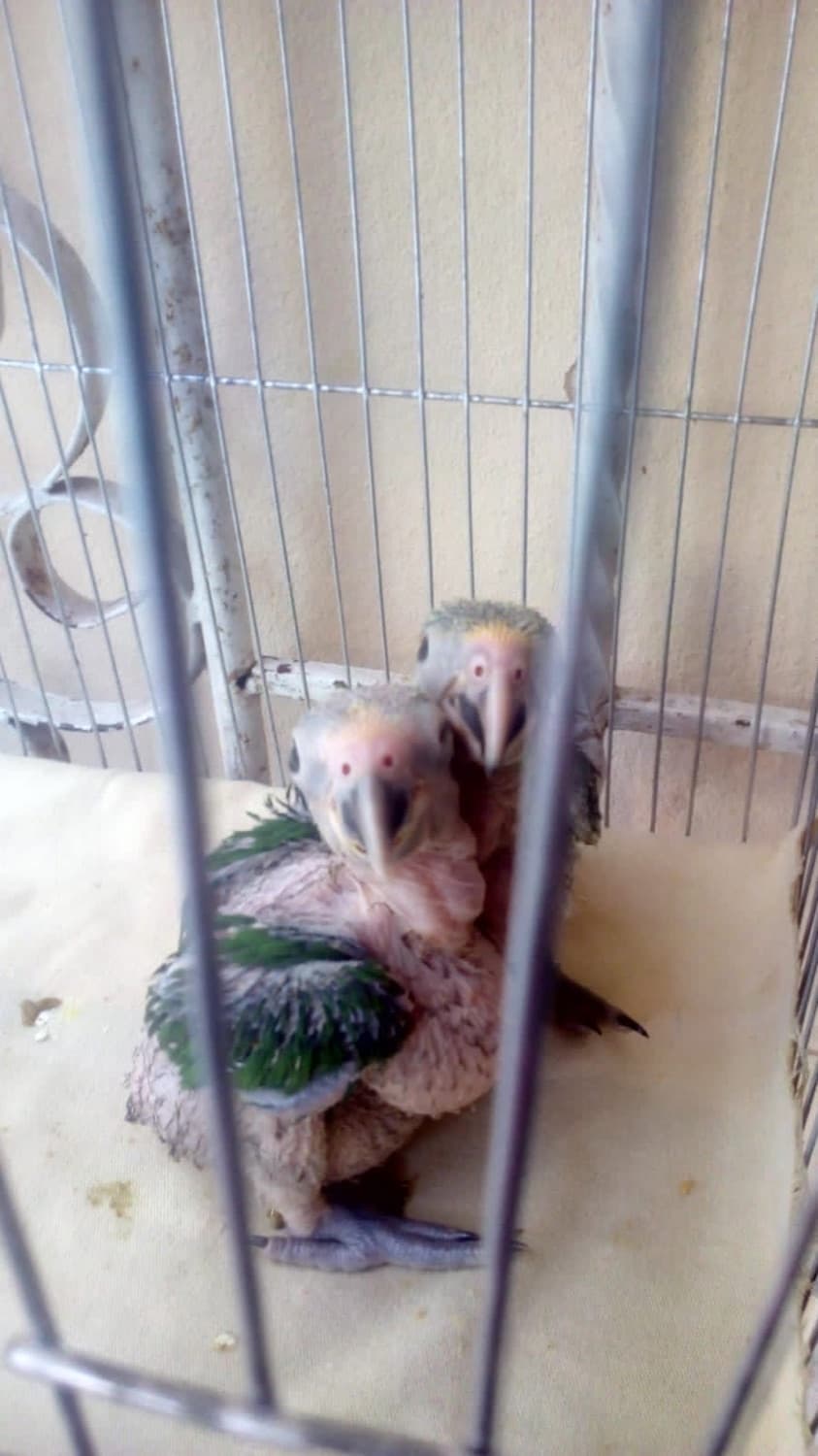
Mateo and Diego didn't choose to live among people. In April 2018 they were bought at a market in Barranquilla —one first, the other the next day— and became pets, far from the forest and the flock they belonged to.
For more than five years their world was four walls. They lived in a small house, with no yard or trees; in the afternoons the windows were shut to bring them inside. Those who cared for them recall that, the few times they were let out, both would gaze up at the sky.
His family swears that one of them seemed to say, over and over, a phrase that said it all:
One gets bored here, one gets bored here.
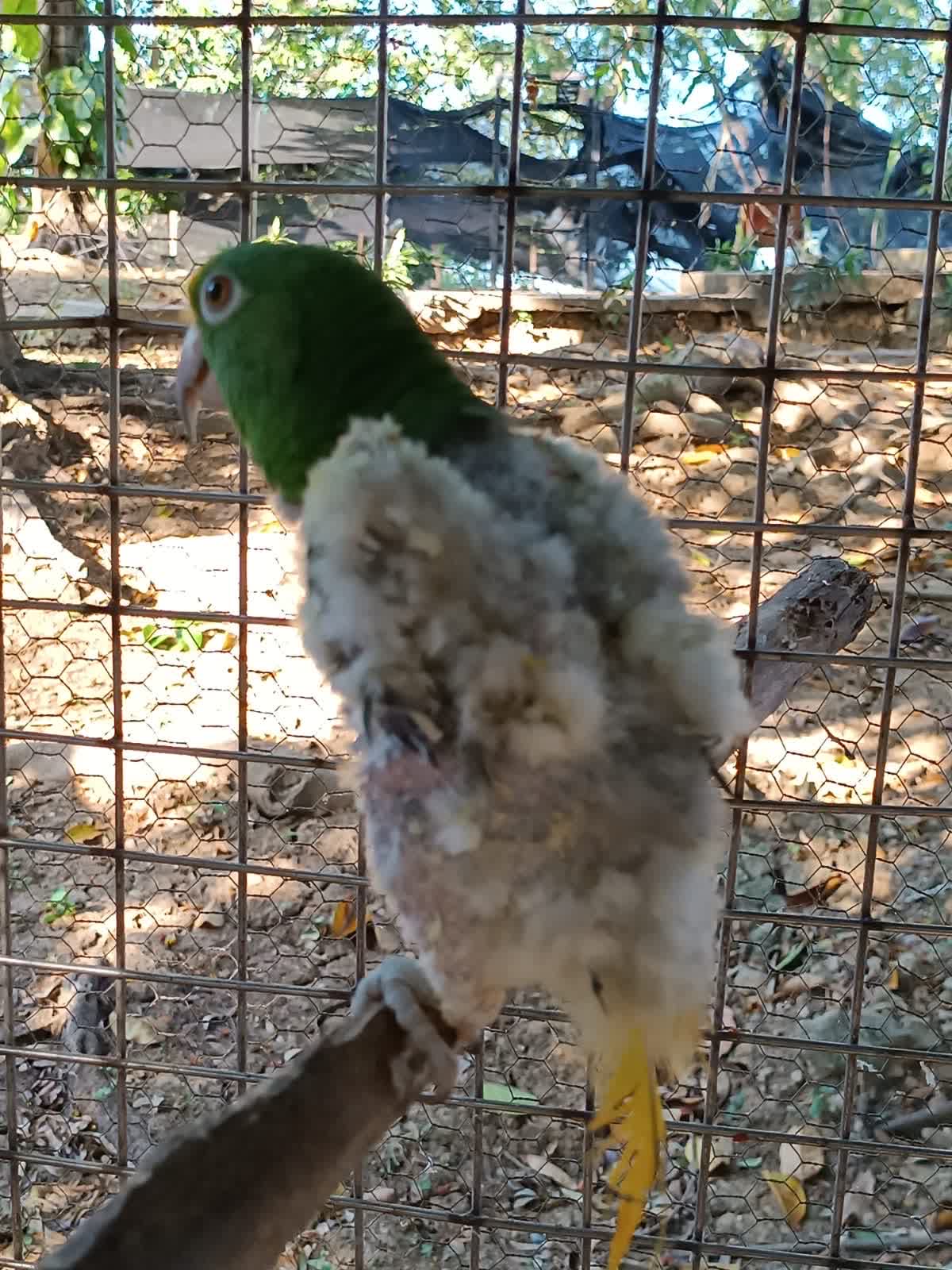
Over the years they reached adulthood, and with it the instinct to find a mate awoke. In 2023, Mateo began courting his only companion, with no possible response. A week later he started pulling out the feathers on his chest. Confinement, monotony and a natural instinct with no outlet set off the feather-plucking, until he was left almost bare.
In captivity · 2018 – 2023
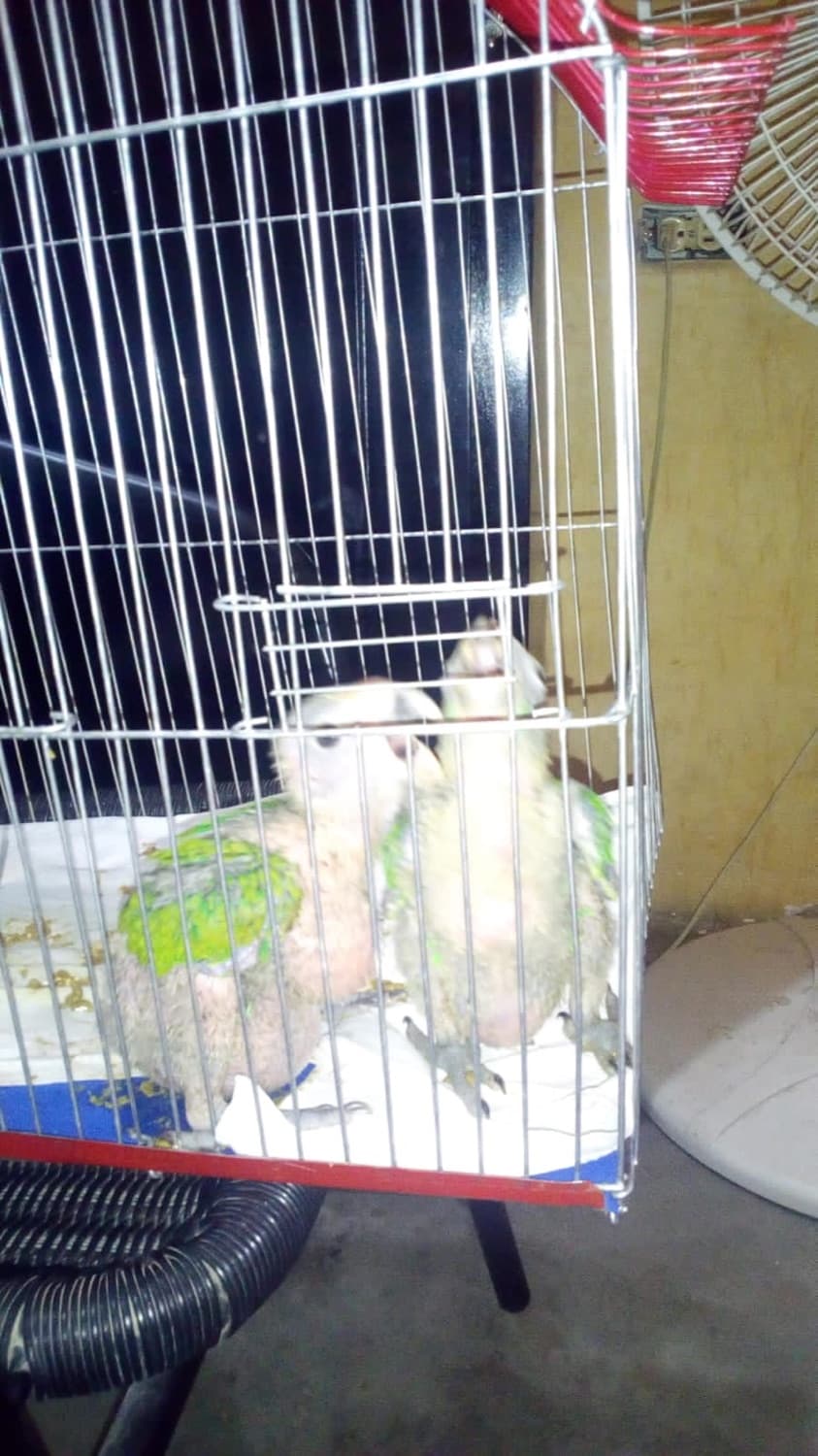
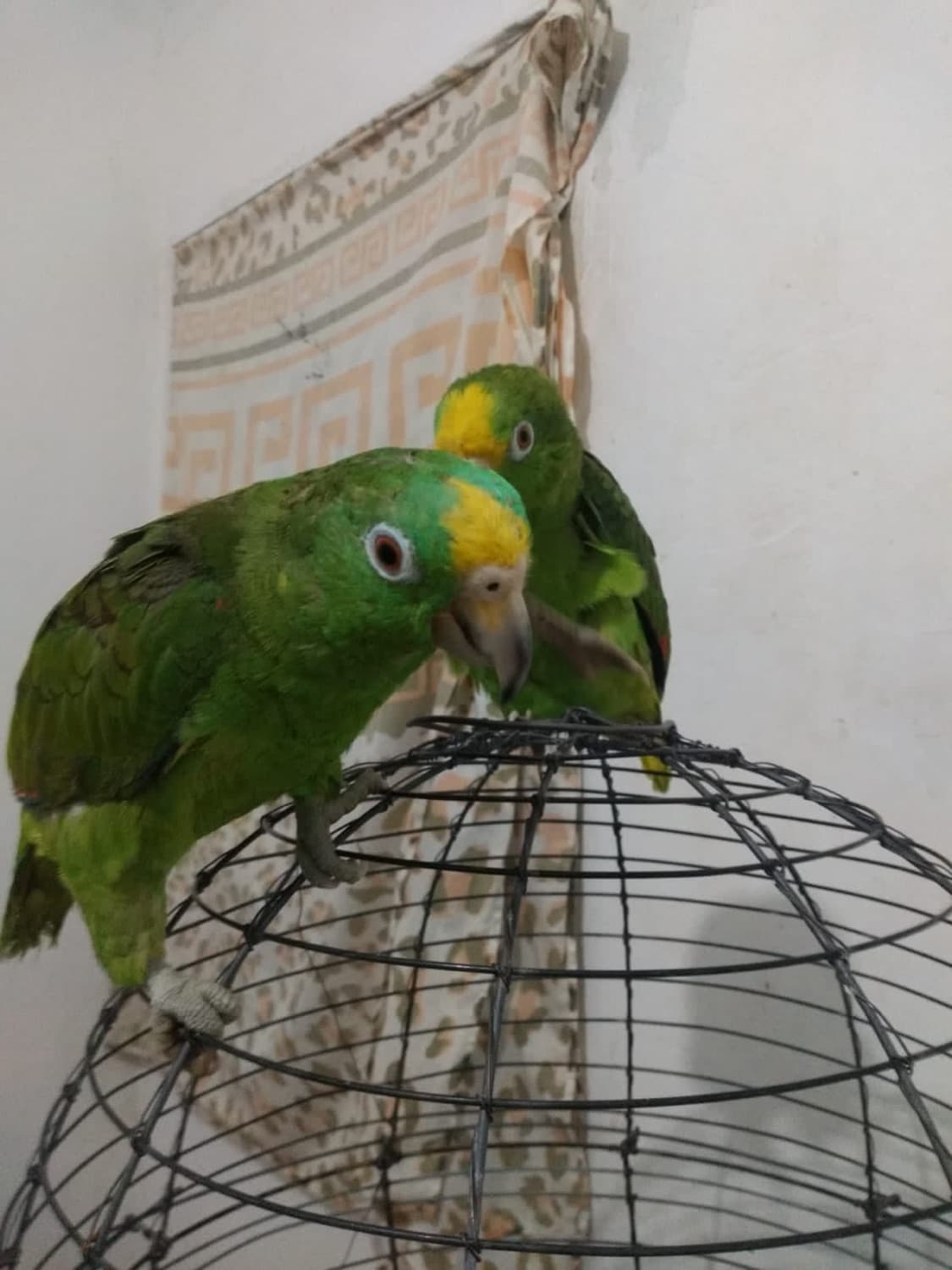
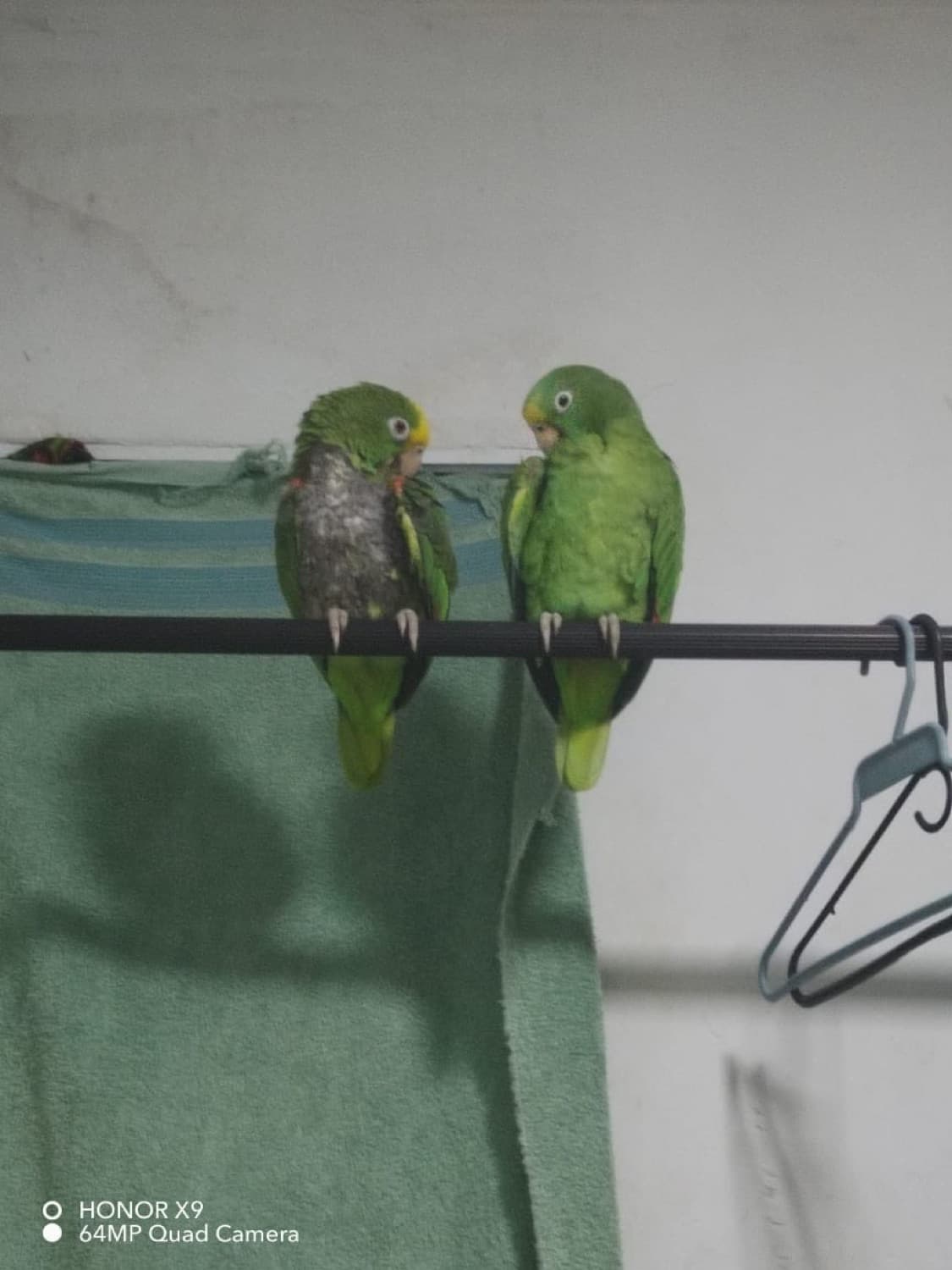
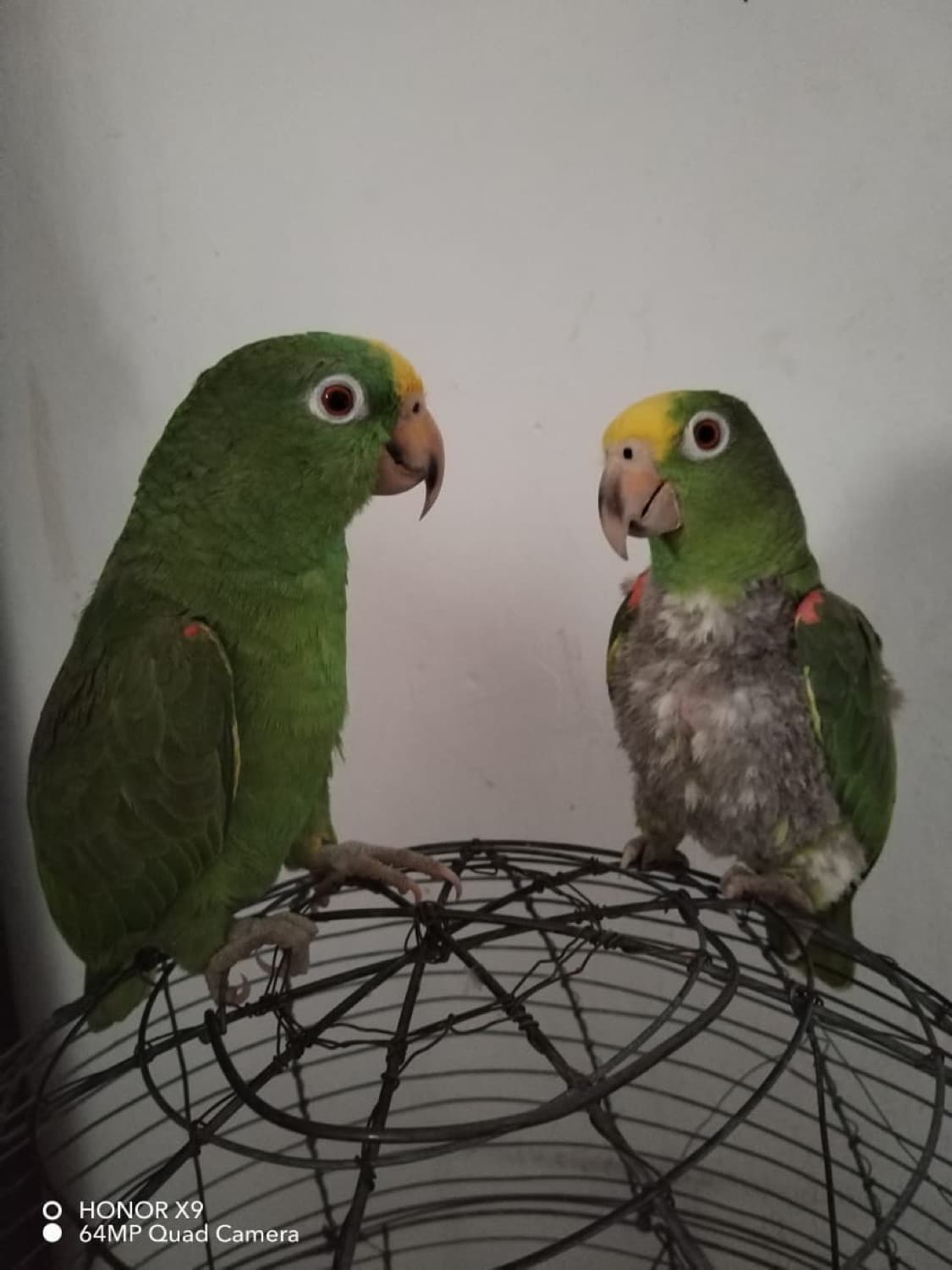
The decision to let them go
Over time, keeping them caged began to weigh on the person who cared for them. He told the foundation that seeing them in the cage saddened him, and that every time he went out and saw free birds crossing the sky, a guilt that was hard to carry would wash over him. To that was added the realization that keeping wildlife at home is illegal, just as the authorities were beginning to make more seizures.
One day he found Fundación Loros on Instagram. He saw a photo of a parrot perched, free, on a tree, and thought: «that''s where mine should be». He wrote to us to ask how to surrender them, and we explained the right path.
Surrendering a wild animal must always be done before the environmental authorities (see how here), never directly to a foundation. So he took Mateo and Diego himself, by taxi, to Barranquilla Verde, the environmental authority of the District of Barranquilla. Barranquilla Verde, in coordination with Cardique, arranged the transfer of the parrots —and other animals— to Fundación Loros. It was not abandonment, but an act of love: choosing the parrots'' wellbeing over his own company.
The story didn't end there. The family that kept them has returned to the reserve several times, to plant trees and donate food for the parrots now in recovery. From keeping them caged, they became allies of their freedom.
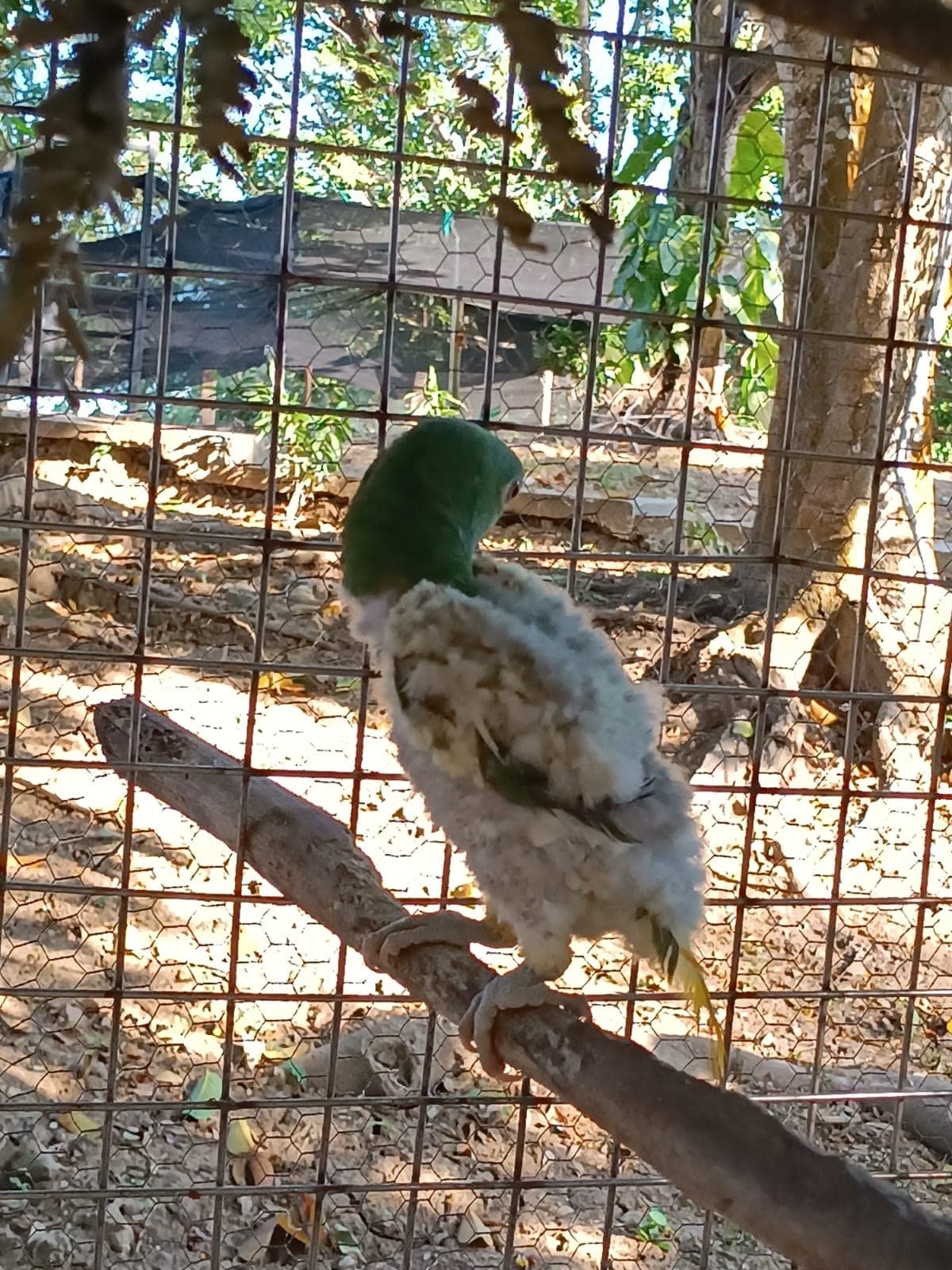
01 · Arrival · November 2023
A body marked by captivity
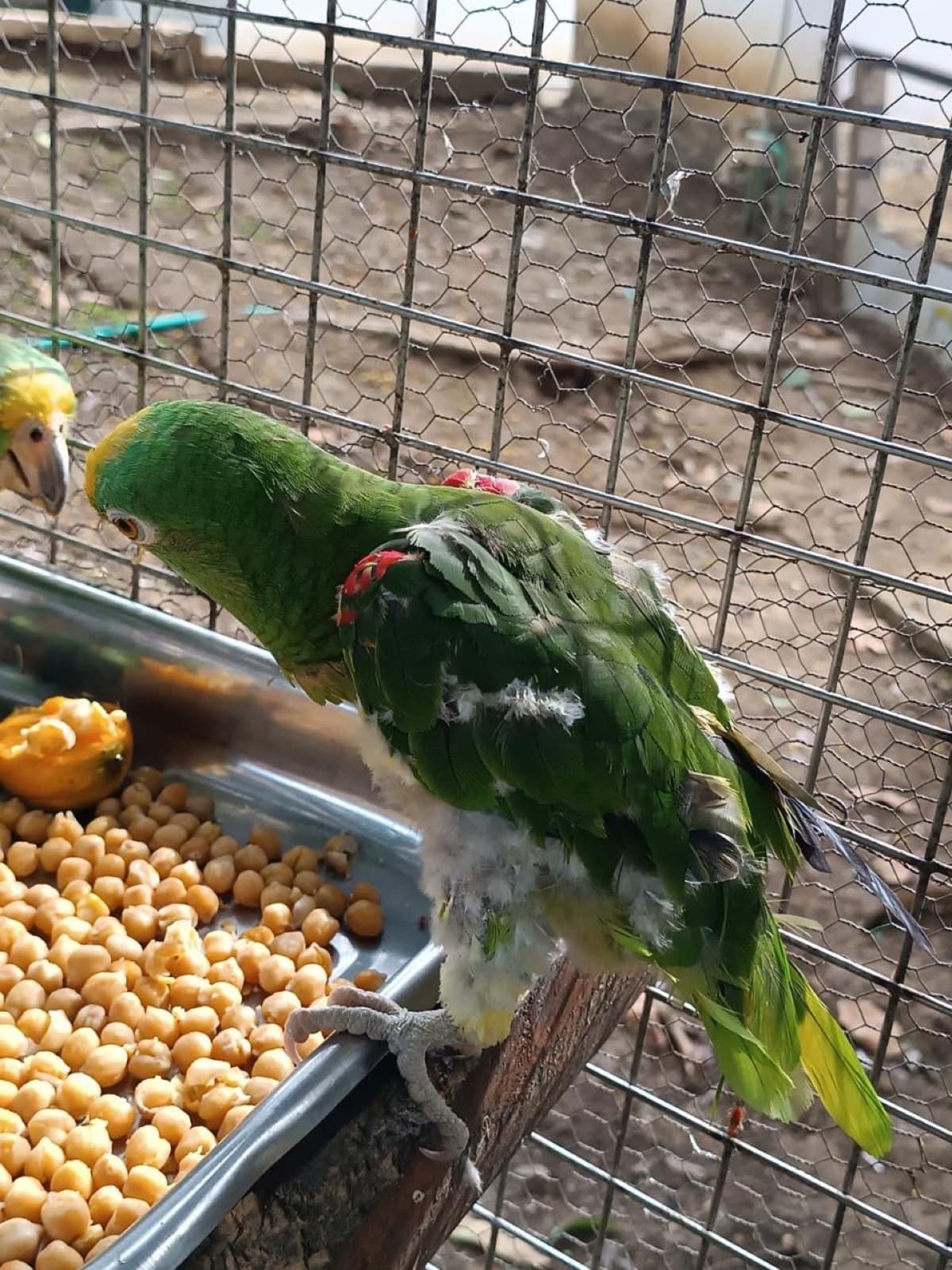
His condition was worrying. He had lost much of his plumage to a severe case of feather-plucking.
He had plucked out every feather he could reach: his body was covered mostly in down and he could not fly at all.
As soon as he arrived, Mateo went through a quarantine alongside the parrots surrendered with him. It is a mandatory step in any rehabilitation process: it rules out contagious diseases, confirms that the bird is well, and prevents any risk of infection for the rest of the aviary.
As the days passed, Mateo grew stronger, and none of the parrots that came in with him got worse.
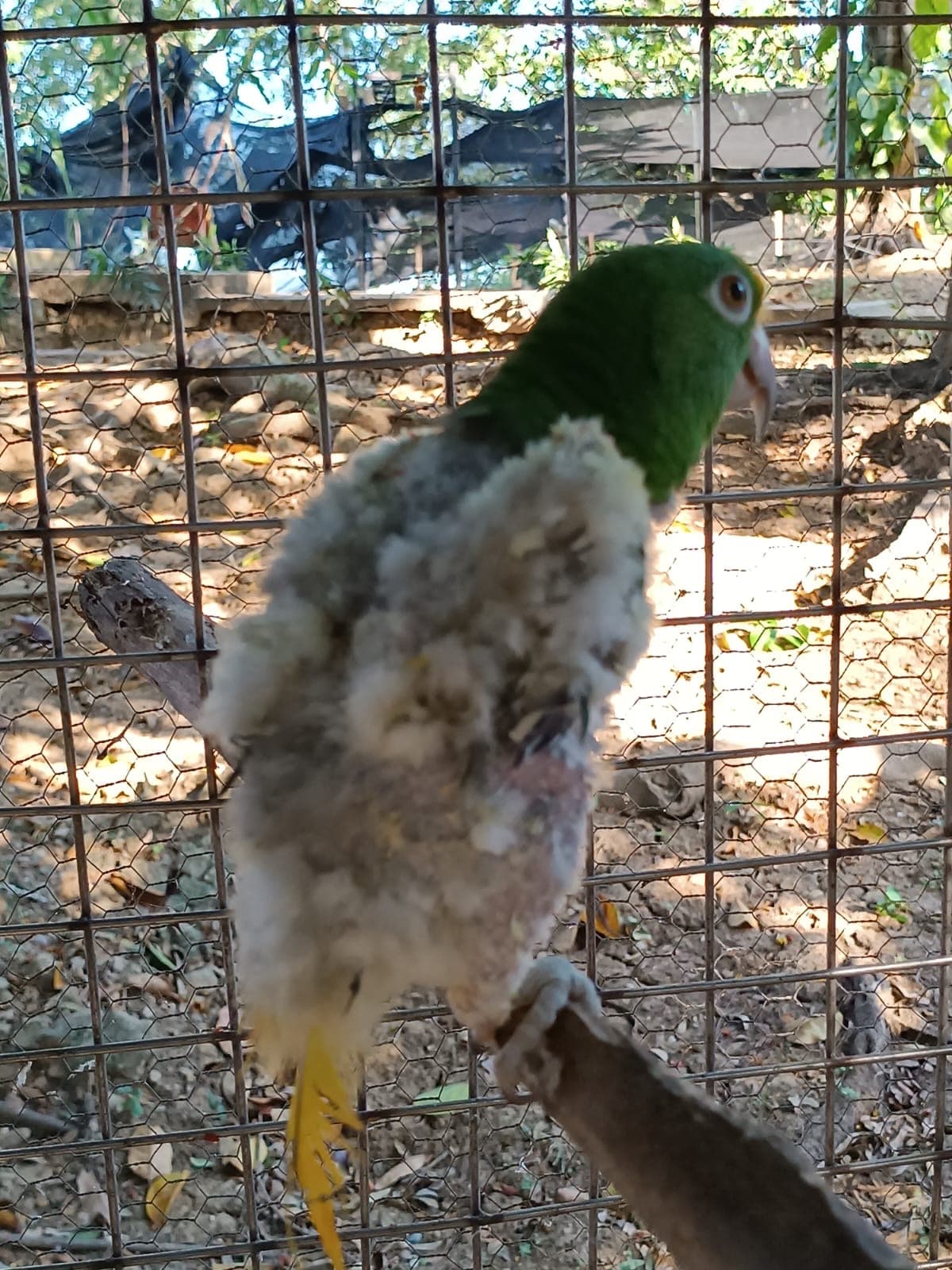
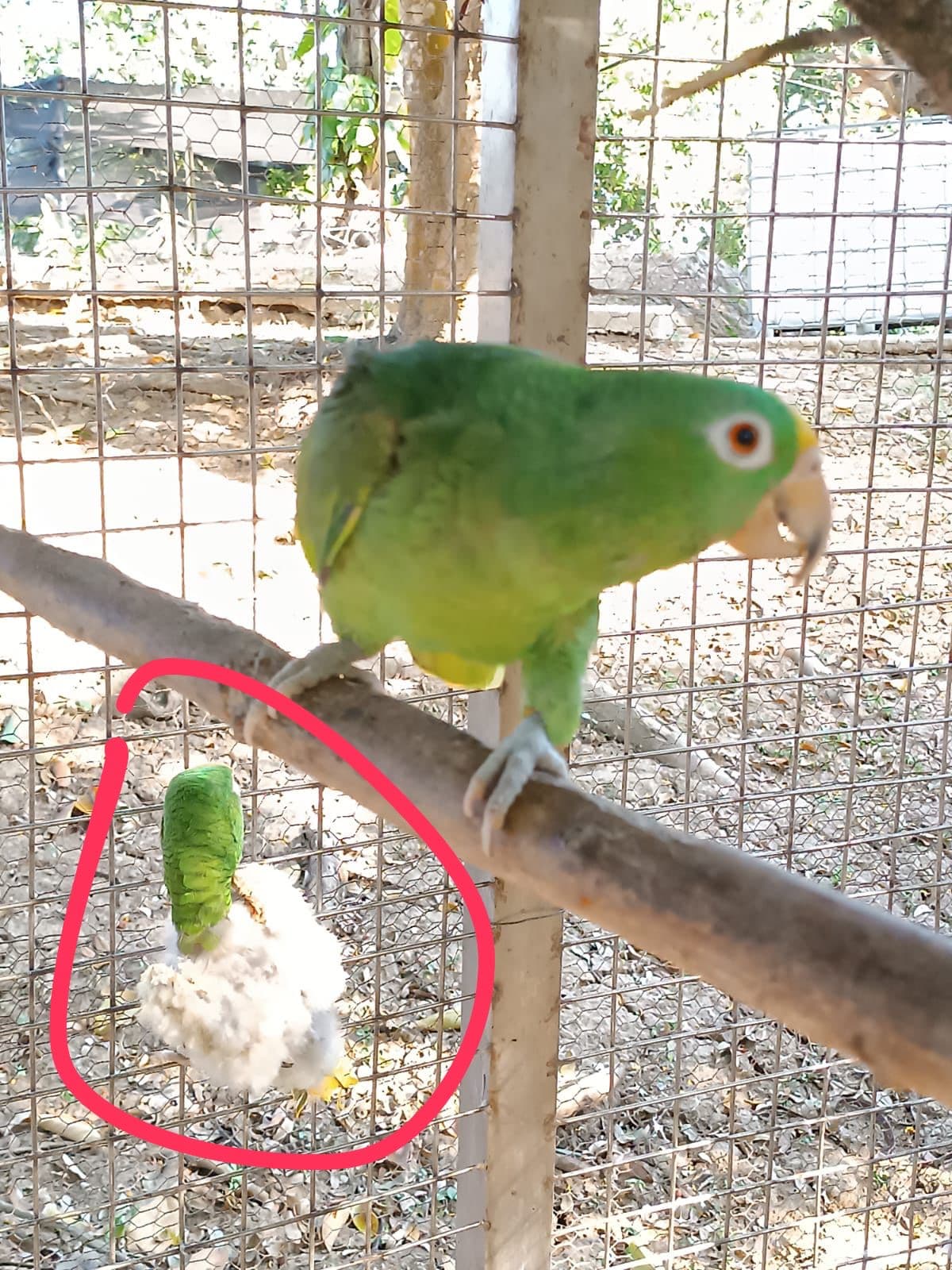
Feather-plucking: a complex behaviour
The diagnosis was feather-plucking. It rarely has a single cause: usually several act at the same time. The most likely include:
- sensory deprivation —the boredom of small cages with no enrichment;
- environmental stress from noise, poor lighting or a dirty cage;
- sexual frustration and the loss of social stimulation when the parrot lives alone;
- the bird's own skin or nutritional problems;
- and infectious causes, such as viruses or dermatitis —bacterial, fungal or mite-related.
Telling these causes apart is not something that can be done by eye. That is why both the diagnosis and the treatment must always be in the hands of a specialist veterinarian; when the condition is severe, the bird may even need medication.
In Mateo's case no medication was needed. His history pointed to a combination of factors: the lack of environmental enrichment —years on a perch, with nothing to do— and, very likely, sexual frustration. As the person who cared for him recounted, the plucking began when a courtship behaviour awoke in him with no possible outlet. The answer was not physical, but surrounding him with an environment full of stimulation.
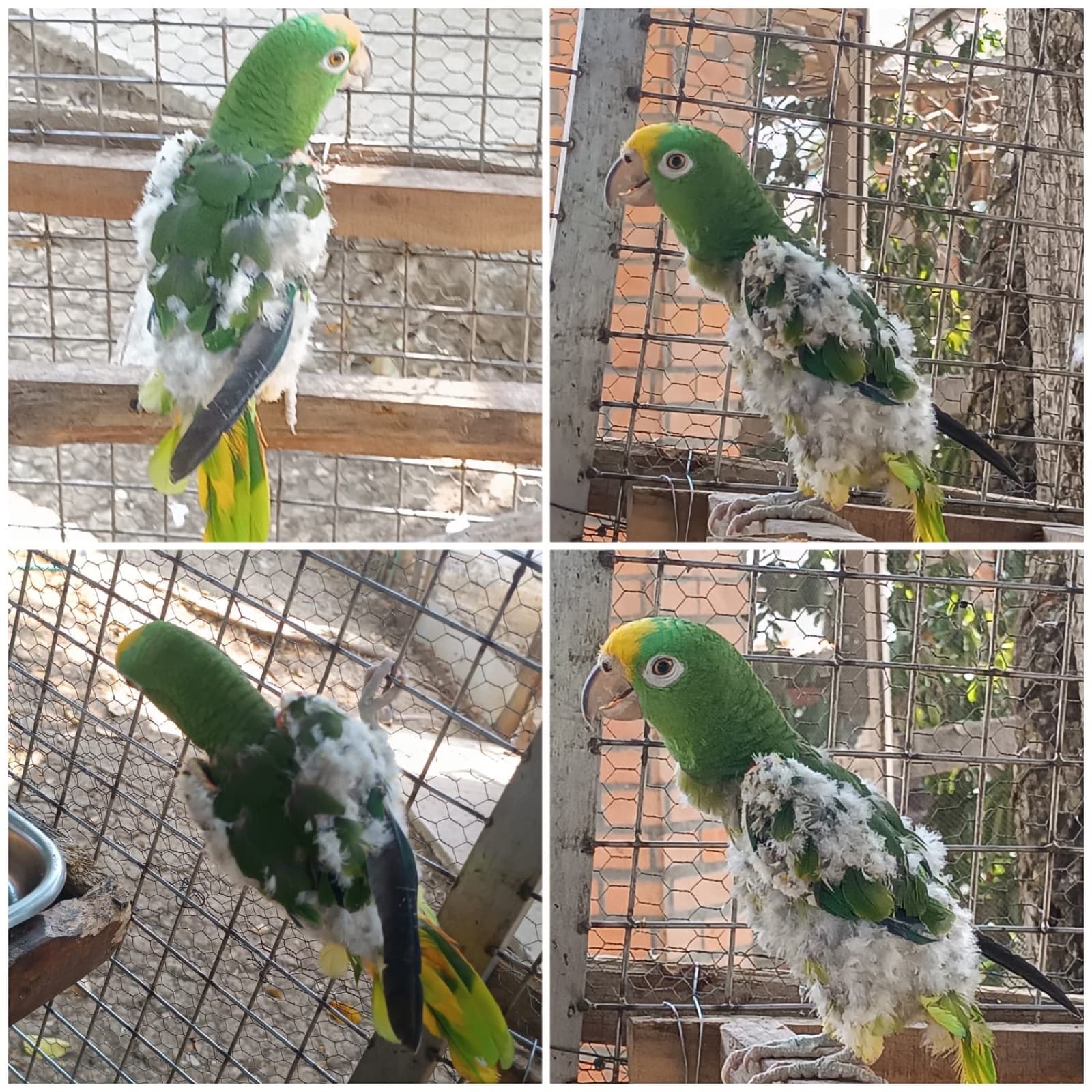
02 · Treatment · 2024–2025
Giving back what captivity took
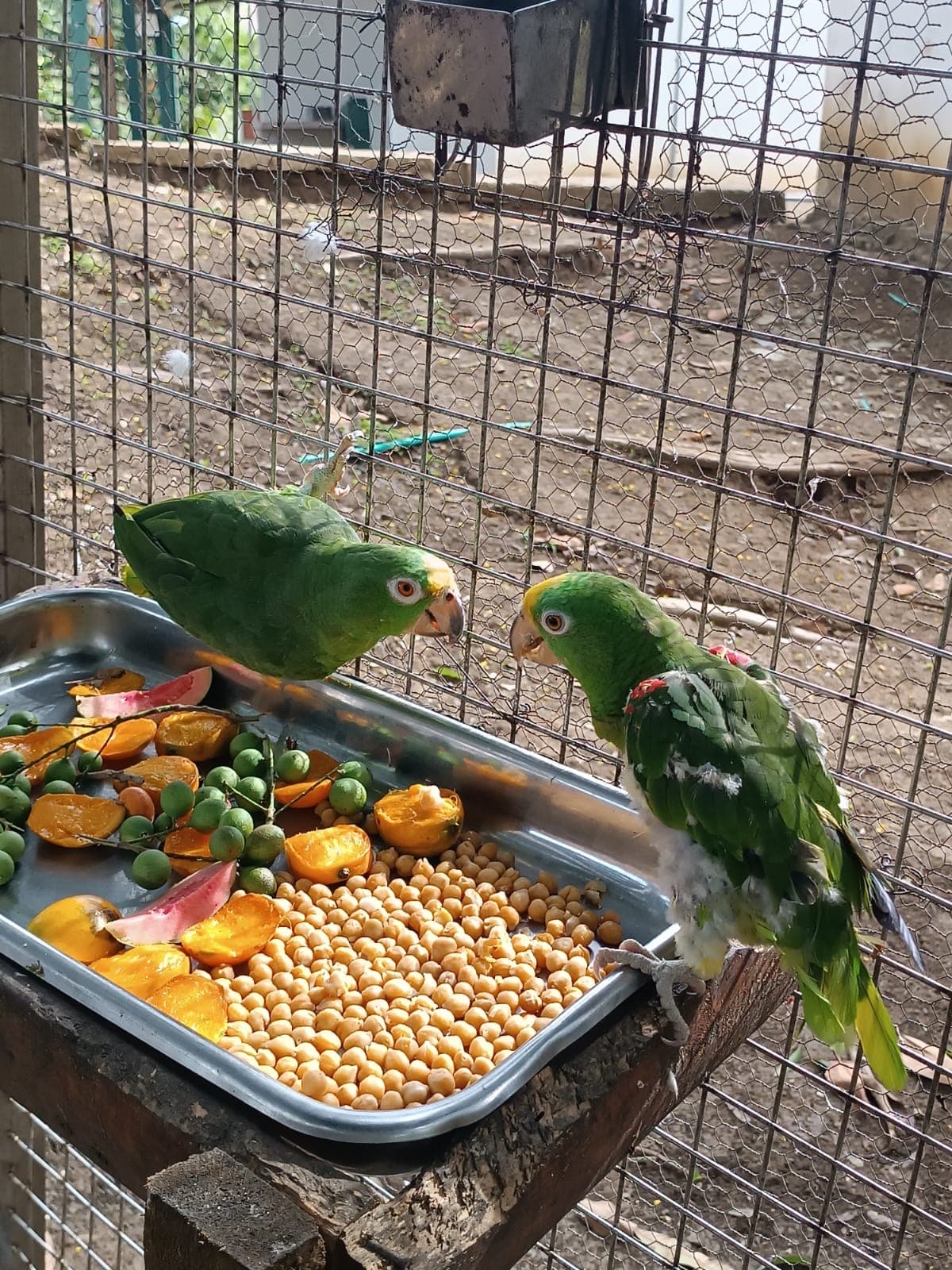
The treatment meant giving back what he had lost over the years: proper food, environmental enrichment, access to sun and rain, veterinary supervision, a calm natural setting and, above all, the company of other parrots.
Because he could not fly during this first stage, his surroundings were designed to protect him: he shared space only with calm parrots or others that also could not fly, to avoid fights in which he would be at a disadvantage; and he was kept in low aviaries, since without feathers a fall from height could be fatal.
Over the months a slow but steady transformation began. New feathers appeared where there had only been skin and down. He regained strength, confidence and natural skills, gradually joining a stable social group.
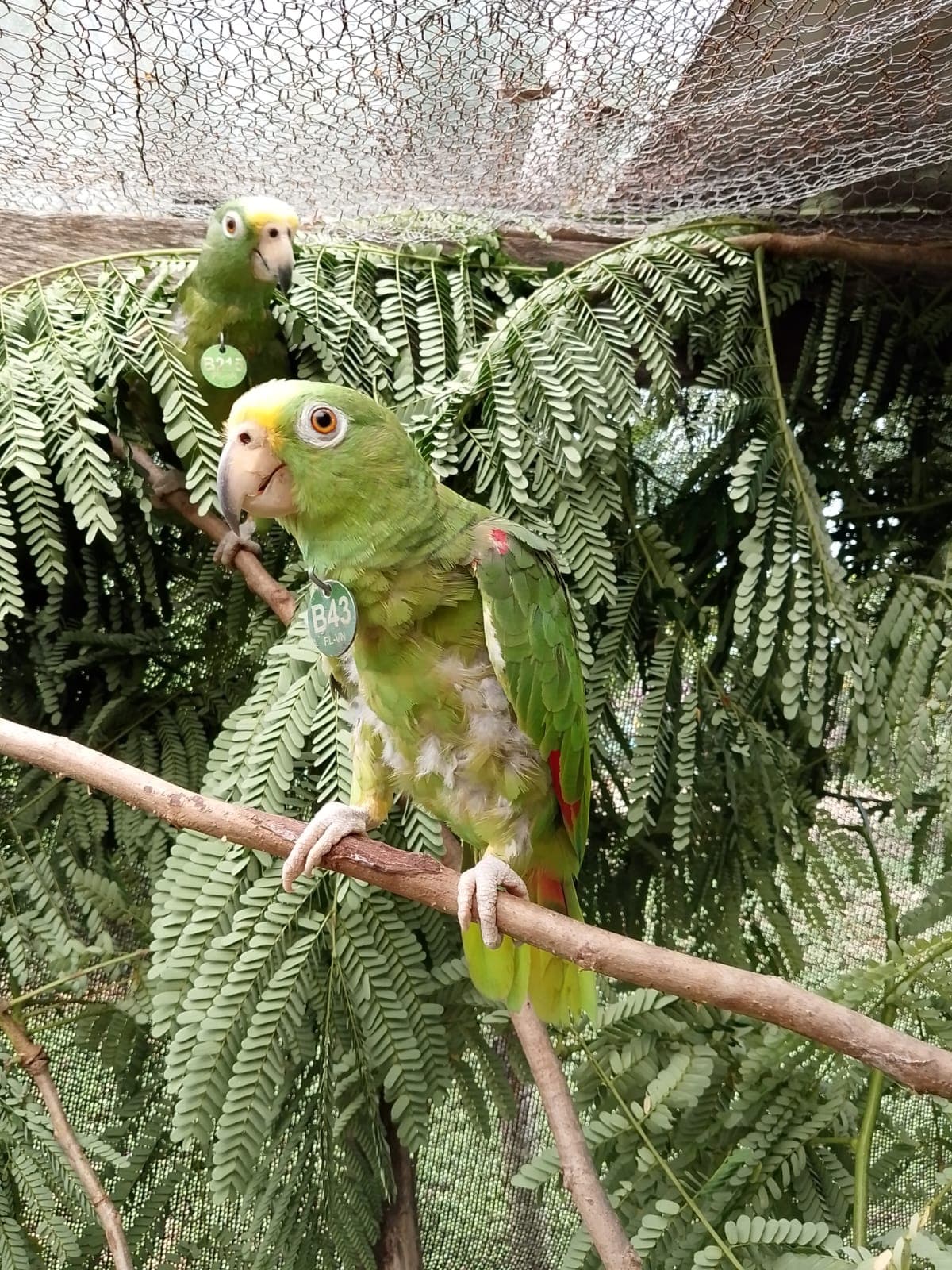
About a year and a half after his arrival, with enough plumage by then, he was moved to an aviary with other fully feathered parrots to begin his flight training, always under the team's monitoring.
The keys to his recovery
Three pillars for a parrot to heal
Proper nutrition
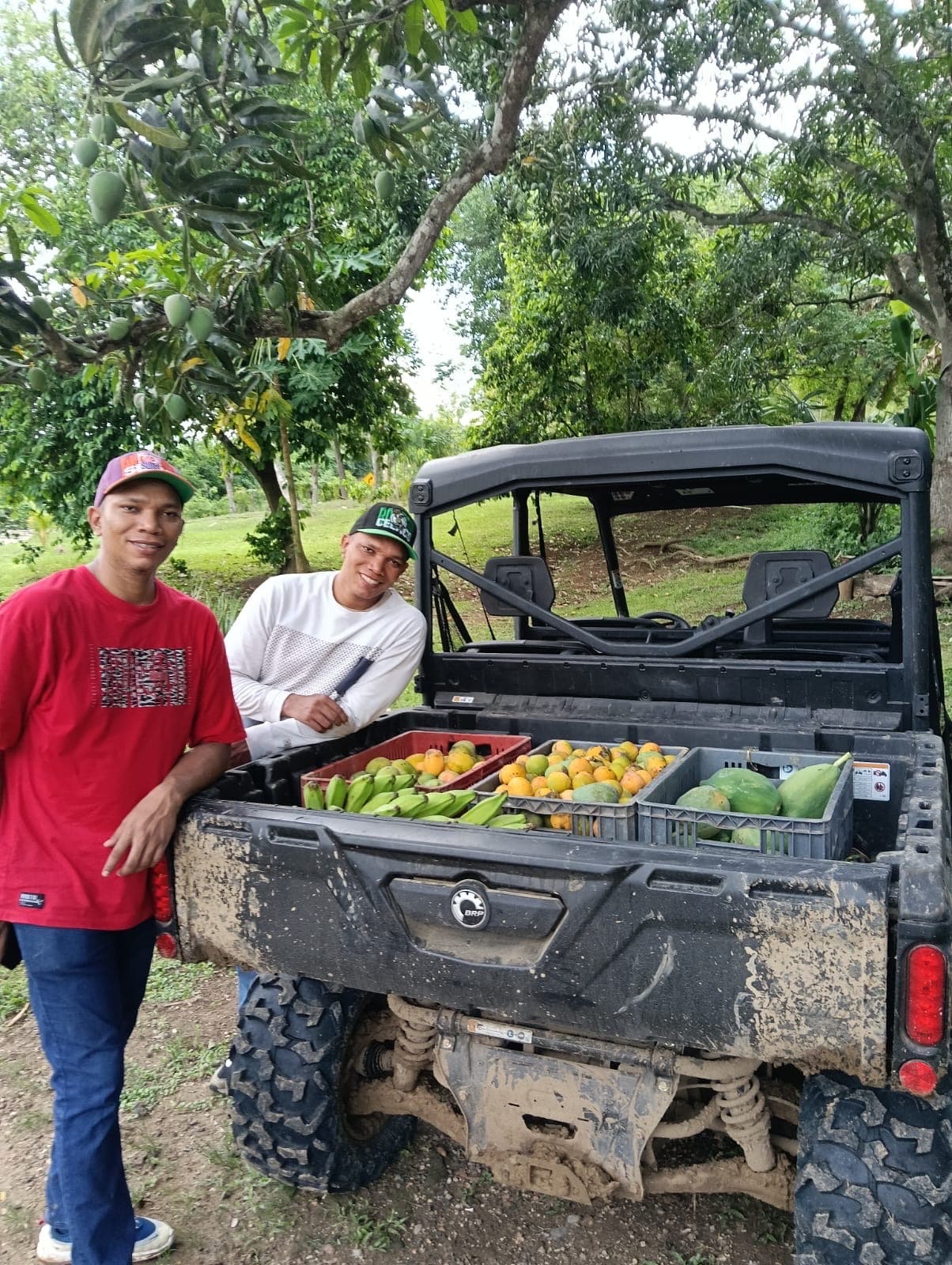
A varied diet, as close as possible to a wild one: vegetables and leafy greens, legumes and fresh fruit, with seeds always in minimal proportion. The closer it is to what they would eat in the forest, the better.
Environmental enrichment
A space full of branches, leaves and fruit to bite and explore. Movement and curiosity keep body and mind active.
The company of his own kind
Most important of all: being surrounded by other parrots, ideally at his same level and of his own species. Parrots learn and recover alongside their peers.
Eating like in the forest
In the wild, parrots feed mostly on berries, flowers, leaves, seeds and fruit. In captivity, by contrast, the diet is usually poor, with an excess of carbohydrates and fats a bird would never find in nature.
That is why a good diet in captivity must be varied: vegetables and leafy greens (carrot, spinach, corn, celery, bell pepper, squash with its seeds, cucumber), legumes (cooked chickpeas, lentils), fruit (papaya, mango, guava, plum, mamoncillo) and, in a smaller proportion, seeds (millet, flax, sunflower).
Sunflower seeds must be given in minimal amounts and never as the main food: in excess they are very harmful to the bird.
At Fundación Loros we are studying what parrots eat in their natural habitat to bring their diet ever closer to a wild one. You can see that work in our wild-foods study.
Food is only one piece: rehabilitation is a complete process and, as such, must always be carried out by professionals.
On video · The treatment
Wings, regained
03 · Freedom · June 18, 2026
Back to where he belongs
Today, June 18, 2026, more than two and a half years after his arrival, Mateo begins a new chapter.
Although he still carries some visible marks of the feather-plucking, he has regained fully functional flight, keeps stable social bonds with other parrots and shows the calm behavior suited to life in the wild. For these reasons, he officially begins his return to nature.
Outside, his parrot friends are waiting — the ones who have accompanied him over these two years; thanks to them his return will be easier, because parrots learn from their peers. The release station has feeders, water and rangers who monitor his progress to make sure he stays well.
Mateo's return was made possible by the coordinated work of three institutions: Barranquilla Verde, which received his voluntary surrender; CARDIQUE, the environmental authority that authorizes and oversees the process; and Fundación Loros, which rehabilitated him. Together they gave him a second chance.
On video
The moment of flight
The transformation
From how he arrived to who he is today
More than two and a half years separate one image from the other.
Nov 2023 – Jun 2026
In rehabilitation
More than two and a half years
0
Medications
Only care, environment and company
B43
Mateo
Surrendered with his brother, Nov 2023
Solitude, too, leaves deep wounds.
Parrots are deeply social animals: they live in flocks, communicate and learn from one another. That is why captivity and isolation are the worst thing that can happen to a parrot, and that stress does not stay emotional — it takes a toll on the body: feather-plucking, a weakened immune system, the loss of flight, as we saw in Mateo. His story reminds us that parrots, and all wildlife, belong in freedom: in the forests they should never have left.
The story continues
The start of reintegration is not the end of the road: it is the first step toward freedom. From now on, Mateo and his companions can explore farther and farther, but with a safety net around them: feeders and feeding stations, attentive caretakers and continuous monitoring.
The full reintegration of an adult parrot that spent many years in captivity is a slow process: regaining ecological skills —recognizing wild foods, reading the surroundings, moving with the flock— takes time, and we will accompany every stage of that learning.
Mateo made it. Another yellow-crowned amazon is still waiting.
His recovery took months of proper food, enrichment, veterinary care and monitoring. By sponsoring a yellow-crowned amazon you sustain that same work — and open the way home for another parrot.
Responsible rehabilitation
Wildlife rehabilitation is work for professionals
Every rehabilitation process must be carried out by professionals. If you have a wild animal and wish to surrender it to the environmental authorities, we provide the information you need to do it properly; and if you would like to know how we work, we invite you to read about our method.
Environmental oversight and compliance
The logo identifies the environmental authority that exercises oversight; its use does not imply sponsorship or partnership.