Participa en persona · a 35 km de Cartagena
Ven a conocer el santuario
Tres formas de vivir la reserva, para tres tipos de visitante. Todas con cita previa — no recibimos visitas sin programación.
Todas las visitas son programadas. No recibimos personas sin cita previa: escríbenos antes de venir para coordinar la fecha.
Un santuario que trabaja, no un parque
La Reserva Natural Los Loros es un centro de conservación en funcionamiento: rescatamos, rehabilitamos y liberamos loros y guacamayas víctimas del tráfico, y restauramos el bosque seco tropical. Abrimos las puertas porque conocer el trabajo de cerca cambia la relación de las personas con la fauna — pero siempre con cita previa, para no interferir con la rutina de los animales y del equipo.
Estas son las formas de visitarnos. Elige la que va contigo.
Para residentes en Colombia · en español
Experiencias para la comunidad local
Planes cercanos para conocer de cerca a los loros y guacamayas que devolvimos a la libertad. En español, en grupo.
Solo para residentes en Colombia. Para inscribirte necesitas tu número de cédula.
Alimenta a los loros y guacamayas
Sin costo de inscripción
Tu aporte es la fruta o las semillas que traes. Una hora dándoles de comer junto al equipo — ideal para ir en familia. Con cita previa.
Agenda tu visita →Caminata con picnic
Desde $75.000 por persona
Caminata guiada por el bosque seco tropical con parada de frutas a mitad del camino. Tres niveles, para grupos de 7 a 40 personas. Con cita previa.
Agenda tu visita →Caminata en familia
$50.000 por adulto · niños $40.000
Dos horas para ir con los niños (desde los 2 años): preparan la comida de monos y loros, caminan con un guía por el bosque seco y siembran árboles. De lunes a sábado, de 9:00 a 11:00 a. m.
Agenda tu visita →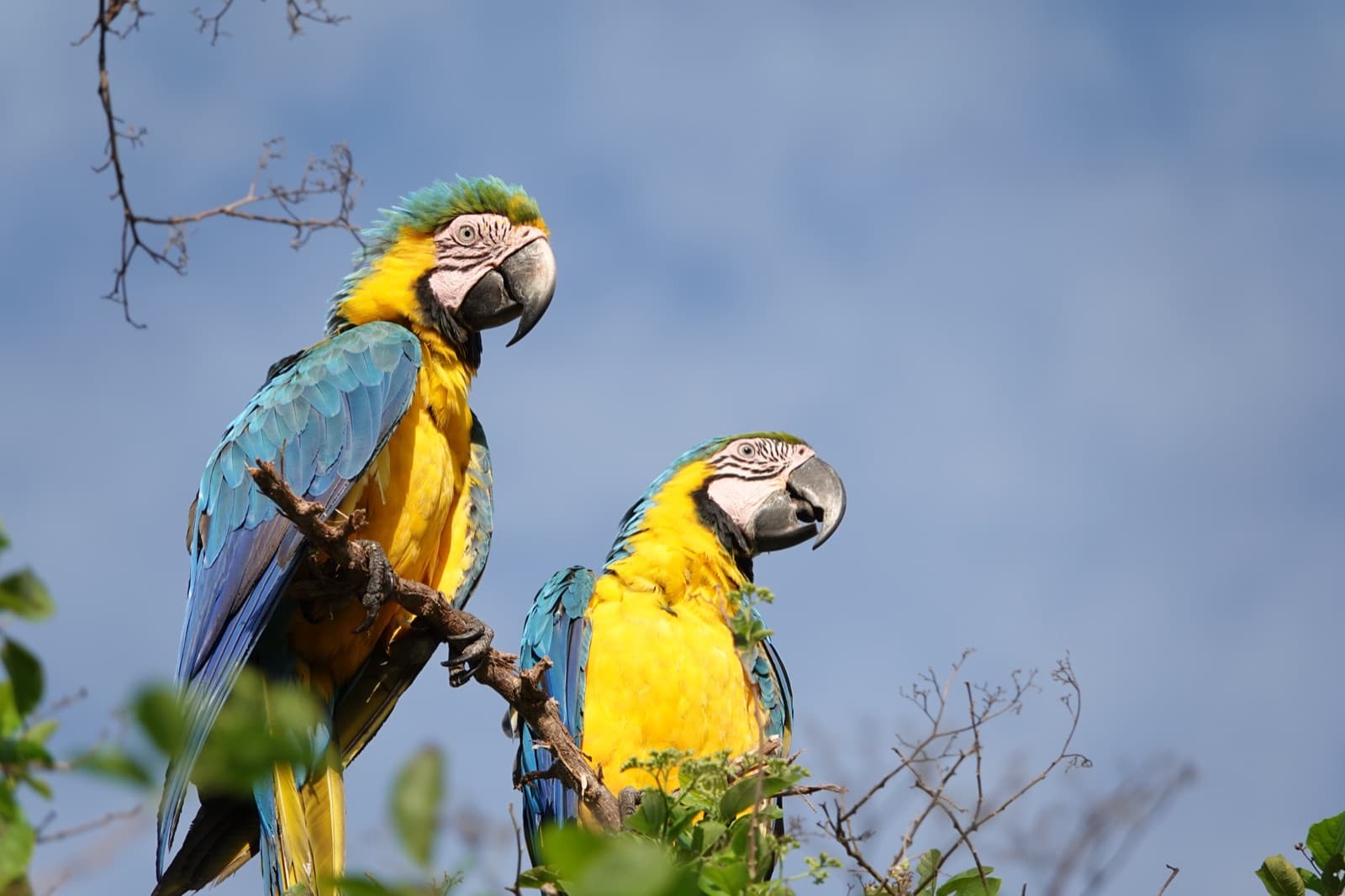
Para empresas
Voluntariadoscorporativos
Un día de siembra de árboles nativos y voluntariado con las aves rescatadas para tu equipo. Team building con impacto real, a una hora de Cartagena.
Para grupos de 7 a 40 personas · desde $75.000 por persona. La fecha se coordina con la empresa.
Para colegios · salidas pedagógicas
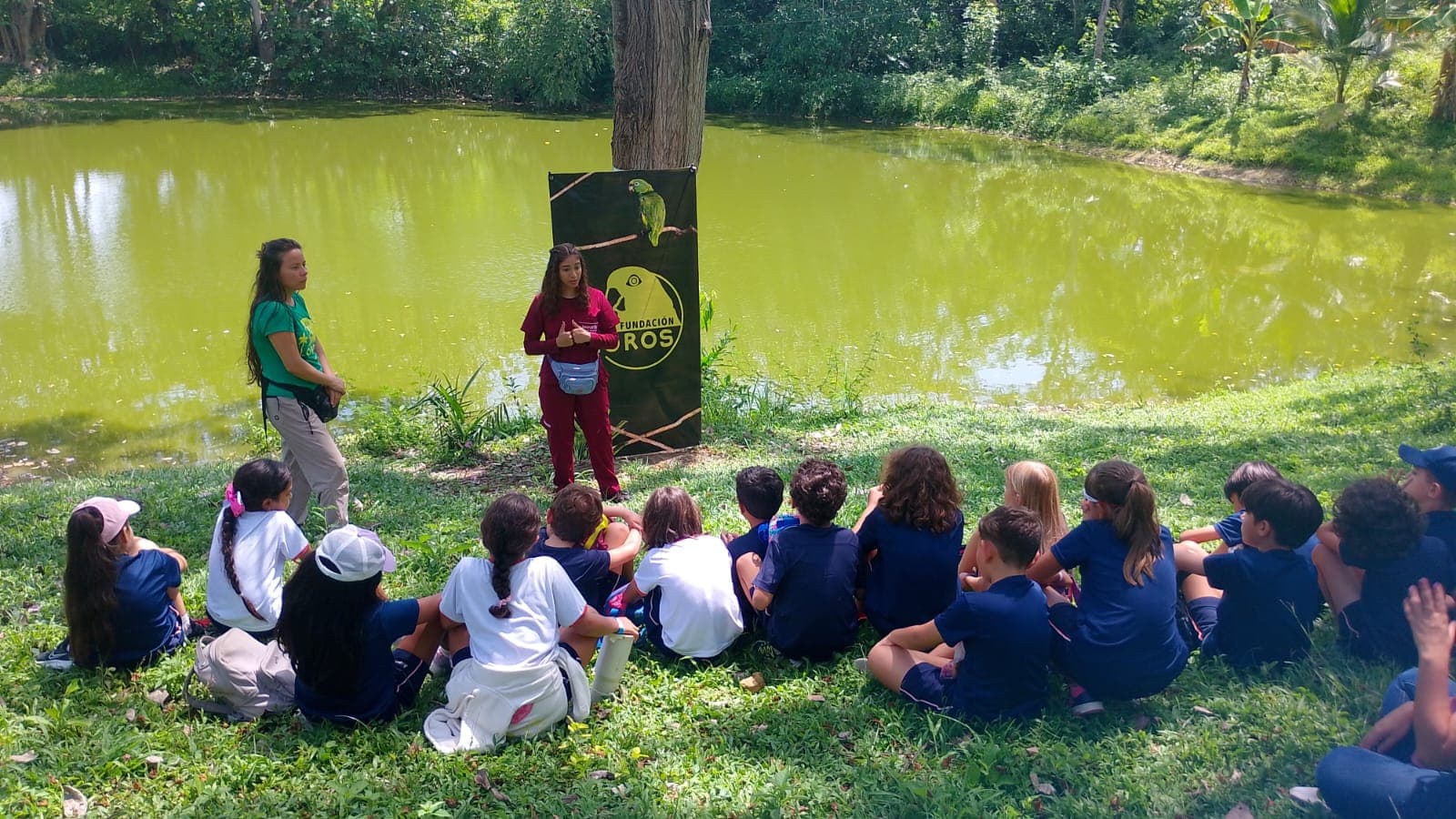
Salidas pedagógicaspara colegios
Una jornada de conservación con las manos para tus estudiantes: siembran árboles nativos, alimentan loros y guacamayas rescatados y recorren el bosque seco tropical. Aprender haciendo, a una hora de Cartagena.
Grupos de 20 a 40 estudiantes por turno · desde los 5 años · jornadas de 1,5 a 3 horas · $35.000 por estudiante. La fecha se coordina con el colegio.
Bilingües · grupos de 1 a 6 personas
Experienciasprivadas
Nuestras experiencias privadas y bilingües (español e inglés): avistamiento de aves, senderismo, cabalgatas, recorridos en ATV y más. Más largas, en grupos muy pequeños de 1 a 6 personas, con guía dedicado.
Son de alto valor a propósito: estas experiencias financian la operación y la sostenibilidad de la fundación. Cada reserva sostiene directamente la rehabilitación de las aves y el día a día del santuario — al vivirlas, haces posible todo lo demás.
Loros y guacamayas del bosque seco
Las especies que protegemos
Estos son los loros y guacamayas que habitan la reserva — muchos rescatados del tráfico ilegal y devueltos a la libertad. En cualquiera de las visitas vas a ver y escuchar a varios de ellos.
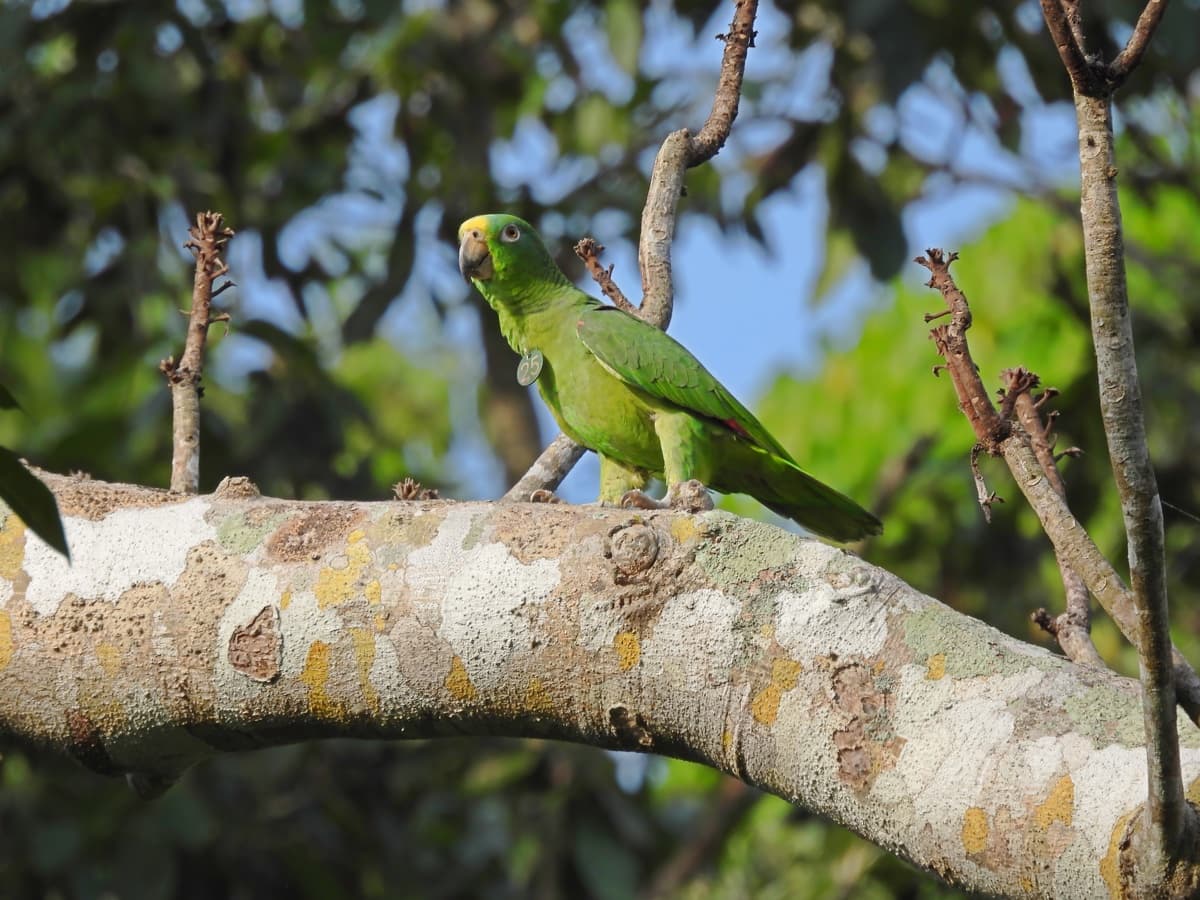
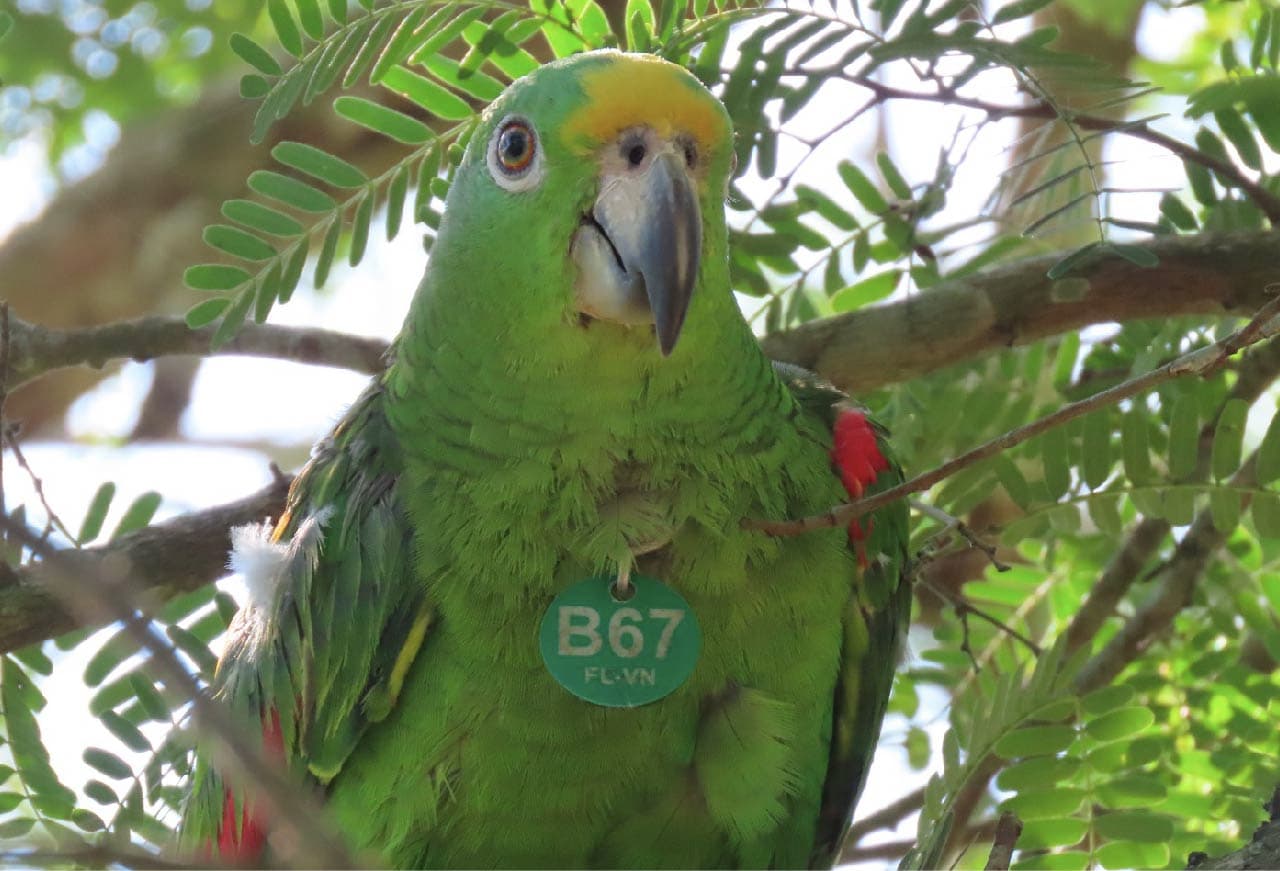
Amazona ochrocephala · Flagship species
Loro frentiamarillo
Our flagship species. A large green parrot with yellow forehead and crown and a red wing patch. The most-trafficked parrot in Colombia, and the reason Fundación Loros was founded: to give a second chance to individuals rescued from captivity and return breeding flocks to the tropical dry forest.
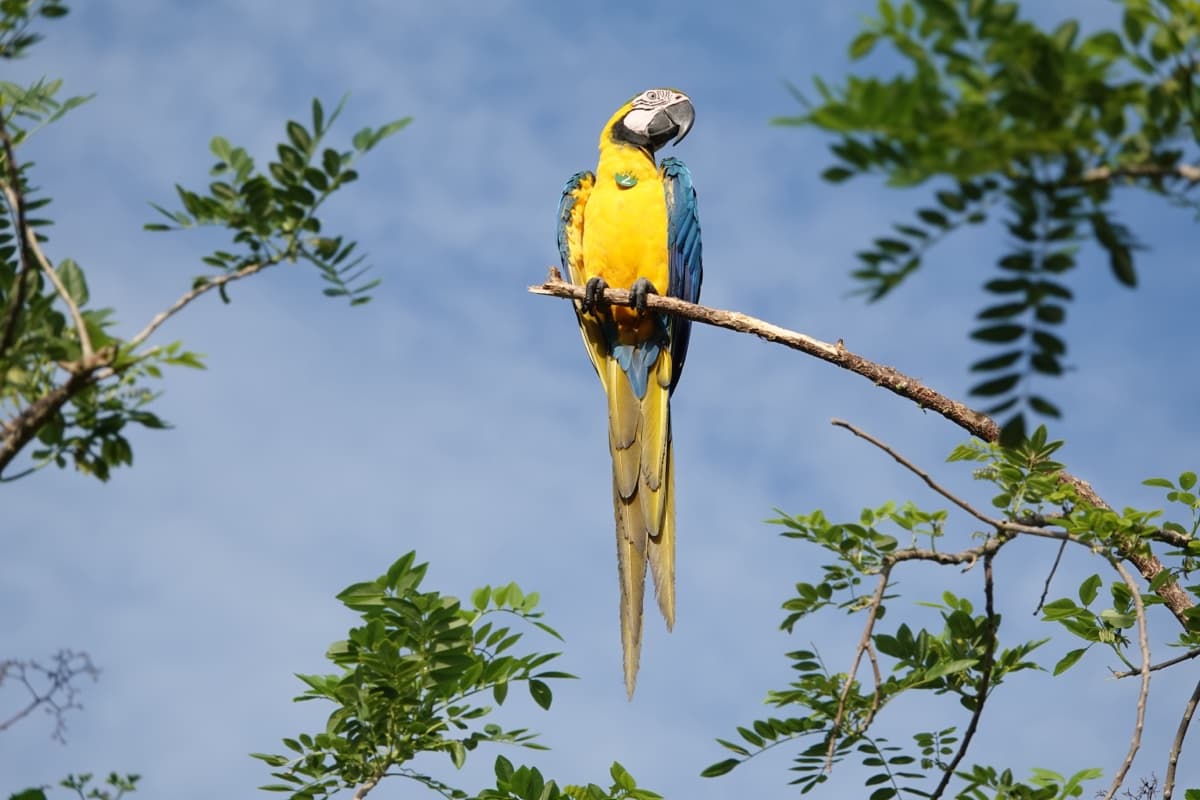
Ara ararauna
Guacamayo azul y amarillo
One of the most recognizable macaws in the tropics: deep blue back, yellow chest, and a white facial mask with black lines. They form stable pairs that fly together above the forest. Their diet centers on seeds, fruits, and palm nuts. In Colombia, populations have been pressed by the illegal pet trade.
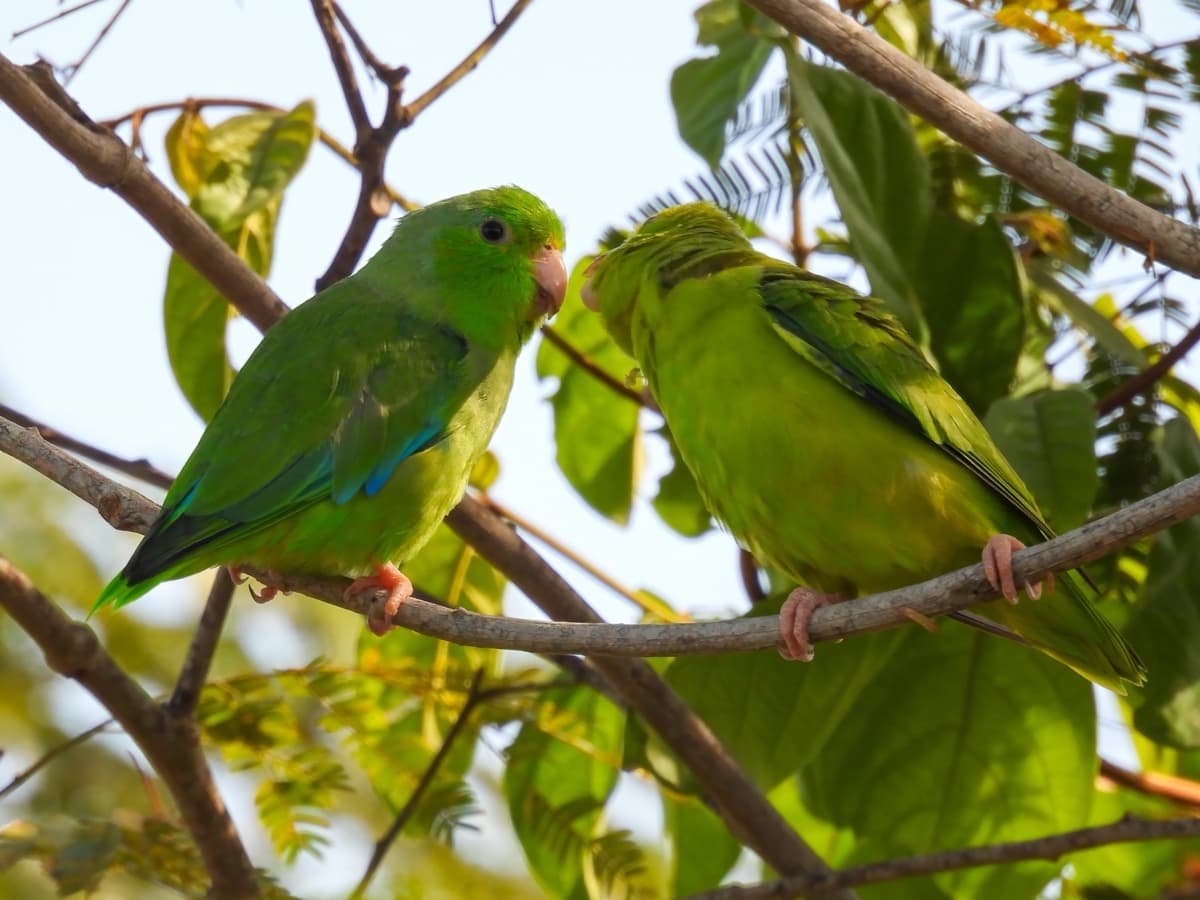
Forpus spengeli
Cotorrita aliturquesa
The smallest of Colombia's parrots — barely 12 cm. Bright green with a turquoise touch on the wings. Endemic to northern Colombia, it lives in small flocks in dry forests and open areas. Its size makes it a frequent target of the illegal trade; in the reserve we see them in flocks over the yarumo trees.
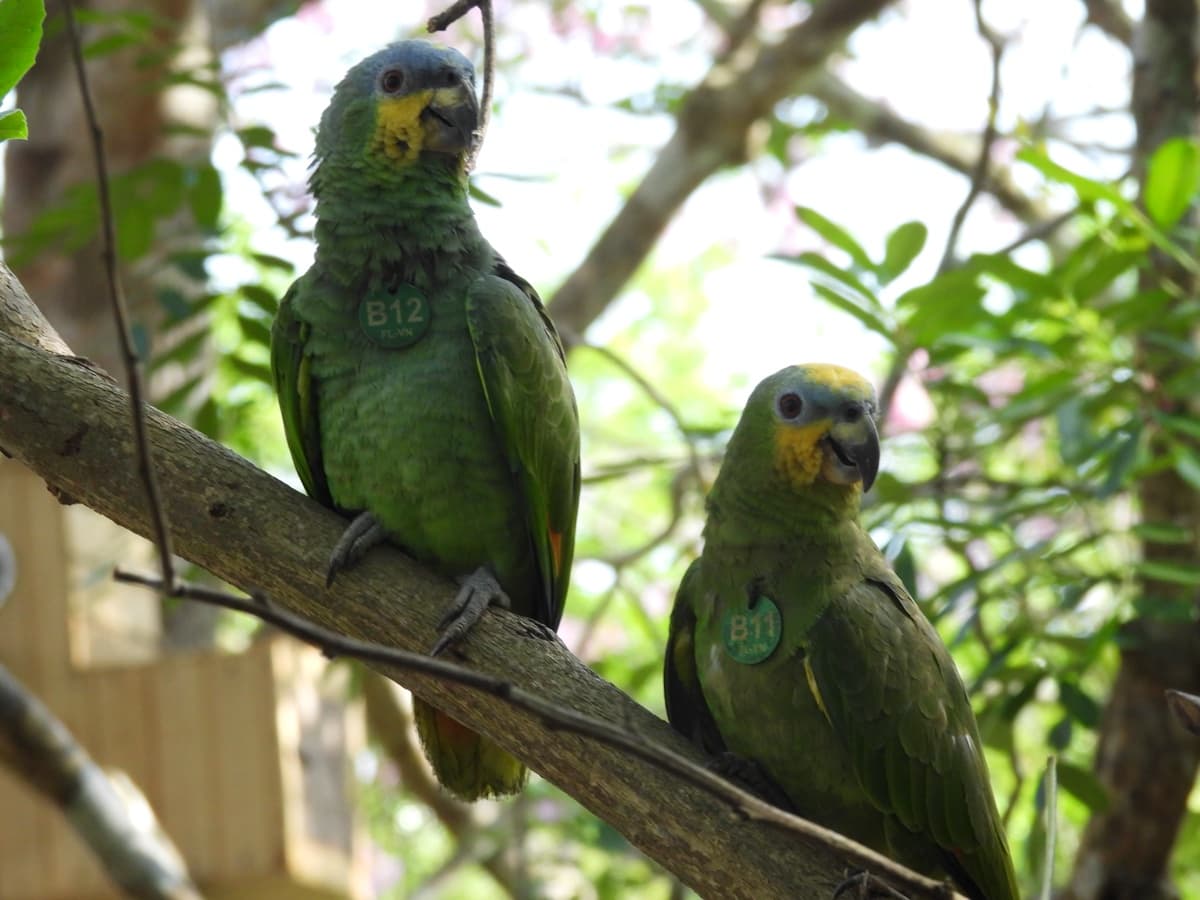
Amazona amazonica
Lora frentiazul
A common amazon of northern South America: green body, blue forehead, yellow cheeks and throat, and an orange wing patch that gives the species its name. Lives in pairs and noisy flocks in lowland forests. Frugivorous and granivorous. In the reserve, several individuals rescued from the illegal trade share spaces during rehabilitation.
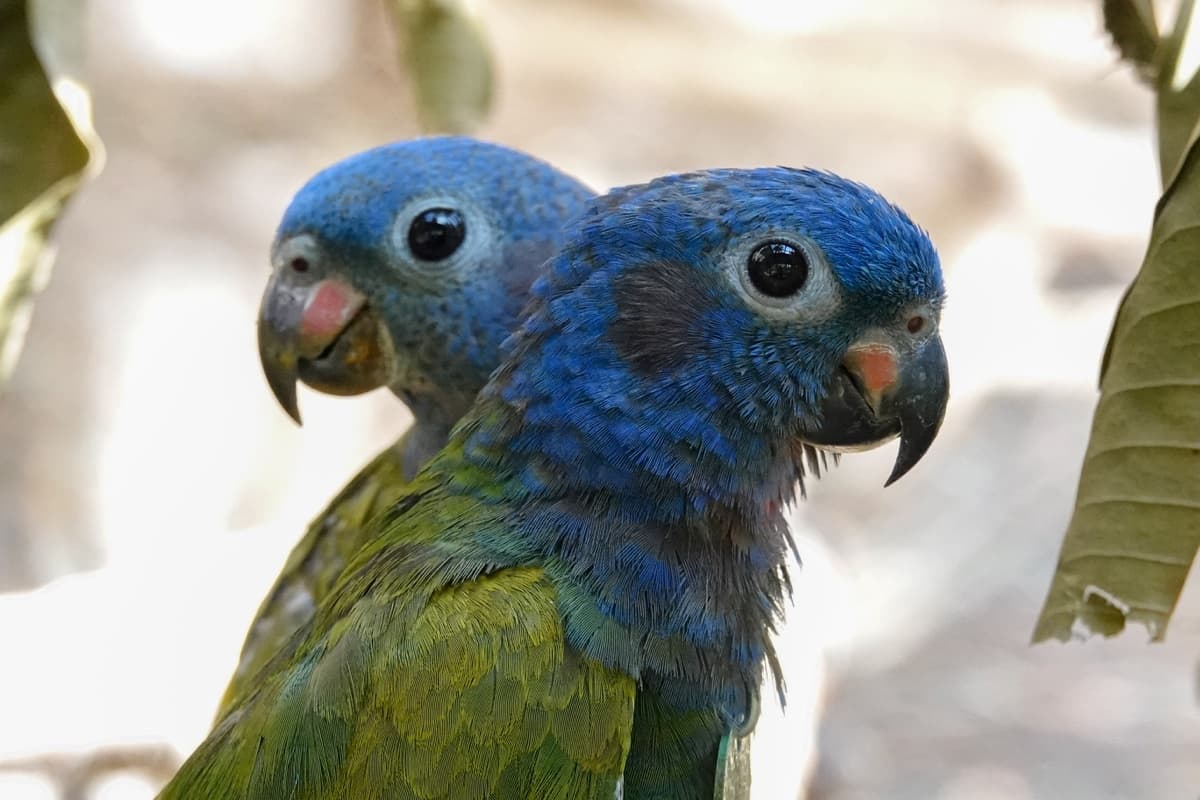
Pionus menstruus
Loro cabeciazul
Mid-sized parrot easily recognized by an entirely cobalt-blue head and chest over a green body, with a reddish bill. It flies in compact flocks at dawn and dusk. Frugivorous and granivorous; favors forest edges and areas with emergent trees. In Colombia it is a frequent target of the illegal trade because it readily learns sounds.
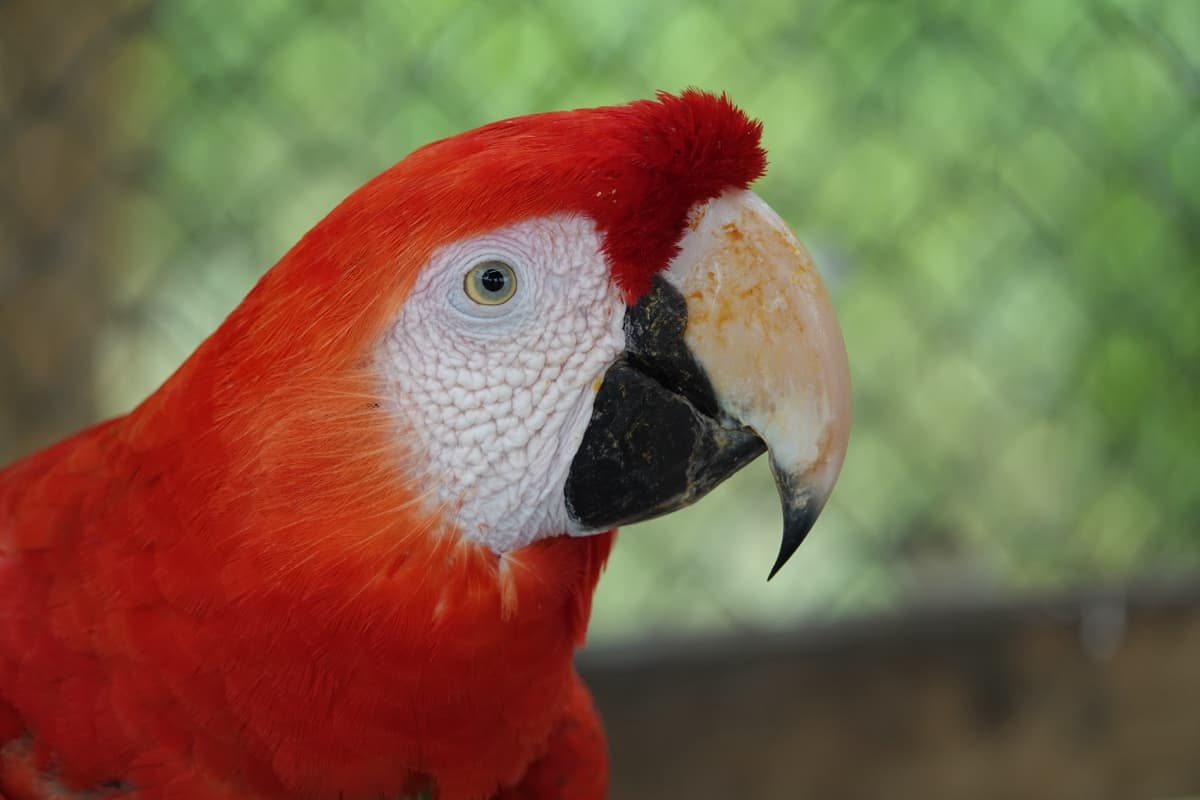
Ara macao
Guacamaya bandera
Known in Colombia as 'guacamaya bandera' because its red, yellow, and blue colors echo the national flag. Bare white facial skin furrowed by red feather lines and a powerful pale bill. They form lifelong pairs. They need huge trees and cavities to nest — their recovery depends on mature, connected forests like the reserve's.
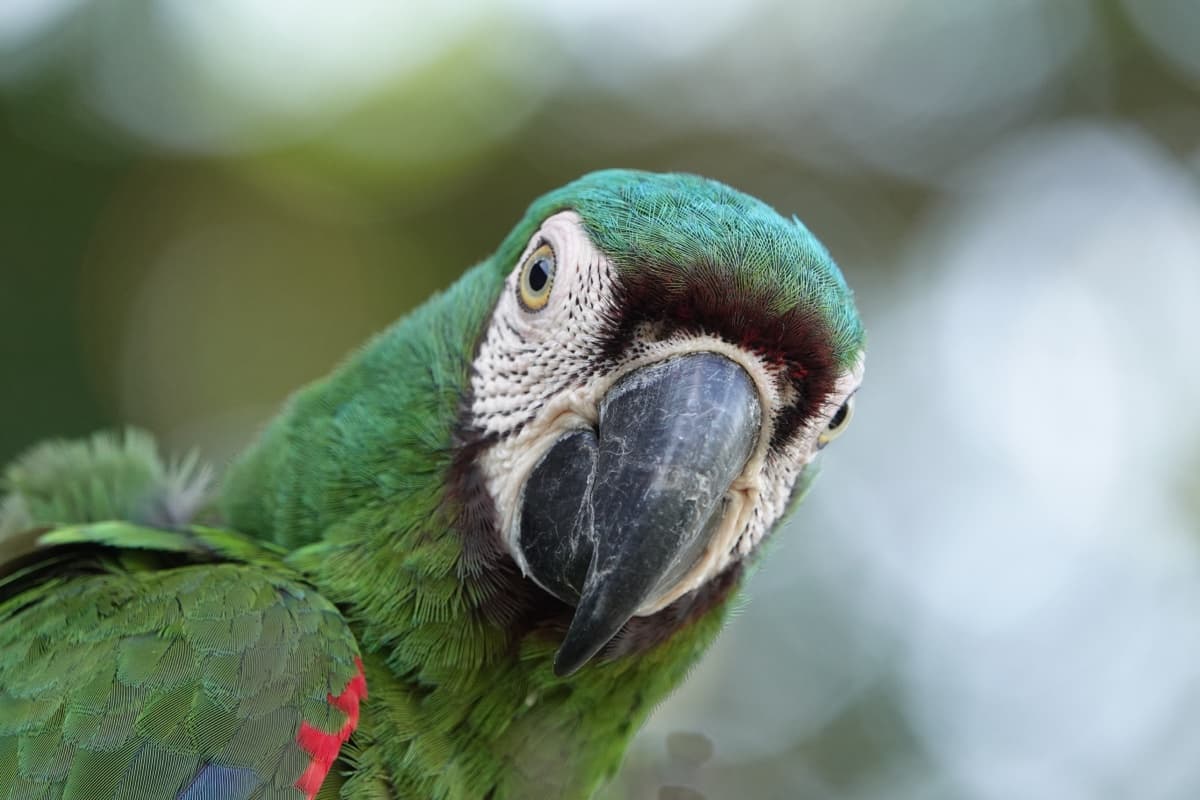
Ara severa
Guacamayo cariseco
A small macaw, mostly green, with chestnut forehead and cheeks and a flash of red beneath the wing. It flies in family flocks and perches in tall trees, where its sharp call announces its arrival. Frugivorous and granivorous. Though its population is stable, in the Caribbean region it is pressed by the illegal capture of chicks.
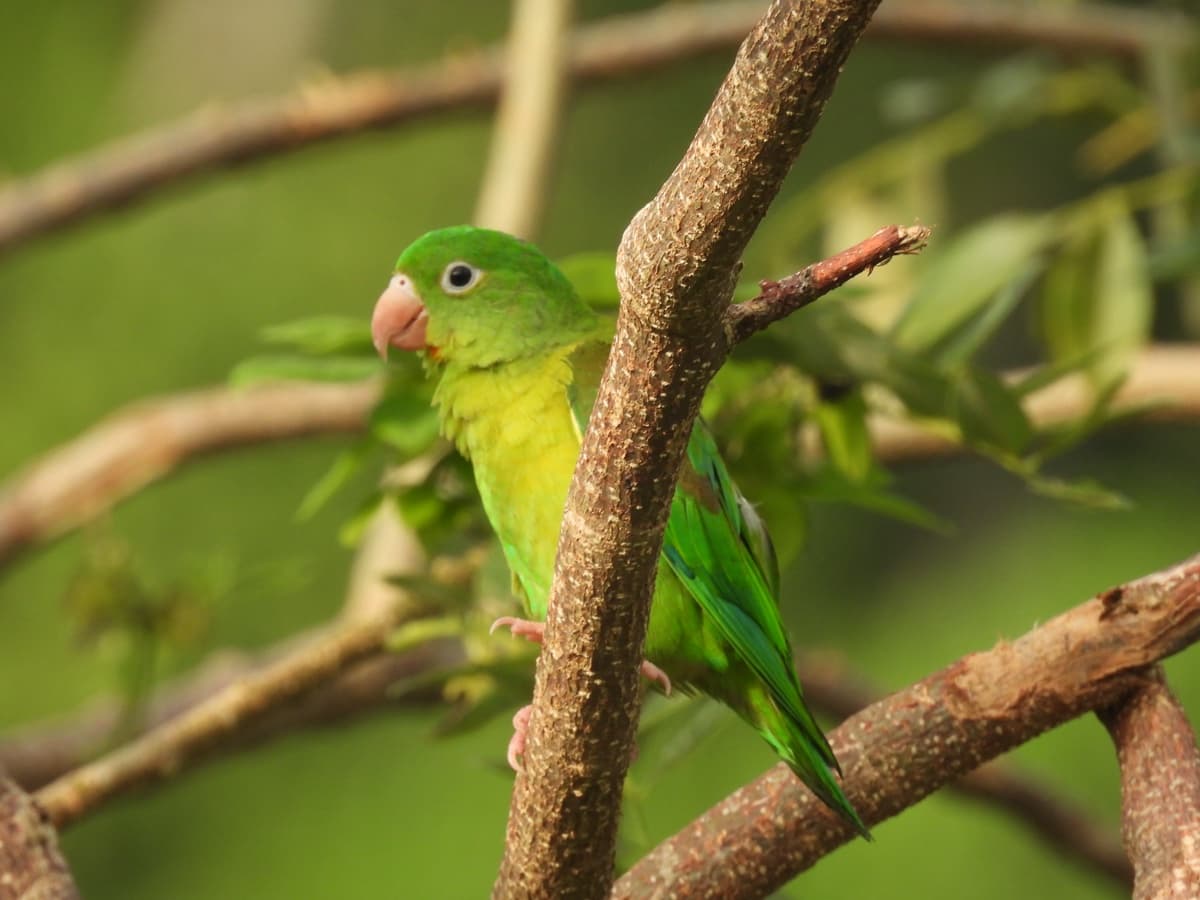
Brotogeris jugularis
Periquito alibronceado
A small, bright-green parakeet with an orange chin patch and a bronze wing patch that gives it its name. Flies in noisy, swift flocks above the dry-forest canopy. Frugivorous and nectarivorous: visits flowering and fruiting trees. One of the most abundant parrot species in the region, though still vulnerable to the illegal trade.
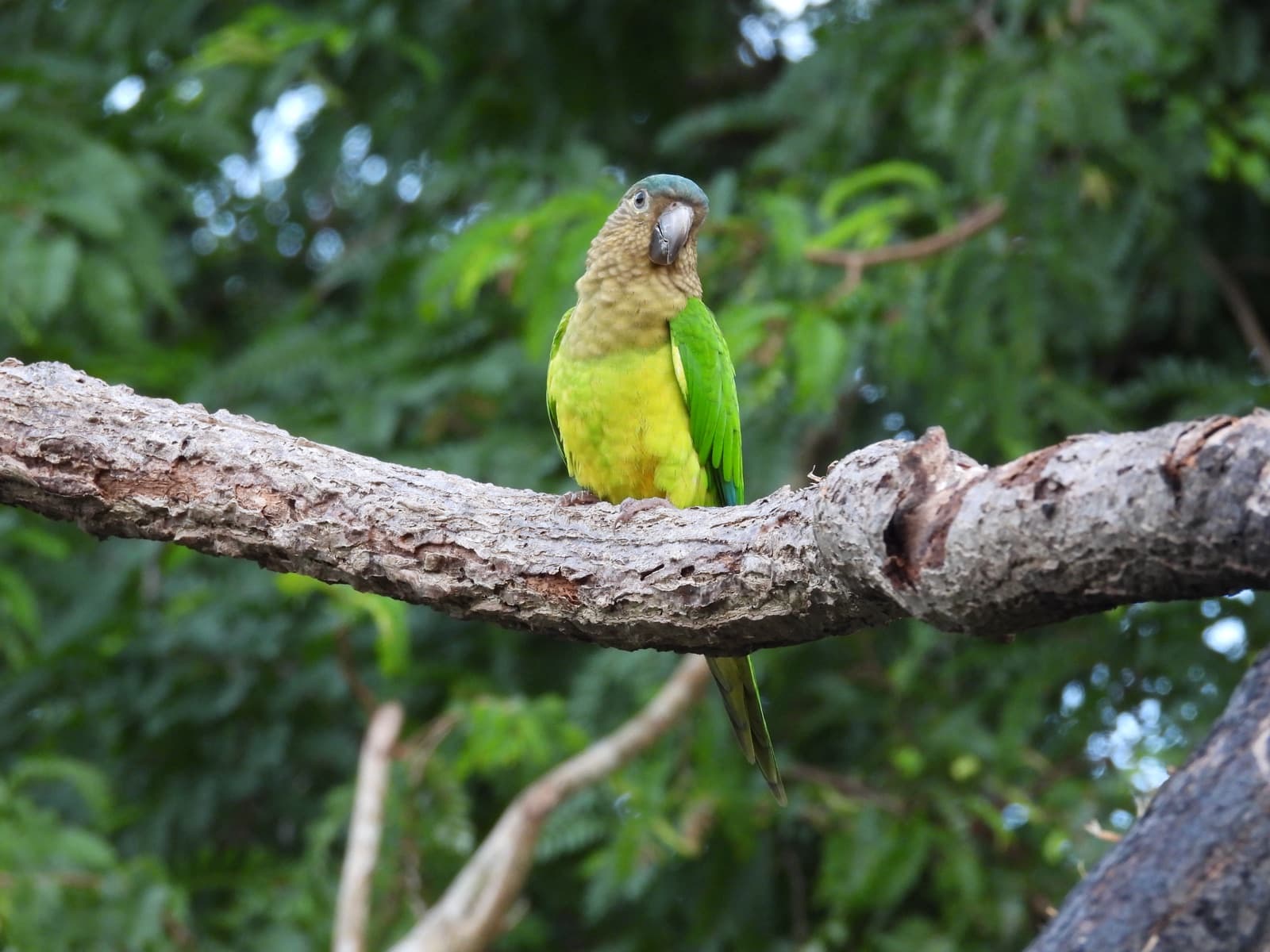
Eupsittula pertinax
Cotorra carasucia
A small, green parakeet with a dusky brown face and throat —the trait behind its Spanish name «carasucia», meaning dirty-face— and a yellowish belly. Native to northern South America and common in the Colombian Caribbean, it lives in noisy, restless flocks and nests in cavities and arboreal termite mounds. Frugivorous and granivorous, it helps disperse dry-forest seeds. Though abundant, it is also taken by the illegal pet trade.
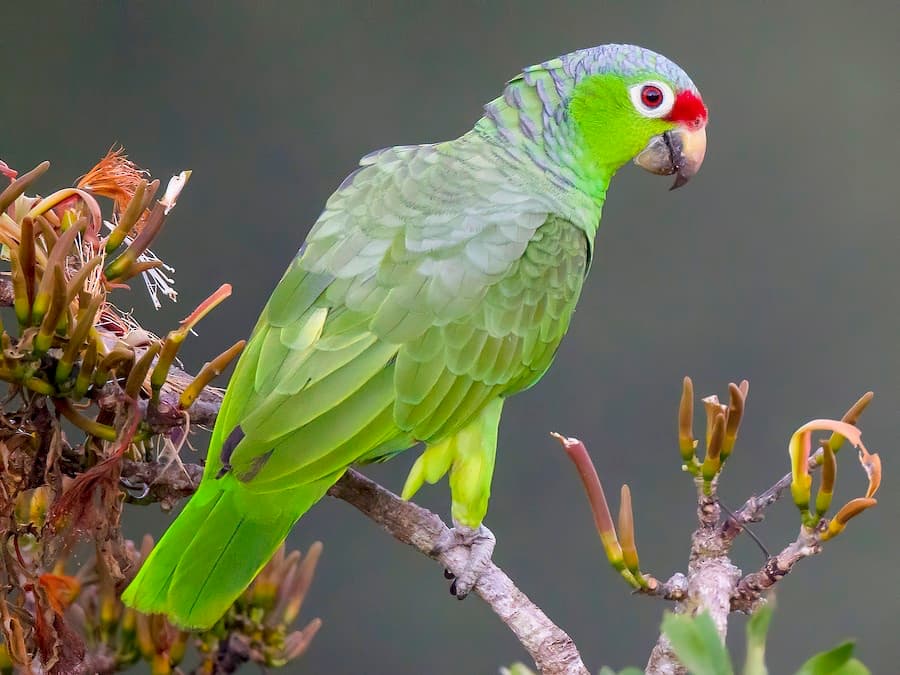
Amazona autumnalis
Lora frentirroja
A green amazon about 32–35 cm long, unmistakable for its red forehead, yellow cheeks, and a bluish wash over the crown, plus the red patch that shows on the wing. It inhabits humid and semi-deciduous forests from Central America to north-western South America, reaching the Caribbean lowlands in Colombia. It flies in pairs and flocks and feeds on fruits, seeds, nuts, and flowers. Like other amazons, it suffers from habitat loss and capture for the illegal trade.
⚠️ Recuerda: todas las visitas son con cita previa. Coordina la fecha por WhatsApp antes de venir — no atendemos sin programación.
Cómo llegar
En carro: Uber o InDriver
Es lo más cómodo: busca "Fundación Loros — Loros Wildlife Sanctuary" como destino y el conductor te deja en la entrada. La reserva da sobre la carretera principal (vía Villanueva, Bolívar), a 35 km de Cartagena — no entras por trochas ni caminos veredales.
En bus: no hay ruta directa desde el centro
No existe ningún bus público que salga del centro de Cartagena hasta la fundación. Los buses intermunicipales solo salen de la terminal, así que venir en bus son siempre dos tramos:
- Del centro a la terminal. Tienes que llegar primero a la Terminal de Transporte de Cartagena, sobre la Carretera La Cordialidad, al oriente de la ciudad (sector Doña Manuela) — no a la Terminal Satélite del Norte, que sirve otras rutas. Desde el Centro Histórico son unos 30 minutos en taxi, Uber o InDriver; más en hora pico. En transporte público va la ruta X104 de Transcaribe (Terminal – Pedro Romero – Centro), que no recibe efectivo: necesitas la tarjeta Transcaribe, que compras en la taquilla de cualquier estación. Esa ruta ha tenido desvíos por obras, así que confirma el recorrido del día en transcaribe.gov.co.
- De la terminal a la fundación. Ahí tomas un bus hacia Villanueva o Arenal (San Estanislao): salen cada 30 minutos, el viaje dura unos 40 minutos y cuesta alrededor de COP $7.000 —confirma el valor del día en taquilla—. Pídele al conductor que te baje en Fundación Loros.
⚠️ El bus solo es recomendable si conoces la zona y hablas español. Entre los dos tramos y la espera se te va cerca del doble de tiempo que en carro, y el bus no tiene parada fija en la fundación: le tienes que pedir al conductor que te baje. Si es tu primera vez por acá, ven en Uber o InDriver.
Tiempos de referencia
En carro:
| Desde la Terminal de Transportes — ver ruta | 41 min |
| Desde Serena del Mar | 55 min |
| Desde el Aeropuerto Rafael Núñez — ver ruta | 59 min |
| Desde el Centro Histórico | 1 hora y 5 minutos |
| Desde Bocagrande | 1 h 10 min |
| Desde Barú | 1 h 20 min |
¿No puedes venir en persona?
Ayuda desde donde estés
Todas estas experiencias son presenciales, en la reserva cerca de Cartagena. Si no puedes venir, también puedes sostener el trabajo a distancia.
Apadrina una especie
Un aporte mensual que sostiene la rehabilitación y liberación de una especie, con seguimiento.
Dona un nido
Una casa segura para que un loro liberado críe en libertad. Donación única, con tu nombre en el árbol.
Dona un comedero
Una estación de fruta que acompaña a las aves recién liberadas mientras reaprenden el bosque.
All together
This month, 35 people from 7 countries got involved with the foundation
October 2026 · visits, nests, volunteering, sponsorships
Programa tu visita
Escríbenos por WhatsApp para coordinar la fecha y la experiencia. Recuerda: todas las visitas son con cita previa — no recibimos visitas sin programación.