Before the day has properly broken, while mist still clings to the pastures of Fundación Loros, Eder, Jender, and Nilson are already at work. By 5:00 a.m., the three of them have begun the morning milking — a quiet, unhurried ritual repeated across all 22 cows, day after day, by hand.
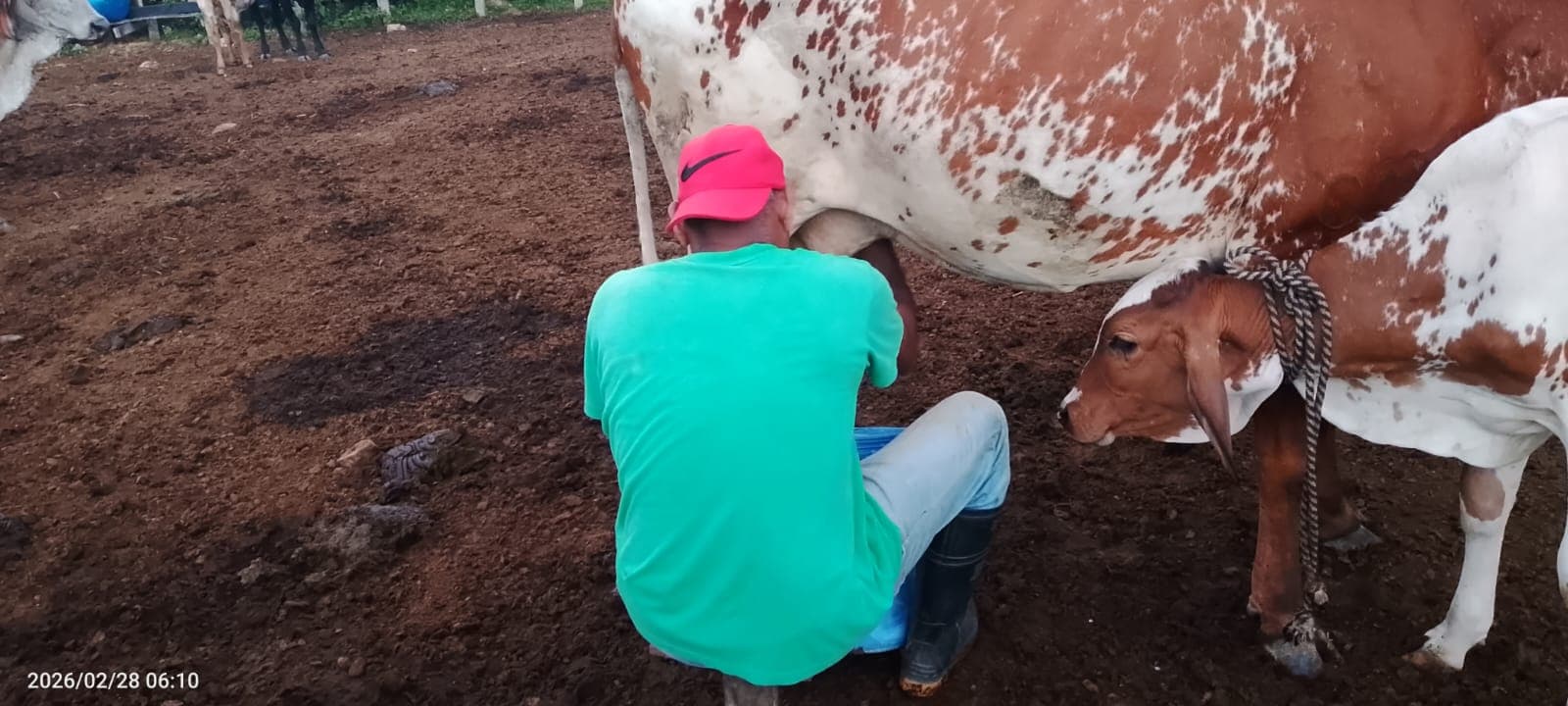
The morning routine, which takes them roughly two and a half hours from first pull to last, encompasses not only the milking itself but the subsequent work of moving the herd out to the paddocks. It unfolds the way it always has, in the earthen corrals, with each calf tied close to its mother during the milking — a traditional practice that coaxes the cows to let down their milk and keeps the young ones near. It was in this setting, at 6:10 in the morning on February 28th, 2026, that the scene was captured in photographs: the soft light, the calves at their mothers' sides, the steady rhythm of hands and buckets.
The milk that leaves Fundación Loros each morning travels to a local merchant, where it is transformed into the everyday staples of the region — fresh cheese, suero — modest products that nonetheless carry within them something of the land and the early-morning labor that made them possible.
About the author
Nilson
Nilson begins every morning in the stable, milking while the light barely grazes Cerro El Peligro, his favorite corner of the farm. He reads animals with quiet precision: a dull coat, weepy eyes, or a hesitant gait at first rising are signs that never slip past him. He remembers clearly a cow that kept collapsing from weakness in her legs, and another with a wound that refused to close. The hardest part, he says, is when an animal falls ill and the diagnosis doesn't come. His vision of the future is simple and exact: a flock of loros sweeping freely over the land, and the neighbors stopping to look up.
Stay in touch
Get news from the reserve
Before-and-after photos, management protocols, events and the story of each individual — straight to your inbox.