What 234 parrots taught us about care, freedom, and illegal trade in Colombia
By Alejandro Rigatuso, Director of Fundación Loros. 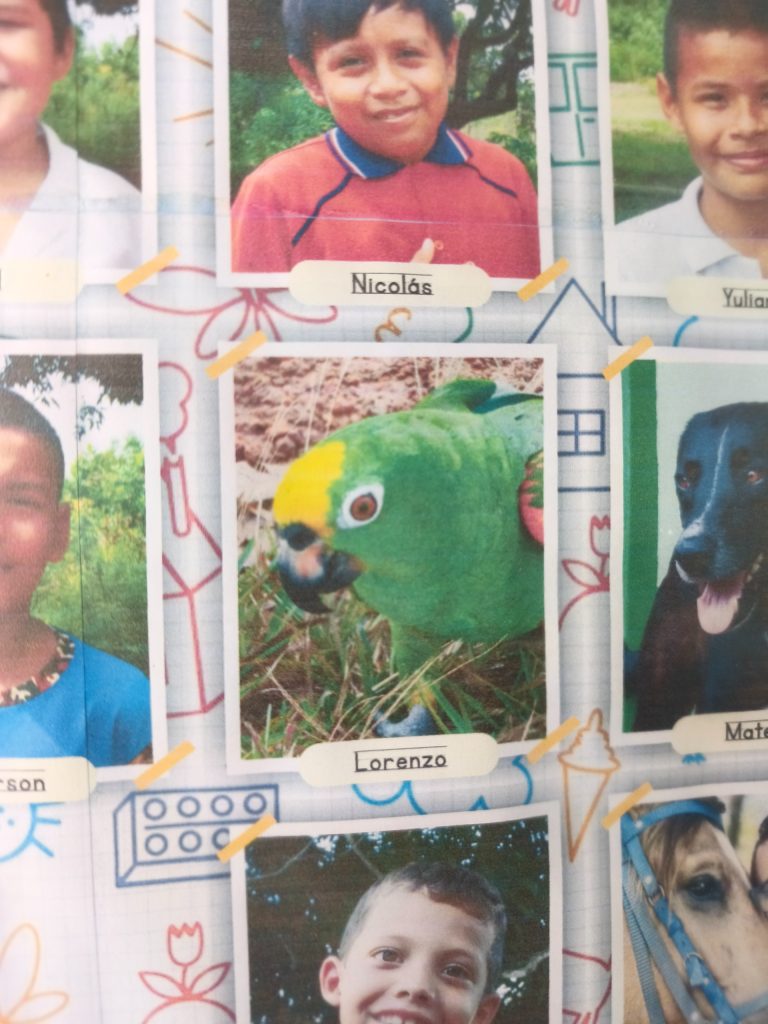
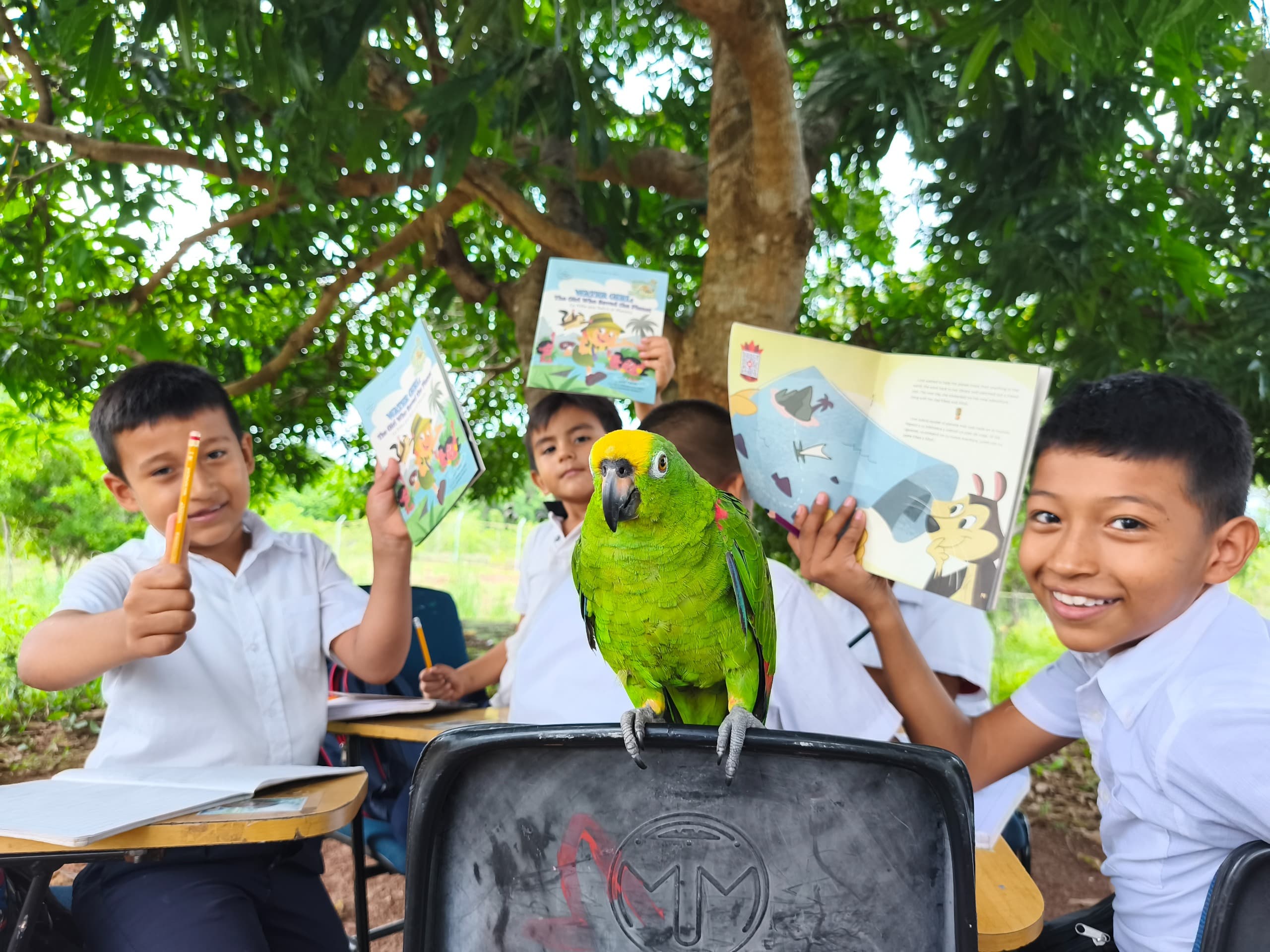
Lorenzo goes to school. And that's not a joke.
At 5:30 in the morning, when the sun is just beginning to warm the leaves of the samán, a flash of green cuts across the sky with steady wingbeats. Yellow forehead, sharp eyes… and a clear destination: school. That's Lorenzo. A real parrot. One more student.
That morning — like every morning — no one brought him to school. He went alone. He perched in the classrooms, walked among the notebooks, listened closely to teacher Camilo's natural science lesson. At lunchtime, he joined the children in the dining hall. In the afternoon, he flew to his favorite tree to sleep. Free. Loved. Respected.
This happens in La Esmeralda, a hamlet of barely 50 houses in the rural outskirts of Puerto Carreño, Vichada. There, Lorenzo belongs to no one. But everyone looks after him.
And yet, Lorenzo is the exception. Because in Colombia, the call of parrots doesn't always come from the forest. Often —and despite being illegal— it comes from a cage hanging in a yard, on a farm, or inside a living room. These are parrots that don't fly, that never see other parrots, that learned to repeat human words… without being able to speak their own language.
That's why, some months ago, Fundación Loros (Villanueva, Bolívar) — a nonprofit dedicated to the rehabilitation and protection of parrots, macaws, parakeets, and conures — launched a literary contest with a simple but powerful idea: invite people to share their story with a parrot. That's how "El Espíritu de los Loros" was born.
Everything that follows actually happened.
Who are parrots?
Before talking about cages, releases, or rescues, it's worth pausing on a question that is almost never asked with the seriousness it deserves: Who are parrots? Not what. Who.
At five in the afternoon, as if an invisible bell rings somewhere above the Amazon, the sky over Leticia fills with wings. Thousands of parrots sweep over Parque Santander, circling above the palm trees, sending into the air vocalizations that only their companions understand. They search for each other. They call. They recognize one another. And they sleep together.
Parrots are deeply sensitive and social. It has been shown — in at least some species — that each chick receives a "name" from its mother: a unique, unrepeatable vocalization that identifies it for life.
They live in tight flocks of 20 to 40 individuals, sometimes more. They sing when it rains. They hide among the green when danger is near, and sometimes — just for fun — they swing from branches like children on a playground.
Their intelligence is comparable to that of a preschool-age child. They don't just mimic sounds: they learn. They express themselves. They recognize gestures, tones, rhythms — and, when taught, they use human words with intent. They live a very long time. Some more than 80 years. When they choose a mate, it's for life: they are monogamous.
In the wild, they play an essential role: they disperse seeds, regenerate forests, and balance ecosystems.
Understanding who parrots are is the first step toward grasping the seven lessons their stories left behind.
1. Not everyone who has a parrot was looking for one
It was August 2002, and fireworks were going off across the country for the presidential inauguration of Álvaro Uribe. In Medellín, amid the blasts and the noise, a small parakeet, frightened, lost her bearings and flew straight into the window of a family home. The glass broke. And so did the routine of a father, a mother, a 12-year-old girl, and an 8-year-old boy.
That's how "El vuelo de Lulú" begins — one of the contest's finalist stories — which tells how an unexpected winged visitor unintentionally changed the life of an entire family.
Like this one, many stories from the contest show the same thing: most people do NOT go looking for a parrot. The parrot arrives.
Sometimes, like Lulú, it falls from the sky. Other times, it appears on a roadside, trembling in the hands of children who just raided a nest. It arrives in cardboard boxes offered by strangers at the market, or in the arms of someone who has no idea what to do with it.
It almost always starts with an unexpected encounter. Then comes compassion. And then — confusion. Who do you call? Where do you take it? What do you do with an animal that needs help but has nowhere to go? The lack of options — clear, accessible, safe pathways — means that, almost without trying, affection becomes confinement. Not out of selfishness, but out of the absence of better choices.
2. Before the affection, there was a capture
Not all parrots arrived by accident. Some fell from a tree, yes. Others flew in through a window. But many — too many — came by way of a harder story: they were taken from the nest.
Some through a thoughtless act that was never challenged. On a Sunday in April 2020, in Santa Catalina, Bolívar, a family came across a termite mound in an oak tree — like so many that parakeets use for nesting in the tropical dry forest. They opened it out of curiosity. Inside, three chicks of a brown-throated parakeet were calling out, blind to the world. "A gift for the children," they said. That night, two died. Only one survived: Cuqui.
Others through greed, need, or habit. Many were taken from the forest by people who knew exactly what they were doing: breaking apart a family of chicks for a quick gain. That clandestine supply enters the market and triggers an internal voice in the buyer: "I'll treat it better than the people who caught it." Faced with that promise of "saving" the bird, few resist the urge to buy. The hunter sells, the buyer buys… and the cycle reinforces itself.
That's why cutting demand is not enough. If we don't stop the capture — if we don't close the first door — the story will start over.
3. Solitude is the worst cage
One of the most repeated lessons across the stories was the silent suffering of parrots that live alone. This is no surprise: in the wild, parrots live in flocks — they call each other by "name," play, explore, preen, eat, fly together, and sleep close to one another. At home, they often have none of that. When a parrot spends its days without company, without branches to climb, without anything to explore, without wind, without rain, without the calls of others… the only thing left is its own body. And so, one feather at a time, it begins to pull them out. This behavior is called feather plucking. It isn't defiance. It's boredom. It's distress. A language without words, but with unmistakable signs.
4. Parrots are not toys or gifts for children
"She slept with me. She had her own little house, but she'd come looking for me at night, and I — not knowing the danger — would let her. Until one day we fell asleep watching television in Medellín… and we didn't wake up together. Chochi had burrowed under the covers, looking for warmth, and ran out of air. I tried to give her beak-to-mouth resuscitation, but it was too late."
That was told by one of the contest's participants. She was six years old when her uncle gave her Chochi.
Many stories from the contest began with a well-meaning gesture: a parrot given as a gift to a little girl. But many of them ended in tragedy. Because, even when surrounded by love, a parrot is not a stuffed animal or a starter pet.
We read about parakeets accidentally crushed, parakeets with broken necks after rough play, birds treated like toys — not out of cruelty, but out of ignorance. Childhood, by its nature, is full of play, lapses in attention, and impulse. But a parrot shouldn't be there to bear the consequences.
These stories aren't pointing fingers, but they do ask you to look honestly at one truth: parrots are not toys for children.
5. Fear of the authorities also keeps birds caged
"The parrot fell into the Río Magdalena. He was injured, soaked, with no strength left. My brother jumped in and swam out to rescue him. He pulled him out in his hands, trembling. From the love I've always felt for animals, I begged my parents to let us care for him. We had no idea what was coming. At home we named him Stiven. But every time we called him that, he ruffled his feathers and answered, annoyed: —No… Yoe. And from then on, he was Yoe."
That's how Yoe spent eight years with Cielo, a teenager who cared for him with dedication: she researched his species, adjusted her routine to support his well-being, and even chose to study Biology, inspired by him. Knowing that Yoe deserved a life closer to nature, she arranged to hand him over to the environmental authority, convinced he would receive professional care.
Yoe was received, given a medical assessment… and three weeks later, he died. The news left a deep grief.
But this raises a question that's hard to ignore: how can we ask citizens to trust and surrender these birds, when institutions are not always prepared to receive them and give them the rehabilitation process they deserve — especially when thousands of individuals are seized every year?
Distrust in institutions means that even people who want to do the right thing often leave birds in captivity.
Building institutional capacity is urgent and essential — so that the public's act of trust ends in genuine recovery, not frustration.
6. An ethical zoo or a sanctuary can be a better option
Ideally, every parrot would return to the wild. But that isn't always possible. Some have had their feathers clipped, others have lost basic skills, or have become too accustomed to humans. Even so, that doesn't mean they have to live in solitude.
The story of Rina, told in the piece "Coro de guacamayas", shows this. This scarlet macaw spent decades in a cage, until Andresito's grandfather decided to take her to a zoo in Medellín. There she wasn't locked away — she was gradually integrated into a flock of macaws that lives freely in the trees surrounding a lake.
Ten years later, Andrés returned to the zoo as a student. Walking near the lake, a voice surprised him from above: "Andresito's here!" It was Rina. And behind her, a chorus of macaws. She hadn't just recovered movement and stimulation. She'd recovered something deeper: belonging.
This example shows that when full freedom isn't an option, an ethical sanctuary or zoo can offer a bridge. A place where they don't just survive… they also sing.
7. Opening a cage is not the same as setting a bird free: releases must be guided by experts
Opening a cage is not enough. For a parrot raised in captivity, freedom without preparation can be a death sentence: it doesn't know how to find wild food, avoid predators, or fly far enough. Without the support of a flock, its chances of survival are minimal.
The studies confirm it: when releases are abrupt, fewer than three in ten birds survive the first year; but when proper protocols are followed, success rates exceed 60% — and in some cases can reach 100%.
What does a well-done release actually require? A bird that flies with strength and endurance, that knows — or can learn — to feed itself in a wild environment, and that has regained socialization with other parrots. It means releasing birds in flocks; some experts recommend releasing cohesive groups of at least 7 individuals.
It also requires an ecosystem rich in food and safe for the species, and a human community that won't persecute the bird but respect it — especially if it has previously lived alongside people.
In many cases, it means time in a pre-release aviary, where the bird adapts to a real outdoor environment, along with food support and post-release monitoring to track its well-being and ensure successful reintegration.
From Cartagena, Natalia shares the painful story of Pepe, a parrot she released out of love. She wanted him to fly. To be who he was. But he never came back. His absence left questions that still hurt: did he survive? Is he alone?
Epilogue: Community is the new refuge
Among more than 230 testimonies, there were luminous stories of freedom, others heavy with grief, and many that traveled a middle road: people who made mistakes but also learned; who transformed their bond with the bird and, with it, their way of seeing the world.
But one thing is clear: the problem isn't solved just by releasing birds. And stopping purchases isn't enough either. The challenge runs much deeper: it is cultural.
In many stories, freedom didn't come from an open cage — it came from an awake community. That's what happens in La Esmeralda, Vichada, where Lorenzo — that parrot who flies alone to school every morning — is free not despite his community, but because of it: no one cages him, everyone looks after him, and there a simple but powerful lesson is taught… respect.
As long as we treat it as "normal" for a child to climb a tree and raid a nest, we will keep failing. Because that's not a harmless prank: it's a sign of what we didn't teach. And if we excuse it with phrases like "we all did it," "it's part of growing up in the countryside," or "it's just an animal"… what we're passing on is permission to cause harm.
That transformation starts with adults. With mothers who teach their children to care, not to take. With fathers who recognize that a parrot is not the best gift. With farm owners who don't allow their workers to pull chicks from the forest. With teachers, grandparents, neighbors, community leaders… because education is not only the school's job: it begins at home, is reinforced in the classroom, and is honored in community.
But changing habits also means offering better options. For the children who today climb trees to take a parrot, we need to open other doors: environmental education programs, sports, music, volunteer experiences, and real encounters with the forest — without needing to capture it.
And for communities that today depend economically on wildlife trafficking, prohibition alone is not enough: we must offer dignified, sustainable, and legitimate alternatives. Building models where wild animals are worth more alive than captured is not a secondary concern — it is a core part of the transformation we need. In the Llanos Orientales, La Aurora shows that llanero safari tourism can generate income through conservation; and in Bolívar, Fundación Loros combines nature-based tourism on a natural reserve with the rehabilitation of parrots rescued from illegal trade.
As a final reflection, the lesson from these 234 stories is clear: respecting the flight of parrots is not only an ecological act — it is an act of respect. It means learning to care for those who cannot defend themselves, to look with different eyes at the smallest among us. And in that simple gesture, something larger begins: a culture of care, a citizenship born from empathy.
–
The Spirit of the Parrots
Read the contest stories
These stories are part of The Spirit of the Parrots, a national contest of stories about parrots, parakeets, parrotlets and macaws. Its purpose is to raise awareness about captivity and the illegal trafficking of psittacines in Colombia: letting people who lived with a parrot tell, in their own words, what the relationship taught them, what they understood too late, and what happens when a bird leaves the nest for a cage. 234 stories reached the contest — below, the first six.
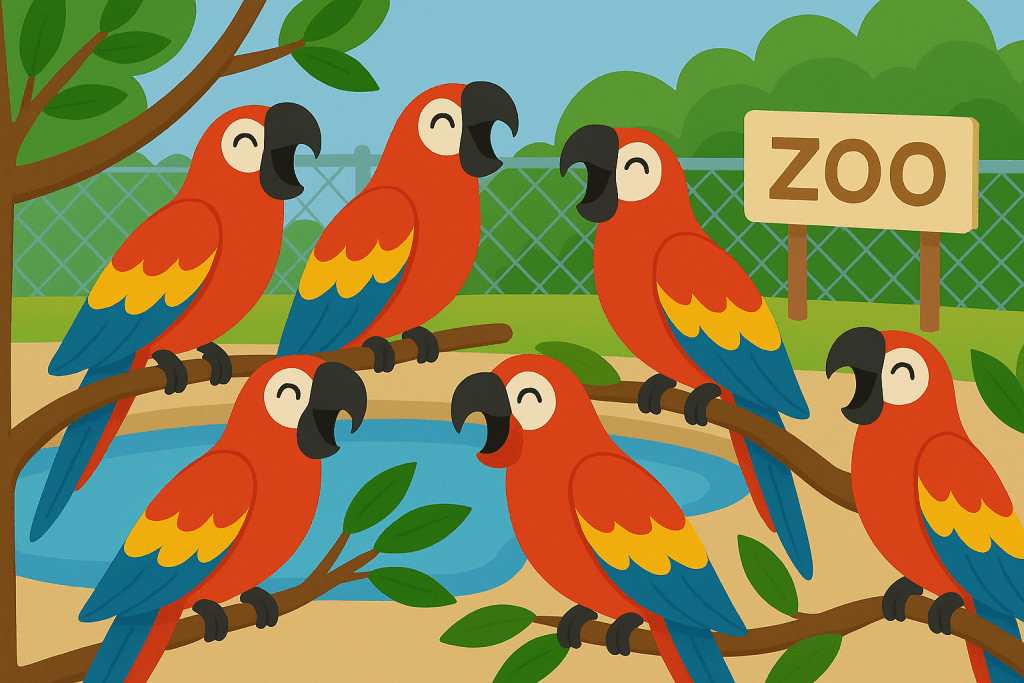
Carlos Andrés Paniagua Delgado · Colombia, Medellín · Scarlet macaw (Ara macao)
Macaw Chorus
Read more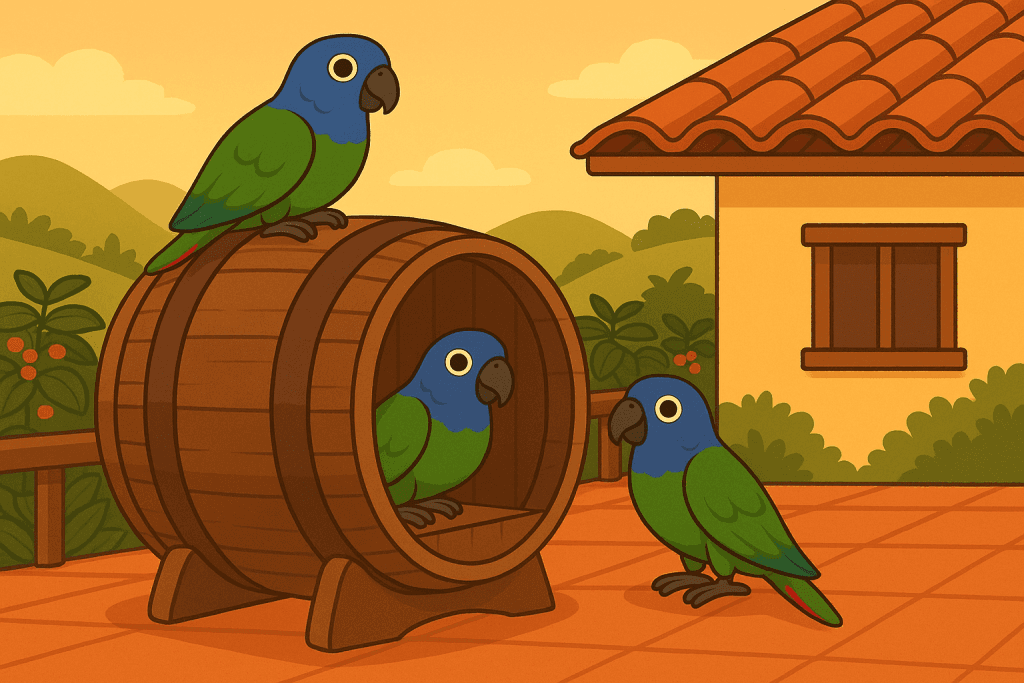
Miguel Ángel Aguirre Echeverry · Colombia, Valle del Cauca · Blue-headed parrot (Pionus menstruus)
Pachita: The Parrot That Awakened My Dream of Becoming a Vet
Read more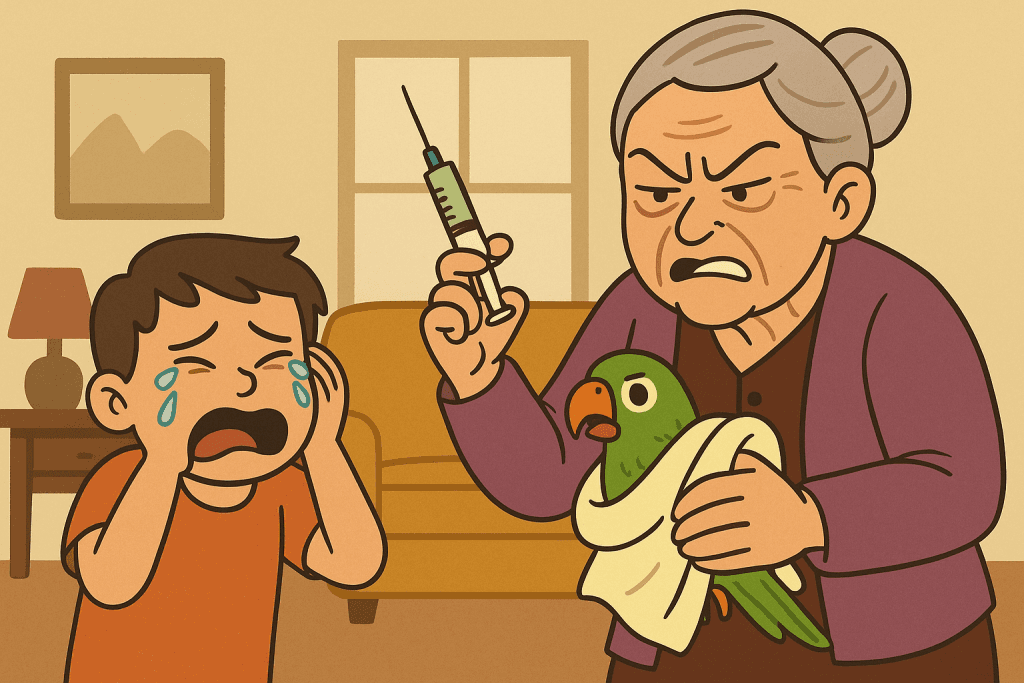
Natalia Plumaverde (pseudonym) · Colombia, Medellín · Yellow-crowned amazon (Amazona ochrocephala)
The Paquedad of Paco
Read more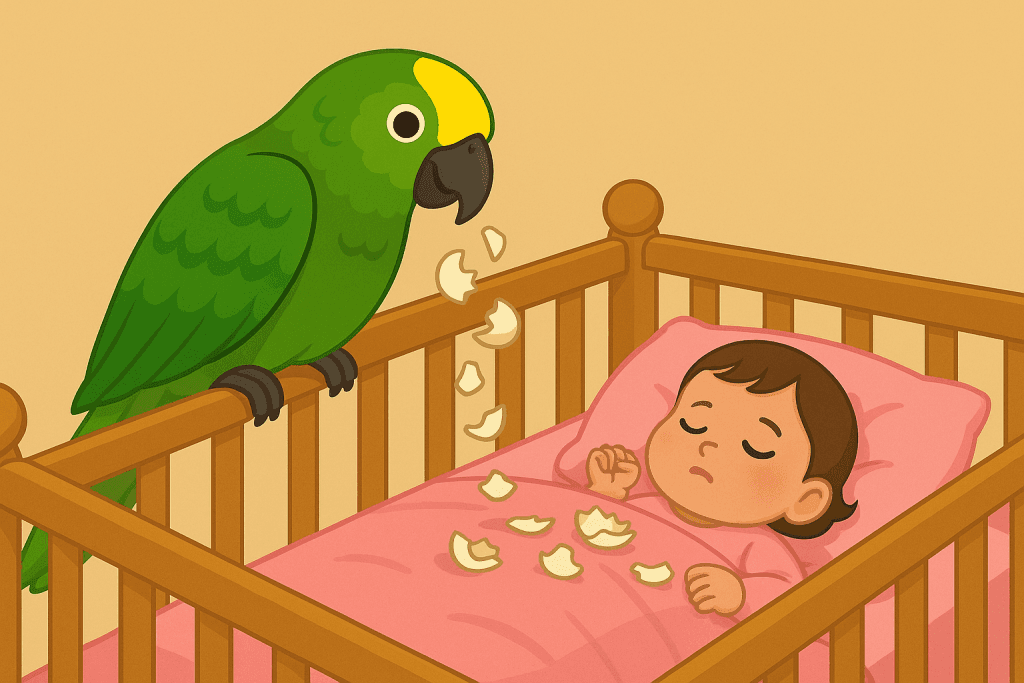
Carolina Mesa Trujillo · Colombia, Medellín · Yellow-crowned amazon (Amazona ochrocephala)
Feathers woven, eternal spirits, green destiny
Read more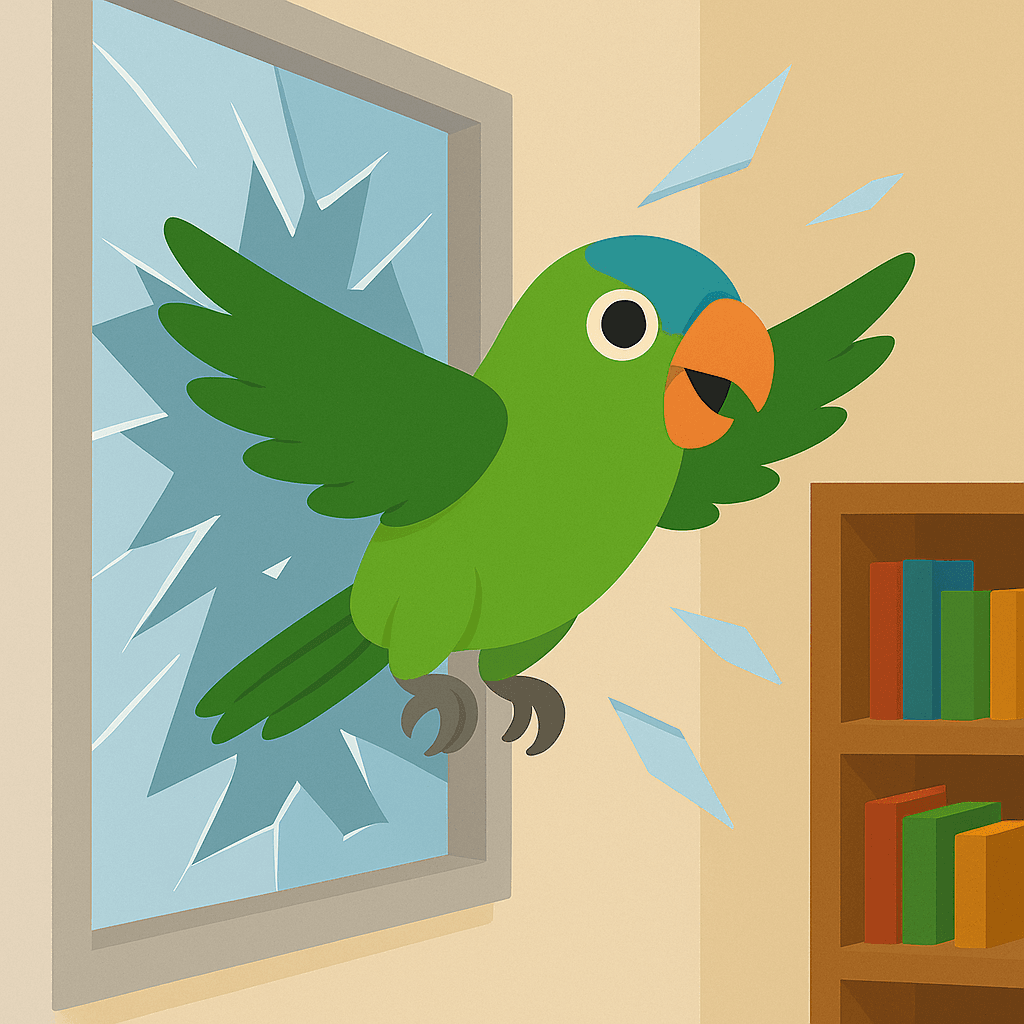
Chris Valderrama · Colombia, Medellín · Tovi parakeet (Brotogeris jugularis)
Lulú's Flight
Read more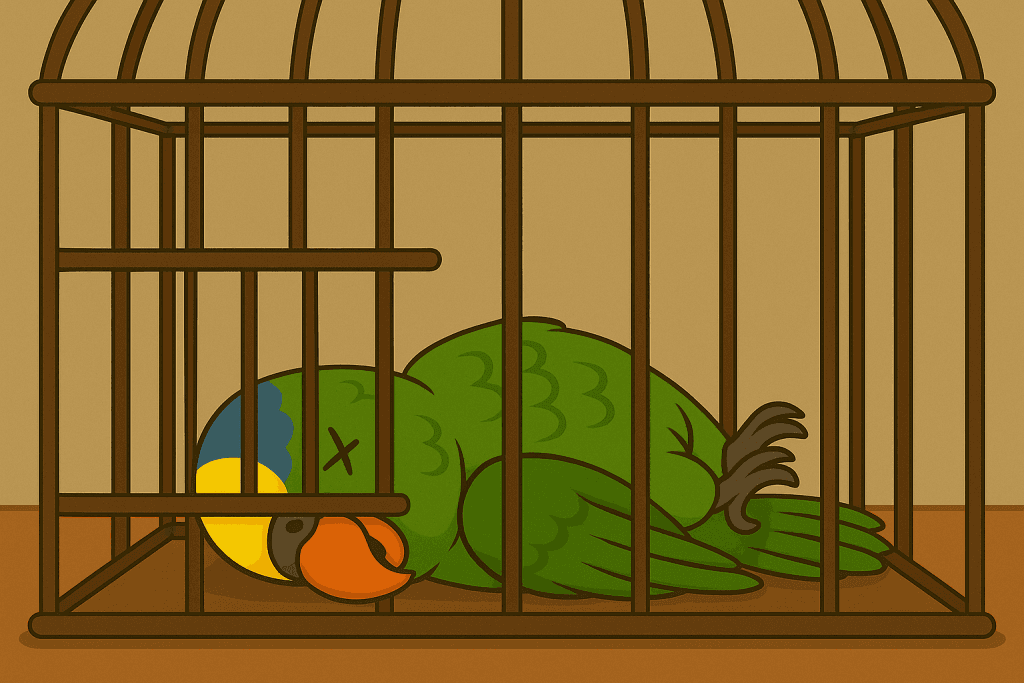
Fran Torres · Colombia, Cartagena · Blue-fronted parrot (Amazona aestiva)
No more cages
Read moreOpen review
Reviews of this article
This text gets corrected with input from the field. You can review the whole article below, or scroll back up and flag a specific paragraph while you read. We read every submission before publishing it.
This article has no published reviews yet. If something you read contradicts your experience, misses a nuance, or you can add to it from your own fieldwork, write it here: we read all of it.
Leave your review
You can review the whole article from here, or flag a specific paragraph while you read.